



TL;DR:
- Termite damage often remains hidden until it becomes severe and more costly to repair. Early detection through recognizing signs like mud tubes, hollow wood, and damaged paint can save homeowners significant money and structural integrity. Professional inspections are recommended when signs appear or during property transactions, as DIY checks have limitations in uncovering hidden activity.
Termite damage is one of those problems that sneaks up on you. By the time you notice something is wrong, the damage is often already serious and expensive to fix. Termites often remain hidden until the destruction reaches a level that’s hard to ignore, which means most Ohio homeowners are already dealing with a real problem by the time they start asking questions. The good news is that knowing what to look for, where to look, and when to call in a professional can save you tens of thousands of dollars in structural repairs.
Table of Contents
- Common signs of termite damage in Ohio homes
- DIY inspection steps: How to check for termite damage
- Differentiating termite damage from other pests
- When to call a professional: Limits of DIY termite checks
- Our take: Why being proactive beats costly repairs
- Get professional help and peace of mind
- Frequently asked questions
Key Takeaways
| Point | Details |
|---|---|
| Spot subtle signs early | Even minor changes in wood, paint, or debris could indicate termite activity. |
| DIY inspections have limits | A simple home check helps, but professionals are needed to find hidden infestations. |
| Correct pest identification matters | Mistaking ants for termites can lead to ineffective or costly treatments. |
| Act quickly for best results | Delaying action after spotting signs often leads to more expensive repairs and structural damage. |
Common signs of termite damage in Ohio homes
Now that you understand why early detection is essential, let’s break down the most common and reliable signs of termite damage found by Ohio homeowners.
Most people picture a crumbling beam or a collapsed floor when they think of termite damage. In reality, the early signs are far more subtle. You might notice a door that suddenly sticks, paint that looks a little bubbly, or a faint hollow sound when you knock on a wall. These small clues add up, and recognizing them early is the difference between a minor treatment and a major renovation.
The key signs of termite infestation that Ohio homeowners should watch for include several distinct categories. According to the EPA, evidence categories to identify termite activity include mud tubes, hollow wood, buckling or sagging structural wood, paint issues, pinholes, frass, and discarded wings. Each of these tells a slightly different story about where the colony is and how long it has been active.
Here is a quick rundown of what each sign looks like and where you’re most likely to find it:
- Mud tubes: Pencil-thin tunnels made of soil and wood particles, usually running along your foundation wall or floor joists. Subterranean termites, the most common species in Ohio, build these to travel safely between the soil and your home.
- Hollow-sounding wood: When you tap on a beam, joist, or wall stud and it sounds like a drum instead of solid wood, termites may have eaten the interior while leaving the surface intact.
- Buckling or sagging floors and ceilings: Structural wood that has been weakened will start to bend under normal weight. This is often misread as a settling house.
- Paint issues: Bubbling, peeling, or uneven paint on walls or window frames can mean moisture from termite activity is building up underneath.
- Frass: Drywood termites leave behind tiny pellets that look like sawdust or coffee grounds, usually found in small piles below infested wood.
- Discarded wings: After termites swarm, they shed their wings. Finding small, equal-sized wings near windowsills or doorways is a strong warning sign.
| Sign | What it looks like | Common locations |
|---|---|---|
| Mud tubes | Brown, pencil-width tunnels | Foundation, basement walls, joists |
| Hollow wood | Dull thud when tapped | Beams, studs, door frames |
| Frass | Tiny wood-colored pellets | Below infested wood, windowsills |
| Discarded wings | Tiny, equal-sized wings | Near doors, windows, light sources |
| Buckling wood | Warped floors or ceilings | Subfloors, ceiling panels |
| Bubbling paint | Raised or uneven paint surface | Walls, trim, window frames |
One detail that many homeowners miss: these signs rarely appear in isolation. If you spot one, there are usually two or three others nearby. A tree termite signs guide can also help you recognize when termite activity near your yard trees may be putting your home at risk, since outdoor colonies are often the source of indoor infestations in Ohio.
Statistic to know: The average termite colony contains between 60,000 and one million workers. A mature colony can eat through one foot of a 2×4 board in roughly five months. That pace of damage is easy to miss but impossible to ignore once it compounds.
DIY inspection steps: How to check for termite damage
Once you know what to look for, you can conduct a basic termite check throughout your home. Here’s how to do it safely and effectively.
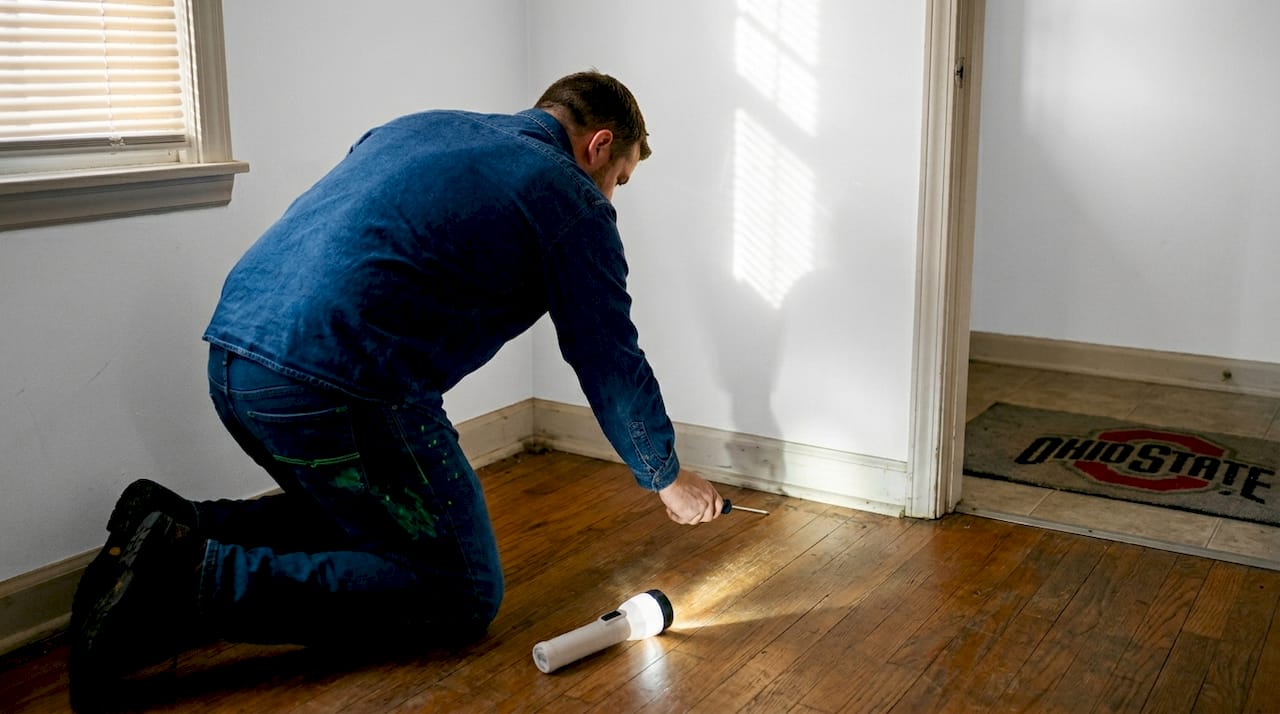
You don’t need fancy equipment for a basic inspection. A bright flashlight, a flathead screwdriver, and a pair of gloves are enough to get started. Set aside about 90 minutes and plan to check your basement, crawl space, garage, and any wood that contacts the ground or has exposure to moisture.
- Start outside. Walk the perimeter of your home’s foundation. Look for mud tubes on concrete blocks, brick, or bare soil. Check where utility lines, pipes, and wood elements meet the foundation. Note any cracks or gaps.
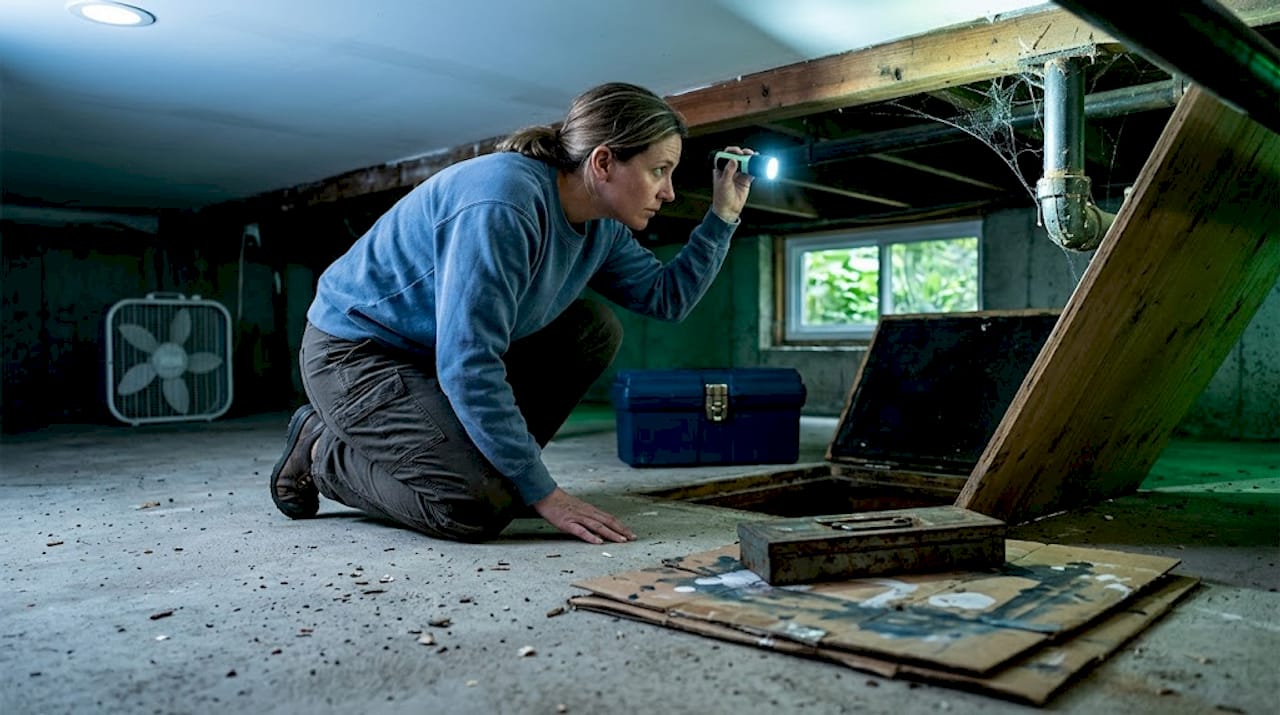
- Move into the basement or crawl space. Bring your flashlight and check every exposed wood surface: floor joists, support beams, sill plates (the boards that rest directly on the foundation). Tap each one with your screwdriver handle and listen for a hollow sound.
- Probe suspect wood. The EPA recommends probing exposed wood with a flathead screwdriver to locate hollow spots. Press the tip firmly into the surface. Healthy wood resists; termite-damaged wood feels soft, crumbles, or collapses inward.
- Check window and door frames. These are high-moisture areas that attract subterranean termites. Look for bubbling paint, soft spots, or visible frass collected in the corners.
- Look near wood piles and soil contact points. Any place where wood touches dirt is a direct entry point. Wooden deck posts, fence boards that enter the ground, and firewood stacked against the house are all common entry sources.
- Document everything. Take photos of anything suspicious. Note the location and size. This information is valuable if you bring in a professional afterward.
Pro Tip: Pay extra attention to your crawl space if your Ohio home has one. Crawl spaces are humid, dark, and rarely visited, which makes them the perfect environment for a termite colony to establish itself and go unnoticed for years.
| Factor | DIY inspection | Professional inspection |
|---|---|---|
| Cost | Free | $75 to $300 depending on home size |
| Tools needed | Flashlight, screwdriver, gloves | Moisture meters, thermal imaging, probes |
| Hidden damage detection | Limited | High accuracy |
| Time required | 60 to 90 minutes | 30 to 60 minutes |
| Documentation | Photos and notes | Formal written report |
| Legal value | None | May satisfy real estate requirements |
If you’re comparing your options after a DIY check, reviewing a termite treatment company comparison can help you understand what professional services include and what realistic treatment costs look like across Ohio.
Differentiating termite damage from other pests
Identifying the right pest is crucial before taking action. Here’s how to ensure you’re actually dealing with a termite problem and not another lookalike invader.
This is where homeowners lose time and money. Ohio has a wide range of wood-damaging pests, and the signs they leave behind can look nearly identical at first glance. Treating for the wrong pest is not just ineffective; it can give the actual infestation more time to spread.
Ant swarmers are commonly mistaken for termites, and it’s an easy mistake to make. Both swarm in the spring, both shed wings, and both are drawn to moisture-damaged wood. However, there are clear physical differences once you know what to compare.
Here’s how to tell them apart:
- Wings: Termite swarmers have two pairs of wings that are equal in length. Ant swarmers have unequal wings, with the front pair noticeably longer than the back.
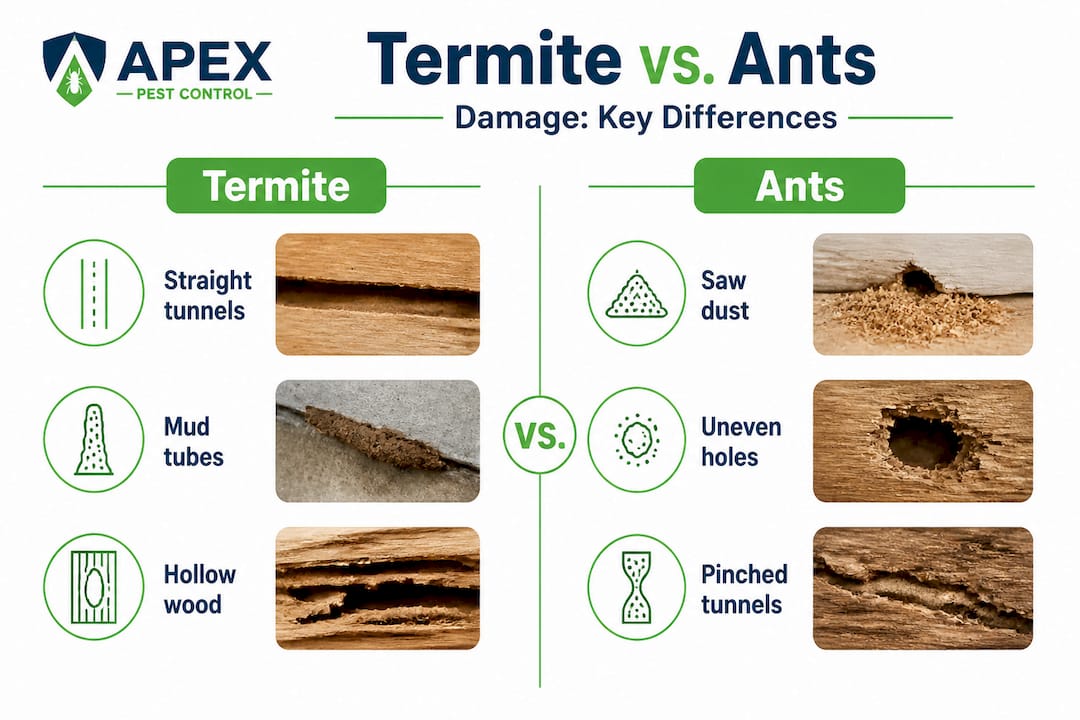
- Body shape: Termites have a straight, uniform body with no pinched waist. Ants have a clearly pinched waist between the thorax and abdomen.
- Antennae: Termite antennae are straight or slightly curved, like a string of beads. Ant antennae are bent at a sharp angle, like an elbow.
- Frass: Carpenter ants push frass out of the wood in coarse, shredded strands mixed with insect parts. Termite frass consists of uniform, tiny pellets that look almost like mustard seeds.
- Damage patterns: Termites eat along the grain of the wood, following the soft cellulose. Carpenter ants excavate galleries against the grain and leave smooth, clean tunnels inside.
“Wrong identification doesn’t just waste money on ineffective treatments. It delays the right treatment while the actual colony keeps growing. In our experience, a six-month delay can double the damage.”
If you suspect you might be dealing with ants instead of termites, reviewing your options with the best Ohio ant exterminators is a smart step. Carpenter ants, in particular, cause damage that mirrors termite destruction closely enough to fool even experienced homeowners.
Pro Tip: Collect a few of the insects in a sealed plastic bag or take a close-up photo. Any pest control professional can identify the species in seconds, which saves you from guessing and treating the wrong problem.
When to call a professional: Limits of DIY termite checks
If you’re unsure or you spot warning signs, here’s when and why bringing in an expert makes all the difference.
DIY checks are a useful starting point, but they have real limitations. Termites build their activity deep inside walls, below subfloors, and inside structural cavities that no flashlight can reach. The EPA is direct on this point: professional inspection is recommended over relying solely on DIY checks, since termites can go undetected for long periods even in homes where owners are actively watching.
Here are the situations where you should pick up the phone and call a pest control professional:
- You find active mud tubes. Fresh, moist mud tubes mean the colony is currently active and feeding. This is not a wait-and-see moment.
- Your screwdriver probe finds soft or crumbling wood. Any structural wood that gives way under light pressure has been compromised and needs immediate professional assessment.
- You see swarming insects indoors. A termite swarm inside your home means the colony has been established long enough to reproduce. That points to a mature infestation.
- You smell a musty, mildew-like odor with no moisture source. Some homeowners report a damp, moldy smell near termite-active areas even when there’s no plumbing leak or rain exposure.
- You’re buying or selling a home. Real estate transactions in Ohio often require a licensed pest inspection report. A DIY check has no legal standing in this situation.
“Professional inspectors use tools like moisture meters and thermal imaging cameras to detect activity inside walls without opening them up. That level of accuracy simply isn’t possible with a flashlight and a screwdriver.”
A professional inspection typically takes 30 to 60 minutes for an average-sized home. The inspector will check the same zones you would in a DIY check, plus interior walls, attic framing, and areas under insulation. Afterward, you’ll receive a written report that identifies active infestations, past damage, and conditions that make your home vulnerable. Reviewing your options through top residential pest solutions can help you understand what levels of service are available and what to expect from an Ohio-based inspection.
Our take: Why being proactive beats costly repairs
Having covered how, where, and when to check, let’s talk about why this mindset is so important, especially for Ohio homeowners.
Ohio’s climate is genuinely favorable for subterranean termites. The state’s warm, humid summers and wet springs create ideal soil conditions for termite colonies to thrive and spread. We’ve seen it play out the same way dozens of times: a homeowner waits until something feels obviously wrong, a floor starts to sag or a doorframe won’t close, and by then the damage is structural. What could have been a straightforward treatment becomes a repair project involving replacing joists, subfloor sections, and sometimes load-bearing elements.
The real cost of waiting is not just financial. It’s the disruption. Homes with extensive termite damage sometimes require families to temporarily relocate while repairs happen. Insurance rarely covers termite damage, which makes the full cost fall entirely on the homeowner.
What we’ve seen work consistently is simple: one annual inspection, done either by a professional or as a careful DIY check using the steps above, paired with paying attention to the early termite warning signs throughout the year. This approach catches activity before it becomes expensive. A treatment in the early stages of an infestation might cost a few hundred dollars. The same infestation caught two years later, after it has moved into structural wood, could cost $10,000 or more in combined treatment and repairs.
We also want to challenge the assumption that termites are only a problem in older homes. New construction in Ohio is not immune. Termites follow moisture and cellulose, and a brand-new home with wood framing, landscaping mulch against the foundation, and soil-to-wood contact points is just as attractive to a colony as a century-old farmhouse. Homeowners in newer builds often have a false sense of security that delays the kind of regular checking that would catch activity early.
The mindset shift we advocate for is this: don’t inspect because you suspect a problem. Inspect because you want to make sure there isn’t one.
Get professional help and peace of mind
Ready for a more thorough inspection or need reliable service? Here’s how Apex Pest Control can guide your next step.
At Apex Pest Control, we’ve been protecting Ohio homes since 1969, and termite detection is one of the areas where professional expertise makes a measurable difference. If your DIY inspection turned up anything concerning, or if you simply want the assurance of a thorough, professional evaluation, we’re ready to help. Our licensed inspectors cover the full scope of termite activity, from crawl space assessment to structural framing checks, using tools and techniques that go well beyond what a flashlight and screwdriver can reveal. You can explore your options through our best Ohio termite solutions page, or get in touch directly through Apex Pest Control to schedule an inspection or request a free quote. Don’t wait for visible damage to take action.
Frequently asked questions
What are the first signs of termite damage in a house?
Early signs include hollow-sounding wood, mud tubes along the foundation, bubbling or uneven paint, and small piles of discarded wings near windows or doors. The EPA confirms that common evidence includes all of these indicators and that they often appear together rather than in isolation.
How can I tell if damage is from termites or ants?
Termites have equal-length wings, straight bodies, and bead-like antennae, while ants have unequal wings, a pinched waist, and bent antennae. Ant swarmers are often mistaken for termites, making close physical comparison essential before starting any treatment.
When should I call a professional for termite inspection?
Call a professional if you find active mud tubes, soft or crumbling wood, indoor swarms, or if you’re involved in a real estate transaction that requires a licensed inspection report. Professional inspection is safest because termites often stay hidden long after a colony has established itself.
Is a DIY termite check enough for Ohio homes?
DIY checks are a helpful starting point but should not replace professional inspections, especially for hidden activity in walls, under insulation, or in structural cavities. DIY is not always sufficient, and experts can identify infestations that no homeowner inspection would catch.