


Finding effective ways to keep rodents and insects out of your Oakwood home often means weighing concerns over family safety and environmental impact. Many Northeast Ohio homeowners struggle to manage pest problems without relying on harsh chemicals or risking exposure. By using Integrated Pest Management (IPM), you can address infestations with thoughtful, sustainable tactics that protect your loved ones, pets, and the local ecosystem while delivering real results.
Table of Contents
- Defining Integrated Pest Management For Homes
- IPM Methods: Biological, Cultural, Mechanical, Chemical
- How IPM Works: Prevention, Monitoring, Action Thresholds
- Eco-Friendly IPM Approaches For Ohio Residents
- Risks, Costs, And Legal Safety In Pest Management
Key Takeaways
| Point | Details |
|---|---|
| Integrated Pest Management (IPM) | IPM is a proactive, environmentally conscious approach to pest control focused on prevention, monitoring, and targeted interventions. |
| Four Primary IPM Methods | IPM uses Biological, Cultural, Mechanical, and Chemical controls, emphasizing minimal environmental impact. |
| Importance of Prevention | Implementing preventative measures reduces the likelihood of pest establishment and supports overall pest management efforts. |
| Understanding Risks and Compliance | Homeowners must be aware of health risks, financial implications, and legal requirements associated with pest management. |
Defining Integrated Pest Management for Homes
Integrated Pest Management (IPM) represents a strategic, environmentally responsible approach to controlling pests in residential settings. Unlike traditional pest control methods that rely primarily on chemical treatments, IPM focuses on comprehensive, sustainable solutions that minimize risks to human health and the environment.
At its core, IPM combines multiple control methods to manage pest populations effectively. The approach emphasizes prevention, accurate pest identification, and targeted interventions that address the root causes of pest problems. Key components of IPM include:
- Detailed pest identification and understanding of specific pest behaviors
- Regular monitoring and assessment of pest populations
- Implementation of preventative measures
- Use of least-toxic control methods
- Ongoing evaluation and adaptation of pest management strategies
The Ohio State University Extension highlights that IPM is not about complete eradication but about reducing pest damage to acceptable levels. Biological control methods, cultural practices, and mechanical interventions are prioritized before considering chemical treatments. This approach ensures that homeowners can effectively manage pest populations while protecting their families, pets, and local ecosystems.

Pro tip: Maintain a clean, well-sealed home and eliminate potential pest entry points to support your IPM strategy and reduce pest attraction.
IPM Methods: Biological, Cultural, Mechanical, Chemical
Integrated Pest Management (IPM) employs four primary approaches to effectively control pest populations while minimizing environmental impact. Each method offers unique strategies for addressing pest challenges in residential and agricultural settings.
The first method, Biological Control, harnesses natural predators and parasites to manage pest populations. This approach involves introducing beneficial insects or organisms that naturally prey on or compete with target pest species. For example, ladybugs can control aphid populations, while certain nematodes can suppress harmful soil-dwelling insects.
Cultural Controls focus on modifying the environment to make it less hospitable for pests. Key strategies include:
- Crop rotation to disrupt pest breeding cycles
- Proper sanitation practices
- Selecting pest-resistant plant varieties
- Adjusting planting times
- Maintaining healthy soil conditions
Mechanical Controls provide direct physical interventions to prevent or remove pest infestations. These methods include:
- Installing physical barriers
- Using traps and monitoring devices
- Manually removing pests
- Employing screens and seals to block pest entry
- Implementing temperature or moisture controls
Chemical Controls represent the final strategy in IPM, used sparingly and with precise targeting. When necessary, professionals select the least toxic pesticides and apply them in minimal quantities to minimize environmental and health risks.
Chemical interventions are a last resort, applied strategically to prevent widespread pest damage while protecting human and environmental health.
Pro tip: Combine multiple IPM methods for comprehensive pest management, focusing on prevention and minimal intervention.
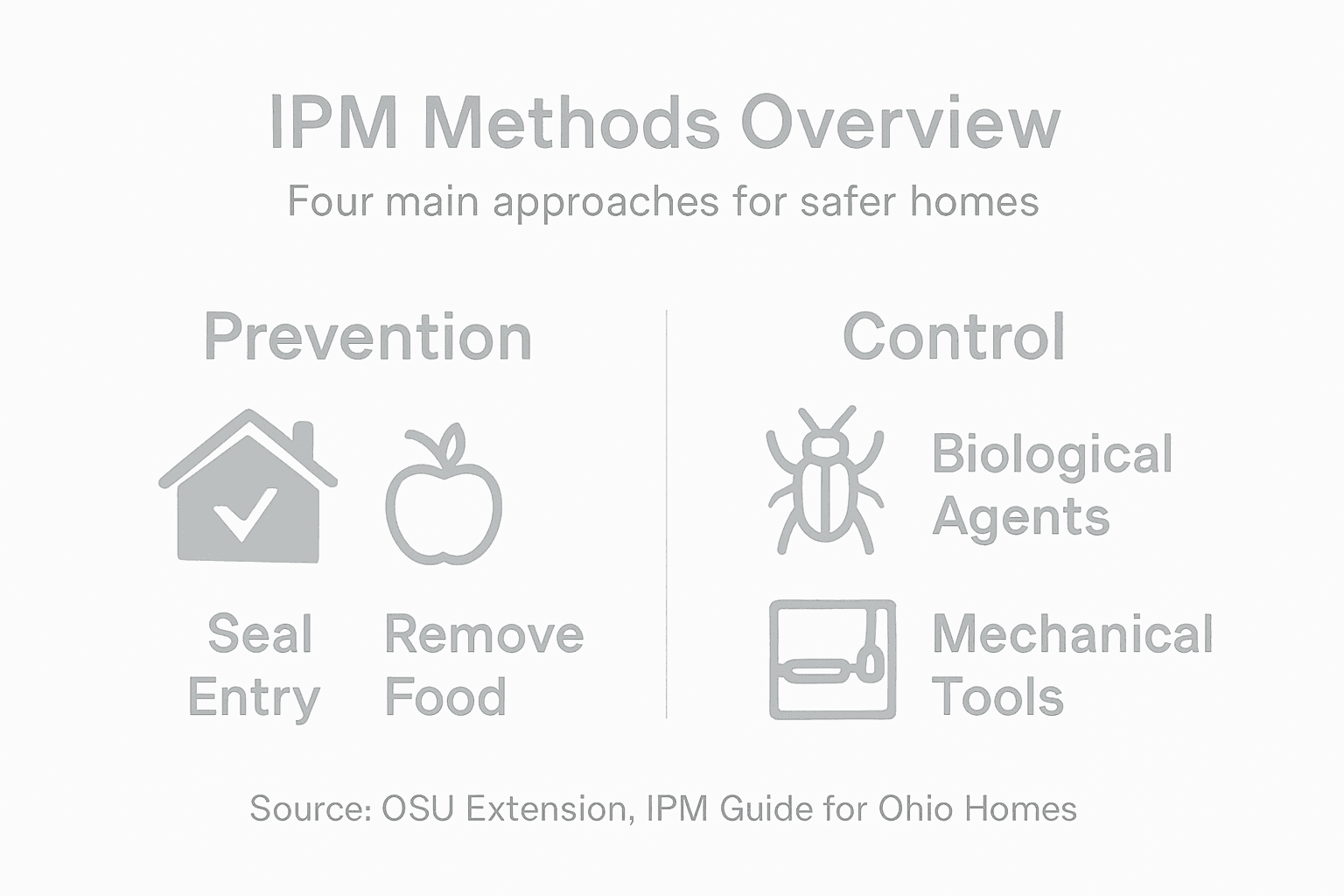
Here’s a side-by-side comparison of the four IPM methods:
| Method | Typical Approach | Environmental Impact | Best Use Scenario |
|---|---|---|---|
| Biological | Use of predators/parasites | Low, supports ecosystem | Garden pest control |
| Cultural | Modify environment | Low, preventive | Preventing plant infestation |
| Mechanical | Physical barriers/traps | Minimal, direct intervention | Blocking home pest entry |
| Chemical | Targeted pesticide use | Higher, must be minimized | Severe infestations only |
How IPM Works: Prevention, Monitoring, Action Thresholds
Integrated Pest Management (IPM) operates through a systematic approach that transforms pest control from reactive treatment to proactive management. IPM practices rely on strategic components designed to minimize pest populations while protecting human health and environmental integrity.
Prevention serves as the critical first line of defense in IPM. This strategy focuses on creating environments that naturally discourage pest establishment. Homeowners can implement prevention techniques such as:
- Sealing potential entry points around windows and doors
- Maintaining proper drainage to reduce moisture
- Storing food in sealed containers
- Keeping living spaces clean and free of debris
- Removing potential pest habitats near the home
Monitoring represents the second crucial phase of IPM, involving consistent and systematic pest population assessment. Professional technicians use various techniques to track pest activity, including:
- Placing strategic traps and monitoring devices
- Conducting regular comprehensive inspections
- Identifying early signs of pest infestation
- Recording and analyzing pest population trends
- Using technology to detect subtle changes in pest behavior
Action Thresholds define the specific point at which pest populations become economically or environmentally significant enough to warrant intervention. These carefully calculated levels help professionals make informed decisions about when and how to implement control measures.
Action thresholds transform pest management from indiscriminate treatment to precise, targeted interventions that protect both property and ecosystem.
Pro tip: Maintain a detailed log of pest sightings and potential entry points to help professionals develop a more targeted IPM strategy.
Eco-Friendly IPM Approaches for Ohio Residents
Environmentally responsible pest management is crucial for Ohio homeowners seeking to protect their families and local ecosystems. Eco-friendly pest control methods prioritize minimal environmental impact while effectively addressing pest challenges specific to Northeast Ohio’s unique landscape.
Natural Predator Strategies represent a cornerstone of sustainable pest management. These approaches leverage biological control mechanisms that work in harmony with local environmental conditions. Homeowners can support these strategies by:
- Creating habitats that attract beneficial insects
- Maintaining diverse garden ecosystems
- Avoiding broad-spectrum chemical treatments
- Promoting natural pest population balance
- Supporting local biodiversity
Organic Pest Control Methods focus on using minimal-risk treatments derived from natural sources. These environmentally conscious approaches include:
- Plant-based repellent solutions
- Essential oil treatments
- Diatomaceous earth applications
- Biological pest control agents
- Targeted, low-toxicity interventions
Preventative Design plays a critical role in eco-friendly pest management. This approach involves structurally modifying living spaces to naturally discourage pest invasions without relying on chemical interventions. Strategies include:
- Sealing potential entry points
- Managing moisture levels
- Maintaining proper landscaping
- Implementing natural barriers
- Reducing attractive nuisance areas
Effective eco-friendly pest management combines strategic prevention, natural interventions, and minimal environmental disruption.
Pro tip: Consult local pest control professionals who specialize in environmentally responsible management techniques tailored to Ohio’s specific ecosystem.
Risks, Costs, and Legal Safety in Pest Management
Pest management involves complex considerations beyond simple treatment, requiring homeowners to understand potential risks, financial implications, and legal requirements. Ohio regulatory standards mandate comprehensive safety protocols to protect residents and the environment during pest control activities.
Health and Environmental Risks associated with pest management can be significant if not properly managed. Potential dangers include:
- Chemical exposure to humans and pets
- Contamination of local water sources
- Disruption of local ecosystem balance
- Potential long-term health complications
- Unintended harm to beneficial wildlife
Financial Considerations play a critical role in responsible pest management. Homeowners should evaluate:
- Immediate treatment costs
- Potential property damage prevention
- Long-term maintenance expenses
- Insurance implications
- Cost-effectiveness of different intervention strategies
Legal Compliance requires strict adherence to state and federal regulations. Ohio mandates specific protocols for pest management professionals, including:
- Proper certification and training
- Detailed documentation of treatments
- Use of least-hazardous control methods
- Compliance with environmental protection standards
- Regular safety assessments
Effective pest management balances economic efficiency, legal compliance, and environmental responsibility.
Pro tip: Request comprehensive documentation and certifications from pest control professionals to ensure legal and safety standards are consistently met.
Below is a summary of key risks and considerations when choosing a pest management strategy:
| Factor | Potential Risk | Importance Level |
|---|---|---|
| Health Impact | Human/pet exposure | Very High |
| Environmental Effect | Ecosystem disruption | High |
| Cost Efficiency | Unexpected expenses | Medium |
| Legal Compliance | Regulatory penalties | High |
Protect Your Ohio Home with Expert Integrated Pest Management Solutions
The article highlights the importance of Integrated Pest Management (IPM) as a safer and environmentally responsible method to control pests in Ohio homes. If you are concerned about preventing infestations without risking your family’s health or harming the local ecosystem IPM offers a balanced approach using prevention, monitoring, and least-toxic interventions. Apex Pest Control understands these challenges and specializes in family-safe pest control methods tailored specifically for Northeast Ohio residents. Our licensed technicians provide customized treatments including ant control, rodent removal, and termite inspections to keep your home pest-free while honoring IPM principles.
Discover how Apex Pest Control combines biological, cultural, and mechanical control methods with careful chemical use to protect your property effectively. Visit our Uncategorized Archives – Apex Pest Control to learn more about our eco-friendly services. Ready to experience safe and reliable pest management? Contact us today at Apex Pest Control to schedule your inspection and take the first step toward a healthier pest-free home.
Frequently Asked Questions
What is Integrated Pest Management (IPM)?
Integrated Pest Management (IPM) is a strategic, environmentally responsible approach to controlling pests that combines multiple control methods, focusing on prevention, accurate pest identification, and targeted interventions to manage pest populations effectively.
How do biological controls work in IPM?
Biological controls utilize natural predators and parasites to manage pest populations. This can involve introducing beneficial insects or organisms that naturally prey on harmful pests, such as ladybugs controlling aphids.
What are the main components of an effective IPM strategy?
An effective IPM strategy includes pest identification, regular monitoring of pest populations, the implementation of preventative measures, the use of least-toxic control methods, and ongoing evaluation to adapt pest management strategies accordingly.
Why should I consider eco-friendly pest management methods?
Eco-friendly pest management methods prioritize minimal environmental impact while effectively controlling pests. They often leverage natural solutions and preventative design strategies to discourage pest infestations without relying heavily on chemical treatments.