



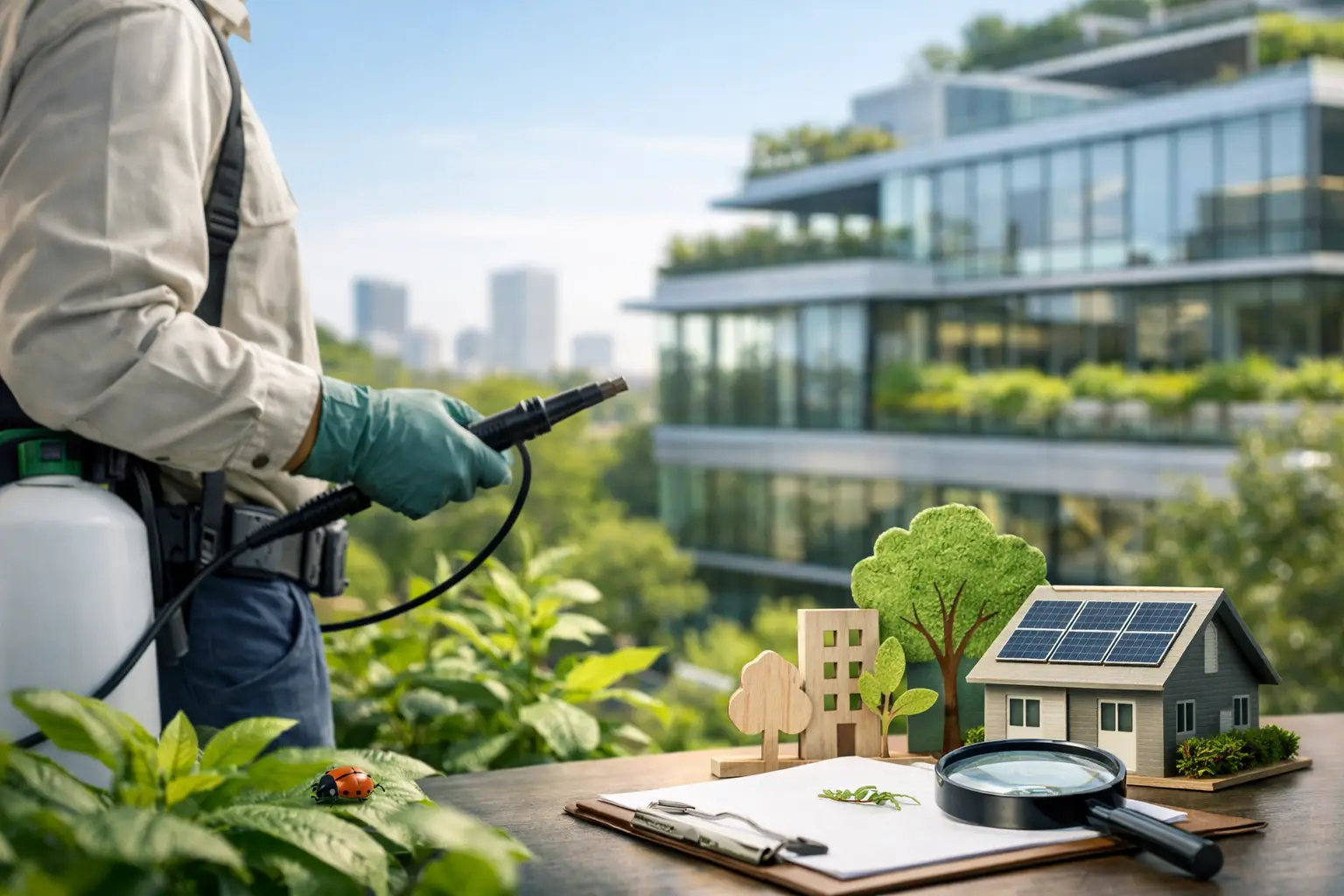
A pest sighting can become a building-performance problem fast. Rodents in a loading area, ants in a break room, or flies near waste storage can affect occupant confidence, sanitation, and maintenance costs. This LEED pest management guide explains how an Integrated Pest Management (IPM) program can support healthier, better-managed facilities without treating pesticides as the first or only answer.
For property managers, facility teams, and commercial operators, the goal is straightforward: prevent pest pressure, respond decisively when activity appears, and maintain the records needed to demonstrate control. LEED requirements vary by rating system, project type, and version, so teams should always confirm current project requirements before claiming a specific credit or prerequisite. The operating principles of IPM, however, remain consistent.
What LEED-Aligned Pest Management Means
LEED-aligned pest management is built around prevention, monitoring, and informed treatment decisions. It recognizes that pests do not appear randomly. Most infestations are driven by access to food, water, shelter, or entry points. A strong program identifies and corrects those conditions before relying on broad pesticide applications.
That approach protects more than a scorecard. It can reduce unnecessary chemical exposure, help preserve indoor environmental quality, and give facilities a clearer picture of recurring maintenance issues. It also creates a defensible process for handling pest concerns in occupied offices, schools, health care environments, multifamily properties, retail sites, and industrial facilities.
An IPM plan should not promise that no pest will ever enter the building. That standard is unrealistic, especially in Ohio, where seasonal changes can push ants, rodents, spiders, and occasional invaders indoors. Instead, the plan should define how the facility detects pest activity early, determines when action is needed, selects the least disruptive effective response, and verifies that the response worked.
Build the LEED Pest Management Plan Before a Problem Grows
The best time to create an IPM plan is before a tenant complaint, failed audit, or visible infestation forces a rushed decision. The plan should assign responsibility among the property manager, janitorial team, maintenance staff, food-service operators, occupants, and pest management provider. Without clear roles, simple corrections such as repairing a door sweep or removing overflowing waste can sit unresolved while pest pressure increases.
Start with a detailed site assessment
A qualified inspection should evaluate the building exterior, roofline, utility penetrations, loading areas, dumpsters, kitchens, break rooms, mechanical rooms, storage spaces, drains, landscaping, and adjacent conditions. Inspectors should look for evidence such as droppings, gnaw marks, insect trails, damaged goods, nesting materials, moisture, standing water, and gaps around pipes or doors.
The assessment should also identify conditions that make pest activity more likely. A floor drain that is rarely used may dry out and allow drain flies or odors to develop. A dumpster placed too close to an entrance may attract flies and rodents near the building. Cardboard stored directly on the floor can provide harborage for cockroaches and stored product pests. These are facility conditions, not simply pest control issues.
Set monitoring methods and action thresholds
Monitoring gives an IPM program its discipline. Depending on the facility and pest risk, this may include insect monitors, rodent stations, pheromone traps, fly-light monitoring, visual inspections, service reports, and occupant reporting procedures.
The program should establish action thresholds – the point at which pest evidence requires a response. A single ant near an exterior door may call for inspection and sanitation correction, while rodent droppings near stored food may require immediate containment and treatment. Thresholds depend on the pest, location, building use, and health or product-safety risk. A food processing area, for example, requires a more conservative response than a lightly used storage room.
Prioritize exclusion and sanitation
Physical prevention is the foundation of long-term pest control. Seal gaps around utility lines, repair torn screens, install door sweeps, correct damaged weatherstripping, and keep exterior doors closed when not actively in use. In commercial buildings, loading docks and receiving doors deserve special attention because they create frequent opportunities for pest entry.
Sanitation should be specific and accountable. Remove food debris from break rooms, use lined waste containers with secure lids, clean spills promptly, rotate stored materials, and keep inventory elevated off floors and away from walls. Outdoor waste areas should be cleaned regularly, and vegetation should be maintained so it does not touch the structure or conceal rodent activity.
Moisture control is equally important. Repair leaks, improve drainage, address condensation around pipes, and maintain floor drains. Cockroaches, drain flies, mosquitoes, and rodents all benefit from readily available water.
Use Treatments Carefully and Document Every Decision
Pesticides can be an appropriate part of an IPM program, but they should be targeted, justified, and applied by trained professionals. Treatment selection should consider the pest species, level of activity, site conditions, occupant sensitivity, and the risk of pest movement into other areas.
For example, rodent bait may be necessary in a secured exterior station when exclusion work is underway, but interior sanitation and entry-point repairs remain essential. A crack-and-crevice treatment for cockroaches may be appropriate after inspection and monitoring confirm activity, while routine broad-area spraying is rarely the most efficient first step.
A LEED-conscious plan should document why a treatment was selected, where it was applied, what product or method was used, and what corrective actions were recommended. Records commonly include service dates, monitoring results, pest observations, pesticide application details, safety information, maps of traps or stations, and follow-up findings.
Notification procedures matter as well. Occupants and facility contacts should know how pest concerns are reported, when treatments may occur, and what precautions are required. In sensitive environments, scheduling, access control, and communication can be just as important as the treatment itself.
Make Documentation Useful for Audits and Operations
Documentation should not be a stack of reports no one reads. It should help facility leaders spot patterns and close the loop on corrective work. If inspections repeatedly show rodent activity near one loading dock, the records should reveal whether the door, waste handling, landscaping, or delivery practices are contributing to the problem.
Keep a central IPM file that includes the written plan, inspection reports, trend logs, corrective-action requests, treatment records, safety documentation, and proof of completed repairs. For multi-site commercial operations, standardized reporting makes it easier to compare locations, identify repeat risks, and maintain consistent compliance practices.
Review the program at regular intervals. Seasonal changes, construction activity, tenant turnover, new food-service vendors, and landscaping changes can alter pest pressure. A plan that worked last year may need adjustment after a renovation opens new wall voids or a new receiving schedule increases door traffic.
Common Gaps That Weaken an IPM Program
Many facilities have pest service but not a complete pest management program. The difference shows up when recurring activity continues despite regular treatments. Common gaps include ignoring maintenance recommendations, failing to trend pest sightings, storing materials against walls, treating without confirming the pest species, and allowing staff to use unapproved aerosol products.
Another common mistake is assuming an environmentally responsible program means refusing all treatment. That can leave occupants and assets exposed to a growing infestation. Responsible IPM means using prevention first and choosing proven, targeted treatment when prevention alone is not enough.
Construction and renovation projects require added attention. Open wall sections, temporary doors, disturbed soil, unsealed penetrations, and debris can create new pest pathways. Include pest exclusion checkpoints in construction closeout procedures rather than waiting for the first post-project infestation.
Partner With a Provider That Supports Prevention
A capable commercial pest management provider should do more than place devices and return on a set schedule. Look for detailed inspections, clear reporting, trained technicians, practical exclusion recommendations, rapid response for urgent issues, and communication that helps your team act on findings.
Apex Pest Control builds customized IPM programs around the conditions of each facility, with the documentation, quality assurance, and responsive service commercial teams need. The right partner helps protect people, property, products, and your building’s operational standards – while giving managers a clear path from pest evidence to lasting correction.
A well-run LEED-aligned program is ultimately visible in what does not happen: fewer surprise sightings, fewer repeat complaints, fewer emergency treatments, and greater peace of mind for the people who use the building every day.