


Over 30 percent of American households report significant pest problems each year, putting property and health at risk. In Ohio, homeowners face unique challenges from seasonal pests and strict licensing requirements for exterminators. Understanding what licensed professionals actually do, and how eco-friendly techniques protect your family and environment, helps you choose solutions that work for your home’s specific needs.
Table of Contents
- What Licensed Exterminators Really Do
- Ohio Licensing Requirements and Regulations
- Eco-Friendly Tools and Methods Explained
- Risks of Unlicensed or Diy Pest Control
- Comparing Licensed Versus Unlicensed Services
Key Takeaways
| Point | Details |
|---|---|
| Licensed Exterminators Ensure Expertise | Professionals undergo rigorous training and licensing, offering comprehensive pest management solutions. |
| Importance of Eco-Friendly Practices | Modern pest control emphasizes sustainability, utilizing integrated pest management and biological controls. |
| Risks of Unlicensed Services | Hiring unlicensed operators poses potential health and legal risks due to unsafe practices and lack of accountability. |
| Verify Credentials Before Hiring | Always check for proper licensing and insurance to ensure high-quality service and protection against liabilities. |
What Licensed Exterminators Really Do
Licensed exterminators are highly trained professionals who specialize in identifying, managing, and eliminating pest infestations in residential and commercial settings. These experts go far beyond simply spraying chemicals – they conduct comprehensive pest management strategies that protect homes and businesses from unwanted intruders. According to the Bureau of Labor Statistics, pest control workers perform intricate tasks that require specialized knowledge and precise technical skills.
The core responsibilities of licensed exterminators include thorough property inspections, identifying specific pest species, and developing targeted treatment plans. They meticulously examine properties for signs of pest activity, assess potential entry points, and determine the most effective removal strategies. This process involves understanding pest behavior, lifecycle, and habitat preferences. Exterminators use a combination of physical methods like traps and strategic chemical applications to address infestations safely and effectively.
Professional pest control extends beyond immediate elimination. Licensed exterminators create comprehensive prevention strategies that address root causes of pest problems. They identify moisture sources, structural vulnerabilities, and environmental conditions that attract pests. By implementing integrated pest management techniques, these professionals help homeowners develop long-term solutions that minimize future infestations. Their expertise includes recommending home modifications, sealing potential entry points, and providing ongoing monitoring to ensure sustained pest control.
Pro tip: Always request documentation of an exterminator’s current licensing and pest management certifications before hiring to ensure you’re working with a qualified professional.
Ohio Licensing Requirements and Regulations
In Ohio, pest control professionals must navigate a comprehensive licensing system administered by the Ohio Department of Agriculture. This rigorous process ensures that only qualified individuals can apply pesticides commercially or privately, protecting public health and environmental safety. The state’s licensing framework is designed to maintain high standards of professional practice, requiring applicators to demonstrate extensive knowledge of pest management techniques, safety protocols, and regulatory compliance.
The licensing process involves multiple critical steps. Aspiring pest control professionals must pass specialized core and category examinations that test their understanding of pesticide application, safety procedures, and environmental regulations. Different license types exist for various professional roles, including commercial applicators, private applicators, and pesticide business operators. Each license requires specific qualifications and comes with unique responsibilities. Applicants must pay application fees, submit detailed documentation, and provide evidence of their technical competence in pest management strategies.

License renewal and continuing education are fundamental components of Ohio’s regulatory approach. Pest control professionals must complete ongoing training to maintain their credentials, ensuring they stay current with the latest safety techniques, technological advancements, and environmental protection standards. State regulations mandate annual renewal and recertification, which helps prevent outdated practices and promotes continuous professional development. This system guarantees that licensed exterminators remain knowledgeable about restricted-use pesticides, environmental impact, and emerging pest control methodologies.
Pro tip: When choosing a pest control professional, always verify their current Ohio Department of Agriculture license and ask about their most recent continuing education certifications to ensure the highest quality service.
Eco-Friendly Tools and Methods Explained
Modern pest control is undergoing a significant transformation, moving away from traditional chemical-heavy approaches toward more sustainable and environmentally conscious strategies. Integrated pest management techniques are at the forefront of this ecological revolution, focusing on comprehensive pest control that minimizes environmental impact while maximizing effectiveness. These innovative approaches prioritize prevention, natural interventions, and precise, targeted treatments that protect both human health and ecosystem balance.
The toolkit for eco-friendly pest management has expanded dramatically, incorporating sophisticated biological controls and plant-based solutions. Exterminators now utilize advanced methods like introducing natural predators, deploying beneficial insects that combat harmful pest populations, and using botanical pesticides derived from plants such as neem and citrus oils. Cutting-edge technologies like nano-pesticides enable more precise application, dramatically reducing chemical usage while maintaining high efficacy. Precision monitoring tools, including unmanned aerial vehicles and advanced information communication technologies, allow for real-time pest tracking and intervention with minimal environmental disruption.
Understanding the broader ecological context is crucial in modern pest control. Instead of viewing pests as simple targets for elimination, eco-friendly approaches consider entire ecosystem dynamics. This holistic strategy involves identifying root causes of pest infestations, addressing environmental conditions that attract unwanted species, and implementing long-term prevention strategies. Genome editing techniques are also emerging, developing crop and habitat resilience that naturally reduces pest proliferation. By combining scientific innovation with ecological awareness, professional exterminators can provide solutions that protect homes while maintaining environmental integrity.
Below is a summary of common eco-friendly pest control tools and their main advantages:
| Tool or Method | How It Works | Primary Benefit |
|---|---|---|
| Biological Controls | Introduces natural pest predators | Reduces need for chemical pesticides |
| Beneficial Insects | Releases insects that feed on pests | Targets pests without harming others |
| Botanical Pesticides | Uses plant-based formulas | Low toxicity to people and pets |
| Nano-Pesticides | Provides micro-scale, precise treatment | Minimizes environmental exposure |
| Precision Monitoring | Real-time tracking tech | Intervenes only when necessary |
Pro tip: Request a detailed eco-friendly pest management plan from your exterminator that outlines specific biological controls and minimal-chemical strategies tailored to your specific property.
Risks of Unlicensed or DIY Pest Control
DIY pest control might seem like a cost-effective solution, but it carries significant hidden dangers that can compromise your home’s safety and your family’s health. Unlicensed operators frequently use illegal household pesticide products that have not undergone proper safety evaluations, exposing residents to potentially severe health risks. These unregulated treatments can lead to acute poisoning, long-term health complications, and environmental contamination that far outweigh any perceived savings.
The complexity of pest management requires specialized knowledge that goes beyond simple chemical application. Untrained individuals often misuse pesticides, applying incorrect dosages or using inappropriate treatments that can harm beneficial insects, contaminate water sources, and create resistant pest populations. Professional exterminators understand species-specific behaviors, breeding cycles, and precise intervention strategies. They can identify the root causes of infestations, implement targeted solutions, and prevent future problems through comprehensive ecological assessments that DIY methods typically overlook.
Legal and financial risks compound the safety concerns of unauthorized pest control attempts. Improper pest management can void home insurance policies, create liability issues if chemical misuse damages property or causes health problems, and potentially result in significant fines for environmental violations. Licensed professionals carry insurance, follow strict regulatory guidelines, and provide documented treatment plans that protect homeowners from potential legal and financial repercussions. Their expertise ensures that pest control methods are not only effective but also compliant with local, state, and federal regulations.
Pro tip: Always request and verify a licensed exterminator’s credentials, insurance documentation, and specific treatment plan before allowing any pest control intervention on your property.
Comparing Licensed Versus Unlicensed Services
The difference between licensed and unlicensed pest control services extends far beyond a simple certification, representing a comprehensive approach to safety, expertise, and professional accountability. Pest control licensing requirements establish critical standards that protect homeowners from potential risks associated with untrained pest management professionals. Licensed technicians undergo rigorous training, comprehensive examinations, and mandatory continuing education that ensures they understand complex pest behaviors, environmental interactions, and sophisticated treatment methodologies.
Licensed services provide substantial advantages that unlicensed operators cannot match. Professional exterminators develop holistic treatment strategies that address root causes of infestations, not just surface-level symptoms. They possess advanced diagnostic skills to identify specific pest species, understand their lifecycles, and implement targeted interventions that minimize environmental impact. Unlicensed services typically rely on generic, potentially harmful approaches that may temporarily mask pest problems while creating long-term ecological disruptions. Licensed professionals use scientifically validated methods, specialized equipment, and strategic treatments that offer sustainable, comprehensive pest management solutions.
The financial and legal protections offered by licensed pest control services are equally significant. Licensed operators carry professional insurance, maintain detailed treatment records, and comply with state and federal regulations. This accountability means homeowners are protected against potential property damage, health risks, and unintended environmental consequences. Unlicensed services expose homeowners to substantial liability, potentially voiding insurance claims and creating legal complications if improper treatment methods cause harm. The additional cost of licensed services represents an investment in professional expertise, safety, and comprehensive pest management that far outweighs the short-term savings of unqualified alternatives.
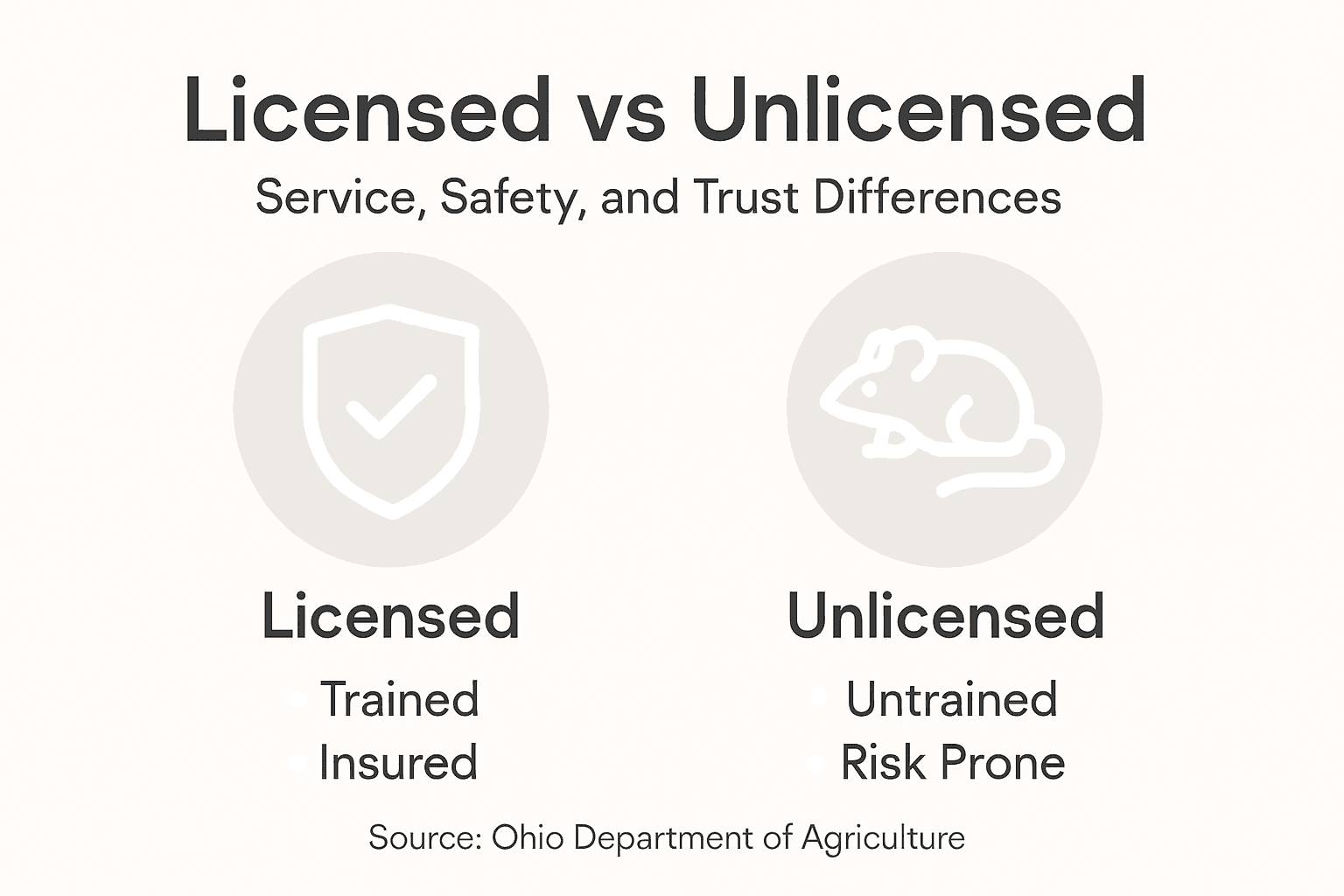
Here’s a quick comparison of licensed versus unlicensed pest control services and what each offers:
| Aspect | Licensed Exterminator | Unlicensed Operator |
|---|---|---|
| Training | Formal education, exams, certifications | No formal training or validation |
| Safety Compliance | Follows regulations and safety standards | May ignore safety or legal protocols |
| Insurance Coverage | Carries liability and property insurance | Rarely insured for damages or injury |
| Treatment Approach | Custom, science-based strategies | Generic, potentially risky measures |
| Legal Accountability | Legally responsible for treatments | No legal recourse or warranties |
| Ongoing Education | Must complete regular training updates | No requirement for continued learning |
Pro tip: Request a detailed service agreement and proof of licensing from any pest control professional before authorizing treatment, ensuring complete transparency and professional accountability.
Trust Licensed Experts to Safeguard Your Home and Health
The article underscores the critical importance of choosing licensed exterminators who combine professional training with safe and effective pest control methods. If you want to avoid the risks that come with unlicensed or DIY treatments such as health hazards, legal troubles, and ineffective solutions, Apex Pest Control offers peace of mind through certified and knowledgeable technicians. We specialize in targeted, eco-friendly pest management that protects your family, pets, and property while addressing root causes of infestations using advanced strategies mentioned in the article.
Ready to experience expert service tailored to your specific pest challenges? Explore our comprehensive pest control approach in the Uncategorized Archives – Apex Pest Control and take control today. Don’t settle for risky shortcuts when licensed, insured, and committed professionals are just a click away. Contact us now for a personalized quote at https://apexpestcontrol.net/free-quote and safeguard your home the right way.
Frequently Asked Questions
What are the benefits of hiring a licensed exterminator?
Licensed exterminators are trained professionals who understand pest behavior, chemical safety, and effective pest management techniques. They provide a comprehensive approach to pest control, ensuring safety for your family and the environment while addressing both immediate and long-term pest issues.
How do licensed exterminators develop treatment plans?
Licensed exterminators conduct thorough inspections of properties to identify specific pest species and their entry points. Based on this information, they create targeted treatment plans that include safe chemical use and eco-friendly methods to eliminate the infestation and prevent future problems.
What are the risks of using unlicensed pest control services?
Using unlicensed pest control services can lead to severe safety risks, such as improper pesticide application, exposure to harmful chemicals, and potential legal and financial repercussions if damage occurs. Licensed professionals follow strict safety protocols and regulations, protecting both your home and health.
How can I verify an exterminator’s licensing and qualifications?
You can verify an exterminator’s licensing by requesting their credentials directly and checking their licensing status with the appropriate state department or regulatory agency. Additionally, inquire about their continuing education and certifications to ensure they are current on pest management practices.