



TL;DR:
- Professional pest control in Mentor targets hidden infestations and addresses entry points effectively.
- Common signs include droppings, bites, trails, mud tubes, and nests indicating specific pests.
- Ongoing, integrated approaches with follow-ups ensure long-term pest management success.
Spotting one mouse or a few ants in your kitchen might feel like a minor nuisance, but in Mentor, Ohio, that small sign can be the tip of a much larger problem hiding behind your walls, under your floors, or inside your insulation. Pests in this part of Lake County thrive year-round, shifting strategies with each season and exploiting any weakness in your home or building’s structure. Whether you own a single-family home in a quiet Mentor neighborhood or manage a commercial property along the Route 2 corridor, knowing how to respond fast and smart can mean the difference between a quick fix and a costly, drawn-out infestation.
Table of Contents
- Why professional pest control matters in Mentor, Ohio
- Common pest threats in Mentor and how to identify them
- How to choose a trusted Mentor pest control provider
- What to expect from a Mentor pest control service: workflow and outcomes
- A fresh perspective: What really makes Mentor pest control effective
- Take the next step: Connect with Mentor pest control experts
- Frequently asked questions
Key Takeaways
| Point | Details |
|---|---|
| Professional expertise matters | Experts in Mentor, Ohio, quickly identify and solve pest issues that DIY methods often miss. |
| Early detection saves money | Spotting trouble signs early prevents costly infestations and business disruption. |
| Choose reliable providers | Select pest control companies based on licenses, reviews, and local experience. |
| Understand the workflow | Knowing the pest control process helps you prepare and ensures better results. |
| Take action promptly | Connecting with Mentor’s experts means your pest problems are solved efficiently. |
Why professional pest control matters in Mentor, Ohio
Mentor sits right along Lake Erie, and that geography has real consequences for pest activity. The moisture from the lake, combined with Ohio’s cold winters and warm, humid summers, creates exactly the conditions that rodents, insects, and stinging pests love. They push into buildings when temperatures drop, breed aggressively in summer heat, and leave behind damage that compounds over time.
Here’s what local homeowners and business owners regularly face:
- Rodents chewing through electrical wiring, insulation, and structural wood
- Bed bugs spreading between units in rental properties or hotel rooms
- Ants infiltrating kitchens, pantries, and food storage areas
- Termites silently destroying the wood framing of homes and commercial buildings
- Stinging insects nesting in eaves, attics, and landscaping near high-traffic areas
- Cockroaches contaminating food prep surfaces and triggering asthma and allergies
DIY sprays and traps might knock out what you can see, but they almost never reach the colony, nest, or infestation behind the scenes. A tube of ant killer at the hardware store treats worker ants, not the queen. A snap trap catches one mouse, not the family of ten living in your attic.
“Professional exterminators don’t just treat what’s visible. They investigate the source, the entry points, and the conditions that attracted pests in the first place.”
Professional pest control in Mentor gives you access to licensed technicians who understand local pest behavior, seasonal patterns, and the specific layouts of Ohio homes and commercial buildings. Apex Pest Control has been providing Mentor pest solutions since 1969, building deep familiarity with exactly how pests behave in this region.
Pro Tip: Schedule a professional inspection at least once a year, even if you haven’t spotted any pests. Minor activity like faint scratching sounds, small droppings, or tiny holes in drywall often signals an infestation that’s already growing.
Common pest threats in Mentor and how to identify them
Understanding what you’re dealing with is the first step toward solving it. Each pest leaves behind a specific signature, and catching those early clues saves you money, time, and stress.
Here are the most important warning signs by pest type:
- Rodents (mice and rats): Look for small dark droppings near baseboards, in cabinets, or along walls. Gnaw marks on wood, plastic, and food packaging are another giveaway. At night, you may hear scratching or scurrying sounds inside walls.
- Bed bugs: These tiny, reddish-brown insects hide in mattress seams, headboards, and bed frames. The most common early sign is small red, itchy bites arranged in a line or cluster on your skin. You may also spot tiny rust-colored spots on sheets or mattress fabric.
- Ants: Trails of ants moving in a line, especially near kitchens or windows, point to an active colony. Look for small piles of debris or sawdust near wood surfaces, which can indicate carpenter ants.
- Termites: Mud tubes running up your foundation walls are one of the clearest signs of subterranean termites. Tap wooden surfaces with a screwdriver. A hollow sound means termites may have eaten through from the inside. Blistered or discolored paint on wood surfaces is another red flag.
- Stinging insects: Visible nests under eaves, in bushes, or around utility boxes, combined with unusually high activity near your roofline, suggest a colony has moved in.
| Pest | Key warning signs | Risk level |
|---|---|---|
| Rodents | Droppings, gnaw marks, scratching sounds | High (disease, fire hazard) |
| Bed bugs | Itchy bites, rust spots on bedding | High (spread, psychological stress) |
| Ants | Trails, sawdust near wood | Medium to high (structure, food contamination) |
| Termites | Mud tubes, hollow wood, blistered paint | Severe (structural damage) |
| Stinging insects | Visible nests, heavy buzzing near roofline | Medium to high (allergic reactions) |
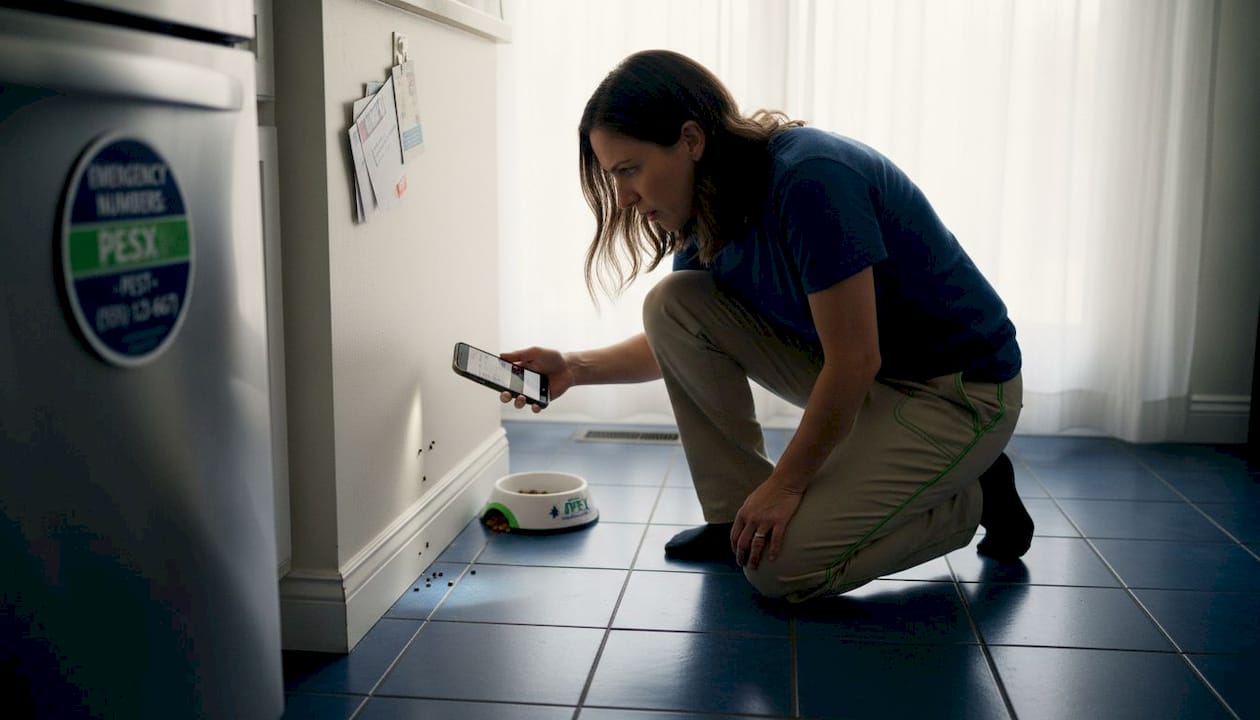
Acting on these early signs is one of the smartest decisions you can make as a property owner. The Mentor pest control expertise needed to identify and eliminate each of these threats is very different, which is why a specialist beats a general approach every time. For rodent problems specifically, professional rodent removal services address both the animals themselves and the entry points that let them in.
Pro Tip: If you see one bed bug, assume there are hundreds more hiding nearby. Bed bugs multiply fast and spread easily between rooms and units. Call a professional immediately rather than waiting to confirm a larger problem.
How to choose a trusted Mentor pest control provider
Not every pest control company offers the same quality, responsiveness, or local knowledge. Choosing the wrong provider can mean wasted money, return infestations, and unnecessary exposure to harsh chemicals. Here’s what to look for before you hire anyone.
| Selection criteria | Why it matters |
|---|---|
| State licensing and certification | Required by Ohio law; confirms technical training |
| Years of local experience | Familiarity with Mentor-specific pests and building types |
| Verified customer reviews | Reflects real outcomes and service quality |
| Emergency and same-day response | Critical for fast-moving infestations |
| Eco-friendly treatment options | Protects your family, pets, and the environment |
| Clear pricing and guarantees | Prevents surprises and shows service confidence |
Before you commit to any provider, ask these questions directly:
- Are your technicians licensed and insured in Ohio?
- Do you offer a written guarantee or warranty on your services?
- What treatment methods do you use, and are they safe for children and pets?
- How do you handle follow-up visits if pests return?
- Can you provide local references or recent reviews from Mentor-area clients?
- Do you offer preventative maintenance plans, not just one-time treatments?
Taking the time to compare pest control options before you sign anything is worth every minute. A company that’s been serving Mentor and surrounding Lake County communities for decades will know things about local pest behavior that a newer or out-of-area provider simply won’t. You can also explore local pest control deals to find competitive pricing without sacrificing quality.
What to expect from a Mentor pest control service: workflow and outcomes
Many homeowners and business owners hesitate to call a professional because they don’t know what the process looks like. That uncertainty is understandable, but the actual workflow is straightforward and designed to minimize disruption to your daily life.
Here’s a typical step-by-step breakdown of what happens from your first call to a pest-free result:
- Initial consultation: You describe your concerns and the technician gathers background information about your property, recent pest activity, and any previous treatments.
- On-site inspection: A licensed technician visits your property to examine the affected areas, identify the pest species, locate entry points, and assess the severity of the infestation.
- Diagnosis and treatment plan: Based on the inspection, the technician recommends a specific treatment approach, which may include chemical treatments, mechanical traps, exclusion work (sealing entry points), or a combination of methods.
- Treatment execution: The technician carries out the agreed plan, applying treatments to the right areas with the right products. This step may take anywhere from one hour to a full day, depending on the scope of the problem.
- Follow-up visit: Most reputable providers schedule at least one follow-up to verify that the treatment worked, check for any remaining activity, and address any new findings.
- Ongoing monitoring plan: For long-term protection, many Mentor providers offer quarterly or seasonal maintenance visits to stay ahead of new infestations before they take hold.
Studies show that properties with consistent professional monitoring experience significantly fewer repeat infestations compared to those relying on one-time treatments alone. Customer satisfaction rates for professional pest control services that include follow-up visits are consistently higher than those for single-visit treatments, often exceeding 90% across residential and commercial clients.
Pro Tip: Before your technician arrives, clear access to areas like attics, crawl spaces, under-sink cabinets, and basements. Easier access means a faster, more thorough inspection and treatment, which directly affects how quickly you get results.
A fresh perspective: What really makes Mentor pest control effective
Here’s something that most articles won’t tell you: the treatment itself is rarely the hardest part of eliminating a pest problem. The hard part is everything around it.
We’ve seen it countless times over more than 50 years of serving Ohio. A homeowner gets a treatment, the immediate problem improves, and they assume the issue is resolved. Then six months later, the rodents are back. Or the ants return in spring. Why? Because pest control isn’t a single event. It’s an ongoing relationship between a property and its environment.
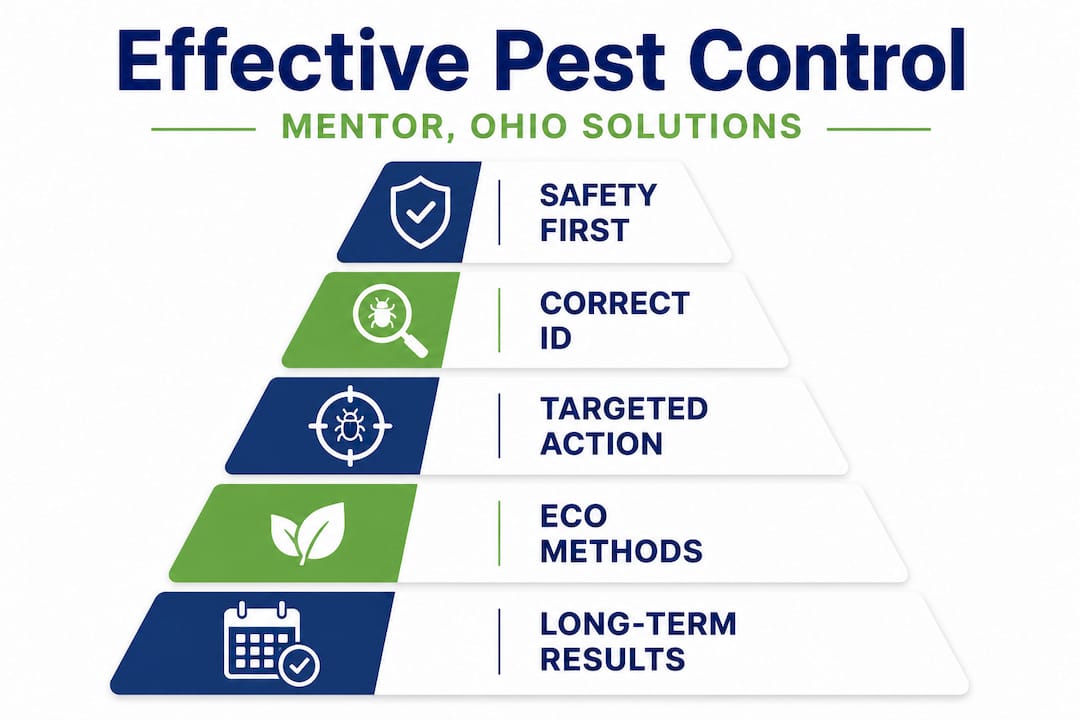
The real keys to lasting results are:
- Following up without exception. Skipping even one scheduled follow-up gives surviving pests the window they need to re-establish.
- Addressing conditions, not just symptoms. Treating ants without sealing food sources and entry points is like bailing water without plugging the hole.
- Using layered approaches. The most effective results come from combining chemical treatments with mechanical barriers, habitat modification, and ongoing monitoring. This is what’s known as integrated pest management (IPM), and it consistently outperforms single-method treatments.
- Communicating openly with your provider. If you see new activity between scheduled visits, report it immediately. Early communication prevents small rebounds from becoming full re-infestations.
- Thinking seasonally. Pests in Mentor shift behavior with the seasons. A strategy that works in August needs to adapt for November when rodents start seeking warmth indoors.
“The pest control providers who get the best long-term results aren’t necessarily using the strongest chemicals. They’re the ones who show up consistently, ask the right questions, and treat the property as a whole system.”
That’s why we believe deeply in eco-friendly pest solutions that target the actual problem without compromising your family’s safety or the broader environment. Sustainable, targeted methods simply work better over time than aggressive treatments that ignore the root cause.
Take the next step: Connect with Mentor pest control experts
Ready to end your pest problems once and for all? Whether you’re dealing with rodents in your basement, bed bugs in a rental unit, or an ant trail that keeps reappearing no matter what you try, the right professional help is available right now. Apex Pest Control has served Mentor and Lake County since 1969, and that depth of experience shows in every inspection and treatment we deliver.
You can request a free pest control quote today with no obligation and no guesswork. If rodents are your main concern, explore our dedicated rodent extermination services to see exactly how we locate, eliminate, and lock out mice and rats for good. Dealing with bed bugs? Our bed bug removal guide walks you through what to expect from a professional treatment and how to prepare your home for the fastest, most effective results. The first step is always the hardest, but once you make it, relief is closer than you think.
Frequently asked questions
How quickly can Mentor pest control respond to emergencies?
Most professional providers, including Apex Pest Control, offer same-day or next-day service for urgent pest situations, so you won’t be left waiting when the problem is serious.
Are pest control treatments safe for pets and children?
Licensed Mentor pest professionals use methods specifically approved for use in homes with pets and children, and many providers offer eco-friendly options that are effective without harsh chemical exposure.
What’s the average cost for pest control in Mentor, Ohio?
Standard extermination services in Mentor typically range from $100 to $300, though the final cost depends on the pest type, severity of the infestation, and the size of your property.
How often should I schedule pest inspections?
Most residential properties benefit from an annual inspection, but businesses, rental properties, and homes in high-risk areas should consider quarterly checks to catch issues before they escalate.
What’s the difference between extermination and integrated pest management?
Extermination focuses on eliminating pests immediately using targeted treatments, while integrated pest management (IPM) combines prevention, habitat modification, ongoing monitoring, and targeted intervention for lasting, whole-property protection.