



Every homeowner in Oakwood, Bedford Heights, or Solon knows the quiet anxiety of finding rodent droppings beneath a kitchen sink or inside the pantry. Rodent infestations threaten not only comfort but also family health, as these pests can spread disease through their droppings and urine. This guide offers practical steps for identifying key signs, choosing eco-friendly rodent removal, and creating lasting protection—so you can restore a safe and healthy environment without risking your pets or children.
Table of Contents
- Step 1: Assess Signs of Mice and Rat Infestation
- Step 2: Implement Eco-Friendly Rodent Removal Solutions
- Step 3: Seal Entry Points and Prevent Future Infestations
- Step 4: Verify Results and Maintain Ongoing Protection
Quick Summary
| Essential Insight | Explanation |
|---|---|
| 1. Identify Signs of Infestation | Look for droppings, gnaw marks, and nesting materials to detect active rodent problems in your home. |
| 2. Implement Eco-Friendly Solutions | Use traps instead of poison for safe and effective rodent removal, protecting your family and pets. |
| 3. Seal Entry Points Thoroughly | Block gaps and openings larger than a quarter-inch to prevent rodents from accessing your home. |
| 4. Regularly Monitor for Activity | Continually check for signs of rodents to catch potential reinfestations early and address them. |
| 5. Maintain Ongoing Sanitation | Keep food sealed, eliminate clutter, and inspect sealed areas to sustain a rodent-free environment year-round. |
Step 1: Assess Signs of Mice and Rat Infestation
Rodent infestations rarely announce themselves loudly. Instead, they leave behind quiet clues that tell a story of unwanted residents in your Oakwood, Bedford Heights, or Solon home. Your job is to become a detective, learning where to look and what signs matter.
Start by understanding what an active infestation looks like. The strongest indicator is finding droppings in areas where food is stored, prepared, or eaten. Mouse droppings are tiny (about the size of a grain of rice), while rat droppings are larger and more oval-shaped. Rodent droppings and gnaw marks are early warning signs that require immediate attention and confirmation through cleaning and reinspection.
Beyond droppings, watch for these telltale signs:
- Gnaw marks on food packaging, wood trim, or electrical wires
- Nesting materials like shredded paper, fabric, or insulation in corners or wall cavities
- Holes chewed through walls, floors, or door frames (dime-sized for mice, quarter-sized for rats)
- Stale, musky odors in enclosed spaces or behind appliances
- Grease marks along baseboards where rodent bodies rub against surfaces
Timing matters when you’re inspecting. Rodents are most active at night, so you might hear scratching or scurrying sounds in walls or attics after dark. Make note of when you hear activity, as this confirms active rodents rather than evidence from months past.
Focus your inspection on high-risk zones in your home. Check under kitchen sinks, inside pantries, around the basement, behind the stove, and along exterior walls where gaps exist. Don’t forget about attics and crawl spaces. Rodents love these undisturbed areas for nesting.
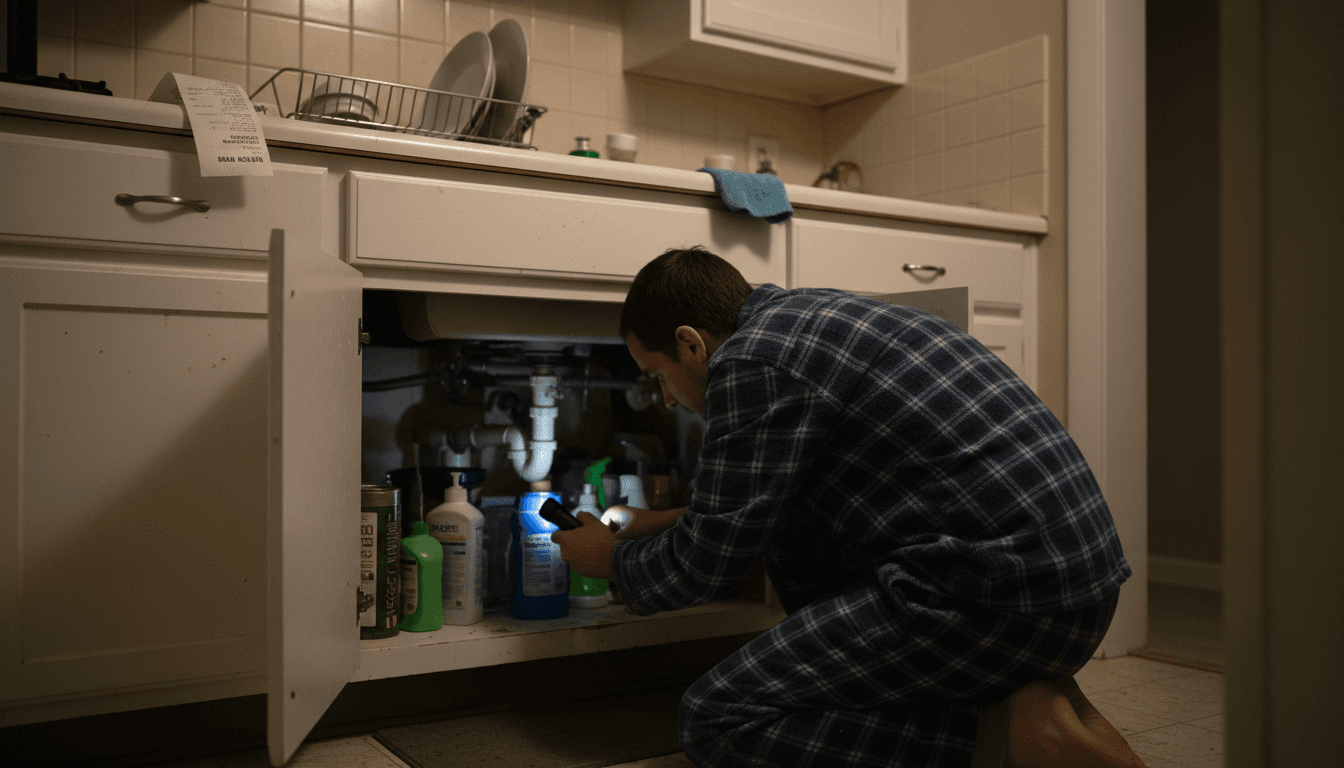
One critical step many homeowners miss: look for multiple indicators in the same location. Finding one dropping could be old evidence. Finding droppings plus gnaw marks plus nesting material in the same area strongly suggests an active infestation requiring action now.
Here’s a side-by-side comparison of the key differences between mice and rat infestations:
| Characteristic | Mouse Infestation | Rat Infestation |
|---|---|---|
| Dropping size and shape | Tiny, rice-sized, pointed | Larger, oval-shaped |
| Entry hole diameter | Dime-sized openings | Quarter-sized openings |
| Potential odor | Mild, musky scent | Strong, stale smell |
| Typical nesting zones | Wall cavities, attics | Basements, crawl spaces |
| Nocturnal activity | Mainly after sunset | Evening or throughout night |
This comparison helps clarify what to look for when investigating rodent activity.
Your inspection reveals the scope of the problem, but proper rodent control steps should follow your assessment to address what you’ve found.
Active rodent infestations leave multiple signs in the same locations. Finding one indicator is suspicious; finding three confirms you have a real problem.
Pro tip: Use a flashlight and wear gloves during your inspection. Keep a notepad handy to document where you find droppings, gnaw marks, and holes, then photograph these areas. This record helps professionals understand the infestation’s severity and location when you call for help.
Step 2: Implement Eco-Friendly Rodent Removal Solutions
Once you’ve confirmed an active rodent problem, your next move matters for your family’s safety and the environment. Eco-friendly removal methods protect your pets, children, and local wildlife while still eliminating rodents effectively from your Oakwood, Bedford Heights, or Solon home.
Start with trapping as your primary removal method. Snap traps and live traps are far safer than poison baits, which can harm pets and wildlife that eat poisoned rodents. Place traps along walls where you’ve spotted activity, baiting them with peanut butter, chocolate, or nesting material. Check traps daily and dispose of rodents properly, wearing gloves and a mask.
The most sustainable approach combines multiple techniques. Non-chemical control methods like sanitation, exclusion, and trapping work together to solve infestations without toxins. Here’s what to prioritize:
- Remove food sources by sealing pantry items in airtight containers and cleaning up crumbs immediately
- Eliminate water access by fixing leaky pipes and drying sinks before bed
- Reduce clutter in basements, attics, and storage areas where rodents nest
- Seal entry points with steel wool and caulk (more on this next)
Exclusion is your long-term defense. Rodent-proof construction and sealing entry points using metal and concrete prevents future infestations. Inspect your home’s exterior for gaps larger than a quarter-inch, then seal them permanently. Focus on areas around pipes, electrical lines, foundation cracks, and vents.
Timing your removal efforts matters. Start trapping immediately after confirming activity, but don’t stop there. Rodents breed quickly, so you may need to trap for two to three weeks to catch the entire population.
The combination of trapping, sanitation, and exclusion addresses the infestation now while preventing new rodents from entering your home later. This integrated approach is far more effective than poison alone.
Summarizing eco-friendly rodent removal methods and their impact:
| Method | Effectiveness | Safety for Pets & Kids | Environmental Impact |
|---|---|---|---|
| Snap traps | High with proper use | Very safe when placed correctly | No toxins left behind |
| Live traps | Moderate, humane | Excellent, no injury risk | No environmental harm |
| Poison baits | Can be effective | Dangerous—risk of poisoning | Harmful, affects wildlife |
| Exclusion (sealing) | Prevents reinfestation | Very safe | Sustainable solution |
Understanding these methods helps you select the safest and most effective approach for your home.
Eco-friendly rodent removal means using traps and exclusion instead of poison, protecting your family and wildlife while solving the problem permanently.
Pro tip: Set traps perpendicular to walls where rodents travel, not parallel. Rodents naturally run along edges, so a trap blocking their path works better than one they can avoid. Check traps every morning and replace bait if it dries out or gets contaminated.
Step 3: Seal Entry Points and Prevent Future Infestations
Sealing entry points is your permanent defense against rodent reinfestation. Once you’ve removed the current population, blocking their access routes ensures they cannot return. This step transforms your home into a rodent-proof fortress.
Start by identifying where rodents enter your home. Mice can squeeze through gaps as small as a quarter-inch, while rats need slightly larger openings. Walk around your home’s exterior and inspect foundation cracks, gaps around pipes, holes near electrical lines, and spaces under doors and windows.
Small holes require a two-step approach. Filling small holes with steel wool sealed with caulk creates a barrier rodents cannot chew through. Rodents dislike steel wool’s texture and cannot gnaw past caulk, making this combination highly effective for quarter-inch gaps.
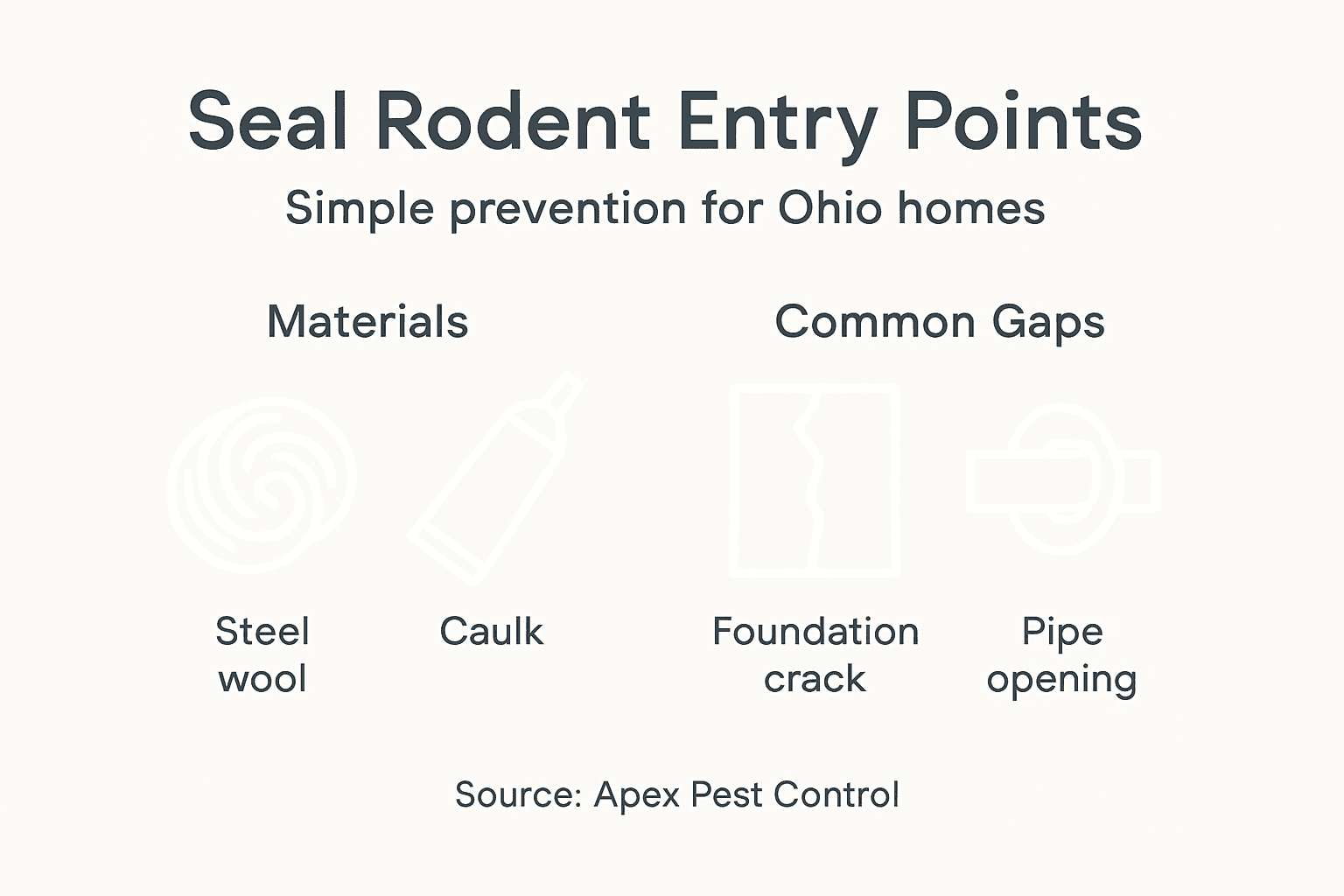
Larger openings demand sturdier materials. Use hardware cloth or metal flashing for holes bigger than a half-inch. These materials resist rodent teeth far better than wood or plastic. Seal the edges with caulk to eliminate any remaining gaps.
Priority areas to seal include:
- Foundation cracks in concrete or brick
- Vents for dryers, bathrooms, and attics (use vent covers)
- Gaps around pipes entering your home
- Spaces under doors (install door sweeps)
- Holes in exterior walls from old electrical lines or cable entry
- Openings in eaves where roof meets walls
Durable physical barriers around common entry points reduce your reliance on traps and chemical treatments long-term. Inspect your work seasonally, as weather and settling can create new gaps.
The goal is creating a continuous seal that rodents simply cannot penetrate. Once sealed, rodents cannot access your home no matter how attractive the interior becomes.
Sealing entry points prevents future infestations permanently, eliminating the need for traps and poison repeatedly throughout the year.
Pro tip: Install your sealing materials on a dry day when temperatures are moderate. Caulk and sealant work better in stable conditions, and you’ll have better visibility to identify all gaps. Check your work from both inside and outside to ensure complete coverage.
Step 4: Verify Results and Maintain Ongoing Protection
Removing rodents is only half the battle. Verifying your success and maintaining protection prevents the frustrating cycle of reinfestation that catches many Oakwood, Bedford Heights, and Solon homeowners off guard. This final step ensures your hard work lasts.
Begin by monitoring for signs of continuing activity. Ongoing monitoring for rodent signs like new droppings and gnaw marks helps you catch any new problems early before they become full infestations. Inspect the same areas where you found evidence initially. If you see no new droppings after two weeks, trapping has likely succeeded.
Continuous inspection keeps you ahead of potential problems. Check your sealed entry points seasonally, especially after weather changes or heavy rain. Look for new gaps or damage from settling. Test door sweeps and vent covers to ensure they still fit snugly.
Maintenance is where most homeowners stumble. Prevention requires ongoing attention to these areas:
- Food storage in airtight containers year-round
- Trash management with sealed cans and prompt disposal
- Water source elimination by fixing leaks immediately
- Clutter reduction in storage areas, attics, and basements
- Exterior maintenance including removing dead branches near your roof
Sustained efforts in sanitation and maintenance are essential to keeping your home rodent-free. Think of it as seasonal housekeeping rather than a one-time project. Each season brings different risks, so adjust your focus accordingly.
If you discover new droppings or gnaw marks after two weeks of being clear, contact a pest control professional immediately. Reinfestation suggests either a new entry point you missed or rodents finding their way in from outdoors again.
Verification is not a one-time check but an ongoing practice that catches problems early when they’re easiest to solve.
Pro tip: Keep a simple checklist of your sealed entry points and inspection dates. Review it monthly during winter months when rodents seek shelter indoors most aggressively. Taking photos of sealed areas creates a reference for checking condition over time.
Protect Your Ohio Home from Rodents with Trusted Experts
Discovering signs of mice and rat infestations in your Oakwood, Bedford Heights, or Solon home can be overwhelming. From identifying droppings and gnaw marks to sealing entry points and ensuring ongoing protection, the challenge is clear: you need a safe and effective solution that eliminates pests and prevents their return. You want peace of mind knowing your family and pets are protected from harmful toxins while keeping your home rodent-free.
At Apex Pest Control, we specialize in eco-friendly rodent removal tailored for Northeast Ohio residences. Our licensed technicians use proven methods like careful trapping and thorough exclusion to address active infestations and seal your home against future threats. Don’t wait until rodent activity worsens or compromises your health. Explore our Uncategorized Archives – Apex Pest Control to learn more about sustainable pest solutions and take the first step by requesting a free quote today. Protect your home now with reliable, local expertise you can trust.
Frequently Asked Questions
How can I identify signs of a mice or rat infestation in my home?
To identify a mice or rat infestation, look for droppings, gnaw marks, and nesting materials. Check areas like the kitchen, basement, and attic for these signs, focusing on dark corners and along walls.
What are effective eco-friendly methods for removing rodents?
Use trapping methods, such as snap traps and live traps, to safely remove rodents without harming pets or the environment. Place traps in areas where you notice rodent activity and check them daily to ensure effectiveness.
How can I seal entry points to prevent rodents from entering my home?
Seal entry points by filling gaps larger than a quarter-inch with steel wool and caulk, and use hardware cloth for larger openings. Regularly check for new gaps, especially after severe weather, to maintain rodent-proof defenses.
What should I do after eliminating rodents to ensure they don’t return?
After removing rodents, monitor for signs of re-infestation by checking for droppings and gnaw marks regularly. Continue to manage food sources, eliminate water access, and maintain cleanliness to prevent new infestations.
How often should I inspect my home for potential rodent entry points?
Inspect your home for entry points at least once every season, focusing on areas like the foundation, vents, and around pipes. By doing this regularly, you can catch new gaps early and take appropriate action.