



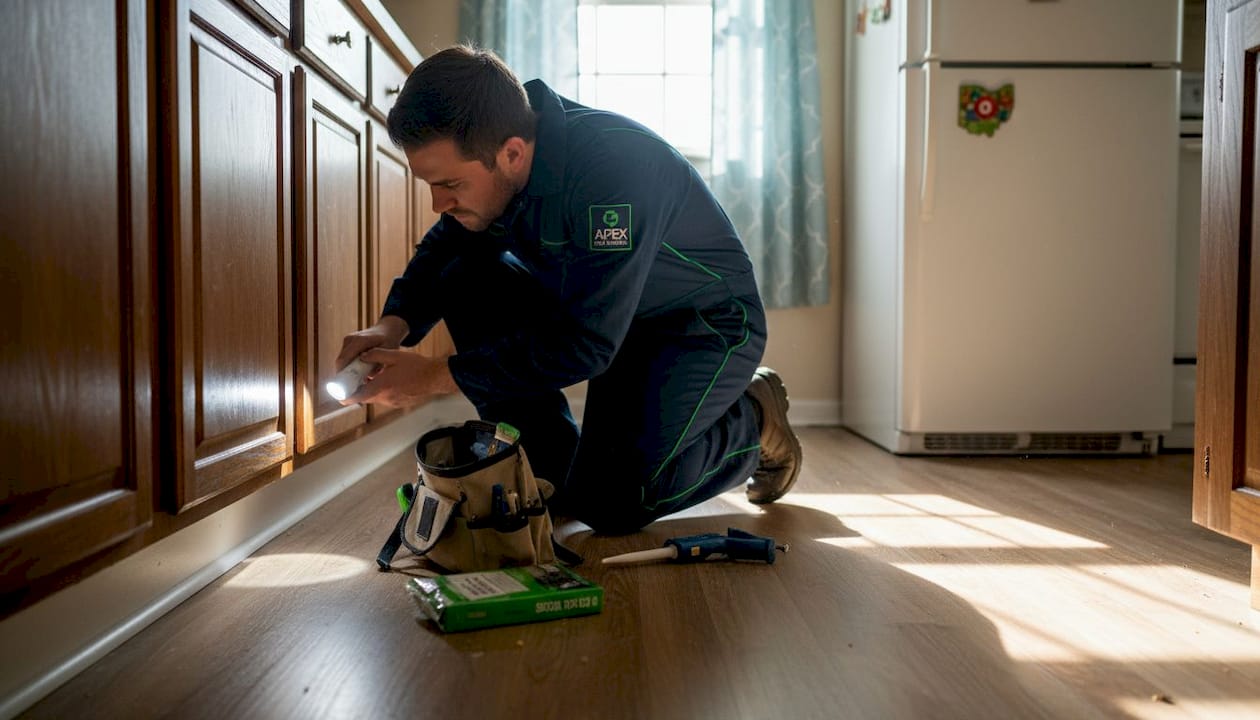
TL;DR:
- DIY mouse control often fails because it overlooks sealing entry points and removing nesting sites. Professional plans incorporate comprehensive inspection, exclusion, trapping, sanitation, and scheduled follow-ups for lasting results. Effective long-term control requires sealing all possible entry points smaller than a quarter-inch and implementing an integrated pest management approach.
Grabbing a few snap traps at the hardware store feels like the obvious first move when you spot a mouse in your kitchen. Most Ohio homeowners and business operators do exactly that, then wonder why they’re still seeing droppings three weeks later. The truth is that mouse infestations almost never respond to a single tactic. Real, lasting control requires a layered approach that covers inspection, sealing, trapping, sanitation, and scheduled follow-ups. This article walks you through each step so you understand what actually works and why.
Table of Contents
- Why DIY mouse control often falls short
- What a professional mouse control plan includes
- Exclusion: The key to permanent mouse removal
- Trapping, mechanical devices, and safety essentials
- Sanitation and follow-up: The long-term solution
- Why most mouse control advice misses the mark in Ohio
- Connect with proven Ohio mouse control providers
- Frequently asked questions
Key Takeaways
| Point | Details |
|---|---|
| DIY alone rarely works | Traps and poisons by themselves provide only short-term relief and do not prevent re-infestation. |
| Exclusion is essential | Sealing gaps and entry points is the most permanent way to keep mice out of Ohio buildings. |
| Integrated plans are best | Professionals combine inspection, trapping, exclusion, and sanitation for lasting results. |
| Safety matters | Use traps over poison indoors and rely on professionals to avoid risks to people and pets. |
| Regular follow-up prevents return | Scheduled inspections and repeat exclusion are critical for true, lasting mouse control. |
Why DIY mouse control often falls short
The appeal of a DIY fix is completely understandable. Traps are cheap, poison bait blocks are easy to find, and watching a few YouTube tutorials makes the whole thing feel manageable. The problem is that visible activity represents only a fraction of the actual population. Mice breed rapidly, with females capable of producing five to ten litters per year, so reducing the number you see rarely keeps pace with reproduction.
DIY measures like traps and poison can reduce visible activity but typically do not eliminate an infestation on their own without exclusion and removal of nesting sites and entry points. There is no simple, easy fix. Effective control demands combining population reduction with preventive measures like sanitation and exclusion. That means if you skip even one of those layers, the mice that survive will repopulate the area within weeks.
Common DIY pitfalls include:
- Placing traps in the middle of open floor space instead of along walls where mice actually travel
- Using poison bait blocks in areas accessible to household pets or small children
- Skipping nest removal, which leaves behind scent trails that attract new mice
- Never identifying or sealing the original entry points
- Stopping all control efforts the moment visible activity drops
“Most people declare victory too early. A temporary drop in mouse sightings feels like success, but unless every entry point is sealed and every nest is removed, the infestation is simply paused—not solved.”
Following safe rodent control steps before and after any DIY attempt can reduce the risks significantly, but there are hard limits to what a homeowner can realistically accomplish without professional tools and training.
What a professional mouse control plan includes
Professional pest control providers operating in Ohio do not rely on a single product or technique. They use an integrated pest management approach, often abbreviated as IPM, which is a structured process that treats the property as a whole system rather than just targeting individual mice.
Here is how a professional plan typically unfolds:
- Initial property assessment: A trained technician inspects interior and exterior spaces to map out where mice are active, where they are nesting, and how they are getting inside.
- Species and extent identification: Knowing whether you are dealing with house mice, deer mice, or a mixed population affects product selection and strategy.
- Mechanical trapping: Snap traps, glue boards, and multi-catch devices are placed in high-traffic zones.
- Tamper-resistant bait stations: When bait is appropriate, it is housed in locked stations that prevent access by children and non-target animals.
- Exclusion: Every gap, crack, utility penetration, and vent that could serve as an entry point is sealed with appropriate materials.
- Sanitation guidance: The technician identifies food sources, clutter, and moisture issues that are sustaining the population.
- Follow-up monitoring: Scheduled return visits confirm that the population has been eliminated and that no new activity has started.
The DHS rodent service process outlines exactly this kind of IPM program, demonstrating that the most effective services address every layer of the problem rather than relying on one product.
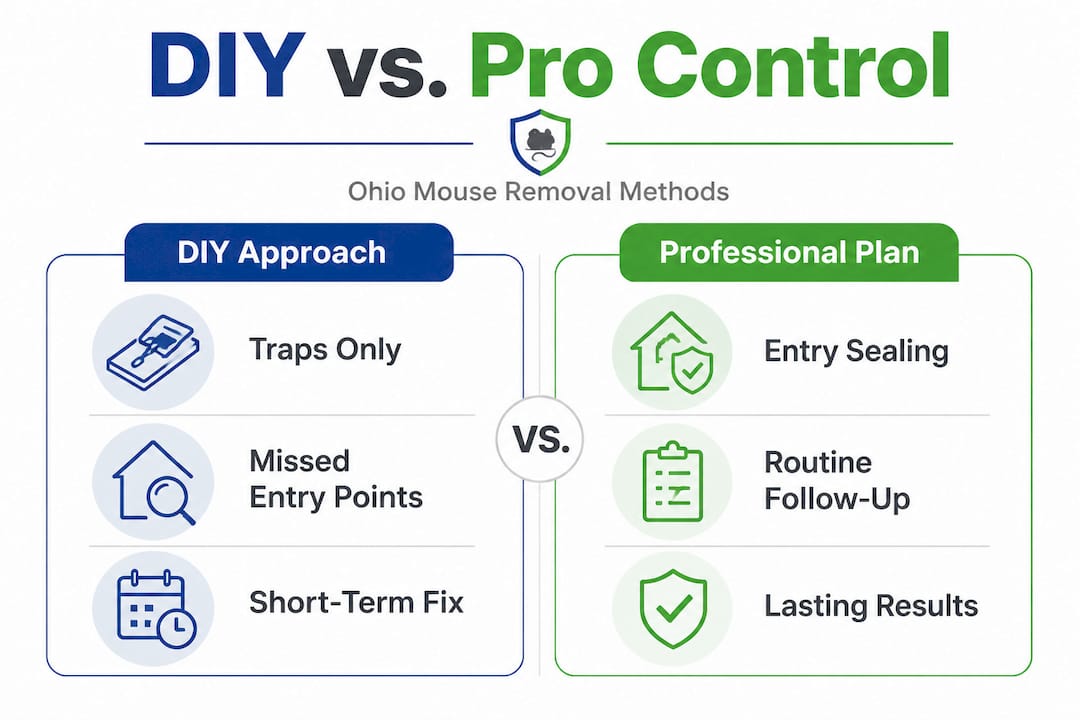
How professional and DIY approaches compare:
| Factor | DIY approach | Professional IPM plan |
|---|---|---|
| Entry point sealing | Rarely included | Always included |
| Nest removal | Often missed | Standard practice |
| Bait station safety | Inconsistent | Tamper-resistant stations |
| Follow-up visits | Almost never | Scheduled and included |
| Species identification | Not performed | Conducted at start |
| Long-term prevention | Limited | Built into the plan |
For Ohio homeowners and businesses that have already tried DIY methods without success, rodent pest extermination performed by a licensed provider is typically the faster and more cost-effective path. You can also review a rodent service comparison to understand what different service tiers offer before you commit.
Pro Tip: Ask any pest control company you are considering whether their mouse service includes exclusion and scheduled follow-up visits as part of the standard plan. If the answer is no to either, keep looking.
Exclusion: The key to permanent mouse removal
If there is one step that separates a temporary fix from a permanent solution, it is exclusion. Exclusion simply means physically blocking every way a mouse could enter your structure.
Here is the fact that shocks most property owners: mice can squeeze through openings larger than one quarter of an inch. To put that in perspective, a standard pencil eraser is about three-eighths of an inch wide. Any gap at least that size in your foundation, walls, or roof line is a potential doorway.
Common entry points in Ohio homes and commercial buildings:
| Entry location | Risk level | Best sealing material |
|---|---|---|
| Utility pipe penetrations | Very high | Steel wool plus caulk |
| Foundation cracks | High | Concrete patching compound |
| Garage door gaps | High | Door sweep or weather stripping |
| Roof vents without screens | High | Hardware cloth (1/4 inch mesh) |
| Window frames and screens | Moderate | Caulk and screen repair tape |
| Dryer vents | Moderate | Metal vent cover with flap |
| Door frames and thresholds | Moderate | Door sweep and weather stripping |
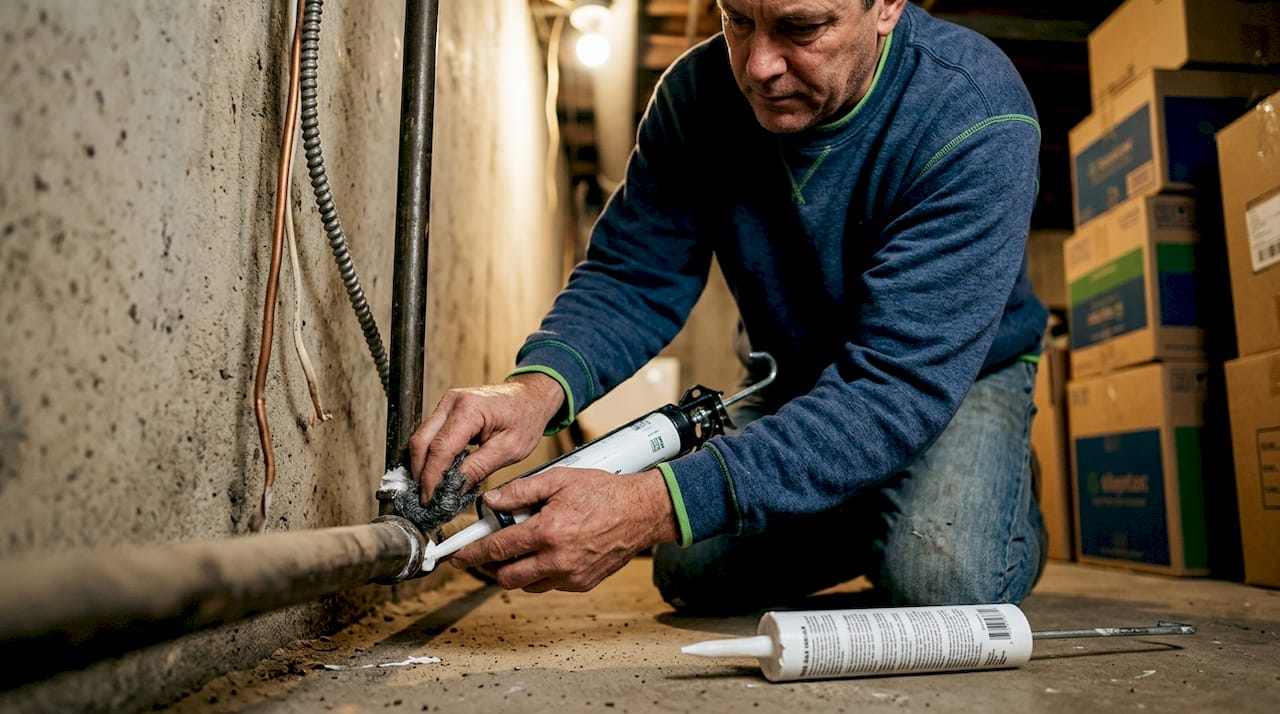
Steel wool works as a temporary plug because mice cannot gnaw through metal fibers. For permanent repairs, pair steel wool with a layer of caulk or expanding foam to lock it in place. Hardware cloth made from galvanized metal is the right choice for larger openings like vents and crawl space covers. Avoid using plastic sheeting, foam alone, or standard caulk without a backing material, because determined mice can gnaw through all of them.
Here is a practical exclusion sequence you can follow:
- Walk the entire exterior perimeter at dusk when gaps are easier to spot.
- Use a flashlight and a pencil to probe suspected gaps. If the pencil fits, a mouse can too.
- Start with the highest-risk areas: utility penetrations, foundation corners, and garage entries.
- Work from ground level up to at least 18 inches since mice typically enter at or near ground level.
- Re-inspect after the first rain to check for any missed spots where water is seeping in, as these often overlap with mouse entry points.
Investing in effective rodent barriers is the single highest-return action you can take. No trap catches every mouse, but a properly sealed structure stops them before they ever get inside.
Pro Tip: Pay special attention to the gap where your gas line, cable wiring, or plumbing enters the building. These openings are almost always larger than necessary and are among the most commonly missed entry points.
Trapping, mechanical devices, and safety essentials
Once exclusion is in place, mechanical trapping removes the mice that are already inside. There are three main device types used by professionals and experienced homeowners.
Snap traps remain the gold standard for indoor mouse control. They are fast, effective, and inexpensive. Set snap traps flush to walls with trigger plates facing the wall surface, since mice run along edges rather than crossing open floors. Peanut butter applied in a small, tight bead works better than cheese because mice cannot cleanly remove it without triggering the trap.
Glue boards capture mice on contact and are useful for monitoring activity levels and identifying travel paths. However, they are not recommended as a primary control method because they do not kill quickly and require careful, sanitary disposal.
Multi-catch traps are sealed boxes that mice enter through a one-way door and cannot escape. They are useful in commercial kitchens and food storage areas where snap traps might not be appropriate.
- Place traps every eight to ten feet along baseboards, behind appliances, and in dark corners
- Check and reset traps every one to two days to keep them effective
- Wear gloves when handling traps or dead mice to avoid direct contact with potential pathogens
- Never place open poison bait blocks in areas where children or pets can access them
On the topic of rodenticides, rodent baits are not recommended for use within homes by homeowners because of the poison risk to children and pets, and because serious infestations require professional service. If a technician does use bait, it should always be secured inside tamper-resistant stations. Returning to safe trapping steps is a smart habit after each service visit to confirm devices are positioned and secured correctly.
Pro Tip: Double your trap density in areas where you have found droppings. Active runs often have multiple mice using them at the same time, and a single trap in a busy corridor will fill up before catching everything.
Sanitation and follow-up: The long-term solution
Exclusion and trapping handle the immediate problem. Sanitation prevents the next one.
Mice need three things to thrive: food, water, and shelter. Remove any one of those and the environment becomes significantly less hospitable. Remove all three and mice have no reason to stay even if they find a way inside.
Key sanitation steps for Ohio homes and businesses include:
- Store all dry goods in hard-sided, airtight containers rather than cardboard boxes or paper bags
- Remove clutter from basements, garages, and storage rooms since these are prime nesting locations
- Fix leaking pipes and eliminate standing water in crawl spaces and utility areas
- Move firewood stacks at least 20 feet from the building and elevate them off the ground
- Keep grass trimmed short and eliminate brush piles near the foundation
- Empty trash containers frequently and use metal or thick plastic bins with tight-fitting lids
The value of scheduled follow-up visits cannot be overstated. An IPM program includes not just property assessment and exclusion but also follow-up monitoring to verify that the treatment worked and to catch any new activity quickly. Early detection of renewed activity can turn what would become a re-infestation into a minor, easily corrected issue.
For Ohio homeowners and property managers who want to stay ahead of the problem, building routine maintenance into your calendar is one of the most practical pest control tips available. A quick exterior inspection every fall, before temperatures drop and mice start seeking warmth indoors, can prevent a full infestation from developing.
Pro Tip: After a professional treatment, schedule your next inspection for 30 days out rather than waiting until you see activity again. Catching a small amount of renewed activity at the 30-day mark is far cheaper to address than a full reinfestation discovered six months later.
Why most mouse control advice misses the mark in Ohio
Having worked with Ohio homeowners and businesses for decades, we have seen the same pattern play out hundreds of times. Someone finds a mouse, sets a trap, catches it, and moves on. Then the calls come back in the fall, sometimes the same season.
Most online guides focus on products, not process. They recommend a specific brand of snap trap or a particular bait station, but they skip the foundational work of sealing the structure and eliminating what is drawing mice in the first place. That is not a content problem; it reflects how most people want pest control to feel, quick and simple. The reality is less convenient.
Ohio’s climate makes this especially important. Cold winters push mice aggressively toward heated structures starting as early as September. Once inside, they breed through the entire heating season. A single female mouse that gets inside in October can become a population of dozens by February. The Midwest winters are not just uncomfortable for people; they are a survival event for rodents, and they will exploit any vulnerability in your building envelope to escape them.
The other piece most guides miss is the emotional trap of “no visible activity equals solved.” Mice are nocturnal and extraordinarily cautious. A population can decline temporarily when traps reduce their numbers, then rebound within weeks because the entry points were never addressed. Connecting with local Ohio rodent experts who understand this cycle is not a last resort. For many properties, it is simply the fastest and most reliable path.
Professional plans are built for long-term prevention, not just symptom management. That distinction matters enormously when you are protecting a home, a food service business, or any commercial property where a mouse sighting carries real consequences.
Connect with proven Ohio mouse control providers
If you have read this far and recognize your situation in these pages, the next move is straightforward. Apex Pest Control has been serving Ohio homeowners and businesses since 1969, and our mouse control services are built around the integrated approach described in this article: inspection, exclusion, mechanical control, sanitation guidance, and scheduled follow-ups. We use methods that are safe for your family and pets. To find rodent control near me options or learn more about safe rodent removal methods we rely on, explore our service pages. When you are ready to stop guessing and start solving, rodent pest extermination in Ohio from a licensed, experienced provider is one call away. Request a free quote and let us build a plan that keeps mice out for good.
Frequently asked questions
Why do mice keep coming back after I trap them?
Mice return unless all entry points are sealed and food sources are removed, because trapping alone does not stop new invaders from entering. Exclusion is the most permanent form of mouse control, and any gap larger than one quarter inch must be eliminated.
Is it safe to use mouse poison in a home with children or pets?
No. Rodent baits pose serious risks to both children and pets, and professional use with tamper-resistant stations is strongly recommended for any household with non-target individuals.
How small a gap can a mouse squeeze through?
Mice can enter any opening larger than one quarter inch, making thorough inspection and sealing of even minor gaps a critical part of any control plan.
What does a mouse control follow-up visit involve?
A follow-up visit checks for continued activity, confirms that all entry points are still sealed, and verifies that traps and exclusion measures are performing correctly. DHS Pest Control includes follow-up visits as a core part of their IPM program, which reflects industry best practice.