




TL;DR:
- Finding a buzzing cluster inside your wall indicates a serious bee infestation that requires a thorough removal process. Properly extracting the colony, comb, and honey, then sealing all entry points, prevents recurring problems and structural damage. Timely spring removal is ideal, especially if the colony is small, to ensure humane and effective remediation.
Finding a buzzing cluster behind your siding or inside a wall cavity is more than unsettling. It signals a situation that gets more complicated every week you wait. Ohio homeowners, especially in Oakwood where older homes with wood siding and wide eave gaps are common, face a specific kind of challenge: bees that have moved in and started building. A proper bee removal workflow makes the difference between a one-time fix and a recurring problem that damages your home, your walls, and your wallet. This guide walks you through every stage of the process, from understanding why bees chose your home to sealing up so they never come back.
Table of Contents
- Key takeaways
- Understanding the bee removal workflow
- Ohio bee behavior and local nesting patterns
- Preparing for safe bee removal
- Step-by-step bee removal and relocation process
- Common mistakes and when to call a professional
- My take on humane removal after years in Ohio homes
- How Apexpestcontrol handles bee removal in Oakwood
- FAQ
Key takeaways
| Point | Details |
|---|---|
| Full removal beats extermination | Killing bees without removing comb causes structural damage and attracts rodents and other pests. |
| Timing changes everything | Dawn and dusk removals capture more foragers and reduce bee confusion during the process. |
| Comb must come out | Leaving wax behind attracts new swarms through pheromone signals, causing repeat infestations. |
| Ohio seasonality matters | Spring removals are faster and less expensive due to smaller, more docile colonies. |
| Sealing prevents return | Using fine mesh and foam to close entry points is the final step that makes removal last. |
Understanding the bee removal workflow
Before any tools come out, you need to understand what you’re dealing with. The bee removal workflow is not a single action. It is a sequence of decisions, each depending on what you find at the previous step. Skipping steps is the most common reason homeowners end up calling a professional after a failed DIY attempt.
The biggest misconception is that bee removal and bee extermination are the same thing. They are not. Professional bee removal spans 1 to 4 hours and includes inspection, live colony removal, comb extraction, and sealing. A quick spray job typically wraps up in 15 to 30 minutes and leaves everything else behind. That leftover comb becomes a problem faster than most homeowners expect.
Most experts recognize the real issue as a nest and wax problem, not just a bee problem. Removing the insects without removing the structure they built is an incomplete job. Oakwood’s older housing stock, with its plaster walls, uninsulated attic spaces, and decorative wood trim, gives colonies plenty of places to set up deep inside a structure before anyone notices.
Ohio bee behavior and local nesting patterns
Knowing your opponent helps. In Oakwood and the broader Cuyahoga County area, the most common culprit is the European honey bee. These bees are not naturally aggressive unless the hive feels threatened, but a colony that has had months to establish inside a wall void will defend that space vigorously.
Ohio bee activity follows a predictable seasonal arc. Swarms typically emerge in May and early June as established colonies split and scouts search for new cavities. This is actually the best window to act. Spring removals are significantly easier because colonies are smaller and have not yet built substantial comb or stored large honey reserves. By late summer, a colony inside a wall can contain 40,000 or more bees and many pounds of honey, turning a straightforward job into a half-day structural project.
Common nesting locations in Oakwood homes include:
- Wall voids behind wood siding on older craftsman and bungalow-style houses
- Roof eaves where fascia boards have gaps or have pulled away from soffits
- Chimney chases where the brick has opened up at the mortar joints
- Attic spaces accessed through gable vents with broken or missing screens
- Tree cavities in the mature oaks and maples common in residential Oakwood yards
Bee behavior during removal also matters. Dawn and dusk timing reduces the number of forager bees out of the hive, which means fewer confused bees circling the worksite after the colony is removed. Midday removals leave thousands of foragers returning to a cavity that no longer contains their colony, creating a disoriented mass that can be aggressive and difficult to manage.
Preparing for safe bee removal
Good preparation determines whether the actual removal goes smoothly or turns into an emergency. This is the stage that most DIY guides underestimate.
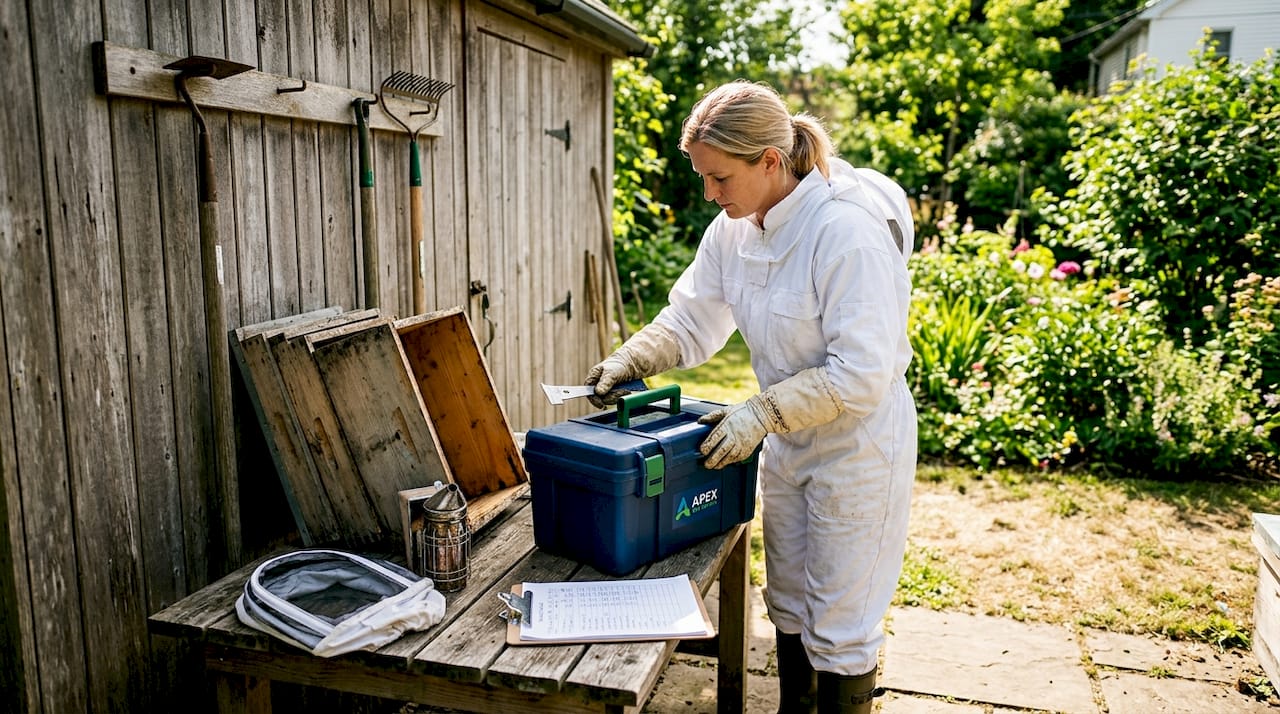
Personal protective equipment is the starting point. A full beekeeper suit with a sealed veil, thick leather gloves, and sealed ankle cuffs at the boots are the baseline. Street clothes with a simple mesh veil are not adequate for an in-wall removal.
| Tool or item | Purpose | Professional grade needed? |
|---|---|---|
| Beekeeper suit and veil | Full body sting protection | Yes |
| Bee vacuum | Live capture without harming bees | Yes |
| Smoker and fuel | Calms bees before and during removal | Yes |
| Inspection camera | Locates hive without cutting open walls | Strongly recommended |
| Hive transport box | Moves colony after extraction | Yes |
| Caulk, foam, and fine mesh | Seals entry points post-removal | No (DIY-friendly) |
Thermal imaging and listening devices reduce the number of cuts made into your walls because they locate the hive precisely before any material is removed. In Oakwood homes with original plaster-and-lath walls, unnecessary cuts can be structurally and cosmetically expensive to repair.
Pro Tip: Before cutting into any surface, tap along the wall and listen for the change in sound density. A hollow tap shifts to a dull thud where comb is packed against the interior surface. This takes 10 minutes and can save you two unnecessary wall openings.
Contacting a local beekeeper before starting is worth the time. Many Ohio beekeepers will take a healthy colony for free or a nominal fee, which lowers your total cost and keeps the bees out of a landfill. Your county extension office or the Ohio State Beekeepers Association can help with referrals.
Step-by-step bee removal and relocation process
This is the core of any successful honey bee relocation. Follow these steps in sequence.
-
Confirm species and hive location. Not every buzzing insect in your wall is a honey bee. Yellow jackets and bumblebees require different bee control methods. Use the inspection camera to verify comb presence and estimate colony size.
-
Put on full PPE and light the smoker. Apply smoke to the entry point 10 to 15 minutes before opening the wall. Smoke triggers a feeding response that calms bees and buys you time.
-
Open a clean access point. Cut the smallest opening that gives you clear access to the top of the comb. Starting from the top is important because the queen is often found in the lower brood section, and working downward keeps her from escaping early.
-
Vacuum live bees. A bee vacuum runs at low suction to capture bees alive. Work methodically from top to bottom. As comb is exposed, move bees off it with a soft brush into the vacuum chamber.
-
Remove all comb and honey. This step is non-negotiable. Killing bees and leaving comb results in rotting honey that seeps into drywall and framing, and the scent draws ants, cockroaches, and rodents. Use a scraper to get every piece of wax off the cavity walls.
-
Manage the queen. For live relocation to succeed, the queen must be transferred to the transport box. Brood combs are secured with rubber bands in a hive frame so the bees can reattach them after relocation. Once bees sense the queen is in the box, most remaining bees follow voluntarily.
-
Relocate the colony at least three miles away. Relocated hives moved fewer than three miles risk forager bees returning to the original site and causing a partial reinfestation. Partner with a local beekeeper who can give the colony a permanent home.
-
Clean the cavity thoroughly. Scrape all residual wax, then wipe down cavity surfaces with a citrus-based cleaner. This breaks down pheromone traces that would otherwise act as a signal beacon for future swarms.
-
Seal all entry points. Use fine mesh with at least 6 openings per inch behind the patch to block any bee-sized gaps. Expand over with foam, then patch and repaint. For proper sealing techniques that match Oakwood’s older exterior materials, a caulk-grade compatible with wood siding is necessary to prevent shrink-gap cracking in Ohio winters.
-
Conduct a follow-up inspection at 2 and 6 weeks. Check that no new activity appears around the sealed entry point and that no secondary cavity was missed.
Pro Tip: After sealing, place a piece of white paper inside the repaired cavity access before closing it completely. Check it after 48 hours. Staining from residual honey or wax means you missed some comb and need to re-clean before permanent sealing.
Common mistakes and when to call a professional
Even a well-prepared homeowner can hit walls during this process, literally and figuratively.
The most damaging mistake is using over-the-counter pesticide sprays inside a wall. This kills the bees but leaves the comb fully intact. Partial extermination without comb removal leaves wax that attracts new swarms through residual pheromones, meaning the problem returns by the following spring. You’ve spent money and caused wall damage without solving anything.
Watch for these situations that require a licensed professional rather than a DIY attempt:
- The colony is inside a chimney, which requires specialized equipment and creates serious fall risk
- The hive has been established for more than one season, meaning multiple combs in different cavities
- You find the bees are particularly aggressive when you approach, which may indicate Africanized hybrid genetics (rare in Ohio but not impossible in southern counties)
- The nesting cavity is behind electrical panels, plumbing, or other utility infrastructure
- Your inspection camera shows a comb mass that is wider than the access point you can safely create
Most general pest control companies do not perform full comb extraction or live relocation. When calling for bids, ask specifically whether comb removal and entry point sealing are included. If the answer is no, keep looking. A job done halfway on bees is worse than no job at all, because of the structural consequences.
Live removal is often cost-competitive with extermination when you factor in the follow-up costs of re-infestation, drywall repair from honey damage, and secondary pest problems. The math almost always favors doing it right the first time.
My take on humane removal after years in Ohio homes
I’ve worked with enough homeowners in northeast Ohio to see the same pattern repeat itself more than I’d like. Someone finds bees in May, decides to handle it with a can of spray, and calls us in August with a wall full of rotting honey and a new swarm investigating the entry point.
What I’ve learned is that the single most important step in this entire process is the comb removal. Everything else can be adjusted. Timing can flex. PPE can be supplemented. But if the comb stays in the wall, the job is not done. Bee pheromones are extraordinarily persistent. That scent in an unsealed, uncleaned cavity will draw scouts in subsequent swarm seasons as reliably as a for-rent sign.
I also want to be direct about one thing: live removal is genuinely better for Ohio’s environment. Our honey bee populations face enough pressure from pesticide exposure, habitat loss, and parasites. A colony that survives a cutout and gets placed with an experienced beekeeper contributes to regional pollinator health. That matters if you have a garden, fruit trees, or neighbors who do.
My advice for Oakwood homeowners specifically: if you find activity in May or early June and the colony appears fresh, that is your best window. Act within two weeks. A new swarm in spring is a fraction of the work, cost, and structural disruption of a mature late-summer colony. Do not wait to see if they leave on their own. They will not.
— Dushan
How Apexpestcontrol handles bee removal in Oakwood
Apexpestcontrol has served Ohio homeowners since 1969, and the bee removal workflow used by their licensed technicians covers every step in this guide. From stinging insect control through full comb extraction, cavity cleaning, and structural sealing, their team brings the specialized equipment and local knowledge that Oakwood homes require. You can review their residential pest solutions to understand the full scope of what’s offered, including services for the secondary pest problems that bee hives can trigger. Getting a free estimate takes a few minutes and gives you a clear picture of what the job involves before any work begins. Call 1-800-684-2284 or request your free quote online.
FAQ
What does a complete bee removal workflow include?
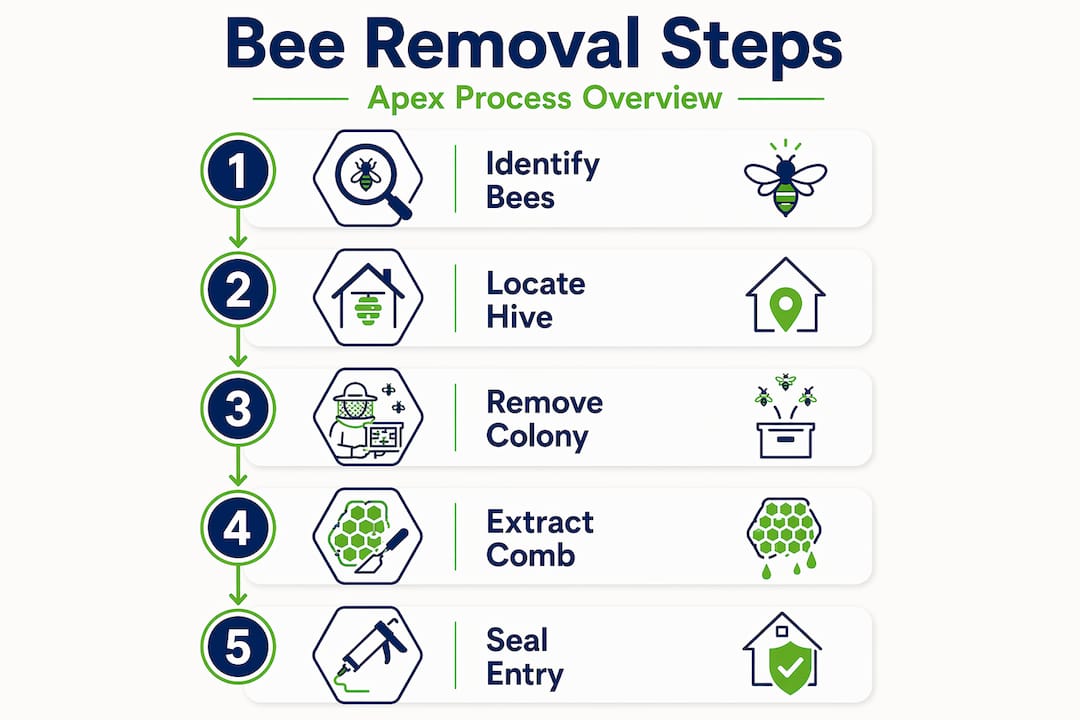
A complete bee removal workflow includes species identification, live colony extraction, full comb and honey removal, cavity cleaning to eliminate pheromones, relocation of the colony, and sealing all entry points. Skipping any step increases the risk of reinfestation.
Why does leaving honeycomb behind cause problems?
Residual honey rots inside walls, damages drywall and framing, and attracts ants, cockroaches, and rodents. The wax also retains bee pheromones that signal new swarms to investigate the same cavity the following spring.
How far away do relocated bees need to be moved?
Bees should be relocated at least three miles from the original site to prevent forager bees from returning on their own. Moving them any shorter distance risks a partial return to the original location.
When is the best time of year for bee removal in Ohio?
Spring removals in May or early June are the most cost-effective and manageable because colonies are smaller and less defensive. By late summer, the colony size and honey volume make the job significantly more involved and expensive.
Should I use pesticide spray to remove bees from my wall?
No. Spraying bees inside a wall without extracting the comb is one of the most damaging mistakes a homeowner can make. It kills the bees but leaves the nest fully intact, creating structural damage from rotting honey and attracting new swarms through residual wax pheromones.