


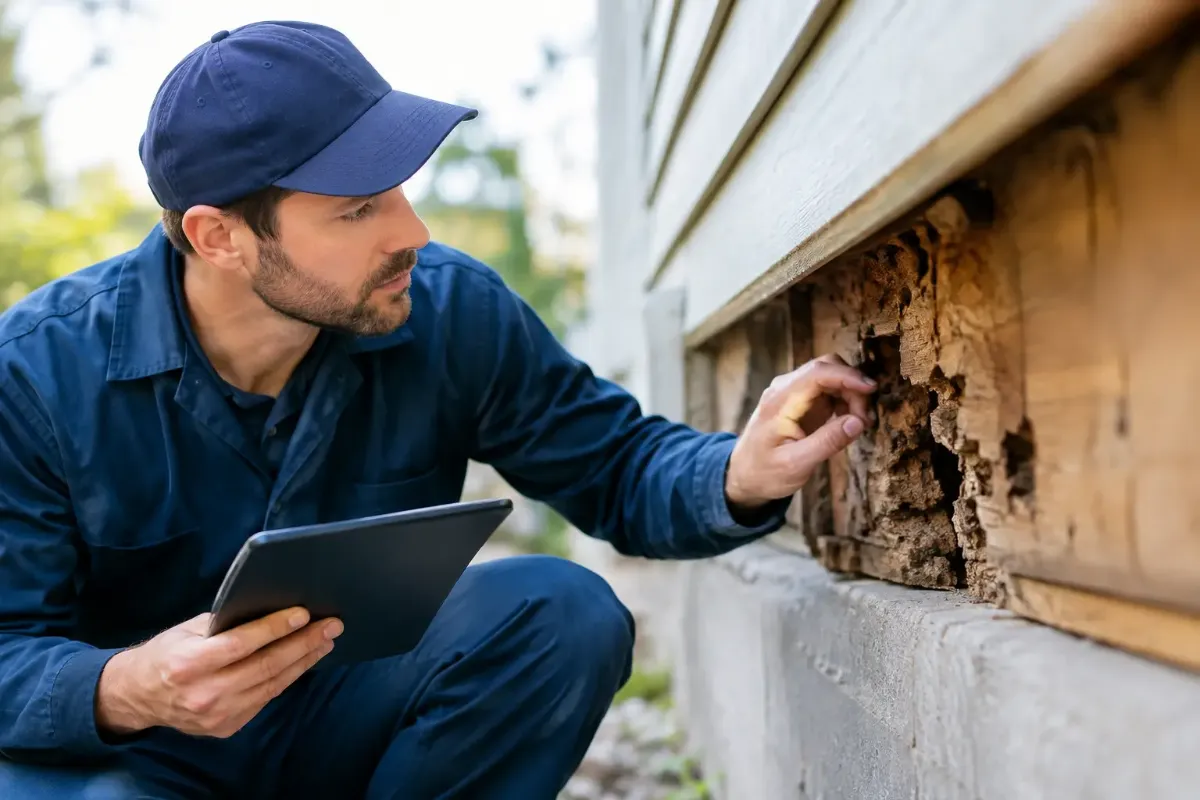
A homeowner noticed what looked like a thin line of dried mud climbing the foundation wall near a finished basement. There were no swarming insects in the room, no obvious collapse, and no reason to assume the damage was extensive. This Ohio termite remediation case study shows why that small clue required a complete response, not a quick spray.
The home, a typical wood-frame property in Northeast Ohio, had conditions termites favor: soil-to-wood contact near one section of the exterior, mulch held too high against the foundation, and moisture around a downspout discharge. The infestation was addressed before major structural failure occurred, but the inspection revealed that activity had likely been present longer than the homeowner realized.
This is a representative case based on the treatment process used for subterranean termite activity. Every property requires its own inspection, treatment plan, and repair assessment.
The Initial Signs Were Easy to Miss
Subterranean termites work from the soil upward and usually remain concealed. Unlike carpenter ants, they do not need an obvious opening to reach structural wood. They travel through protected mud tubes, foundation gaps, utility penetrations, expansion joints, and areas where wood is close to soil.
At this property, the homeowner first saw a mud tube on the interior foundation wall. A trained inspection found additional evidence around the exterior foundation, along a basement sill area, and near a deck attachment point. Probing identified softened wood in a rim-joist section, but the damage was localized. The framing still needed repair, yet the condition did not require a broad structural reconstruction.
That distinction mattered. Termite damage can look alarming, but treatment decisions should be based on active evidence, construction details, access, and the extent of compromised wood – not on fear or a one-size-fits-all treatment package.
Ohio Termite Remediation Case Study: Inspection First
The first step was not treatment. It was determining where termites could travel, feed, and remain undetected. A complete termite inspection included accessible interior and exterior areas, the basement, sill plates, crawlspace-equivalent voids, foundation perimeter, porches, deck connections, and moisture-prone locations.
The technician looked for more than mud tubes. Evidence can include blistered or hollow-sounding wood, damaged trim, pinholes, discarded wings from swarmers, frass-like debris from other wood-destroying insects, and moisture conditions that make termite activity more likely. In Ohio, spring swarmers often prompt the first call, but waiting for swarmers is not a prevention strategy. By the time they appear indoors, a colony may already have access to the structure.
The inspection also ruled out issues that require different solutions. Carpenter ants, powderpost beetles, water damage, and fungal decay can all affect wood. Proper identification prevents a homeowner from paying for treatment that does not address the actual cause.
In this case, the evidence supported active subterranean termite activity. The treatment plan focused on stopping the colony’s access, protecting the structure, correcting conducive conditions, and establishing follow-up monitoring.
The Treatment Plan Addressed the Colony and the Property
A reliable termite response has two jobs: eliminate active pressure around the structure and reduce the chance of reinfestation. The right approach depends on the home’s construction, the infestation’s location, soil access, landscaping, drainage, and whether a monitoring system is appropriate.
For this home, the remediation plan combined a targeted exterior soil treatment with focused treatment in identified active areas. The foundation perimeter received careful attention, including locations around utility lines and construction features where termites commonly find entry. Where access was limited by concrete, treatment methods were selected to maintain a continuous protective approach without unnecessary disruption.
The technician also treated the localized area with evidence of activity. This was not a substitute for perimeter protection. Spot treatment alone can leave untreated travel routes available to subterranean termites, especially when a colony is foraging from the soil outside the home.
The homeowner was given clear preparation and safety guidance before service. Professional termite remediation should be precise, not careless. Product selection, application methods, and timing must account for the property, people, pets, and environmental considerations. A certified pest professional can explain what will be treated, why it is being treated, and what access or temporary precautions are needed.
Moisture and Wood Contact Were Part of the Fix
Termite treatment without property corrections can leave a home more vulnerable than it needs to be. Termites need moisture and soil access, so the remediation plan included practical changes that were just as important as the application itself.
The downspout was extended to carry water away from the foundation. Mulch was pulled back so the foundation could be visually inspected and remained clear of siding. The homeowner arranged to correct the soil-to-wood contact near the deck and repair a small exterior moisture issue that had kept the surrounding area damp.
These changes do not replace professional termite treatment. They reduce conducive conditions and make future warning signs easier to see. It depends on the property, of course. A home with a crawlspace, stone foundation, heavy landscaping, or an attached slab porch may need different corrections than a newer home with open basement access.
Repair Came After Activity Was Controlled
One of the most common questions after termites are discovered is whether repairs should happen immediately. The answer depends on safety and the location of the damage. If damaged components create an immediate structural hazard, a qualified contractor may need to stabilize the area promptly. In many cases, however, repair work is best coordinated after active termite pressure has been addressed.
At this home, the damaged rim-joist section and nearby trim were repaired after treatment. Removing and replacing wood without resolving the infestation can conceal evidence, disturb active areas, and create a false sense of security. Conversely, leaving weakened structural components unaddressed after activity has stopped is not an acceptable long-term plan.
A pest management professional identifies termite evidence and treatment needs. A qualified contractor or structural professional should evaluate repairs when damage affects framing, load-bearing members, decks, or other critical building components.
Follow-Up Confirmed the Home Was Protected
Termite remediation is not complete the moment a technician leaves the property. Follow-up service confirms that the treatment plan is performing as intended and gives the homeowner a chance to report any new concerns.
At the scheduled follow-up, the previously active areas showed no new evidence of termite activity. The corrected downspout and landscape adjustments had improved drainage and visibility around the foundation. The repaired wood was sound, and there were no new mud tubes or signs of active feeding in accessible areas.
Ongoing protection may involve periodic inspections, a renewable termite protection plan, or a bait monitoring program, depending on the property and service agreement. Each option has trade-offs. Liquid soil treatments can provide a strong protective barrier when properly applied, while bait systems rely on regular monitoring and can be a useful fit for properties where ongoing colony suppression is the goal. The appropriate recommendation should follow a thorough inspection, not a sales script.
What Homeowners Can Learn From This Case
The homeowner’s best decision was acting on a small sign before it became a larger repair project. Termites do not announce themselves with noise or obvious nests. They often cause damage quietly behind walls, under flooring, and along concealed structural wood.
Call for a professional inspection when you see mud tubes, winged insects indoors, discarded wings near windows, unexplained wood damage, or conditions that keep the foundation damp. An inspection is also wise before buying a home, after completing major landscaping or drainage work, and when a neighboring property has confirmed termite activity.
DIY products may kill termites that are visible, but visible termites are rarely the full problem. Subterranean colonies can forage across broad areas underground, and incomplete treatment may simply shift activity to another access point. Proven results require inspection, targeted extermination, prevention measures, and follow-through.
For Ohio homeowners, termite protection is ultimately about preserving the structure that protects your family. If a small mud tube, a soft section of trim, or a spring swarm has raised concern, timely professional help can protect the home before hidden damage gains ground.