



Battling constant pest problems in your Ohio garden can be overwhelming, especially when you want to avoid harsh chemicals that may harm your family and the environment. More homeowners are turning to organic pest control methods to create safer, healthier outdoor spaces. By focusing on prevention, natural processes, and solutions that maintain ecological balance, you can protect your yard while supporting local biodiversity and long-term soil health.
Table of Contents
- Defining Organic Pest Control Methods
- Key Types of Organic Pest Solutions
- How Organic Pest Management Works
- Benefits and Limitations for Homeowners
- Common Misconceptions and Safety Concerns
Key Takeaways
| Point | Details |
|---|---|
| Holistic Approach | Organic pest control emphasizes creating balanced ecosystems to prevent and manage pest populations naturally. |
| Integrated Pest Management | Employing IPM principles prioritizes prevention, monitoring, and minimal intervention in pest management strategies. |
| Diverse Solutions | Effective organic pest control utilizes a combination of cultural, mechanical, biological, and natural pesticide methods. |
| Continual Evaluation | Regular monitoring and adapting strategies are essential for successful organic pest management and maintaining ecosystem health. |
Defining Organic Pest Control Methods
Organic pest control represents a holistic approach to managing unwanted insects and wildlife by prioritizing natural, environmentally-friendly strategies. Unlike traditional chemical treatments, organic pest management focuses on creating balanced ecosystems that naturally prevent and minimize pest populations.
The core philosophy of organic pest control centers on Integrated Pest Management (IPM), a systematic method that emphasizes prevention and minimal intervention. Key principles include:
- Understanding pest life cycles
- Monitoring population levels
- Establishing acceptable damage thresholds
- Selecting least-toxic control measures
- Prioritizing ecological balance
Organic pest control strategies leverage multiple complementary techniques to address infestations safely. These methods typically include:
- Cultural practices that strengthen plant health
- Mechanical barriers and physical removal techniques
- Biological controls using natural predators
- Low-toxicity botanical and mineral-based treatments
Preventative approaches are crucial in organic pest management. Organic agriculture emphasizes long-term prevention by maintaining healthy soil, promoting biodiversity, and creating environments less hospitable to pest proliferation.

Pro tip: Start building a pest-resistant landscape by improving soil health, selecting native plant varieties, and encouraging beneficial insects that naturally control pest populations.
Key Types of Organic Pest Solutions
Organic pest solutions encompass a diverse range of environmentally-friendly approaches designed to manage pest populations while minimizing ecological disruption. Organic pest control techniques are strategically divided into four primary categories, each addressing pest management through unique, targeted methods.
Cultural Methods involve preventative practices that create less hospitable environments for pests:
- Crop rotation
- Maintaining proper plant spacing
- Regular garden sanitation
- Selecting pest-resistant plant varieties
- Improving overall soil health
Mechanical and Physical Controls provide direct intervention strategies:
- Installing physical barriers
- Using sticky traps
- Manually removing pests
- Implementing row covers
- Creating habitat disruptions
Biological Controls leverage natural predation and ecological relationships. These methods introduce or encourage natural pest enemies like:
- Ladybugs that consume aphids
- Praying mantises targeting various insects
- Nematodes controlling soil-dwelling pests
- Parasitic wasps eliminating caterpillar populations
Natural Pesticide Options offer targeted treatments when other methods prove insufficient. Organic pesticides approved for use include substances such as:
- Neem oil
- Pyrethrum extracts
- Diatomaceous earth
- Bacillus thuringiensis (Bt)
- Mineral-based treatments
- Botanical insecticide solutions
Successful organic pest management requires a holistic, integrated approach that prioritizes prevention and minimal intervention.
Pro tip: Regularly monitor your garden ecosystem and implement multiple organic pest control strategies simultaneously for the most effective, balanced approach to pest management.
Here’s a comparison of organic pest control methods and their main ecological effects:
| Method Type | Main Approach | Ecological Impact | Common Application |
|---|---|---|---|
| Cultural | Habitat modification | Improves biodiversity | Crop and gardens |
| Mechanical | Physical removal/barriers | Low disturbance | Home gardens |
| Biological | Use of natural predators | Supports food webs | Irrigated soils |
| Natural Pesticide | Selective substances | Minimizes pollution | Targeted outbreaks |
How Organic Pest Management Works
Organic pest management is a comprehensive, strategic approach that prioritizes ecological balance and long-term pest prevention. Integrated Pest Management (IPM) principles guide this holistic system, emphasizing proactive intervention and minimal environmental disruption.
The process follows a systematic, multi-step strategy:
- Initial ecosystem assessment
- Pest population monitoring
- Damage threshold identification
- Strategic intervention selection
- Continuous ecosystem evaluation
Prevention Strategies form the critical first line of defense:
- Building robust, healthy soil
- Selecting pest-resistant plant varieties
- Maintaining proper garden biodiversity
- Implementing crop rotation techniques
- Creating unfavorable pest habitats
Intervention Hierarchy ensures minimal ecological impact by progressively applying control methods:
- Cultural practices
- Mechanical interventions
- Biological controls
- Targeted organic pesticide applications
Organic pest management strategies prioritize ecosystem health over immediate pest eradication. This approach recognizes that complete elimination is less important than maintaining a balanced, resilient environment.
Successful organic pest management requires understanding natural ecological relationships and working with, not against, environmental systems.
Pro tip: Develop a comprehensive garden monitoring routine, documenting pest activities and intervention outcomes to continuously refine your organic pest management approach.
Benefits and Limitations for Homeowners
Organic pest control offers homeowners a comprehensive approach to managing pest populations while protecting their immediate environment and broader ecosystem. Organic pest management strategies present a nuanced balance between environmental responsibility and practical pest control.
Key Benefits for Homeowners:
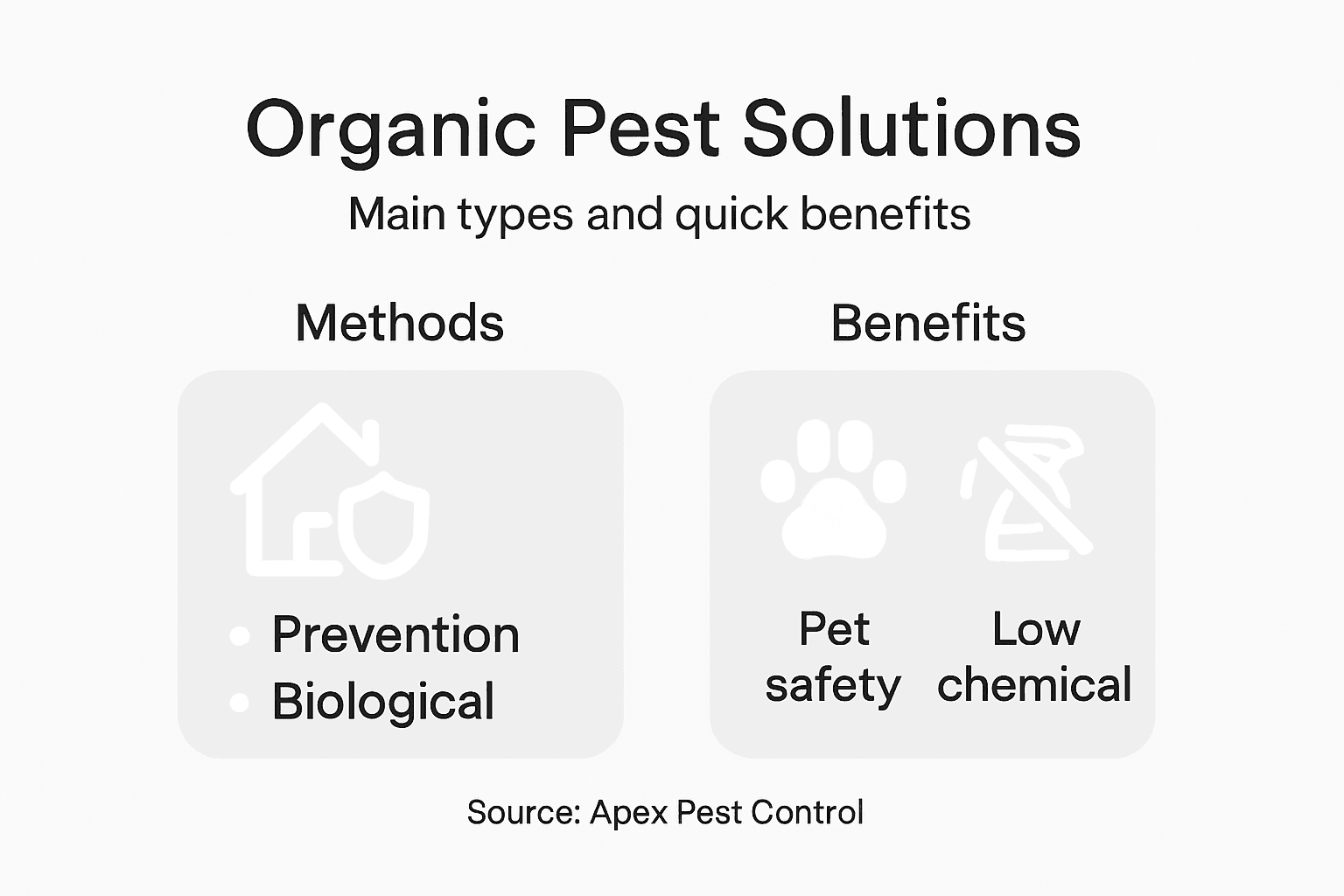
- Reduced chemical exposure for family and pets
- Long-term soil and garden health improvement
- Support for local biodiversity
- Enhanced ecosystem resilience
- Minimal environmental contamination
Potential Limitations to Consider:
- Higher initial time investment
- Potentially slower pest control results
- More complex management approach
- Potentially higher upfront costs
- Requires consistent monitoring
Economic considerations of organic pest control reveal that while initial investments might be higher, the long-term benefits often outweigh traditional synthetic approaches. Homeowners must evaluate their specific needs, garden conditions, and pest challenges.
Successful organic pest management demands patience, observation, and a holistic understanding of ecological interactions.
Economic Trade-offs:
- Potentially lower immediate pest elimination rates
- Higher labor and knowledge requirements
- Gradual but sustainable pest population management
- Investment in ecosystem health
Pro tip: Start with small, manageable sections of your garden when transitioning to organic pest control, allowing you to learn and adapt your strategies incrementally.
The following table outlines key economic and practical trade-offs for homeowners considering organic pest control:
| Factor | Short-Term Impact | Long-Term Benefit | Homeowner Challenge |
|---|---|---|---|
| Upfront Cost | Typically higher | Lower over time | Initial investment |
| Pest Elimination Speed | Slower than chemicals | Gradual reduction | Requires patience |
| Labor Requirement | More frequent tasks | Skill improves | Consistent commitment |
| Soil/Ecosystem Health | Immediate improvement | Sustained resilience | Ongoing monitoring |
Common Misconceptions and Safety Concerns
Organic pest control is often misunderstood, with many homeowners harboring misconceptions about its effectiveness and safety. Common organic pesticide myths create confusion about what truly constitutes safe and responsible pest management.
Major Misconceptions:
- ‘Organic’ means completely chemical-free
- Natural pesticides are always safe
- Organic methods work instantly
- All natural substances are non-toxic
- Organic approaches eliminate all pests
Safety Concerns to Understand:
- Natural does not equal harmless
- Some organic pesticides can harm beneficial insects
- Improper application can create environmental risks
- Overuse of any pesticide can cause ecosystem disruption
- Careful selection remains critically important
Organic pesticide application requires sophisticated understanding of ecological interactions. Homeowners must recognize that natural substances can still pose risks to beneficial insects like pollinators, demanding careful, strategic implementation.
Not all natural chemicals are inherently safe; responsible pest management requires knowledge and precision.
Key Safety Considerations:
- Potential toxicity of natural substances
- Impact on beneficial insect populations
- Proper application and timing
- Understanding specific product characteristics
- Continuous ecosystem monitoring
Pro tip: Always research specific organic pest control products thoroughly, understanding their precise environmental impact before application.
Embrace Safe and Effective Organic Pest Control with Apex Pest Control
Homeowners seeking organic pest control face the challenge of balancing effective pest management with protecting their families, pets, and the environment. The article highlights important concepts like Integrated Pest Management and the need for prevention, monitoring, and using low-toxicity solutions to maintain ecological balance. You want pest control methods that avoid harsh chemicals while still providing lasting results.
At Apex Pest Control, we understand these pain points and goals. Our eco-friendly applications and tailored residential services align perfectly with organic pest control principles. Whether you need mosquito prevention or exterior rodent control, our expert team prioritizes safety and sustainability to protect your home and garden. Learn more about how we integrate organic-friendly pest management strategies by exploring Uncategorized Archives – Apex Pest Control.
Take the first step toward a healthier, pest-free home environment. Request a personalized solution designed to fit your unique needs today. Visit Get Your Free Quote to connect with our professionals and start your journey to safe, organic pest control now.
Frequently Asked Questions
What is organic pest control?
Organic pest control refers to a holistic approach to managing pests through natural, environmentally-friendly strategies that prioritize the ecological balance of the environment over conventional chemical treatments.
How does organic pest management work?
Organic pest management employs Integrated Pest Management (IPM) principles, which involve assessing ecosystems, monitoring pest populations, identifying damage thresholds, and implementing preventative and intervention strategies with minimal environmental disruption.
What are the benefits of using organic pest control methods for homeowners?
Benefits of organic pest control for homeowners include reduced chemical exposure for families and pets, improved long-term soil health, support for local biodiversity, enhanced ecosystem resilience, and minimal environmental contamination.
Are organic pesticides safe to use in gardens?
While organic pesticides are derived from natural substances, they are not inherently harmless. Some can still affect beneficial insects. Homeowners should research products thoroughly and apply them strategically to ensure safety for the ecosystem.