


A failed inspection rarely begins on inspection day. It starts with a small gap that went unnoticed: a loading dock door left open, a floor drain with buildup, a wall void that gives rodents access, or an employee break area that is not being cleaned consistently. Professional pest audits find those gaps before pests, customer complaints, product losses, or compliance problems force your hand.
For commercial facilities, pest control is not just about responding when an insect or rodent is spotted. It is about documenting conditions, correcting vulnerabilities, and maintaining a prevention program that stands up to scrutiny. That is especially true for food handling, warehousing, health care, hospitality, multi-family housing, manufacturing, and retail operations.
What Is a Pest Audit?
A pest audit is a systematic evaluation of pest activity, pest-conducive conditions, sanitation practices, exclusion points, and the records supporting your pest management program. Unlike a routine service visit, an audit looks at the full picture: where pests can enter, what attracts them, where they can survive, and whether your team has the documentation to prove problems are being managed correctly.
The best audits are preventive, not performative. A clipboard alone does not protect a facility. Your auditor should inspect the property, review trends, speak with the people responsible for operations, and identify corrective actions that can realistically be completed.
A commercial pest audit may be conducted as part of an ongoing integrated pest management program, before a third-party inspection, after a recurring pest issue, or during the onboarding of a new pest control provider. The scope depends on the facility and its risk level. A distribution center has different exposure points than a restaurant kitchen, while a hospital must consider patient safety and sensitive treatment areas.
Why Pest Audits Matter to Operations and Compliance
Pest activity can affect far more than a single room. Rodents can damage wiring and contaminate stored goods. Flies can develop quickly around drains, trash areas, and moisture sources. Stored product pests can spread through inventory before employees recognize the problem. Birds and wildlife can create sanitation, structural, and safety concerns around exterior areas.
For a facility manager, the immediate pressure is often an upcoming customer, regulatory, or third-party inspection. Preparation matters, but pest audits should not become a once-a-year scramble. Consistent auditing gives operators time to address small deficiencies before they become findings that interrupt operations or damage a hard-earned reputation.
Strong records matter because they show that issues were identified, communicated, and corrected. Service reports, device maps, pest sighting logs, trend reports, corrective-action records, and sanitation recommendations can all support a credible prevention program. The exact paperwork needed depends on your industry and audit standard, but incomplete documentation is a common weakness even in facilities with otherwise effective pest control.
What a Professional Pest Audit Should Cover
A thorough audit starts outside the building. Many pest problems begin at the perimeter, where landscaping, standing water, dumpsters, damaged screens, gaps around utilities, and poorly sealed doors create access or harborage. Inspectors should evaluate the grounds, roofline where accessible, receiving areas, waste handling zones, and exterior lighting that may attract flying insects.
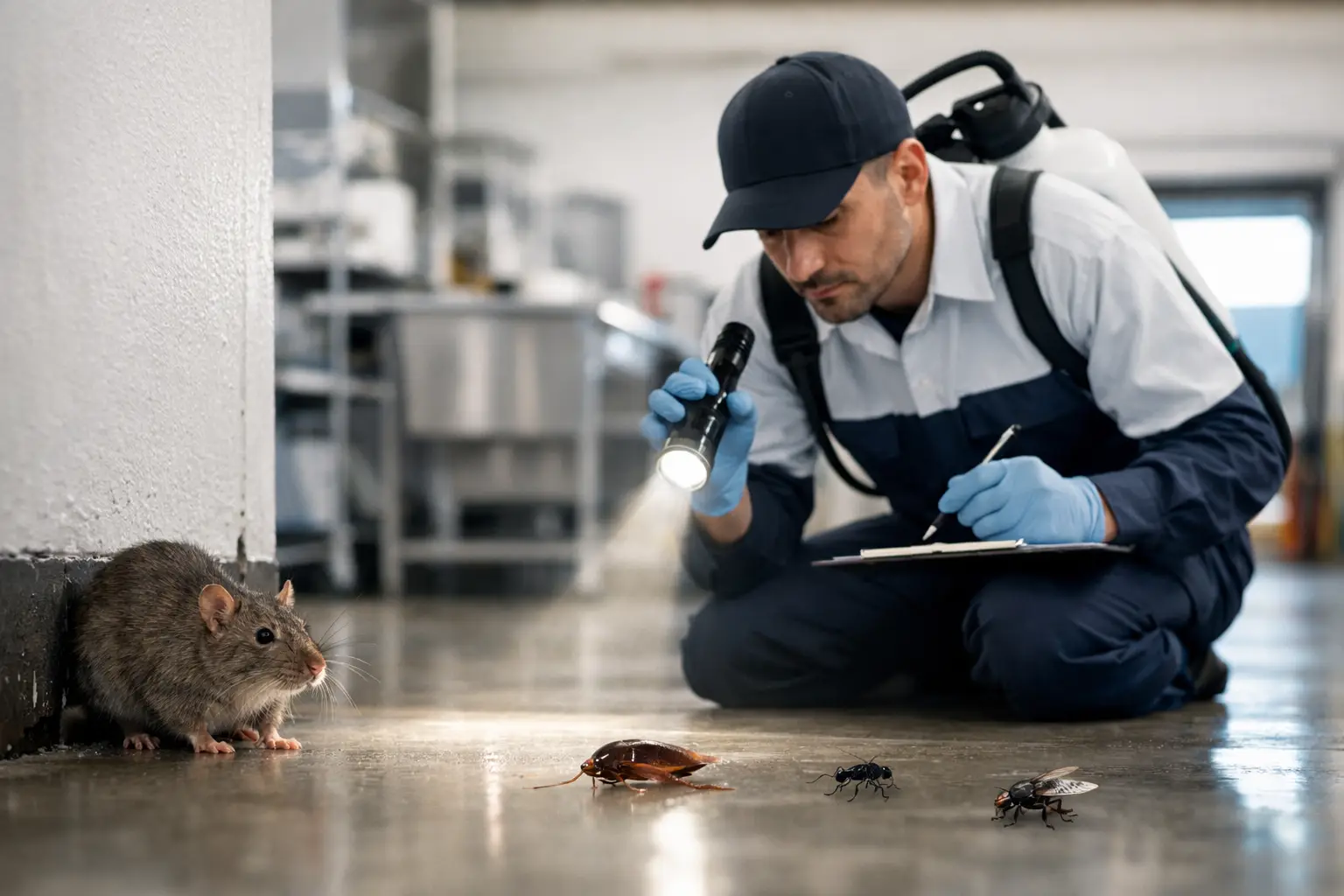
Inside, the review should follow how materials, people, moisture, and waste move through the facility. Receiving docks, storage rooms, utility closets, break rooms, drains, mechanical spaces, production areas, and employee entrances all deserve attention. An auditor is looking for active evidence such as droppings, gnawing, insect activity, webbing, damaged packaging, and nesting material. Just as important are the conditions that allow pests to persist, including clutter, leaks, food residue, excess humidity, and gaps in housekeeping routines.
Exclusion and Structural Conditions
A facility can be clean and still be vulnerable if pests can enter easily. Door sweeps, dock seals, window screens, vents, wall penetrations, roof openings, and utility lines should be checked for gaps. Rodents need surprisingly little space to enter, and small openings around pipes or doors can create repeat activity in otherwise well-managed buildings.
Not every finding requires a major construction project. Some corrections are straightforward, such as installing a door sweep, sealing a pipe penetration, repairing a screen, or improving dumpster-lid use. Larger repairs may need planning and capital approval. A useful audit separates urgent exclusion risks from improvements that can be scheduled over time.
Sanitation, Storage, and Moisture Control
Sanitation is not a judgment on your team. It is a pest-prevention control point. Food debris under equipment, residue in drains, overflowing waste, and poorly managed break areas give pests a reason to remain once they enter. In warehouses, damaged or long-stored inventory can harbor stored product pests and conceal evidence of activity.
Auditors should also examine storage practices. Products should be accessible for inspection, rotated appropriately, and kept off the floor when the operation allows. Clear aisles help employees spot activity earlier and make routine cleaning more effective.
Moisture is another frequent driver. Leaking pipes, condensation, wet mop areas, floor drain buildup, and standing water near the exterior can support cockroaches, flies, mosquitoes, and other pests. Eliminating the moisture source is often more effective than repeatedly treating the symptom.
Monitoring Devices and Documentation
Monitoring devices are only valuable when they are placed strategically, inspected on schedule, and recorded accurately. A professional audit reviews device placement, condition, numbering, and the information collected from them. Devices should support early detection, not simply fill space on a map.
Trend analysis is where records become useful. Repeated activity near the same dock, drain, office kitchen, or storage zone points to a condition that needs correction. Treating that area without addressing the source may reduce sightings temporarily, but it will not deliver dependable control.
How to Prepare for a Pest Audit
Your facility does not need to look perfect to benefit from an audit. It does need to be accessible and honest about ongoing challenges. Give the auditor access to relevant interior and exterior areas, including locations where issues have been reported. Make sure responsible team members are available to explain cleaning schedules, waste handling, receiving procedures, and recent changes to the property.
Before the audit, gather your current pest service reports, device map, pest sighting log, corrective-action list, and any prior inspection findings. If a repair was recommended but not completed, do not hide it. Knowing what remains open helps establish priorities and prevents the same issue from appearing again without context.
It also helps to review recent operational changes. New suppliers, construction work, landscaping changes, equipment installation, water events, altered waste schedules, and shifts in product storage can all change pest pressure. A good pest management provider will account for these details rather than applying the same plan to every location.
Turning Findings Into Lasting Prevention
An audit report should give your team clear next steps, not a vague list of concerns. Each finding should identify the location, the risk, the recommended correction, the responsible party, and a target completion date. High-risk food safety or rodent-entry issues deserve immediate attention. Lower-risk improvements can be placed on a manageable schedule.
Responsibility is shared. Your pest control provider can inspect, monitor, treat when needed, document activity, and recommend exclusion or sanitation improvements. Facility leadership and employees control many day-to-day conditions, including cleaning, door discipline, inventory rotation, repair follow-through, and prompt reporting of pest sightings.
That shared approach is why customized commercial programs perform better than one-size-fits-all service. A multi-location operator may need standardized reporting and account oversight across states, while a single Ohio facility may need hands-on support around seasonal rodent pressure, flies, or a recurring dock issue. The right plan reflects the actual risks of the building and the standards your operation must meet.
Apex Pest Control provides commercial pest audits designed to identify vulnerabilities, document conditions, and build practical corrective-action plans. With trained professionals, responsive service, and programs tailored to complex facilities, the focus stays where it belongs: protecting your people, products, property, and peace of mind.
A pest audit is most valuable when it leads to action. Address the small opening, the moisture source, the missed cleaning task, or the unfinished repair now, while it is still a manageable detail rather than the reason an inspector finds a problem.