



More than 48 million American cases of foodborne illness are reported each year, often traced back to overlooked pest issues in commercial kitchens. For food safety managers in Ohio, maintaining a pest-free environment is crucial for meeting strict health regulations and protecting consumer well-being. This guide gives you insight into effective pest control strategies tailored for Ohio food operations, helping your business stay inspection-ready and keep harmful pathogens out of your kitchen.
Table of Contents
- What Pest Control Means For Food Safety
- Common Pests Threatening Food Operations
- Integrated Pest Management In Commercial Kitchens
- Ohio Food Safety Regulations For Pest Control
- Legal Risks And Compliance Responsibilities
Key Takeaways
| Point | Details |
|---|---|
| Importance of Pest Control | Effective pest control is essential for food safety, protecting against pathogens like salmonella and listeria in food production facilities. |
| Integrated Pest Management | Implementing Integrated Pest Management strategies minimizes chemical use while effectively managing pests through monitoring and prevention. |
| Regulatory Compliance | Ohio food safety regulations require detailed documentation and proactive pest management to avoid legal risks and ensure public health. |
| Legal Consequences | Inadequate pest control can lead to severe penalties, including facility shutdowns and financial losses, emphasizing the need for robust management practices. |
What Pest Control Means for Food Safety
Pest control in food safety represents a critical defense mechanism for protecting human health and maintaining rigorous quality standards in food processing environments. Systematic pest management protocols are essential prerequisites that prevent contamination and ensure consumer safety across commercial food production facilities.
At its core, effective pest control targets multiple disease-carrying organisms like insects, rodents, and birds that can introduce dangerous pathogens into food production systems. These pests can potentially transmit serious foodborne illnesses including salmonella and listeria, which pose significant risks to public health. Good Manufacturing Practices (GMPs) mandate comprehensive strategies that go beyond reactive measures, focusing instead on proactive prevention and systematic monitoring.
Professional pest management in food safety involves implementing integrated approaches that minimize chemical interventions while maximizing protection. Integrated Pest Management frameworks help facilities develop sustainable control strategies that protect both food quality and environmental health. These sophisticated systems analyze potential entry points, implement structural barriers, and create comprehensive tracking mechanisms to identify and neutralize pest risks before they become contamination events.
Pro tip: Conduct monthly comprehensive facility inspections focusing on potential pest entry points, moisture sources, and food debris accumulation to maintain proactive pest prevention protocols.
Common Pests Threatening Food Operations
Food operations in Ohio face significant risks from a diverse range of pest species that can compromise food safety and operational integrity. Common pest categories include cockroaches, rodents, flying insects, and stored product pests, each presenting unique challenges to food processing environments.
Cockroaches represent one of the most dangerous pest threats, capable of spreading numerous pathogens across food preparation areas. These resilient insects can quickly contaminate surfaces, food products, and equipment with bacteria like salmonella and E. coli. Rodents pose equally serious risks, with the ability to introduce dangerous diseases and cause extensive infrastructure damage through their constant gnawing and nesting behaviors. Flying insects such as houseflies can rapidly transfer microorganisms between contaminated and clean surfaces, creating potential cross-contamination scenarios.

Beyond immediate health risks, pest management in agricultural settings involves understanding complex ecological interactions that contribute to potential contamination. Stored product pests like beetles and moths can infest grain storage facilities, potentially destroying entire food inventories and introducing additional contamination vectors. Professional food safety managers must develop comprehensive strategies that address both immediate pest elimination and long-term prevention through systematic monitoring and structural maintenance.
Here is a comparison of common food facility pests, their threats, and typical control strategies:
| Pest Type | Main Threat to Food Safety | Typical Control Strategy |
|---|---|---|
| Cockroaches | Spread pathogens, E. coli | Rigorous sanitation, sealing gaps |
| Rodents | Disease, infrastructure damage | Monitoring, traps, sealing entry points |
| Flying Insects | Cross-contamination | Air curtains, waste management |
| Stored Product Pests | Infest stored goods | Inspect shipments, airtight storage |
Pro tip: Implement a comprehensive pest tracking log that documents pest sightings, entry points, and mitigation actions to create a proactive and data-driven pest management approach.
Integrated Pest Management in Commercial Kitchens
Integrated Pest Management (IPM) represents a sophisticated, holistic approach to pest control that goes far beyond traditional extermination methods in commercial kitchen environments. Sustainable pest control strategies focus on creating comprehensive prevention systems that address the root causes of pest infestations while minimizing environmental impact and chemical interventions.
The core philosophy of IPM involves a multi-layered approach that combines biological, mechanical, cultural, and chemical control methods. Commercial kitchens can implement strategic practices such as sealing potential entry points, maintaining rigorous sanitation protocols, and utilizing natural predators to control pest populations. This approach requires detailed documentation of pest activity, identification of specific vulnerabilities in the kitchen infrastructure, and developing targeted intervention strategies that address unique environmental conditions specific to each food preparation facility.
Successful IPM implementation demands a proactive mindset from food safety managers. By understanding pest behavior, tracking migration patterns, and creating inhospitable environments, commercial kitchens can significantly reduce the risk of contamination. The strategy involves continuous monitoring, immediate response protocols, and systematic prevention techniques that create multiple barriers against potential pest intrusions. These methods not only protect food safety but also help businesses maintain compliance with stringent health regulations and avoid costly disruptions to their operations.
Pro tip: Develop a comprehensive IPM blueprint that includes detailed floor plans highlighting potential pest entry points and create a monthly inspection schedule with specific action protocols for each identified risk area.
Ohio Food Safety Regulations for Pest Control
Ohio’s food safety regulatory landscape establishes rigorous standards for pest control in commercial food establishments, emphasizing prevention and systematic management. Food establishment regulations mandate comprehensive pest control protocols that protect public health and ensure food safety across the state’s diverse food service environments.
The Ohio Department of Health requires food establishments to implement proactive pest management strategies that go beyond basic extermination. These regulations demand detailed documentation of pest control activities, regular facility inspections, and immediate corrective actions when potential pest vulnerabilities are identified. Commercial kitchens must maintain environments that prevent pest harborage, including sealing potential entry points, maintaining strict sanitation protocols, and developing systematic monitoring processes that track and address potential pest risks before they become significant contamination threats.
Ohio food safety standards outline specific requirements for pest management that include comprehensive documentation, staff training, and regular professional assessments. Food service managers must develop robust pest prevention plans that demonstrate a proactive approach to controlling potential infestations. These plans typically require detailed risk assessments, identification of specific pest vulnerabilities, and implementation of targeted intervention strategies that address the unique environmental conditions of each food preparation facility.
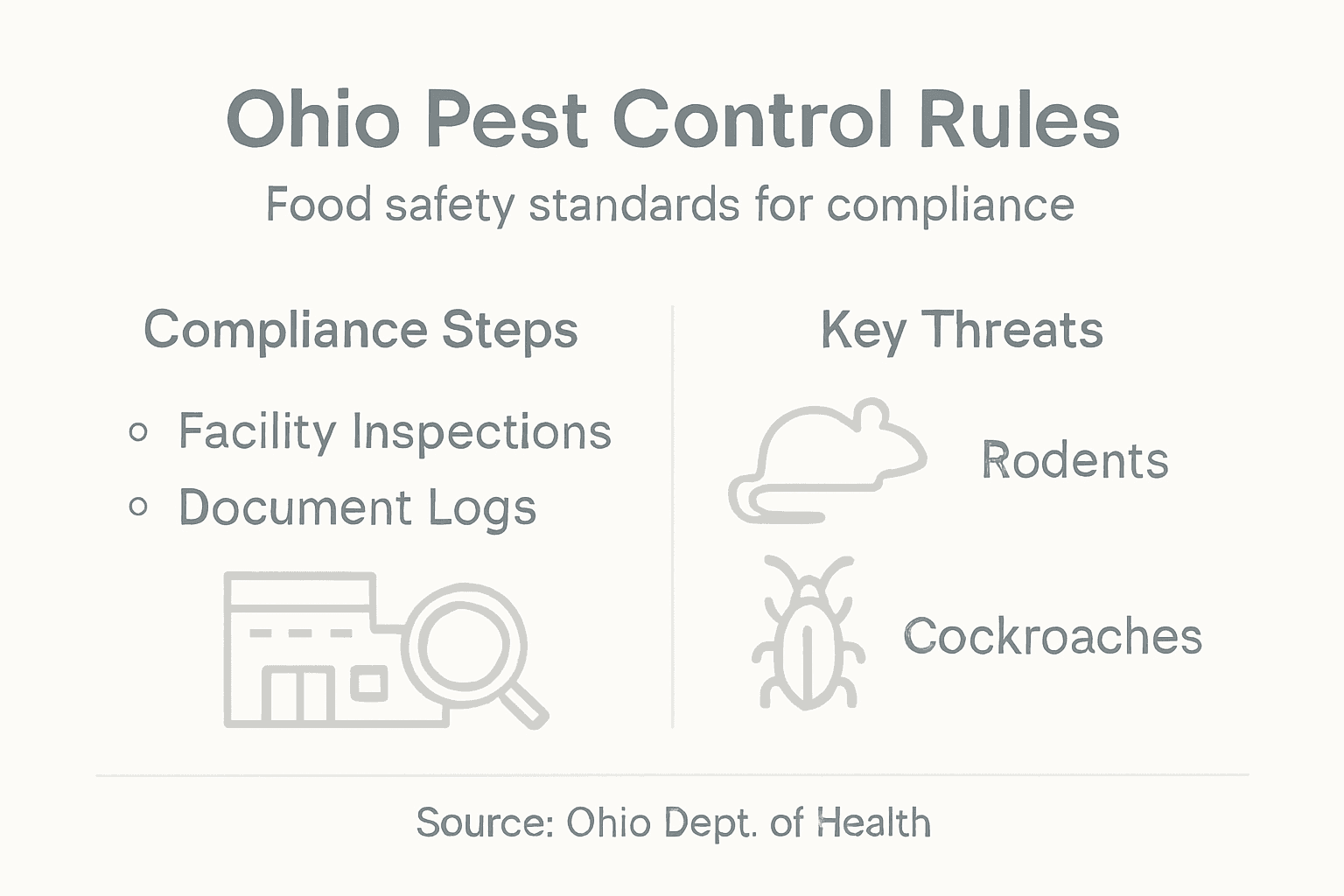
Pro tip: Create a comprehensive pest control documentation system that includes detailed inspection logs, treatment records, and continuous improvement protocols to ensure consistent compliance with Ohio food safety regulations.
The following table summarizes key requirements for pest control compliance in Ohio food establishments:
| Compliance Area | What It Involves | Business Impact |
|---|---|---|
| Documentation | Maintain detailed inspection, treatment logs | Demonstrates due diligence, avoids penalties |
| Proactive Prevention | Routine inspections, staff training | Reduces infestations, lowers shutdown risk |
| Immediate Actions | Rapid response to vulnerabilities | Prevents major contamination, protects reputation |
| Professional Assessments | Regular evaluations by licensed experts | Ensures updated practices, enhances food safety |
Legal Risks and Compliance Responsibilities
Food service establishments face significant legal consequences for inadequate pest control measures, with regulatory frameworks establishing clear expectations for proactive management and documentation. Food Safety Modernization Act requirements outline stringent preventive control standards that demand comprehensive pest management protocols to protect public health and maintain operational integrity.
The potential legal risks extend far beyond simple monetary penalties. Regulatory enforcement can result in severe consequences including facility shutdowns, mandatory recalls, significant financial fines, and permanent damage to business reputation. Food service managers must understand that pest control is not merely a recommended practice but a legal obligation. This means developing robust documentation systems, maintaining detailed inspection logs, implementing immediate corrective actions, and demonstrating a systematic approach to preventing potential pest-related contamination risks.
Pest management compliance standards require active collaboration with licensed pest management professionals who can provide expert guidance and documentation. Businesses must maintain verifiable records of pest control activities, including treatment logs, inspection reports, and continuous improvement strategies. These documentation practices serve as critical evidence of due diligence, helping establishments demonstrate their commitment to maintaining safe, hygienic food production environments in the event of regulatory reviews or potential legal challenges.
Pro tip: Develop a comprehensive digital pest management documentation system that provides real-time tracking, automatic alerts for potential vulnerabilities, and seamless reporting capabilities for regulatory compliance.
Ensure Food Safety with Expert Pest Control Solutions in Ohio
Maintaining strict pest control protocols is crucial for any food operation in Ohio striving to meet regulatory standards and protect public health. If you are concerned about preventing contamination from common pests like cockroaches, rodents, or flying insects, professional and proactive pest management is key. Apex Pest Control specializes in comprehensive commercial pest solutions designed to support your Integrated Pest Management efforts and help you comply with Ohio food safety regulations.
Don’t wait until a pest issue threatens your business reputation or forces costly shutdowns. Our expert team understands the importance of detailed documentation, routine inspections, and targeted treatments that fit the unique needs of food establishments. Visit our Uncategorized Archives – Apex Pest Control to learn more about effective pest strategies and get tailored advice. Ready to take control and protect your facility now Get a Free Quote and let us help you implement sustainable pest prevention measures that keep your kitchen safe and compliant.
Frequently Asked Questions
What is the importance of pest control in food safety?
Effective pest control is essential for protecting human health and maintaining quality standards in food processing environments. It prevents contamination from disease-carrying organisms like insects, rodents, and birds, ensuring consumer safety.
How can Integrated Pest Management (IPM) enhance pest control in commercial kitchens?
IPM uses a holistic approach that combines biological, mechanical, cultural, and chemical control methods to address the root causes of pest infestations. This leads to reduced pest populations while minimizing environmental impact and chemical usage.
What are the common pests that threaten food safety in food operations?
Common pests include cockroaches, rodents, flying insects, and stored product pests. Each poses unique risks such as spreading pathogens, causing infrastructure damage, or contaminating food products.
What are the legal consequences of inadequate pest control in food establishments?
Inadequate pest control can result in severe legal consequences, including facility shutdowns, recalls, financial penalties, and damage to business reputation, reinforcing the need for robust documentation and proactive management strategies.