


More than **35 percent of American homes experience some form of pest problem each year, with Ohio properties especially vulnerable due to changing seasons and diverse wildlife. For homeowners balancing family safety and property value, unwanted pests pose real risks that go beyond nuisance. If you want peace of mind without resorting to harsh chemicals, understanding proactive, eco-friendly prevention and ongoing maintenance offers smarter protection for both your home and the local environment.
Table of Contents
- What Pest Prevention Planning Involves
- Common Ohio Pests and Seasonal Threats
- Proactive Strategies and Eco-Friendly Methods
- Benefits of Regular Maintenance Programs
- Risks of Neglecting Pest Prevention
Key Takeaways
| Point | Details |
|---|---|
| Proactive Pest Prevention is Essential | Developing a comprehensive prevention plan helps stop pest issues before they occur, protecting homes and health. |
| Understanding Seasonal Challenges | Recognizing seasonal pest behaviors allows homeowners to implement timely strategies for effective management. |
| Regular Maintenance is Key | Consistent monitoring and interventions can prevent infestations and minimize long-term costs associated with pest damage. |
| Neglecting Prevention Leads to Risks | Ignoring pest management can result in significant structural damage, health risks, and increased expenses over time. |
What Pest Prevention Planning Involves
Pest prevention planning is a strategic and comprehensive approach to protecting Ohio homes from unwanted insect and wildlife invasions. This systematic method goes beyond reactive treatments by focusing on proactive strategies designed to stop pest problems before they start. Effective prevention involves understanding local pest behaviors, identifying potential entry points, and implementing targeted interventions that create an inhospitable environment for unwanted creatures.
A comprehensive pest prevention plan typically includes multiple layers of protection. These strategies often begin with a detailed property assessment that identifies vulnerabilities, such as moisture issues, structural gaps, or landscaping features that might attract pests. Integrated pest management techniques emphasize using environmentally responsible methods that minimize health risks while protecting the ecosystem. This approach might involve physical barriers, biological controls, and strategic use of targeted treatments.
Key components of a robust pest prevention plan include:
- Sealing potential entry points around windows, doors, and foundation
- Removing standing water and managing moisture levels
- Maintaining proper yard and vegetation management
- Regular property inspections
- Implementing seasonal prevention strategies
For Ohio homeowners, understanding local pest patterns is crucial. Different seasons bring unique challenges, from spring ant invasions to fall rodent migrations. A well-designed prevention plan adapts to these seasonal shifts, creating a dynamic defense system that evolves with changing environmental conditions.
Pro tip: Conduct a thorough property walk-through every season, paying special attention to potential pest entry points and addressing minor maintenance issues before they become major infestations.
Common Ohio Pests and Seasonal Threats
Ohio’s diverse climate and landscape create a complex environment that supports numerous pest species throughout the year. Understanding the seasonal patterns and specific threats helps homeowners develop more effective prevention strategies. Ohio’s Plant Pest Control program highlights the critical importance of early detection and proactive management for protecting both residential properties and agricultural resources.
Seasonal pest challenges in Ohio vary dramatically across different times of the year. Spring typically brings carpenter ants and termites emerging from winter hibernation, while summer sees increased activity from mosquitoes, ticks, and stinging insects. Fall migration periods trigger rodent invasions as mice and rats seek warm indoor shelter, and winter months can reveal hidden pest populations that have been quietly establishing themselves in homes.
The most common Ohio household pests include:
- Ants (carpenter, pavement, sugar)
- Rodents (mice, rats)
- Spiders
- Stink bugs
- Bed bugs
- Cockroaches
- Termites
- Mosquitoes and ticks
Each pest presents unique challenges and potential risks. Some, like termites, can cause significant structural damage, while others like ticks pose serious health concerns through disease transmission. Understanding these threats allows Ohio homeowners to implement targeted prevention strategies that address specific seasonal and regional pest behaviors.
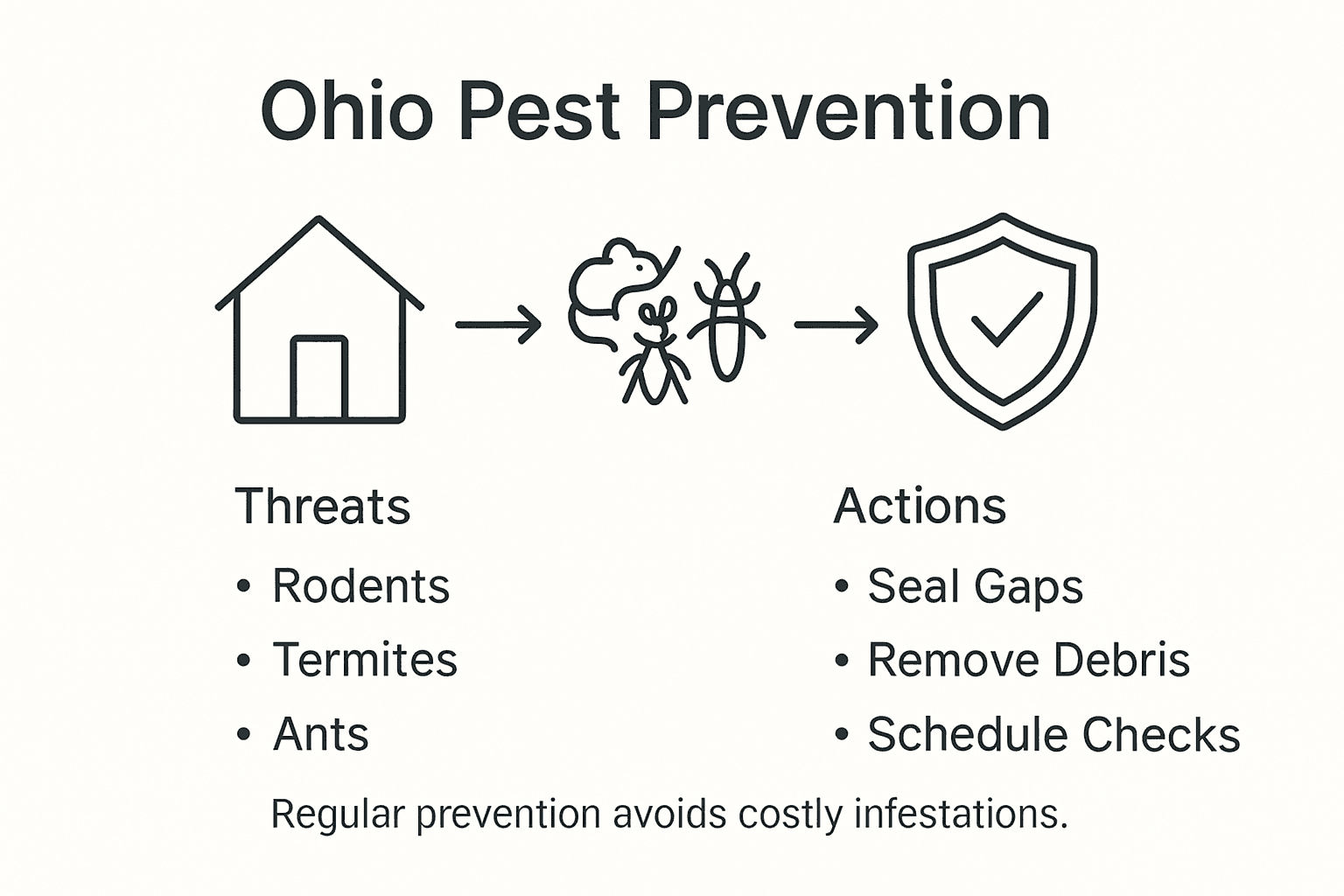
Here’s a comparative look at common Ohio pests and their typical seasonal peak periods:
| Pest Type | Peak Season | Primary Risk |
|---|---|---|
| Carpenter Ants | Spring | Structural wood damage |
| Termites | Spring/Summer | Foundation compromise |
| Mosquitoes & Ticks | Summer | Disease transmission |
| Rodents (Mice, Rats) | Fall/Winter | Wiring damage, contamination |
| Stink Bugs | Fall | Indoor nuisance, odor |
| Cockroaches | Year-round | Health hazards, contamination |
| Bed Bugs | Year-round | Bites, rapid spread |
This table highlights when each pest is most problematic, helping homeowners prioritize seasonal prevention efforts.
Pro tip: Maintain a seasonal pest log documenting any pest sightings or entry points, which can help identify patterns and create more effective, personalized prevention strategies.
Proactive Strategies and Eco-Friendly Methods
Proactive pest management represents a sophisticated approach that goes beyond traditional reactive treatments, focusing on prevention and ecosystem balance. Ecological pest management principles emphasize creating environments that naturally discourage pest populations while minimizing environmental impact. This strategy involves understanding pest behaviors, identifying potential vulnerabilities, and implementing holistic solutions that protect both homes and surrounding ecosystems.

Eco-friendly pest prevention strategies center on creating inhospitable conditions for pests through strategic environmental modifications. These methods include maintaining proper landscaping, eliminating moisture sources, sealing potential entry points, and promoting natural predator populations. By focusing on prevention rather than chemical intervention, homeowners can develop long-term pest management solutions that are both effective and environmentally responsible.
Key proactive and eco-friendly pest management techniques include:
- Implementing natural habitat modifications
- Using pest-resistant plant varieties
- Maintaining proper yard sanitation
- Encouraging beneficial insect populations
- Utilizing mechanical barriers and exclusion methods
- Monitoring and early detection systems
- Minimizing standing water and moisture accumulation
Understanding the delicate balance between pest control and ecological preservation is crucial. Comprehensive ecological approaches prioritize biodiversity and natural predation cycles, recognizing that complete pest elimination is both impossible and potentially harmful to the local ecosystem. Successful strategies focus on population management and creating balanced environments that naturally resist pest overgrowth.
Pro tip: Create a natural barrier around your home by planting pest-repelling vegetation like lavender, marigolds, and mint, which can help discourage insects while enhancing your landscape’s aesthetic appeal.
Benefits of Regular Maintenance Programs
Regular maintenance programs represent a strategic approach to pest management that goes far beyond occasional treatments. Integrated Pest Management (IPM) principles emphasize the critical importance of consistent, proactive interventions that prevent pest populations from gaining a foothold in residential environments. These systematic approaches offer homeowners significant advantages that extend well beyond simple pest control.
The economic and environmental benefits of regular maintenance programs are substantial. By implementing continuous monitoring and targeted interventions, homeowners can dramatically reduce the potential for extensive pest damage. Ongoing preventative measures help maintain a balanced ecosystem, minimize chemical usage, and protect beneficial organisms while avoiding the high costs associated with large-scale pest infestations.
Key benefits of consistent pest maintenance programs include:
- Early detection of potential pest issues
- Reduced long-term pest management costs
- Minimized structural damage to homes
- Protection of family health and safety
- Preservation of property value
- Environmentally responsible pest control
- Customized prevention strategies
Regular maintenance programs provide homeowners with a comprehensive defense strategy that adapts to changing seasonal conditions and emerging pest threats. By establishing a consistent monitoring and intervention approach, residents can create a proactive shield that protects their homes, families, and surrounding environments from potential pest-related challenges.
Below is a summary of benefits from enrolling in regular pest maintenance programs:
| Benefit | Long-Term Impact | Why It Matters |
|---|---|---|
| Early Issue Detection | Stops infestations before spreading | Health and cost savings |
| Less Structural Damage | Preserves home integrity | Reduces repair expenses |
| Chemical Reduction | Protects beneficial local wildlife | Supports ecosystem health |
| Maintains Property Value | Prevents value loss from pests | Safeguards investment |
This summary demonstrates how ongoing professional care delivers both financial and environmental protections for Ohio homeowners.
Pro tip: Schedule quarterly professional inspections to catch potential pest vulnerabilities before they become significant problems, allowing for timely and targeted interventions.
Risks of Neglecting Pest Prevention
Neglecting pest prevention can transform a manageable situation into a potentially catastrophic home maintenance nightmare. Urban pest management research reveals that unchecked pest populations rapidly expand, creating significant health and structural risks for homeowners. What begins as a minor issue can quickly escalate into an extensive and expensive problem that threatens both property integrity and resident wellness.
The consequences of pest prevention neglect extend far beyond simple nuisance factors. Uncontrolled pests can cause extensive structural damage, compromise home safety, and introduce serious health hazards. Termites might silently consume wooden structures, rodents can chew through electrical wiring creating fire risks, and certain insects carry diseases that directly impact human and pet health. These potential damages often far exceed the cost of proactive prevention strategies.
Specific risks associated with neglecting pest prevention include:
- Structural damage to home foundations
- Electrical system compromises
- Potential health risks from disease transmission
- Decreased property value
- Expensive emergency treatment costs
- Potential compromise of food safety
- Psychological stress from persistent infestations
Global pest management studies highlight that climate change is increasingly creating more complex pest migration and reproduction patterns, making prevention even more critical. Ohio homeowners face unique challenges with seasonal pest variations that require consistent, strategic monitoring and intervention to maintain a safe, healthy living environment.
Pro tip: Conduct a comprehensive home perimeter inspection every season, sealing potential entry points and identifying early signs of pest activity before they become full-scale infestations.
Protect Your Ohio Home with Expert Pest Prevention Planning
Protecting your Ohio home from seasonal and persistent pest threats requires more than occasional treatments. The article highlights key challenges like sealing entry points, managing moisture, and adapting strategies to seasonal pest behaviors. Apex Pest Control specializes in customized, eco-friendly pest prevention plans that address these exact pain points and help you maintain a safe, healthy living environment year-round.
Don’t wait for infestations to escalate into costly damage or health risks. Apex offers comprehensive residential services including Mosquito Prevention, Flea & Tick Control, Rodent Exclusion, and more. Our Uncategorized Archives – Apex Pest Control provide insights on sophisticated prevention techniques while our team works with you to implement proactive and tailored solutions. Take the first step by requesting your free, no-obligation consultation today at Apex Pest Control Free Quote. Secure your home’s future and enjoy peace of mind with professional pest prevention designed for Ohio homes.
Frequently Asked Questions
What is pest prevention planning?
Pest prevention planning is a proactive strategy designed to protect homes from pest invasions by identifying potential entry points and implementing interventions to create an inhospitable environment for pests.
What are common pests in Ohio homes?
Common pests in Ohio include ants, rodents, spiders, stink bugs, bed bugs, cockroaches, termites, and mosquitoes. Each pest presents unique challenges and risks to homeowners.
How can I prevent pests from entering my home?
You can prevent pests by sealing entry points around windows and doors, managing moisture levels, landscaping correctly, and conducting regular property inspections for vulnerabilities.
Why are regular maintenance programs important for pest control?
Regular maintenance programs are crucial because they help detect potential pest issues early, minimize structural damage, and provide ongoing protection for your home, ensuring a balanced ecosystem while reducing overall pest management costs.