




TL;DR:
- Pest proofing your home involves sealing entry points and performing seasonal maintenance to keep pests outside permanently. It is most effective when combined with strategic inspections and professional exclusion methods, especially before the first Ohio frost. Regularly revisiting and maintaining the home’s exterior prevents pests from establishing enduring infestations.
Pest proofing your home is the process of physically blocking every entry point, removing attractants, and maintaining seasonal defenses to keep ants, rodents, and other pests permanently outside. Oakwood, Ohio homeowners face a specific set of challenges: the region’s freeze-thaw winters crack foundations, older brick colonials along Far Hills Avenue develop weep hole vulnerabilities, and the dense tree canopy that makes Oakwood beautiful also gives carpenter ants and squirrels a direct highway to your roofline. This guide to pest proofing home covers the exact inspection steps, sealing methods, seasonal routines, and professional resources you need to protect your Oakwood residence year-round.
What are the most common pests in Oakwood homes and how do they enter?
Carpenter ants, house mice, Norway rats, and occasional yellow jacket wasps are the four pests Oakwood homeowners report most often. Each species exploits a different structural weakness, which is why a single trap or spray rarely solves the problem for long.
How pests get inside Oakwood homes:
- Foundation cracks. Ohio’s freeze-thaw cycles widen hairline cracks every winter. Mice can compress their bodies to fit through a gap the size of a dime, roughly 3/8 of an inch.
- Weep holes in brick siding. Many Oakwood homes built between the 1940s and 1970s have exposed brick weep holes that are completely open to ants and mice.
- Garage door thresholds. A warped or worn rubber seal at the base of a garage door leaves a gap wide enough for rats to enter.
- Roof eaves and soffit vents. Carpenter ants and squirrels exploit any gap where the fascia board meets the soffit, especially after wood rot sets in.
- Window and door frames. Settling foundations shift frames out of square, creating gaps along the edges that insects exploit immediately.
Ohio’s fall season is the single most critical window for rodent entry. As temperatures drop below 50°F, mice and rats actively seek warm shelter, and a home with even minor gaps becomes a target. Pest health risks in Oakwood are real: mice contaminate food surfaces with hantavirus-carrying droppings, and carpenter ant colonies cause structural wood damage that goes undetected for years. Understanding these entry behaviors is the foundation of any effective pest management plan for homeowners.
How to perform a thorough home inspection for pest entry points
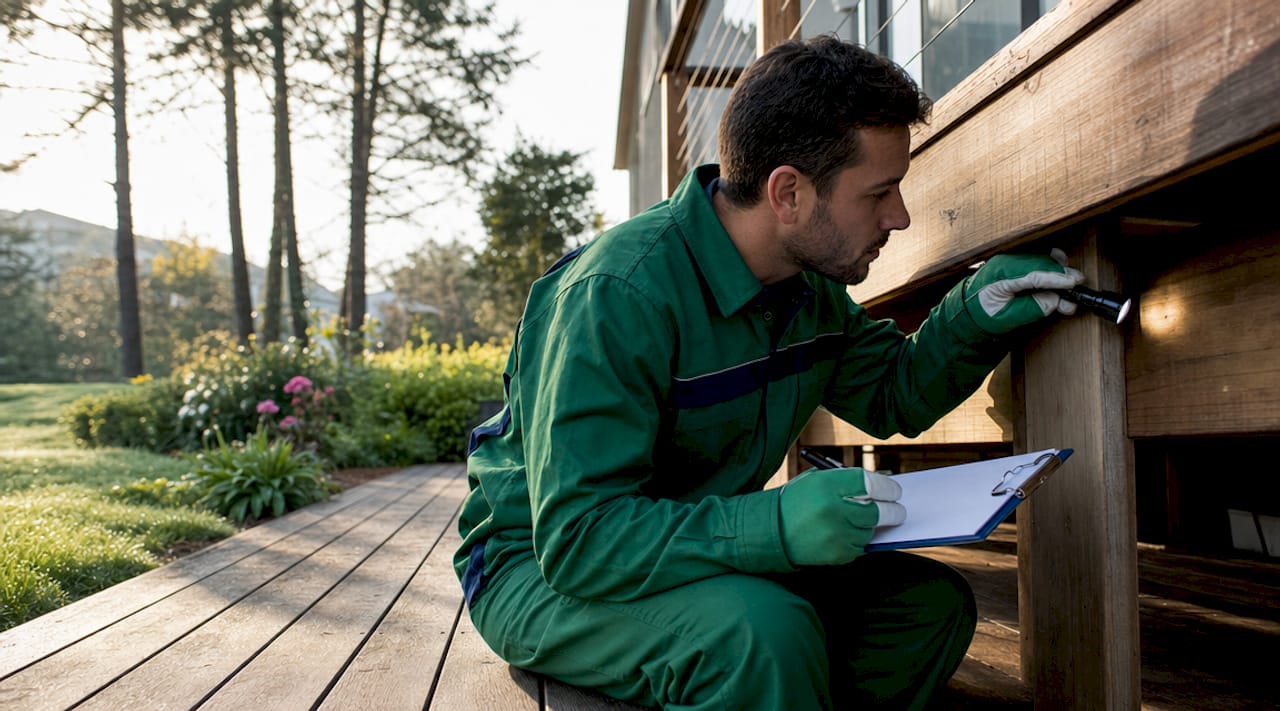
A systematic inspection is the first physical step in learning how to pest proof your house. You need a flashlight, a #2 pencil, a small mirror, work gloves, and a ladder tall enough to reach your roofline safely.
- Walk the foundation perimeter. Crouch down and shine your flashlight along the base of the foundation. Look for cracks, gaps around utility conduits, and places where the sill plate meets the concrete. Mark every gap with blue painter’s tape so you can find them again.
- Check all siding joints and window frames. Run your gloved finger along every seam. If you can feel airflow or daylight, pests can enter. Pay special attention to corners where two siding panels meet.
- Apply the pencil test. A #2 pencil fits through a gap that a young mouse can squeeze through. If your pencil slides into a crack, that crack needs sealing. For rats, use a quarter as your gauge instead.
- Inspect vents and dryer exhausts. Every exterior vent is a potential entry point. Check that flap dampers open and close freely and that screens are intact. A clogged dryer vent with a broken flap is one of the most overlooked entry points in Oakwood homes.
- Examine the garage threshold. Close your garage door in daylight and look for light coming through the bottom seal. Any visible light means the seal is compromised.
- Check the roofline from the ladder. Look for gaps where the soffit meets the fascia, missing or damaged vent screens, and any wood that shows signs of rot or carpenter ant frass, which looks like coarse sawdust.
- Document everything. Take photos of each gap and note the material surrounding it. This determines which sealing material you use in the next step.
Seasonal inspections in Ohio are most effective when scheduled in late August or early September, before rodents begin their fall migration indoors.
Pro Tip: Inspect after the first hard rain of the season. Water stains and soft spots in drywall near exterior walls often reveal entry points that are invisible during dry weather.
Effective pest proofing methods: sealing and exclusion for Oakwood homes
Mechanical exclusion is the highest ROI pest proofing method available to homeowners. It permanently stops pests without toxicity and does not require repeat applications the way chemical treatments do. The materials you choose matter as much as the technique.
Choosing the right sealing materials
| Gap Type | Recommended Material | Why It Works |
|---|---|---|
| Small cracks under 1/4 inch | Exterior-grade silicone caulk | Flexible through freeze-thaw cycles; bonds to masonry and wood |
| Gaps 1/4 to 1 inch (rodent risk) | Copper mesh packed first, then caulk over top | Rodents cannot chew copper; caulk holds mesh in place |
| Door and window frames | Self-adhesive foam weather stripping | Compresses to fill irregular gaps; replaceable annually |
| Garage door bottom | Heavy-duty rubber door sweep | Rated for vehicle traffic; seals against uneven concrete |
| Weep holes in brick | Stainless steel or plastic mesh covers | Blocks pests while preserving moisture drainage |
Rodents chew through silicone caulk alone, which is why the copper mesh and caulk sandwich is the standard for any gap larger than 1/4 inch. Pack copper mesh tightly into the gap first, then apply a bead of exterior-grade silicone caulk over the top. Avoid steel wool in damp areas like basement walls because it rusts within one season and loses its blocking ability.
Brick weep holes require specialized covers rather than caulk. Sealing them completely traps moisture inside the wall cavity, which leads to mold and structural damage. Stainless steel mesh inserts allow airflow while blocking ants and mice.
Pro Tip: Replace weather stripping on every exterior door every two years in Ohio. The freeze-thaw cycle compresses and cracks foam stripping faster than in warmer climates, and a gap you cannot see in summer becomes a rodent entry point by October.
For garage doors, common garage door seal failures are among the most overlooked pest entry points in residential properties. A door sweep costs under $30 and takes 20 minutes to install. Professional minor structural exclusion services run $50 to $150 per hour if you prefer a licensed contractor to handle the sealing work.
Seasonal pest proofing strategies for Oakwood homeowners
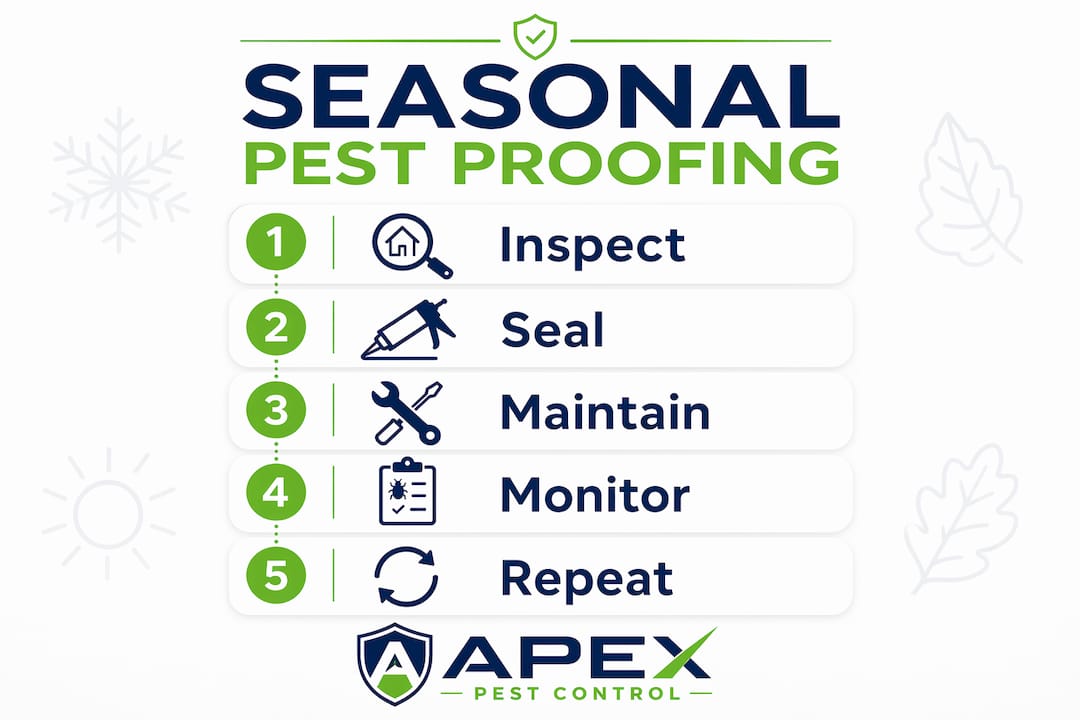
Ohio’s four distinct seasons each create different pest pressures. A single annual inspection is not enough. Effective pest proofing solutions require a calendar-based approach.
Spring (March through May):
- Inspect the foundation perimeter for new cracks opened by winter frost heave.
- Clean gutters and downspouts. Standing water in clogged gutters attracts mosquitoes and carpenter ants within days.
- Trim any tree branches that touch or overhang the roofline. Carpenter ants travel branch-to-roof in Oakwood’s mature neighborhoods constantly.
- Repair any weather stripping damaged by winter ice.
Summer (June through August):
- Check and repair window screens. A single torn screen on a ground-floor window is enough for a yellow jacket to establish a nest inside a wall cavity.
- Remove standing water sources: birdbaths, clogged downspout extensions, and low spots in the yard.
- Keep firewood stacked at least 20 feet from the house. Wood piles are prime carpenter ant habitat.
Fall (September through November):
- This is the most critical window for rodent-proofing. Complete all sealing work before the first frost.
- Install chimney caps if you do not already have them. Squirrels and raccoons enter through open flues regularly in Oakwood.
- Secure attic vents with hardware cloth rated at 1/4 inch mesh or smaller.
- Landscaping touching the home creates a direct pest highway. Pull mulch and shrubs at least 12 inches back from the foundation before winter.
Winter (December through February):
- Monitor interior spaces for signs of rodent activity: droppings near the water heater, gnaw marks on food packaging, or grease smears along baseboards.
- Check that all seals remain intact after hard freezes. Silicone caulk applied in cold temperatures can fail to bond properly and may need reapplication in spring.
When to use chemical controls and when to call a professional
Integrated Pest Management, the recognized industry standard for pest management for homeowners, treats chemical applications as a last resort rather than a first response. Physical exclusion and habitat modification come first. Chemicals fill the gap when an active infestation exists alongside your sealing work.
When DIY chemical controls are appropriate:
- Small ant trails entering through a sealed or soon-to-be-sealed gap. Terro Liquid Ant and Roach Baits attract multiple ant species and reduce colonies when placed out of reach of children and pets. They work by allowing forager ants to carry the bait back to the colony.
- Single mouse entry confirmed and sealed. A snap trap or enclosed bait station placed along the wall where droppings appear is effective and low-risk.
When to call a licensed professional:
- Any wasp or yellow jacket nest inside a wall cavity or attic. Disturbing these without proper equipment causes aggressive stinging responses and can result in serious injury.
- Confirmed carpenter ant colony with visible structural damage. These colonies can contain tens of thousands of workers and require targeted treatment beyond what retail products deliver.
- Rodent activity in multiple rooms or signs of nesting in insulation. This indicates an established population, not a single entry event.
Comparing DIY pest control versus professional extermination comes down to scale and species. DIY works for early-stage, single-species problems. Professional services pay for themselves when an infestation has progressed or involves a species that poses structural or health risks. The role of exclusion in pest management is that it reduces the frequency and cost of both DIY and professional chemical treatments over time.
Key takeaways
Mechanical exclusion combined with seasonal maintenance is the most effective and cost-efficient strategy for keeping Oakwood homes pest-free year-round.
| Point | Details |
|---|---|
| Exclusion outperforms chemicals | Sealing entry points permanently stops pests without repeat chemical applications. |
| Use the pencil and dime tests | A pencil gap admits mice; a dime-sized gap admits rats. Seal both immediately. |
| Copper mesh and caulk sandwich | Pack copper mesh into gaps over 1/4 inch before caulking to stop rodents from chewing through. |
| Fall is the critical season | Complete all sealing and exclusion work before the first Ohio frost to block rodent entry. |
| Pull landscaping from the foundation | Keep mulch and shrubs 12 inches away from the foundation to remove pest access routes. |
Why exclusion is the one step Oakwood homeowners keep skipping
I have seen hundreds of Oakwood homes where the homeowner spent money on bait stations, sprays, and traps every single year without ever fixing the 3/8-inch gap behind the dryer vent. The pests kept coming back because the door was still open. Exclusion is the step that actually ends the cycle, and it is consistently the last thing homeowners try instead of the first.
The mistake I see most often is treating landscaping as a separate issue from pest control. Entomologist Richard Cooper has documented how shrubs and mulch touching a foundation create a direct pest highway, and in Oakwood’s older neighborhoods with mature foundation plantings, this is practically universal. Pulling that mulch back 12 inches costs nothing and eliminates a major access route overnight.
My honest recommendation: do one thorough inspection every fall, fix every gap you find that season, and schedule a professional inspection every two to three years to catch what you missed. That rhythm costs far less than annual exterminator visits and produces better results. Pest proofing is not a one-time project. It is a maintenance habit, the same way you change your furnace filter or clean your gutters. The homes in Oakwood that stay pest-free are the ones where the owner treats the exterior envelope as something worth maintaining, not just the interior.
— Dushan
How Apexpestcontrol helps Oakwood homeowners stay pest-free
Apexpestcontrol has served Ohio homeowners since 1969, and Oakwood’s mix of brick colonials, mature trees, and aging foundations is territory the team knows well. If your fall inspection turns up active rodent signs or carpenter ant damage, the rodent exclusion services at Apexpestcontrol cover full structural sealing, trap placement, and follow-up monitoring. For homeowners who want a professional set of eyes before committing to DIY repairs, Apexpestcontrol offers free quotes and consultations. Reach the team at 1-800-684-2284 or visit keeping your home safe from pests to schedule an assessment specific to your Oakwood property.
FAQ
What is the most effective way to pest proof a house?
Mechanical exclusion, sealing all gaps and entry points with copper mesh and exterior-grade silicone caulk, is the most effective method. It permanently blocks access without relying on repeat chemical treatments.
How do I find rodent entry points in my Oakwood home?
Use the pencil test: if a #2 pencil fits through a crack, a mouse can enter through it. Walk the full foundation perimeter with a flashlight and mark every gap you find with painter’s tape before sealing.
When should I schedule a pest proofing inspection in Ohio?
Late August through September is the best window. Completing your inspection and sealing work before the first frost blocks rodents before they begin their fall search for warm shelter.
Can I seal brick weep holes to keep pests out?
Never seal weep holes with caulk. Use stainless steel or plastic mesh inserts instead. Fully blocking weep holes traps moisture inside the wall cavity and causes mold and structural damage over time.
When does DIY pest control stop being enough?
DIY methods work for early-stage, single-species problems like a small ant trail or one confirmed mouse entry point. Call a licensed professional when you have an active wasp nest inside a wall, confirmed carpenter ant structural damage, or rodent activity in multiple rooms.