



Over 30% of U.S. homes report health issues related to pests each year, from asthma attacks triggered by cockroach allergens to diseases spread by rodents. For Northeast Ohio homeowners and business owners, the threat is real and growing. Effective pest safety protocols protect your family, employees, and property value while prioritizing eco-friendly solutions. This guide delivers practical, region-specific strategies to slash infestation risks and safeguard what matters most.
Table of Contents
- Why Pest Safety Protocols Matter: Health and Property Impacts
- Understanding Pest Behavior and Regional Risks
- Common Misconceptions About Pest Safety
- Eco-Friendly and Family-Safe Pest Control Methods
- Stepwise Pest Safety Protocols for Prevention
- Developing a Framework for Pest Safety Protocols
- Benefits of Consistent Pest Safety Protocols
- Protect Your Northeast Ohio Property with Apex Pest Control
- Frequently Asked Questions About Pest Safety Protocols
Key Takeaways
| Point | Details |
|---|---|
| Health and property impacts | Pests cause allergies, disease transmission, and costly repairs averaging over $1,000 per rodent incident. |
| Regional pest patterns | Northeast Ohio pest activity peaks April through October, with rodents invading indoors during colder months. |
| Integrated Pest Management | IPM reduces chemical use by up to 60% while maintaining effective control through habitat modification and monitoring. |
| Prevention effectiveness | Sealing entry points and maintaining sanitation cuts infestation risks by 70 to 80%. |
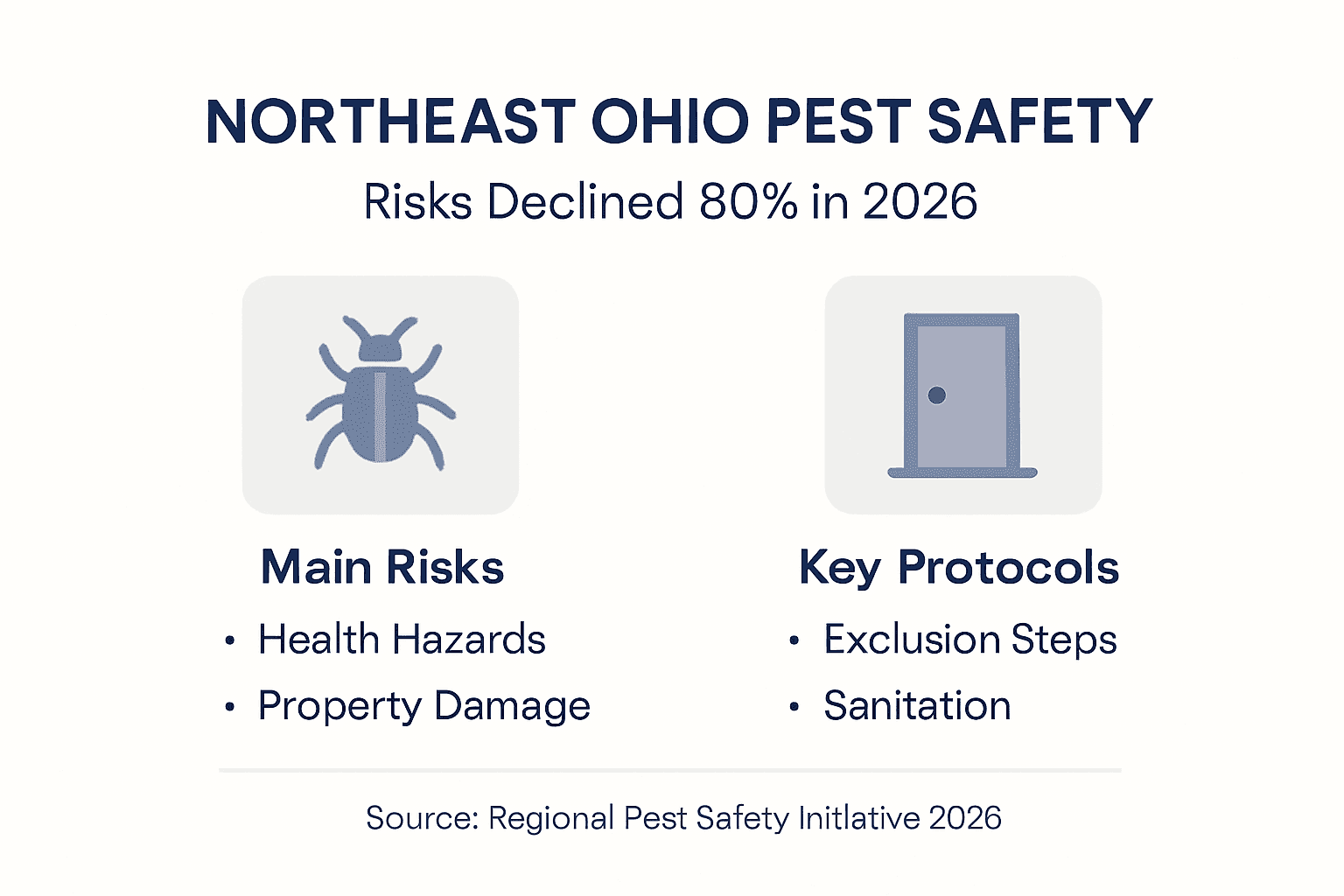
| Long-term consistency | Sustained pest safety protocols reduce problems by 80% within three years and protect family health. |
Why Pest Safety Protocols Matter: Health and Property Impacts
Pests threaten your health in ways many homeowners overlook. Rodents carry hantavirus and salmonella, while cockroaches trigger asthma attacks in children. Bed bugs disrupt sleep and cause skin infections. Each infestation introduces allergens, pathogens, and stress into your home environment.
The financial toll compounds quickly. Rodent damage repair costs average over $1,000 per incident when mice chew through wiring, insulation, and structural materials. Termites silently destroy wood framing. Carpenter ants excavate galleries that weaken support beams. Without proper protocols, these problems escalate from minor annoyances to major expenses.
Protecting your Northeast Ohio property requires understanding regional pest pressures. The Northeast Ohio Pest Calendar shows seasonal patterns that help you time interventions effectively. Spring brings ant invasions as colonies expand. Summer heat drives mosquitoes and wasps. Fall triggers rodent migrations indoors.
Key health and property risks include:
- Respiratory problems from cockroach and rodent allergens
- Foodborne illness from contaminated surfaces and stored goods
- Structural damage to wiring, insulation, and framing
- Sleep disruption and psychological stress from bed bugs
- Disease transmission including hantavirus, salmonella, and Lyme disease
Implementing 7 essential residential pest control tips addresses these threats before they escalate. The goal is proactive prevention rather than reactive treatment.
Understanding Pest Behavior and Regional Risks
Northeast Ohio’s climate creates distinct pest activity windows. Seasonal pest infestation patterns peak during warmer months from April to October, with rodents increasingly invading indoors in colder months. Understanding these cycles helps you anticipate problems and schedule preventive actions.
Pest behavior follows predictable patterns tied to temperature, food availability, and breeding cycles. Ants establish outdoor colonies in spring, then send foragers into homes seeking moisture and food. Wasps build nests in eaves and attics during summer. As autumn temperatures drop, mice and rats seek indoor shelter, exploiting gaps as small as a quarter inch.
Follow this sequence to align protocols with pest biology:
- Monitor pest activity from March through November when most species are active
- Inspect foundations, rooflines, and utility penetrations before rodent season in October
- Apply targeted treatments during peak activity periods for maximum impact
- Seal entry points in late summer before rodents begin fall migrations
- Adjust sanitation practices seasonally to remove attractants when pests are most active
Timing matters enormously. Treating ant colonies in spring before they mature prevents summer invasions. Sealing rodent entry points in September stops winter infestations. Year-round pest protection in Ohio adapts strategies to seasonal pressures rather than using one-size-fits-all approaches.
The Northeast Ohio Pest Calendar provides month-by-month guidance on which pests to watch for and when to implement controls. This regional specificity improves outcomes dramatically compared to generic national advice.
Common Misconceptions About Pest Safety
Many property owners unknowingly sabotage their pest control efforts through widespread myths. Frequent chemical spraying seems logical but often backfires by creating resistant pest populations while increasing health risks. Pesticide overuse kills beneficial insects and contaminates indoor air without addressing root causes.
Another dangerous misconception treats outdoor-only applications as sufficient protection. Up to 60% efficacy loss occurs when treatments do not target pest harborages indoors. Pests live, breed, and feed inside your walls, crawl spaces, and attics where outdoor sprays never reach.
Common myths that undermine pest safety:
- Myth: More chemicals mean better control (Reality: Overuse breeds resistance and health risks)
- Myth: DIY natural remedies work as well as professional methods (Reality: Most lack scientific validation)
- Myth: Outdoor treatments alone prevent infestations (Reality: Indoor harborages must be addressed)
- Myth: Pest control is only needed when you see pests (Reality: Prevention stops problems before they start)
- Myth: All pesticides are equally dangerous (Reality: Proper selection and application minimize risks)
Habitat modification delivers better long-term results than chemical dependency. Eliminating food sources, moisture, and entry points makes your property inhospitable to pests without toxins. Pest control safety tips for Ohio homes emphasize these non-chemical foundations.
Pro Tip: Focus 80% of your pest control effort on exclusion and sanitation, only 20% on treatments. This ratio achieves better results with far less chemical exposure.
Eco-Friendly and Family-Safe Pest Control Methods
Integrated Pest Management transforms pest control from chemical warfare to strategic problem-solving. IPM reduces chemical use by up to 60% while maintaining effective control through habitat modification, monitoring, and targeted treatments only when necessary. This approach protects family health while addressing pest problems effectively.
Bait stations and traps cut pesticide exposure dramatically. Placing rodent bait stations in locked containers keeps toxins away from children and pets while targeting pests precisely. Heat treatments eliminate bed bugs with 95% effectiveness using zero chemicals, making them ideal for homes with young children or allergy concerns.
Chemical risks deserve serious consideration. Exposure to organophosphate pesticides increases neurological risk by up to 15% in children. Choosing safer alternatives protects developing brains while still controlling pests effectively.
| Method | Chemical Use | Effectiveness | Family Safety | Best For |
|---|---|---|---|---|
| IPM | Minimal | 85-95% | Excellent | All pest types |
| Bait stations | Contained | 80-90% | Very good | Rodents, ants |
| Heat treatment | None | 95%+ | Excellent | Bed bugs |
| Conventional spray | High | 70-85% | Moderate | Quick knockdown |
| Traps only | None | 60-75% | Excellent | Light infestations |
Eco-friendly pest control in Northeast Ohio combines these safer methods into comprehensive programs. The EPA IPM Principles guide professional services toward reduced-risk strategies.
Pro Tip: Request IPM-based service plans from pest control companies. Ask specifically which non-chemical methods they use first before applying pesticides.
Stepwise Pest Safety Protocols for Prevention
Effective prevention follows a logical sequence that addresses pest needs systematically. Start with monitoring to identify which species threaten your property, then eliminate the conditions that attract and sustain them.
Implement these steps in order for maximum protection:
- Monitor and identify pest species accurately using traps and visual inspections to target control methods precisely
- Seal entry points including gaps around pipes, vents, doors, and foundations to reduce rodent ingress by 70%
- Maintain rigorous sanitation by storing food in sealed containers, fixing leaks, and removing clutter to cut infestations by 80%
- Deploy targeted control methods like bait stations for rodents or heat treatments for bed bugs based on identified pests
- Schedule quarterly professional inspections to catch emerging problems before they escalate into full infestations
- Document actions and results to refine protocols over time and identify seasonal patterns
Sealing entry points delivers outsized returns. A mouse squeezes through a dime-sized hole, so comprehensive exclusion work stops invasions before they start. Focus on the roofline where soffits meet walls, foundation cracks, utility penetrations, and gaps around windows and doors.

Sanitation removes the survival essentials pests seek. Wipe counters nightly to eliminate food residue. Store garbage in sealed bins. Fix leaky faucets and pipes that provide water sources. Clean up pet food immediately after feeding.
Residential pest control prevention tips walk through each step in detail. Effective pest removal safety tips cover handling active infestations safely.
Pro Tip: Combine roof maintenance for pest prevention with pest protocols. Damaged shingles and fascia create rodent entry points homeowners often miss.
Developing a Framework for Pest Safety Protocols
Strong pest management balances three elements: understanding pest biology, assessing site conditions, and selecting appropriate control tactics. This framework adapts to different pest species, property types, and family circumstances rather than applying rigid formulas.
Pest biology determines which controls work. Ants follow pheromone trails, so disrupting these trails breaks their supply chains. Rodents need continuous gnawing, making exclusion especially effective. Bed bugs hide in tight cracks near sleeping areas, requiring detailed inspections and targeted treatments.
Site conditions shape your strategy. A home with a crawl space faces different rodent risks than one on a concrete slab. Properties near wooded areas battle different pests than urban locations. Families with pets need non-toxic options for ground-level treatments.
Effective frameworks combine these control approaches:
- Physical controls like traps, barriers, and exclusion that remove or block pests
- Cultural controls including sanitation, moisture management, and habitat modification
- Biological controls using natural predators or pathogens that target specific pests
| Chemical controls applied selectively when other methods prove insufficient - Monitoring systems that track pest activity and measure control effectiveness
Balancing these methods achieves up to 90% pest reduction with minimal chemical use. Pest control tips and articles explore specific applications. The eco-friendly pest control framework shows how these elements work together.
| Control Type | Speed | Duration | Safety | Cost |
|---|---|---|---|---|
| Exclusion | Slow | Permanent | Excellent | Medium |
| Sanitation | Medium | Ongoing | Excellent | Low |
| Traps | Fast | Temporary | Excellent | Low |
| Bait stations | Medium | 3-6 months | Very good | Medium |
| Chemical spray | Fast | 1-3 months | Moderate | Medium |
Community cooperation amplifies individual efforts. When neighborhoods coordinate pest management, area-wide populations decline faster. Shared information about local pest pressures helps everyone time interventions effectively.
Benefits of Consistent Pest Safety Protocols
Commitment to ongoing pest management delivers compounding returns over time. Properties with consistent protocols reduce pest problems by 80% within three years as populations decline and prevention barriers strengthen. Initial investments in exclusion and sanitation pay dividends for years.
Community-wide adoption creates zone effects. When 60% of properties in an area maintain good pest protocols, overall populations decrease by 50% even for homes with weaker controls. Pests move to areas with easier access and more resources.
Long-term protocol benefits include:
- Sustained pest population reduction averaging 80% after three years of consistent application
- Decreased chemical pesticide use over time as non-toxic methods prove effective
- Lower annual pest control costs compared to reactive emergency treatments
- Improved indoor air quality and family health from reduced pesticide exposure
- Protected property values and avoided costly structural damage repairs
| Better sleep and reduced stress from knowing your home stays protected
Chemical use typically decreases 40 to 60% in years two and three as exclusion and sanitation measures mature. Populations stay suppressed longer between treatments. Emergency callouts for sudden infestations become rare.
Year-round pest safety benefits extend beyond immediate pest elimination to encompass health, financial, and peace-of-mind advantages that accumulate with sustained effort.
Protect Your Northeast Ohio Property with Apex Pest Control
Apex Pest Control brings these pest safety protocols to life for homeowners and business owners throughout Oakwood, Bedford Heights, Solon, and surrounding Northeast Ohio communities. Our licensed technicians specialize in eco-friendly approaches that prioritize your family’s safety while delivering effective results.
We customize solutions based on your property’s specific pest pressures, structural vulnerabilities, and safety priorities. Residential pest solutions range from comprehensive IPM programs to targeted treatments for specific infestations. Our safe rodent control steps eliminate mouse and rat problems without endangering children or pets.
With over 200 five-star reviews and decades of local experience, we understand Northeast Ohio pest patterns intimately. Get a free pest control quote today to start protecting your property with proven safety protocols.
Frequently Asked Questions About Pest Safety Protocols
How often should I inspect my property for pests?
Inspect exterior perimeters monthly during warm months and quarterly in winter, focusing on entry points, moisture sources, and potential harborages. Professional inspections every three to six months catch problems you might miss and adjust protocols seasonally.
Are chemical pesticides safe for families with pets?
Modern pesticides vary widely in safety profiles. Many newer formulations pose minimal risks when applied correctly, but IPM approaches that minimize chemical use offer better protection for pets and children. Always ask pest control professionals about pet-safe options and required re-entry times.
Can eco-friendly pest control methods be as effective as traditional ones?
Yes, IPM and eco-friendly methods achieve 85 to 95% effectiveness for most pests while reducing chemical use by up to 60%. These approaches often deliver better long-term results because they address root causes rather than just killing visible pests.
What is the best way to prevent rodents in winter?
Seal all exterior gaps larger than a quarter inch before October, store food in rodent-proof containers, eliminate clutter in basements and garages, and fix moisture problems. Installing door sweeps and repairing damaged screens blocks common entry routes.
Do I need professional help to develop a pest safety protocol?
Homeowners can implement basic prevention measures independently, but professional expertise helps identify vulnerabilities, select appropriate treatments, and adapt protocols to specific pest species and property conditions. An initial professional assessment establishes a strong foundation.
How do I know if my current pest control approach is working?
Track pest sightings, droppings, and damage evidence monthly using a simple log. Effective protocols show declining activity within four to eight weeks. If problems persist or worsen after three months, reassess your approach with professional guidance.