

A wasp nest above a doorway, inside a playset, or near a commercial entrance is not a problem to postpone. Stinging insects defend their nest aggressively when they feel threatened, and one disturbed colony can put family members, pets, employees, customers, and visitors at risk. The safest way to remove wasp nests safely is to first identify the nest location, activity level, and species risk before deciding whether professional treatment is necessary.
For many Ohio property owners, professional removal is the right call. A nest that appears small from the ground may hold far more wasps than expected, and nests in wall voids, soffits, attics, or the ground require a controlled treatment plan. The goal is not simply to knock down the visible nest. It is to eliminate active wasps, prevent stings, and address the conditions that could lead to another nest nearby.
Know What You Are Dealing With Before You Act
People often use “wasp” to describe several different stinging insects, but their nesting habits are not the same. Paper wasps usually build open, umbrella-shaped combs beneath eaves, porch ceilings, deck rails, and outdoor fixtures. Their nests are visible, but they may defend them if people get too close.
Yellowjackets are often more concerning because they can nest underground, behind siding, inside wall cavities, or under landscape features. They are easily disturbed by mowing, trimming, foot traffic, or vibration. A ground nest may have only a small opening, while the colony itself can be substantial.
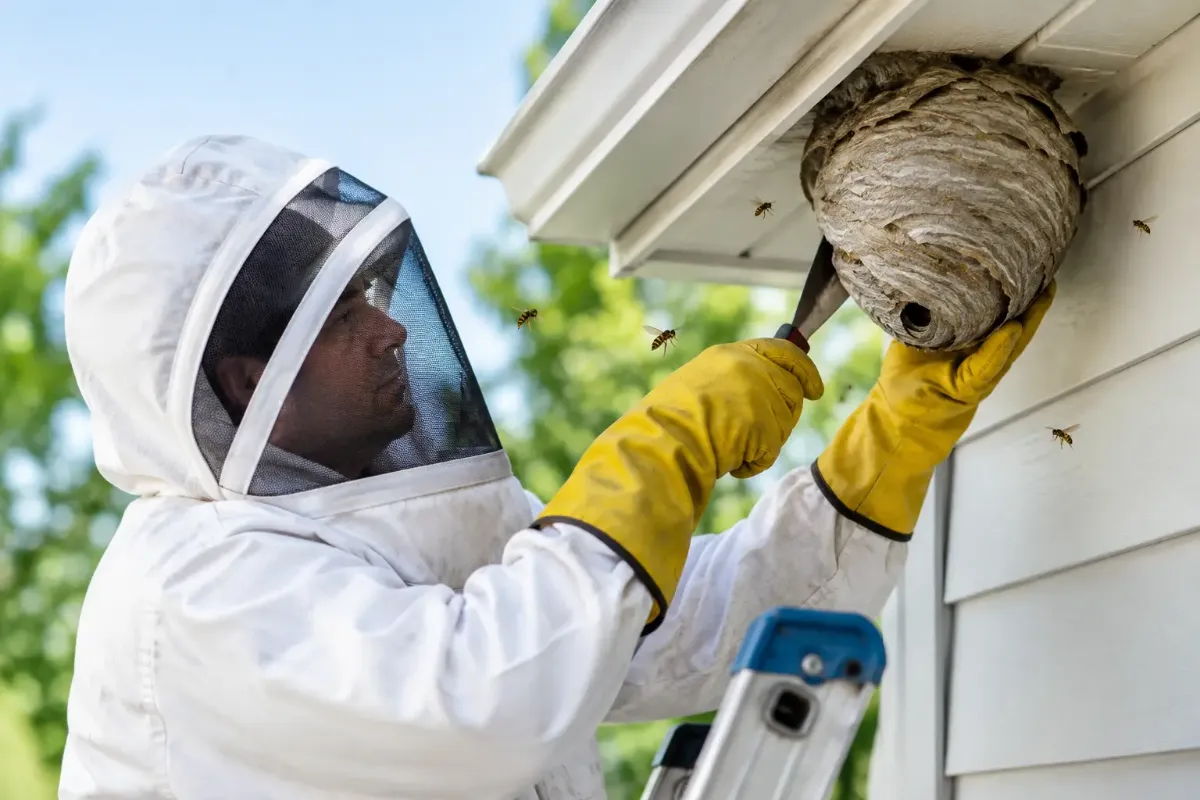
Hornets typically build enclosed, paper-like nests in trees, shrubs, sheds, or on buildings. These nests can become very large by late summer. Mud daubers are generally less defensive and build small mud tubes, yet they should still be treated cautiously until the insect and nest are correctly identified.
Do not assume a nest is inactive because you do not see a wasp immediately. Watch from a safe distance during daylight. Regular flight in and out of one opening, buzzing behind a wall, or increased activity around trash areas and outdoor food service can indicate an active colony.
When Wasp Nest Removal Requires a Professional
A homeowner may be able to manage a very small, exposed, low-activity nest in an accessible location. That is not the same as saying every visible nest is a DIY project. The consequences of getting it wrong include multiple stings, a swarm indoors, property damage, or wasps finding a new route into the building.
Call a trained pest control professional instead of attempting removal when the nest is in a wall, attic, chimney, soffit, roofline, utility area, or other enclosed space. Professional service is also strongly recommended if the nest is high off the ground, larger than a fist, located near a door or walkway, or close to a child’s play area, pool, patio, or pet run.
Do not attempt treatment yourself if anyone in the household has a known insect-sting allergy. The same caution applies to businesses with frequent public traffic, such as restaurants, warehouses, apartment communities, schools, healthcare facilities, and retail properties. A sting incident at an entrance or loading area can become both a safety concern and an operational disruption.
These are additional signs that it is time to call for expert extermination:
- Wasps are entering through a crack in siding, brick, trim, or a vent.
- Activity is coming from the ground or an area you cannot fully see.
- You hear buzzing inside walls or ceilings.
- The nest is near electrical equipment, ladders, roof edges, or other fall hazards.
- You have tried a retail product and the activity has increased or moved indoors.
A professional technician can identify the pest, select the appropriate treatment method, and determine whether the nest should be physically removed after activity has stopped. This approach protects people first while reducing the chance of repeat activity.
How to Reduce Risk Around an Active Nest
Until the nest can be treated, create distance and reduce disturbances. Keep children and pets away from the area, and let family members, tenants, staff, or maintenance teams know where the activity is occurring. If the nest is beside a doorway, use another entrance when possible.
Avoid spraying the nest with a garden hose, throwing objects at it, sealing an active entrance into a wall, or trying to burn the nest. These actions can provoke wasps and may create a bigger problem inside the structure. Sealing an active wall entry can trap insects indoors, where they may emerge through light fixtures, vents, or gaps around trim.
Do not mow directly over a suspected ground nest. Mark the area from a safe distance and keep people away. If wasps become active while you are outside, move away calmly and get indoors if possible. Swatting at them or running through the colony’s flight path can increase the defensive response.
Outdoor sanitation also matters. Keep garbage lids closed, clean spills from patios and picnic areas, and avoid leaving sweet drinks, food scraps, or pet food outdoors. These steps will not eliminate an established nest, but they can reduce wasp activity around the places people use most.
If You Choose a DIY Approach, Keep It Limited
For a small, exposed nest that is easy to reach from the ground, some property owners choose an over-the-counter wasp treatment. Read and follow the product label exactly. The label is the legal safety instruction for that pesticide, including approved use sites, protective equipment, application distance, and reentry guidance.
Choose a time when activity is lower, typically around dusk or early morning, but remember that lower activity does not mean the nest is harmless. Wear long sleeves, long pants, closed-toe shoes, gloves, and eye protection. Do not use a ladder. A ladder can turn a sting response into a serious fall injury, especially if wasps emerge unexpectedly.
Keep an unobstructed route back indoors or away from the treatment area. Do not stand directly below the nest, and never treat a nest when other people or pets are nearby. Apply only as directed, then leave the area and allow the product time to work. Recheck from a distance the next day rather than approaching immediately.
If activity continues, do not repeatedly spray more product without a plan. Persistent activity may mean the nest is larger than it appears, the treatment did not reach the colony, or there is a second entrance. At that point, professional inspection is the safer, more effective option.
Removing the Nest Is Not Always the First Step
Many people focus on physically removing the paper structure, but active-wasp control comes first. Removing a nest before the insects are eliminated can trigger defensive stinging. With concealed nests, removing the visible material may not even reach the colony.
After a confirmed inactive nest has been treated, removal can help with appearance and discourage other insects from using the same protected site. However, some nests are difficult to access safely, especially around rooflines and wall voids. In those cases, a professional may recommend leaving inaccessible material in place after the colony is no longer active, then sealing entry points and correcting the attractants or gaps that allowed nesting.
For yellowjackets in wall cavities, the timing of exclusion is particularly important. Sealing holes too soon can force surviving insects into occupied areas. A trained technician can determine when activity has stopped and when repairs can be completed without driving wasps indoors.
Prevent New Wasp Nests Around Your Property
Wasp prevention is most effective when it begins before colonies grow. In spring and early summer, inspect eaves, porch ceilings, sheds, play structures, fences, attic vents, and gaps around utility lines. Early nests are often smaller and easier to address before worker numbers increase.
Repair loose siding, damaged screens, open soffits, and cracks around exterior penetrations. Trim vegetation away from buildings where practical, especially branches touching rooflines. For commercial properties, include exterior waste areas, loading docks, employee break spaces, outdoor dining areas, and building entry points in regular inspection routines.
Apex Pest Control provides targeted stinging insect service designed around the nest location, species behavior, property use, and safety needs. For homes and businesses, a professional plan can provide fast relief now while helping prevent the same problem from returning next season.
If you are seeing repeated wasp activity, hearing buzzing inside a structure, or avoiding part of your own property because of a nest, do not wait for the colony to grow. Prompt, controlled treatment protects the people who depend on your home or facility every day.