



A single pest sighting in your Ohio retail store can turn a regular day into a crisis that threatens your reputation and bottom line. Retail managers know that keeping pests out is about more than spot treatments—it’s about protecting your products, your customers, and your employees every day. This guide outlines what effective pest control truly means in the retail world, highlighting Integrated Pest Management strategies and solutions specific to the challenges faced in Ohio stores.
Table of Contents
- What Pest Control Means In Retail
- Common Pests Threatening Ohio Retailers
- How Pest Control Protects Stores And Brands
- Legal And Health Standards Retailers Face
- Steps For Effective Pest Management Programs
Key Takeaways
| Point | Details |
|---|---|
| Pest Control is Essential in Retail | A comprehensive pest management system protects customers, employees, and inventory, thereby safeguarding the business reputation. |
| Proactive Strategies are Key | Implementing preventive measures and regular monitoring can prevent infestations before they occur, saving costs in the long run. |
| Understanding Seasonal Pest Pressures | Retail managers should adjust their pest control strategies according to seasonal pest behaviors that influence their business. |
| Compliance is Critical | Adhering to local health regulations and maintaining proper documentation is necessary to avoid fines and protect customer trust. |
What Pest Control Means in Retail
Pest control in retail takes on a completely different meaning than it does in a residential setting. For retail managers, pest control is not just about dealing with a mouse in the stockroom or a wasp nest outside. It’s about establishing a comprehensive system that protects your customers, your employees, your inventory, and ultimately your business reputation. Pest control involves the regulation or management of species defined as pests including animals, insects, and organisms that adversely affect your store operations, products, or the people inside it. But here’s what makes it critical in retail: a single pest sighting can lead to negative reviews, lost customers, and potential health code violations that cost far more than proactive pest management ever would.
When you operate a retail store in Oakwood or anywhere across Ohio, you’re managing a unique environment that pests find incredibly attractive. Your store has food sources (if you carry any consumables), water sources, shelter, and foot traffic that can inadvertently bring pests inside. Pest management systems focus on affecting the environmental elements like food, water, and shelter that pests need to survive. The best retail pest control goes beyond just setting traps or spraying chemicals when you spot a problem. Instead, it uses integrated preventive and corrective measures aimed at preventing pests from ever establishing themselves in your store. This includes mechanical controls like sealing entry points, cultural practices like proper waste management, monitoring systems that catch infestations early, and chemical treatments only when necessary. The retail environment demands constant vigilance because your store’s cleanliness, sanitation, and structural integrity directly influence whether pests become a problem.
What makes pest control particularly important for retail managers is that it protects multiple critical areas simultaneously. Your products sit on shelves where contamination can render them unsalable. Your customers walk through your aisles expecting a clean, pest-free environment. Your employees work in spaces where pest-related health hazards could expose your business to liability. In Oakwood and throughout Ohio, seasons change dramatically, and each season brings different pest pressures. Spring and summer bring flies, wasps, and ants. Fall brings rodents seeking shelter as temperatures drop. Winter concentrates pest activity indoors where it’s warm. Effective pest control means understanding these seasonal patterns and adjusting your prevention strategies accordingly. When you work with commercial pest control services that understand retail operations, they identify vulnerabilities specific to your store layout, your product types, and your customer flow patterns. They develop customized protocols rather than one-size-fits-all solutions.
The real value of pest control in retail comes down to this: it prevents problems rather than just reacting to them. A retail manager who waits until customers report seeing a cockroach has already failed. But a manager who implements regular monitoring, seals potential entry points, maintains strict waste protocols, and partners with professional pest management stays ahead of problems. This approach saves money because you avoid the cost of product loss, customer complaints, staff illness, and potential regulatory fines. It also maintains the professional image that keeps customers returning and employees productive. Whether you’re managing a retail location in Oakwood, Warrensville Heights, or anywhere in Ohio, understanding that pest control is a continuous system, not an occasional service, changes how you operate your store.
Pro tip: Schedule pest control inspections quarterly at minimum, and coordinate them during off-peak hours so your staff can point out any areas where they have noticed pest activity or potential entry points that professional eyes might miss.
Common Pests Threatening Ohio Retailers
Ohio retailers face a consistent threat from pests that specifically target retail environments. Unlike residential pest problems, retail locations deal with pests that are attracted to product inventories, packaging materials, and the sheer volume of goods moving through the space daily. The most damaging pests in Ohio retail stores fall into two main categories: stored product insects and structural pests. Stored product insects include grain beetles, flour beetles, Indianmeal moths, drugstore beetles, cigarette beetles, sawtoothed grain beetles, and weevils. These pests infest packaged foods, cereals, grains, flour, pet food, and other dry goods on your shelves. A single Indianmeal moth infestation can spread rapidly through an entire section of inventory, rendering products unsalable and forcing costly markdowns or disposal. The second category includes ants, cockroaches, and rodents that threaten your store’s structural integrity, sanitation standards, and customer safety. Both types of pests create immediate financial losses and long-term reputation damage that extends far beyond the initial discovery.
Stored product pests present a unique challenge because they hide inside packaging where customers cannot see them until it is too late. When a shopper opens a box of cereal at home and finds insects or contamination, that negative experience translates into online reviews, complaints to your store, and lost repeat business. Beetles and moths infesting stored foods are especially problematic because they have short lifecycles and reproduce rapidly in the stable temperature of your climate-controlled retail space. The Indianmeal moth, for example, can complete its entire lifecycle in 30 to 40 days, meaning an undetected infestation can explode from a few insects to thousands in weeks. These pests also spread between products. A single infested package can contaminate nearby products through larval migration or adult movement. The financial impact goes beyond product loss. Retail managers must implement monitoring systems, coordinate deep cleanings, isolate affected inventory, and potentially quarantine entire sections of the store. In Oakwood, Bedford Heights, and other Ohio retail locations, the seasonal changes intensify this problem. Summer warmth accelerates pest reproduction cycles, while fall brings increased insect activity as pests seek food and shelter before winter.
Structural pests like cockroaches and rodents create different but equally serious problems. Cockroaches contaminate products through their feces and body parts, which can trigger allergic reactions and asthma in sensitive customers and employees. They also carry bacteria that cause foodborne illness. Rodents, whether mice or rats, gnaw through packaging, contaminate food with droppings, and create health code violations that can result in citations or forced closures. Ants form trails across shelves and products, creating an unprofessional appearance that drives customers away. What makes these structural pests particularly dangerous is that they establish themselves inside your building, behind walls, in storage areas, and within product displays. Once they establish a population, eliminating them requires comprehensive treatment, not just spot fixes. A retail manager who discovers rodent droppings behind shelves or sees a cockroach scurrying across the sales floor faces potential regulatory action from local health departments, especially if customers have reported issues. The financial and reputational consequences are severe.
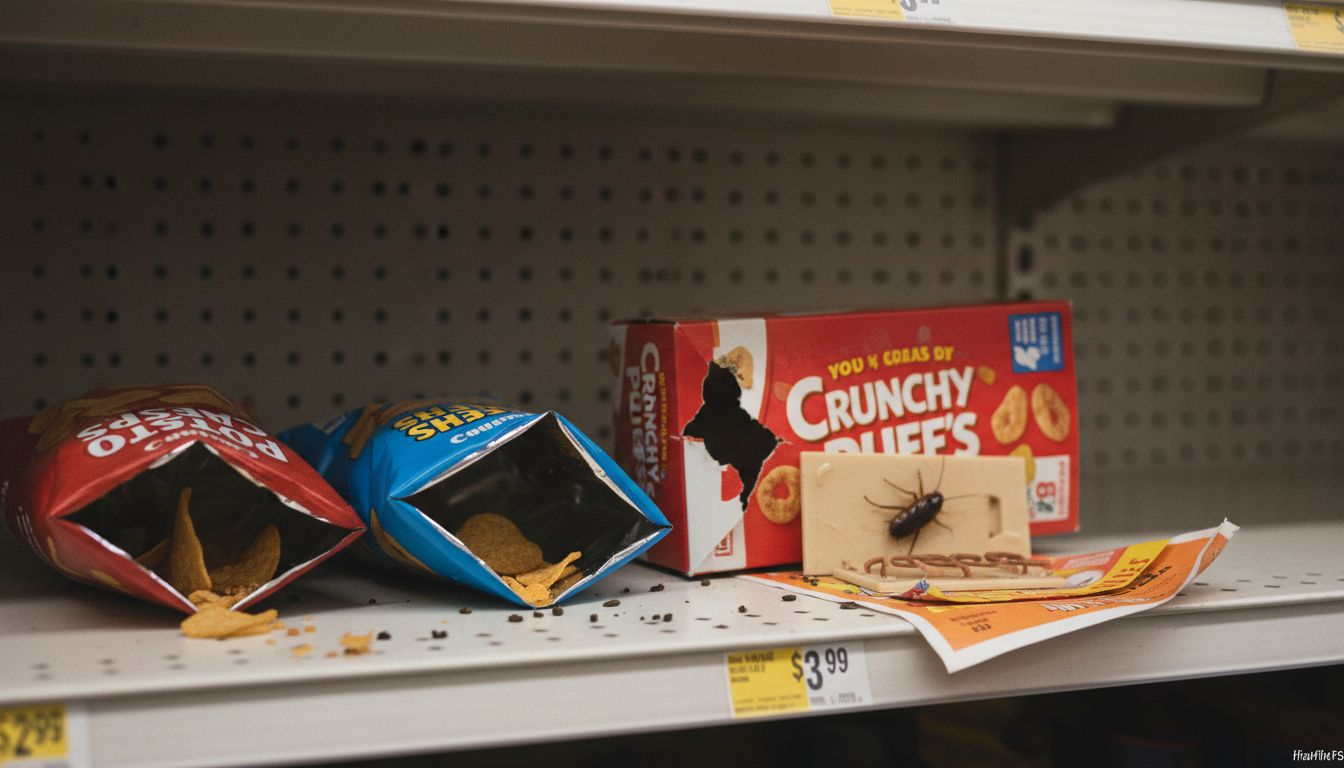
Here’s how common Ohio retail pests differ and why they matter:
| Pest Type | Typical Threat | Impact on Store | Seasonal Risk Peak |
|---|---|---|---|
| Indianmeal Moth | Infests packaged foods | Product spoilage, recalls | Summer |
| Flour Beetle | Contaminates grains | Unsalable inventory | Summer/Fall |
| Cockroach | Spreads bacteria | Health code violations | Year-round |
| Rodent (mouse/rat) | Destroys packaging | Regulatory fines, closures | Fall/Winter |
The key to managing these threats is understanding that each pest type requires different prevention and control strategies. Stored product pests demand rigorous inventory management, proper packaging inspection upon receipt, temperature and humidity monitoring, and rotating stock using the first-in, first-out method. Structural pests require sealing entry points, eliminating harborage areas like clutter and gaps, maintaining sanitation standards, and regular professional inspections. Trying to handle these problems with generic approaches fails because pests in retail environments are persistent and evolving. That is why partnering with pest control professionals who understand Ohio retail operations, seasonal pest cycles, and the specific vulnerabilities of your store layout is essential. They can identify which pests pose the greatest threat to your specific product mix and store design, then develop targeted monitoring and prevention protocols that protect your inventory and reputation.
Pro tip: Implement a pest sighting log where staff members document any pest observations with location, time, and pest type, then review this log monthly with your pest control provider to identify emerging patterns and adjust prevention measures accordingly.
How Pest Control Protects Stores and Brands
Pest control in retail does far more than eliminate visible bugs or rodents. It functions as a comprehensive defense system that protects your store’s reputation, financial performance, and customer relationships simultaneously. Think about what happens when a customer discovers an insect in a product they purchased at your store. They do not quietly return the item. They post about it on social media, leave negative reviews on Google, and tell their friends to shop elsewhere. That single incident can damage your brand in ways that take months or years to repair. Effective pest control prevents these incidents from happening in the first place. Pest control protects retail stores and brands by preventing infestations that damage stored products and physical facilities, thereby preserving product quality and safety. When you implement a systematic pest prevention program, you eliminate the conditions that attract pests, monitor for early signs of infestation, and respond quickly if problems emerge. This proactive approach means customers never encounter pests, product contamination never reaches shelves, and your brand maintains the reputation it has taken years to build. In retail locations across Oakwood, Warrensville Heights, and throughout Ohio, managers who invest in professional pest control report higher customer satisfaction, fewer product recalls, and stronger sales performance.
One critical way pest control protects your brand is by preventing product contamination and recalls. A product recall is catastrophic for retail businesses. It damages customer trust, requires costly removal of inventory, generates negative media coverage, and can trigger regulatory investigations. When pest control programs include proper prevention strategies and early detection methods, infestations are caught before they contaminate products that reach customers. This means fewer recalls, fewer returns, and fewer angry customers. Consider the financial impact: a recall affecting hundreds or thousands of units can cost tens of thousands of dollars in product loss, logistics, and regulatory compliance. A retail manager who discovers an Indianmeal moth infestation in a cereal section through proper monitoring can remove affected inventory quietly before customers are affected. Compare that to discovering the problem after customers report insects in products they bought. The difference in cost and brand damage is enormous. Beyond direct financial loss, contaminated products damage customer perception. People who find pests in products lose confidence in your store’s cleanliness and quality standards. They shop competitors instead, and they tell others about their bad experience. Your brand reputation suffers tangibly, affecting foot traffic and sales for months.
Pest control also protects your store and brand by ensuring compliance with health and safety regulations. Retail locations must meet strict food safety standards and health codes. Local health departments conduct inspections looking for evidence of pest activity, contamination risks, and sanitation failures. A manager who fails these inspections faces fines, mandatory closure periods, and public health alerts that destroy customer confidence. Systematic pest management programs uphold regulatory compliance and demonstrate to health inspectors that your store takes food safety seriously. This compliance protection extends beyond local regulations. If your retail location supplies products to larger retailers or wholesalers, they often require documentation of pest control compliance as a condition of doing business. Major retail chains want assurance that products entering their supply chain come from pest-controlled facilities. Professional pest control programs provide the documentation and audit trails that satisfy these requirements. In Oakwood and across Ohio, retail managers who maintain proper pest control records have easier inspections, better supplier relationships, and fewer disruptions to their business operations.
Beyond the direct operational benefits, pest control protects your brand by reinforcing customer confidence and loyalty. Your store’s cleanliness is one of the first things customers notice when they walk through the door. Visible signs of pest activity, such as droppings, dead insects, or pest damage to products, immediately signal carelessness and low standards. Customers interpret these signs as evidence that your store does not care about their safety or satisfaction. Even one customer who sees a cockroach or notices damaged packaging caused by rodents will question whether other products are safe. In contrast, customers who shop in visibly clean, well-maintained stores develop confidence and loyalty. They return regularly and recommend your store to others. Pest control is not a hidden backend operation. It is a visible commitment to customer safety and quality that influences purchasing decisions and brand perception. When a retail manager partners with professional pest control services that provide regular monitoring, preventive treatments, and documentation of their work, that manager can speak confidently to customers and health inspectors about their commitment to maintaining a pest-free environment. This confidence translates into customer retention, positive reviews, and sustained business growth.
Pro tip: Display your pest control certification or documentation in a visible location near customer service, or mention your regular pest control program in customer communications, as this transparency builds trust and differentiates your store from competitors who ignore the issue.
Legal and Health Standards Retailers Face
Retail managers operate within a complex web of legal and health standards that directly impact how pest control must be implemented and documented. Unlike homeowners who can handle pest problems privately, retail locations face regulatory oversight from multiple agencies and organizations. The stakes are high because violations can result in fines, forced closures, loss of business certifications, and legal liability for health-related injuries. Understanding these standards is not optional for retail managers. It is a fundamental part of operating a compliant, safe business in Ohio. Local health departments set baseline food safety requirements that apply to retail stores. State regulations layer additional requirements on top of local standards. If your retail location sells packaged foods, operates a deli counter, or handles any consumables, health inspectors conduct regular audits checking for pest activity, evidence of contamination, and documentation of pest control efforts. These inspections examine your store’s physical environment, looking for entry points that pests could exploit, sanitation practices that attract pests, and records proving you have professional pest management in place. A manager who cannot produce documentation of pest control activities faces immediate citations. Failed inspections can result in fines ranging from hundreds to thousands of dollars, mandatory corrective action orders, and in severe cases, temporary closure until violations are remedied. The reputational damage of a failed health inspection compounds the financial consequences. Customers learn about violations through public health department reports, and many will shop competitors instead.
For retail locations that handle food products or operate within supply chains connected to larger retailers, the standards become even more stringent. Major retail chains and wholesalers require their suppliers to comply with standards overseen by third-party certification bodies. Documented pest control procedures aligned with food safety standards prevent risks to human health and product safety while establishing legal compliance. Standards like those from the British Retail Consortium and Global Food Safety Initiative require retailers to maintain detailed records of pest control activities, monitoring results, and corrective actions taken when pest activity is detected. These third-party audits verify that your pest management program meets industry standards and protects product integrity throughout the supply chain. If you supply products to Whole Foods, Kroger, Target, or similar major retailers, they will not accept products from suppliers who fail these audits. This means your retail location must maintain meticulous documentation proving that your pest control program is comprehensive, professional, and consistently applied. In Oakwood and across Ohio, retail managers working with suppliers to major chains understand that their pest control compliance is a condition of business. One failed audit can result in loss of supply contracts worth hundreds of thousands of dollars annually.
If your retail location sells pesticides or pest control products to customers, additional federal and state regulations apply. Safe handling, sale, storage, and disposal practices for pesticides must comply with EPA and Worker Protection Standards. Your employees who handle pesticides must receive proper training covering safe application, storage requirements, labeling requirements, and disposal procedures. Restricted-use pesticides, which can only be applied by licensed applicators, have special legal requirements that retailers must understand and enforce. If you sell pesticides over-the-counter to customers, you must ensure proper labeling, educate customers about safe use, and maintain records of sales for certain product categories. Violations of these standards expose your business to federal penalties from the Environmental Protection Agency, state penalties from your state’s environmental or agriculture agency, and civil liability if someone is injured or poisoned by improperly handled pesticides. A retail manager whose employee fails to properly label a pesticide or who sells restricted pesticides to unlicensed individuals faces potential criminal charges, not just civil fines. This is serious business, and it requires training, documentation, and vigilant oversight.
The practical reality for retail managers is that legal and health standards demand professional pest control partnerships. You cannot simply spray chemicals yourself or rely on occasional service calls. Standards require documented monitoring systems that track pest activity over time, showing that infestations are detected early and addressed promptly. They require records of treatments applied, products used, and results achieved. They require proof that your pest control provider is licensed, insured, and qualified. When you partner with professional pest control services that understand retail operations and regulatory requirements, they handle the compliance burden. They provide the documentation needed for health inspections. They maintain records proving your store meets industry standards. They coordinate with your staff to monitor for pest activity and respond quickly to problems. This partnership protects your store legally, protects your customers and employees, and protects your ability to operate your business without regulatory disruptions. In Bedford Heights, Solon, and throughout Ohio, retail managers who take legal and health standards seriously invest in professional pest control as part of their core business strategy.
Summary of key legal and health compliance elements for Ohio retailers:
| Standard/Agency | Requirement | Potential Consequence |
|---|---|---|
| Local Health Department | Regular pest inspections | Fines, closure orders |
| State Food Safety Laws | Documentation of activities | Lose business certification |
| Third-Party Audit (BRC, GFSI) | Records for supply chain | Lost contracts, failed audit |
| EPA/Worker Protection Standards | Trained staff, safe pesticide handling | Federal penalties, liability |
Pro tip: Create a compliance calendar tracking your local health inspection schedule, third-party audit dates, and quarterly pest control service appointments, then schedule internal staff reviews of pest control documentation one week before each inspection to identify any missing records and address them proactively.
Steps for Effective Pest Management Programs
Effective pest management programs do not happen by accident. They require a structured approach based on knowledge, planning, and consistent execution. Retail managers who implement successful pest management programs follow a proven framework that prioritizes prevention, early detection, and targeted response. The foundation of this framework is Integrated Pest Management (IPM), a knowledge-based strategy that has been refined over decades and is now the industry standard for professional pest control. Rather than relying on chemical treatments as a first resort, IPM uses multiple complementary strategies working together to keep pest populations below levels that cause economic damage. This approach saves money, reduces chemical use, protects your staff and customers, and delivers sustainable long-term results. When you understand and implement these core steps, your retail store maintains a pest-free environment that protects your inventory, your customers, and your brand.
Identify and Monitor Your Pest Threats
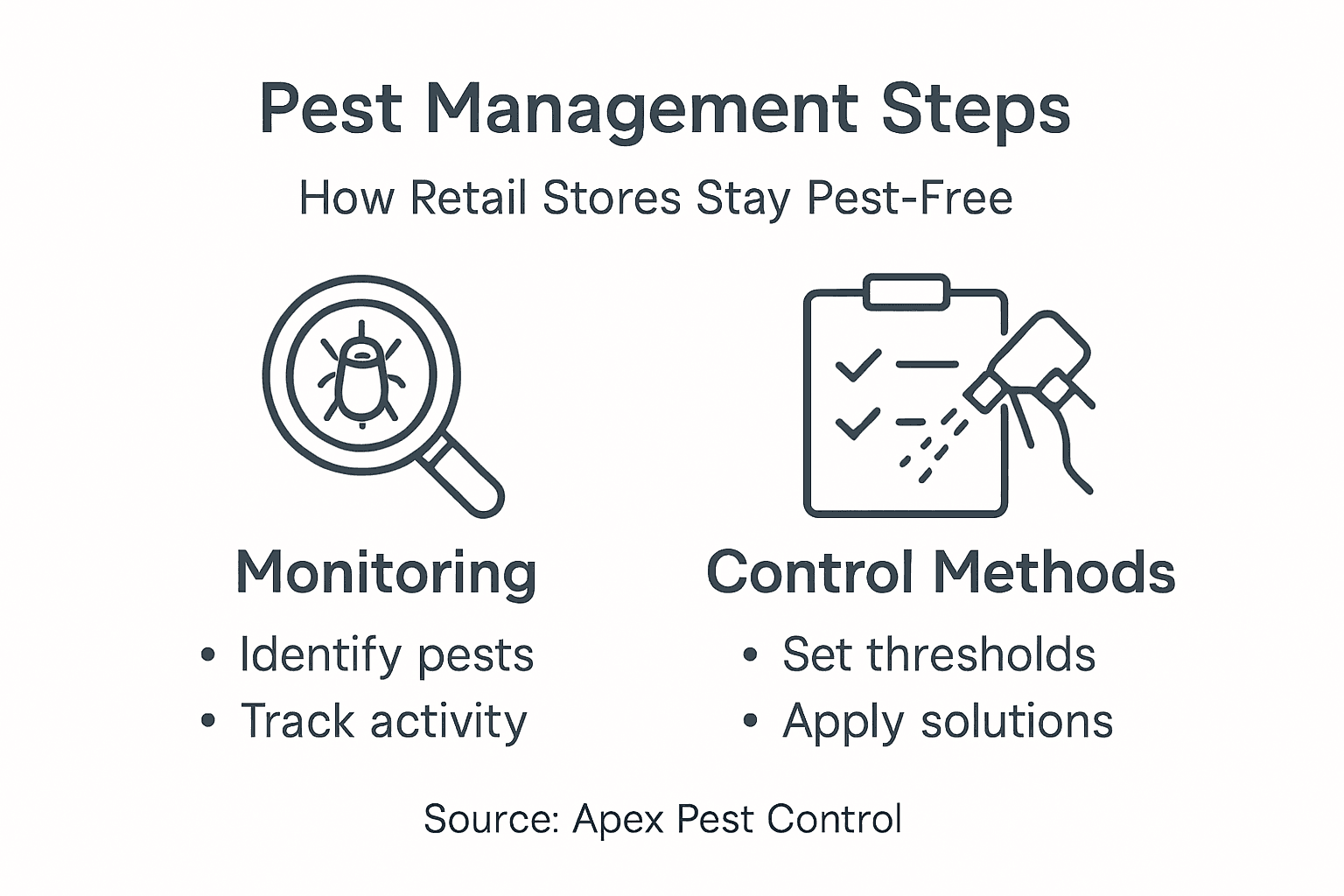
The first critical step in any effective pest management program is accurate pest identification and continuous monitoring. You cannot manage what you do not understand. Before implementing any control measures, you need to know exactly which pests threaten your store, where they are entering, and what conditions attract them. A retail manager might notice droppings in the stockroom and assume they come from mice, but proper identification might reveal they come from rats, which require different control strategies. Similarly, seeing small insects in packaged goods requires identifying whether they are flour beetles, drugstore beetles, or Indianmeal moths, because each species responds to different prevention and control methods. Professional pest control providers start by conducting a thorough inspection of your entire facility, examining entry points, sanitation conditions, storage practices, and environmental factors that create pest-friendly conditions. They use monitoring tools like sticky traps, pheromone traps, and visual inspections to track pest activity over time. This monitoring reveals patterns. Are pests appearing seasonally, or are they present year-round? Are they concentrated in certain areas of the store, suggesting localized entry points? Does activity increase after deliveries, suggesting pests are arriving with incoming inventory? These patterns guide everything that follows.
Establish Action Thresholds and Prevention Strategies
Once you understand your pest situation, the next step is determining your action thresholds and implementing prevention strategies. Setting action thresholds involves determining when control becomes necessary rather than waiting for visible infestations. For retail stores, thresholds are often very low because even a single pest sighting can damage your brand. If a customer sees one cockroach, your store’s reputation suffers. If one package contains insects, that product contaminates customer trust. Therefore, retail action thresholds typically involve immediate response to any confirmed pest activity, rather than waiting for populations to grow. Prevention strategies form the backbone of effective programs. These include sealing entry points that pests use to infiltrate your building, implementing strict sanitation protocols that eliminate food and water sources attracting pests, managing waste properly to avoid creating pest-friendly conditions, and controlling temperature and humidity to make your store less attractive to pests. Prevention also includes careful inspection of incoming deliveries to catch pest-infested products before they enter your inventory. In Oakwood and across Ohio retail environments, these prevention measures are essential because they reduce your reliance on chemical treatments and create an environment where pests struggle to establish themselves.
Implement Integrated Control Methods and Monitor Results
The final step involves selecting and applying appropriate control methods when pests are detected, then continuously monitoring to ensure your program works. Control strategies should be tailored to the specific pest and environment, using chemical controls as a last resort. This means starting with mechanical controls like sealing cracks, removing harborage areas, and using traps to capture pests. If those approaches prove insufficient, cultural controls like improving sanitation and adjusting storage practices come next. Only when these non-chemical approaches fail to achieve your action thresholds do you move to chemical treatments, and even then, you apply them strategically in areas where they will be most effective while minimizing exposure to customers and staff. Throughout this process, you maintain documentation. You record what pests you detected, where you found them, what actions you took, and what results you achieved. This documentation proves compliance with health codes and provides the data you need to evaluate whether your program is working. If pest activity increases despite your efforts, that signals the need to adjust your strategies. Maybe a new entry point has opened. Maybe changing seasons bring new pest pressures. Maybe incoming inventory has become contaminated and requires new supplier relationships. Effective programs evolve based on ongoing monitoring and results. Professional pest control providers handle this complexity for retail managers, implementing comprehensive programs that balance prevention, monitoring, and targeted control to keep your store pest-free.
Pro tip: Schedule a comprehensive pest management program review quarterly with your pest control provider, using monitoring data and staff observations to identify any emerging pest pressures or prevention gaps before they become problems that affect your customers.
Protect Your Retail Store with Expert Pest Management from Apex Pest Control
The challenge of maintaining a pest-free retail space in Ohio and beyond is more than just a cleaning issue. It is about safeguarding your customers, employees, products, and brand reputation from costly infestations like cockroaches, rodents, and stored product pests. As the article highlights, effective pest control requires a proactive system that includes early detection, sealing entry points, and tailored prevention strategies specific to retail environments. You need a partner who understands these unique demands and meets compliance with local health standards while protecting your business from the financial and reputational damage pests can cause.
At Apex Pest Control we specialize in commercial pest management solutions designed for retailers just like you. Our comprehensive services cover everything from inspection and monitoring to eco-friendly treatments and continuous prevention programs. Whether you face threats from product pests or structural pests, our experts work closely with you to develop a customized plan that fits your store’s layout and seasonal challenges. Take control now with a professional approach backed by industry knowledge and commitment to safety for people and the environment. To learn more about our service offerings, visit the Uncategorized Archives – Apex Pest Control and get started by requesting your Free Quote. Don’t wait for pests to hurt your brand. Act today to secure your retail store’s reputation and compliance with trusted commercial pest control.
Frequently Asked Questions
What are the main types of pests that threaten retail stores?
Retail stores commonly face threats from stored product insects such as grain beetles and Indianmeal moths, and structural pests like cockroaches and rodents. These pests not only damage products but can also impact the store’s reputation and customer safety.
How does pest control help maintain product quality in retail stores?
Effective pest control prevents infestations that can lead to product contamination, spoilage, or recalls. By implementing monitoring systems and proactive prevention strategies, stores ensure that products remain safe and high-quality for customers.
What is Integrated Pest Management (IPM) and why is it important for retailers?
Integrated Pest Management (IPM) is a comprehensive, knowledge-based strategy that combines multiple pest control methods. It emphasizes prevention, monitoring, and targeted responses to keep pest populations low. This approach helps retailers save money and ensures a safer shopping environment.
How often should retail stores conduct pest control inspections?
It is recommended that retail stores schedule pest control inspections at least quarterly, preferably during off-peak hours. Regular inspections help detect potential issues early and allow staff to report any pest activity or vulnerabilities to the pest control provider.