



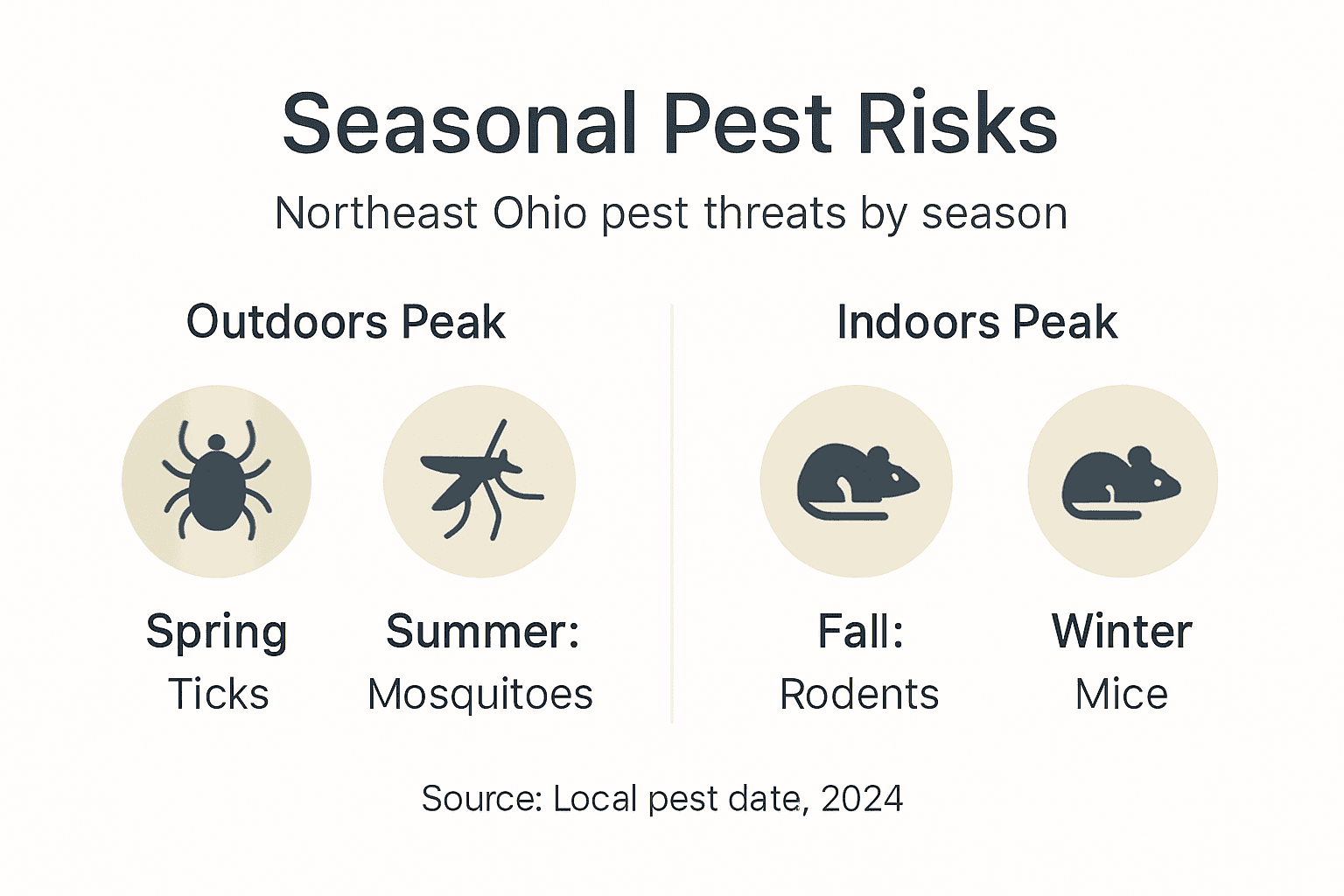
Most Northeast Ohio homeowners brace for pests only during summer heat, but rodents peak indoors in fall and winter while ticks soar in spring, illustrating year-round threat cycles. Mice invade homes seeking warmth from September through November, while tick populations explode April through June, creating distinct risk windows. Understanding these seasonal shifts helps you prevent infestations before they start, protecting your property and family throughout the year.
Table of Contents
- Introduction To Seasonal Pest Risks In Northeast Ohio
- Seasonal Pest Activity And Risks In Northeast Ohio
- Environmental Factors Influencing Seasonal Pest Behavior
- Common Misconceptions About Seasonal Pest Risks
- Practical Seasonal Pest Prevention And Control Strategies
- Conclusion: Year-Round Pest Awareness And Property Protection
- Protect Your Home Year-Round With Apex Pest Control
- FAQ
Key Takeaways
| Point | Details |
|---|---|
| Pest activity peaks vary by season | Rodents surge indoors in fall and winter, ticks and termites emerge in spring, mosquitoes dominate summer. |
| Temperature drives pest behavior | Cold snaps trigger indoor rodent invasions while warm humid periods favor insect activity. |
| Year-round vigilance prevents damage | Seasonal prevention measures aligned with pest cycles stop infestations before they escalate. |
| Environmental factors modify risks | Snow cover insulates overwintering pests, late warm spells cause unexpected surges. |
Introduction to Seasonal Pest Risks in Northeast Ohio
Northeast Ohio’s climate creates a rollercoaster of pest challenges. Our region experiences frigid winters, humid summers, and unpredictable spring and fall transitions that drive distinct pest behavior patterns. You face threats from common Ohio pest species including rodents, ticks, ants, termites, mosquitoes, wasps, spiders, and cockroaches throughout the year.
Each season brings temperature and moisture shifts that trigger different pest life cycles. Spring warmth awakens dormant insects. Summer heat accelerates breeding. Fall cooling pushes pests indoors. Winter forces survival strategies that bring unwanted guests into your living spaces.
Ignoring these seasonal fluctuations leaves your home vulnerable. Property damage from chewing rodents, structural harm from termites, disease transmission from ticks and mosquitoes, and allergy triggers from cockroaches all stem from failing to anticipate pest timing. Key seasonal risks include:
- Spring emergence of ticks carrying Lyme disease and other pathogens
- Summer mosquito populations spreading West Nile virus
- Fall rodent invasions contaminating food and damaging wiring
- Winter indoor pest populations aggravating respiratory conditions
Understanding when specific pests pose the greatest threat allows you to implement targeted prevention measures. This proactive approach saves money, protects health, and preserves property value by stopping problems before they require expensive interventions.
Seasonal Pest Activity and Risks in Northeast Ohio
Each season in Northeast Ohio activates different pest threats requiring specific attention and control strategies.
Spring marks the awakening period. Ticks emerge in April seeking blood meals, with populations peaking through June. Termite swarming in spring causes structural wood damage if unchecked, threatening wooden structures as colonies establish new locations. Ants begin foraging trails into kitchens. Cockroach populations rise in spring, aggravating allergies and asthma as warming temperatures accelerate breeding.
Summer brings peak insect activity. Mosquitoes multiply in standing water, transmitting diseases through bites. Wasps build nests near entry points, creating sting hazards. Ant colonies reach maximum size, increasing indoor invasions for food and water.
Fall and winter shift the focus indoors. Rodent activity spikes in fall and winter as mice seek indoor shelter causing property damage and health risks, with mice entering through openings as small as a dime. Spiders follow prey insects inside. Cockroaches maintain indoor populations year-round but become more noticeable as outdoor hiding spots disappear.

| Season | Primary Pests | Key Risks |
|---|---|---|
| Spring | Ticks, termites, ants, cockroaches | Lyme disease, structural damage, contamination, allergies |
| Summer | Mosquitoes, wasps, ants | Disease transmission, stings, food contamination |
| Fall | Rodents, spiders | Property damage, electrical fires, bites |
| Winter | Rodents, cockroaches, spiders | Contamination, respiratory issues, droppings |
Recognizing these pest threats by season in Ohio patterns helps you schedule preventive actions at the most effective times, stopping infestations before populations explode.
Environmental Factors Influencing Seasonal Pest Behavior
Temperature acts as the primary trigger for pest activity cycles in Northeast Ohio. Insects become active when soil and air temperatures reach species-specific thresholds, typically 50 to 60 degrees Fahrenheit for many common pests. Temperature fluctuations cause staggered pest invasions rather than single peaks, creating waves of different species throughout spring and summer.
Humidity and moisture levels determine where pests thrive. Mosquitoes require standing water for breeding. Cockroaches gravitate toward damp basements and bathrooms. Termites need moisture contact between soil and wood. Dry conditions stress some pests, driving them to seek water sources inside your home.
Snow cover creates unexpected pest protection. Snow insulates soil, aiding overwinter survival of pests like slugs and voles, allowing populations to emerge stronger in spring. Heavy snow years often correlate with higher pest pressure the following growing season.
Late season warm spells disrupt normal dormancy patterns. Unseasonably warm October weather keeps mosquitoes active longer. January thaws can trigger premature insect emergence, only to have populations crash when cold returns. These weather anomalies create unpredictable pest windows requiring flexible seasonal pest prevention in Ohio strategies.
Key environmental influences include:
- Soil temperature dictating termite swarming dates
- Rainfall patterns affecting mosquito breeding site availability
- Winter severity determining rodent indoor invasion intensity
- Spring freeze dates controlling tick emergence timing
Pro Tip: Track local weather patterns each season and compare them to typical pest emergence dates. Warmer than normal springs advance tick season by two to three weeks, requiring earlier prevention measures.
Common Misconceptions About Seasonal Pest Risks
Many homeowners hold incorrect beliefs about pest seasonality that leave them vulnerable to infestations.
Myth: Pests only become problems during hot summer months. Reality: Distinct peak periods exist in fall and winter for rodents and spring for ticks, not just summer for all pests. Each species follows its own activity calendar tied to survival needs.
Myth: Harsh Northeast Ohio winters kill off pest populations, reducing next year’s problems. Reality: Many pests survive cold by moving indoors, burrowing below frost lines, or entering dormancy states. Mice thrive inside wall voids. Tick eggs overwinter in leaf litter. Cockroaches maintain stable populations in heated buildings.
Myth: Pests only invade when it is wet outside. Reality: Temperature drives rodent behavior more than moisture. Mice seek indoor warmth as fall temperatures drop, regardless of rainfall. Dry conditions can actually push some pests indoors seeking water sources.
Myth: Professional pest control is only needed when you see active infestations. Reality: Preventive treatments timed to seasonal pest cycles stop problems before populations establish. Spring termite barriers, fall rodent exclusion, and summer perimeter treatments provide year-round protection.
Myth: Cold weather eliminates the need for pest vigilance. Reality: Indoor pest activity continues throughout winter. Rodents breed year-round in climate-controlled homes. Spiders remain active hunting prey insects.
Understanding true seasonal pest dynamics enables effective year-round pest protection in Ohio rather than reactive crisis management when infestations become obvious.
Practical Seasonal Pest Prevention and Control Strategies
Implementing targeted prevention measures aligned with seasonal pest cycles protects your Northeast Ohio home effectively.
-
Fall rodent preparation (August to October): Inspect your foundation, roofline, and utility penetrations for entry points. Seal openings larger than one-quarter inch with steel wool and caulk. Remove outdoor food sources like birdseed and pet food. Trim vegetation away from your home’s exterior. These fall pest prevention steps stop mice before cold weather drives them indoors.
-
Spring emergence control (March to May): Schedule professional termite inspections before swarming season peaks. Apply tick treatments to yard perimeters where wooded areas meet lawns. Eliminate standing water in gutters, planters, and low spots to prevent mosquito breeding. Treat ant entry points before colonies fully activate.
-
Summer pest management (June to August): Maintain broad-spectrum perimeter treatments to repel crawling insects. Install or repair window screens. Keep outdoor garbage sealed. Address moisture issues in basements and crawl spaces. Focus on allergy prevention by controlling cockroaches and reducing indoor pest allergens.
-
Winter monitoring (November to February): Inspect attics, basements, and garages monthly for rodent signs like droppings or gnaw marks. Maintain indoor humidity below 50 percent to discourage cockroaches and spiders. Check stored items for pest damage. Keep firewood storage away from your home’s exterior.
-
Year-round maintenance: Coordinate seasonal HVAC maintenance tips with pest prevention by sealing ductwork penetrations and installing vent screens. Regular professional inspections catch emerging problems early.
These seasonal pest prevention in Ohio homes strategies work together, creating layered defenses against top pest threats by season.
Pro Tip: Create a seasonal pest prevention calendar with monthly tasks. Set phone reminders for critical timing windows like pre-fall rodent exclusion in September and spring tick treatments in April. Consistent seasonal attention prevents the overwhelming infestations that result from neglect.
Conclusion: Year-Round Pest Awareness and Property Protection
Northeast Ohio’s seasonal climate creates distinct pest activity patterns throughout the year. Rodents invade indoors during fall and winter seeking warmth. Ticks emerge in spring carrying disease risks. Summer brings peak mosquito and wasp populations. Environmental factors like temperature, moisture, and snow cover modify these cycles, creating unpredictable surges.
Successful pest management requires understanding these seasonal rhythms and implementing prevention measures before peak activity periods. Sealing entry points in late summer stops fall rodent invasions. Spring treatments control ticks before populations explode. Year-round vigilance catches problems early when they are easiest to resolve.
Partnering with professional pest control services provides expertise in timing treatments to seasonal cycles, using safe methods tailored to Northeast Ohio conditions. You gain peace of mind knowing your home receives protection aligned with actual pest risk windows rather than generic one-size-fits-all approaches.
Maintain awareness of seasonal pest patterns. Act proactively based on calendar timing rather than waiting for visible infestations. Your diligence protects your family’s health and preserves your property value throughout every season.
Protect Your Home Year-Round with Apex Pest Control
Apex Pest Control specializes in seasonal pest management for Northeast Ohio homes, understanding exactly when specific threats emerge in Warrensville Heights, Bedford, Solon, and surrounding communities. Our licensed technicians implement top residential pest solutions timed to regional pest cycles, using family-safe methods that protect your property without harsh chemicals. We provide comprehensive safe rodent control steps in Ohio before fall invasions begin and eco-friendly pest control in Ohio throughout the year. Our seasonal approach prevents infestations rather than just reacting to problems. Contact us today for a free inspection and customized protection plan aligned with Northeast Ohio’s unique pest patterns.
FAQ
What pests pose the highest risk in Northeast Ohio during fall and winter?
Rodents, especially mice, create the greatest concern as they actively seek indoor shelter from September through February. Spiders and cockroaches also increase their indoor presence during cold months, following warmth and prey.
How does Northeast Ohio’s weather affect pest control timing?
Temperature and moisture levels directly determine when specific pests emerge and invade, requiring seasonally timed interventions for maximum effectiveness. Warm humid periods trigger insect activity while cold snaps drive rodent indoor movement.
Can I prevent seasonal pests without using chemicals?
Non-chemical prevention includes sealing entry points, eliminating moisture sources, maintaining cleanliness, and removing outdoor attractants. Professional services offer additional eco-friendly treatment options specifically designed for safe and effective control in Northeast Ohio conditions.
When should I schedule professional pest inspections?
Schedule inspections twice yearly, in early spring before insect emergence and late summer before fall rodent season. These timing windows allow preventive treatments that stop infestations before populations establish.