



Protecting your pets from hidden pest threats is a challenge many American families in Ohio face every day. Even well maintained homes can harbor risks that put your animals in danger during pest control efforts. With over 60 percent of American households owning pets, finding effective solutions that do not compromise your furry companions’ safety has never been more important. This guide offers practical steps for Ohio pet owners to spot hazards, choose safer products, and maintain a secure, comfortable home environment for every member of the family.
Table of Contents
- Step 1: Assess Your Home for Pet Risks
- Step 2: Select Pet Safe Pest Solutions
- Step 3: Apply Treatments Safely Around Pets
- Step 4: Monitor Results and Adjust Methods
- Step 5: Maintain Ongoing Pet Protection
Quick Summary
| Key Insight | Explanation |
|---|---|
| 1. Assess potential pet risks | Regularly inspect your home for hidden hazards during pest control. Focus on areas where your pets frequently roam. |
| 2. Choose pet safe pest solutions | Prioritize non-chemical pest control methods and opt for products labeled as pet friendly. Understand their safety profiles. |
| 3. Implement safety during treatments | Secure pets in a separate area during pest application and ensure thorough ventilation to minimize exposure. |
| 4. Monitor and adapt pest control | Keep detailed records of pest management activities to assess effectiveness and make necessary adjustments. |
| 5. Maintain ongoing pet protection | Develop a pest prevention routine that includes regular health checks and home inspections to safeguard your pets. |
Step 1: Assess Your Home for Pet Risks
Detecting potential pest control risks for your pets requires a systematic and careful approach. Your home environment contains numerous hidden hazards that could impact your furry family members during pest management strategies.
Begin by conducting a comprehensive walkthrough of your living spaces, examining each room and area where pest treatments might occur. Proactively identifying and documenting potential risks is crucial for creating a safe environment. Focus on specific zones such as kitchen baseboards, basement corners, storage areas, and outdoor perimeters where pest problems frequently emerge. Look for potential chemical exposure points, small spaces where pets might accidentally encounter treatment substances, and areas with standing water or food remnants that attract pests.
Pay special attention to your pet’s typical movement patterns and favorite resting spots. Identify potential interaction zones between pest control treatments and your pet’s daily routes. This might include checking under furniture, behind appliances, and near pet bedding where animals frequently spend time. Consider your pet’s size, mobility, and curiosity level when mapping potential risk areas.
Pro tip: Create a detailed sketch or digital map of your home marking potential hazard zones and keep it easily accessible for reference during pest control preparations.
Step 2: Select Pet Safe Pest Solutions
Selecting appropriate pest solutions that protect both your home and your pets requires careful research and strategic decision making. Understanding how to choose safe pest control methods is critical for maintaining a healthy environment.
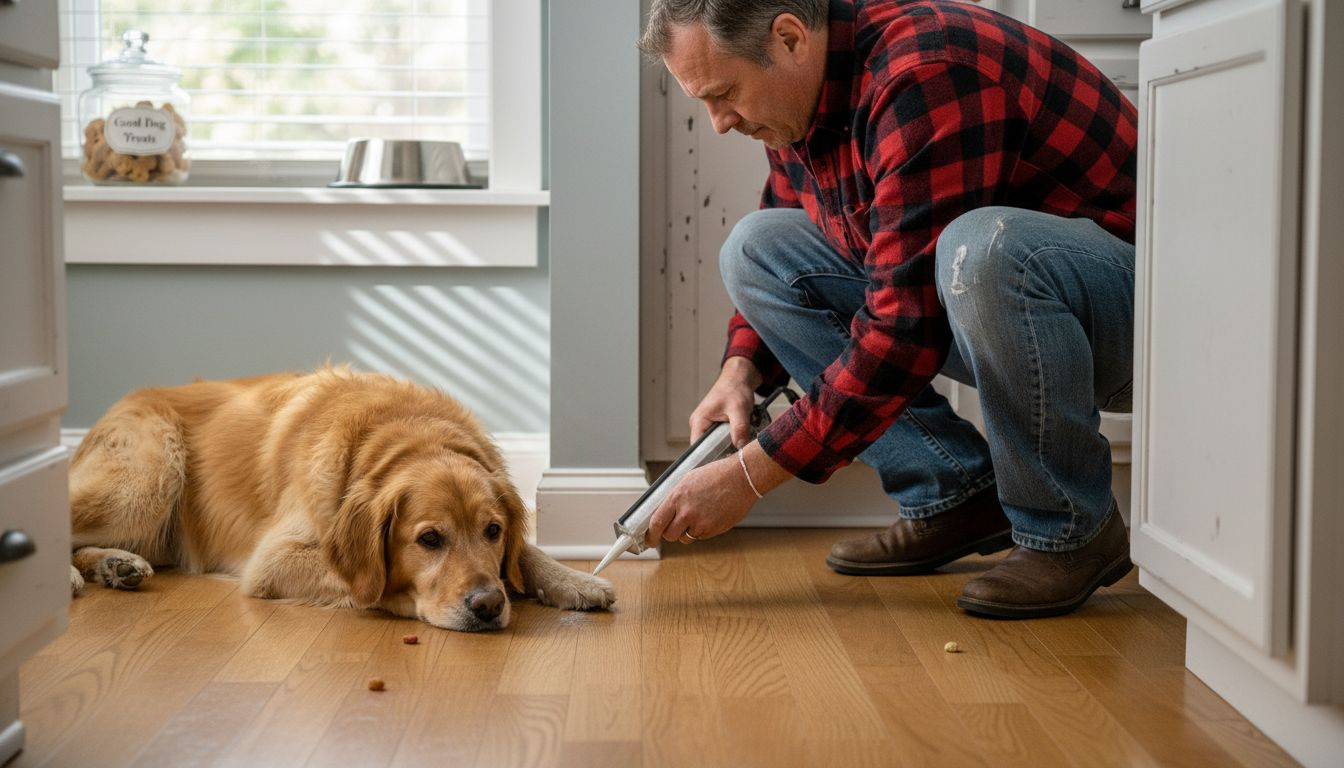
Integrated pest management strategies from the Environmental Protection Agency recommend prioritizing non chemical approaches before considering any treatment products. This means starting with preventive measures like sealing entry points, removing food sources, and maintaining cleanliness. When chemical interventions become necessary, look for products specifically labeled as pet friendly and registered with appropriate regulatory agencies. Check ingredient lists carefully and avoid products containing harsh chemicals like organophosphates, carbamates, and pyrethroids that can pose significant risks to animal health.
Consider consulting with professional pest control services that specialize in pet safe treatments. These experts can provide targeted solutions that minimize exposure risks and use low toxicity products designed to be effective against pests while protecting your animal companions. Carefully read all product instructions, use protective equipment, and ensure pets are removed from treatment areas during application and recommended waiting periods.
Pro tip: Always keep product safety data sheets and emergency veterinary contact information readily available when using any pest control treatments.
Here’s a comparison of common pest control methods and their impact on pet safety:
| Treatment Type | Pet Safety Level | Typical Home Use | Regulatory Oversight |
|---|---|---|---|
| Non-Chemical (barriers, traps) | Very high | Kitchens, basements, outdoors | EPA general guidelines |
| Botanical solutions | High | Pet bedding, carpet zones | EPA partial oversight |
| Pet-friendly chemical products | Moderate | Entry points, corners | EPA/FDA registration |
| Conventional chemicals | Low | Severe infestations, garages | Strict EPA labeling |
Step 3: Apply Treatments Safely Around Pets
Applying pest control treatments requires meticulous planning and careful execution to protect your pets from potential harm. Your primary goal is to create a safe environment while effectively managing pest populations.
Comprehensive safety guidelines from the National Pesticide Information Center recommend several critical steps before initiating any pest treatment. Remove all pet belongings including beds, toys, food and water bowls from the treatment area. Secure pets in a completely separate room or ideally outside the home during application. Ensure complete ventilation by opening windows and using fans to circulate air, which helps dissipate chemical residues more quickly. When applying treatments, wear protective gloves and clothing to minimize direct contact with pest control substances.
After treatment, wait the recommended time before allowing pets to re enter the space. This waiting period varies depending on the specific product used, so carefully read and follow label instructions. Thoroughly wipe down surfaces, paying special attention to areas where pets frequently walk or rest. Consider using pet friendly alternatives like diatomaceous earth or botanical treatments that offer lower toxicity. If possible, opt for targeted treatments that minimize overall chemical exposure and focus on specific pest problem areas.
Pro tip: Create a dedicated pet safety zone in your home where animals can remain completely isolated from pest control activities, ensuring their complete protection during treatment.
Step 4: Monitor Results and Adjust Methods
Pest control is an ongoing process that requires consistent observation and strategic adaptation to ensure your home remains protected and your pets stay safe. Understanding how to effectively track and respond to pest management efforts is crucial for long term success.
Comprehensive pest management guidelines from the Environmental Protection Agency recommend maintaining detailed records of all pest control activities. Start by creating a log that documents treatment dates, specific products used, areas addressed, and observable pest activity. Check treated areas weekly for signs of pest resurgence or new infestations. Pay close attention to potential entry points, moisture zones, and areas previously identified as high risk during your initial home assessment. Compare current observations against your baseline assessment to determine whether your chosen methods are producing the desired results.
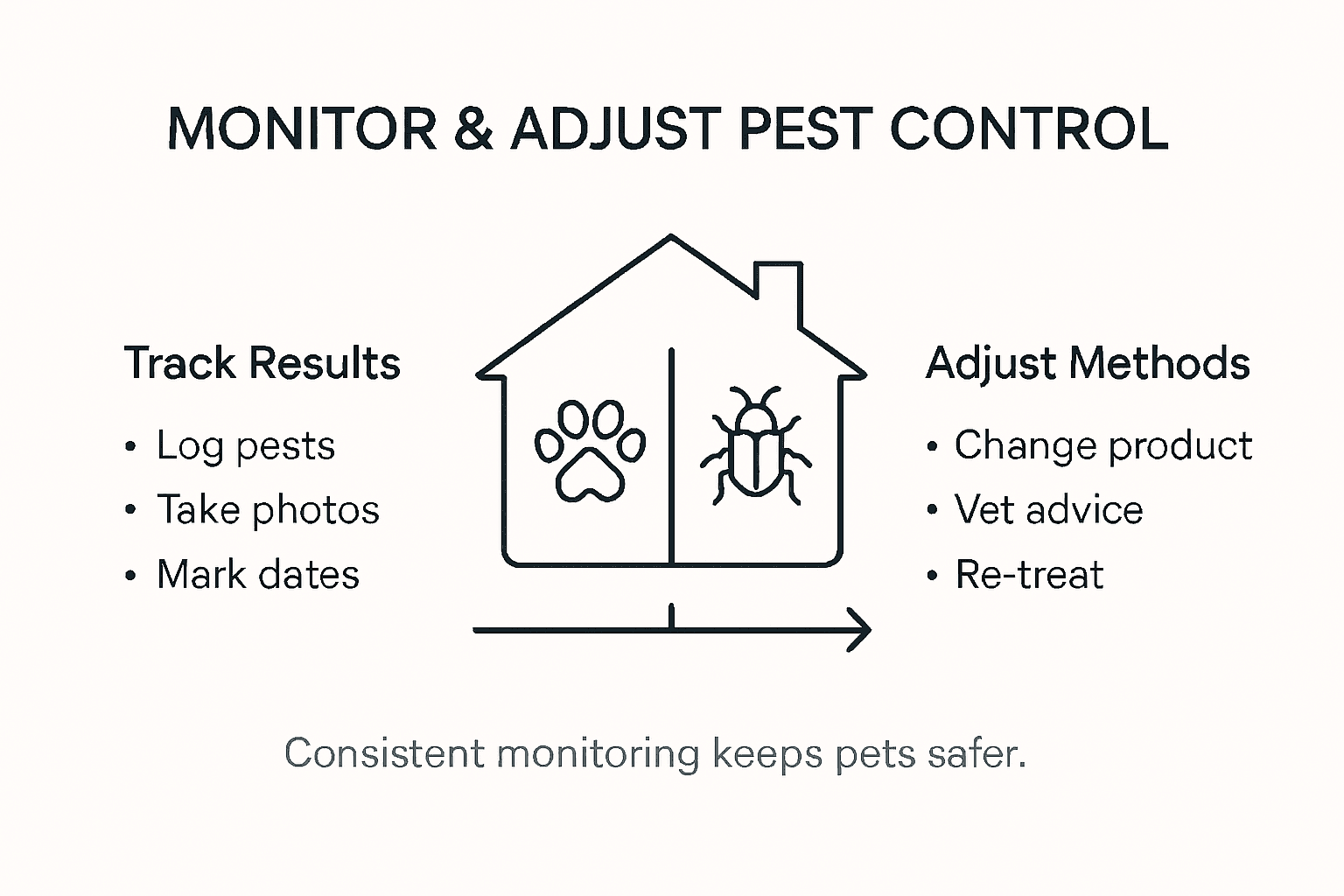
If initial treatments prove ineffective, do not hesitate to modify your approach. This might involve switching to alternative pet safe products, adjusting application frequencies, or consulting professional pest control services for specialized interventions. Remember that integrated pest management is about continuous improvement and adaptability. Some pest populations may require multiple treatment strategies or a combination of chemical and non chemical approaches to achieve complete control. Always prioritize methods that minimize risk to your pets while effectively addressing the specific pest challenges in your home.
Pro tip: Take monthly photos of problem areas to create a visual tracking system that helps you objectively document pest control progress and identify emerging patterns.
Below is a summary of monitoring actions to optimize pet protection and pest management:
| Monitoring Activity | Frequency | Benefit to Pets |
|---|---|---|
| Check pest presence | Weekly | Early risk detection |
| Update treatment log | After each application | Helps track exposure |
| Photograph risk areas | Monthly | Visual trend tracking |
| Consult veterinarian | Seasonally | Custom protection plan |
Step 5: Maintain Ongoing Pet Protection
Sustaining a pest free environment requires consistent attention and proactive strategies that protect both your home and your beloved pets. Continuous vigilance is the key to preventing potential pest infestations and ensuring your animals remain safe from potential health risks.
Year round parasite prevention strategies recommended by the American Animal Hospital Association emphasize the critical nature of ongoing pest management. Develop a comprehensive routine that includes monthly health checks for your pets, weekly home inspections, and seasonal adjustments to your pest control approach. Clean pet bedding regularly, vacuum frequently, and maintain sealed food storage to eliminate potential pest attractants. Monitor your pets for any signs of flea, tick, or other pest related issues such as excessive scratching, unusual behavior, or visible parasites.
Establish a collaborative relationship with your veterinarian to create a customized pest prevention plan tailored to your specific geographic region and pet health requirements. Different areas experience unique pest challenges based on climate, local wildlife, and seasonal variations. Consider implementing natural deterrents like diatomaceous earth, essential oil treatments, and strategic landscaping that reduces pest habitats near your home. Remember that prevention is always more effective and less stressful than treating an established pest problem.
Pro tip: Create a digital or physical pest prevention calendar that tracks treatment dates, veterinary check ups, and seasonal pest risk assessments to maintain a systematic approach to pet protection.
Protect Your Pets with Expert Pest Control Solutions
Keeping your home safe while effectively managing pests is a challenge many pet owners face. This article highlights key concerns like identifying hidden risks in your home, selecting truly pet safe pest treatments, and applying them carefully around your furry friends. At Apex Pest Control we understand the importance of protecting what matters most by prioritizing pet friendly approaches tailored to your home’s unique needs.
Don’t leave your pets exposed to harmful chemicals or ineffective treatments. Explore our range of services including Flea & Tick Prevention and Eco-Friendly Applications designed specifically to reduce risks and ensure lasting comfort. Whether you need a one-time solution or ongoing pest management, our residential pest control programs offer personalized options that truly safeguard your pets and family.
Take action now to create a safer home environment. Visit our Uncategorized Archives to learn more about pet safe methods or immediately request your personalized pest control plan by submitting a Free Quote. Your pets depend on you—protect their health and happiness with professional care from Apex Pest Control.
Frequently Asked Questions
How can I assess my home for pet risks during pest control?
To assess your home for pet risks during pest control, conduct a thorough walkthrough of every room. Focus on areas like kitchens, basements, and outdoor perimeters where pests might be treated, and mark potential hazard zones to keep your pets safe.
What pet-safe pest solutions should I consider?
When selecting pest solutions, prioritize non-chemical methods first, such as sealing entry points and maintaining cleanliness. If needed, choose products labeled as pet-friendly and avoid harsh chemicals to ensure a safer environment for your pets.
How do I safely apply pest treatments around my pets?
Safely apply pest treatments by first removing all pet belongings and securing pets in a separate room. Ensure proper ventilation and follow product instructions closely, including waiting periods before allowing pets back into the treated areas.
What steps should I take to monitor the effectiveness of pest control treatments?
To monitor the effectiveness of pest control treatments, check treated areas weekly for signs of pest activity. Maintain a detailed log of treatment dates and products used, and compare current observations against your initial assessment to evaluate any changes.
How can I maintain ongoing pet protection from pests?
Maintain ongoing pet protection by developing a routine that includes monthly health checks for your pets and regular home inspections. Clean pet bedding frequently and eliminate potential pest attractants to create a more secure environment for your furry companions.