



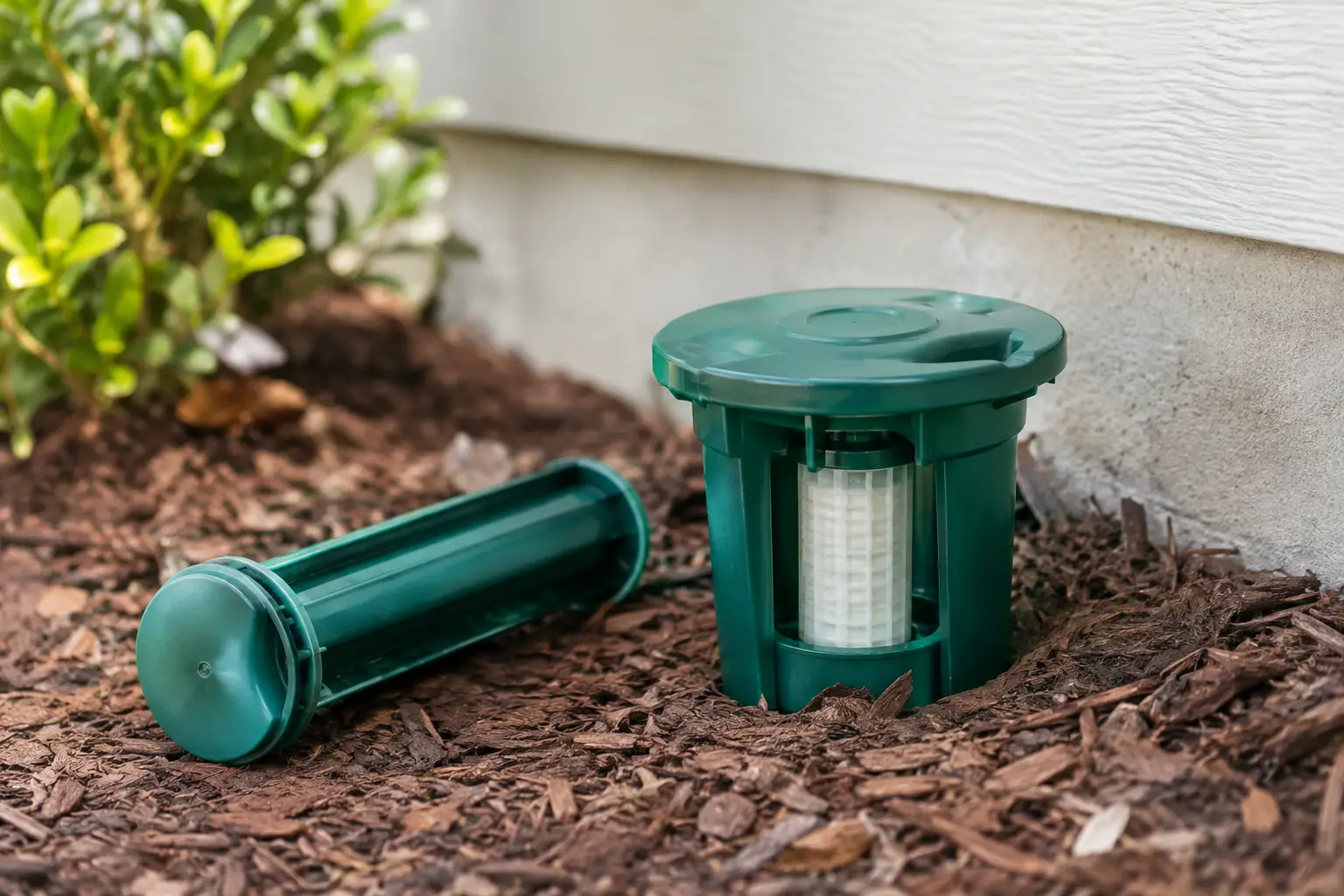
A termite bait system is not a spray-and-forget solution. It is a monitored defense program designed to reach the termite colony feeding beneath and around your property. In this termite bait system review, we look at what bait stations do well, where homeowners need realistic expectations, and why professional oversight makes the difference between a promising treatment and dependable protection.
For Ohio homeowners, termites can remain hidden for years inside foundation walls, floor systems, sill plates, and other structural wood. By the time mud tubes, damaged trim, or spring swarmers are visible, the colony may already have established active feeding routes. The right treatment should address the activity you can see and the colony you cannot.
How a Termite Bait System Works
A bait system uses in-ground stations placed strategically around a building’s perimeter. The stations contain monitoring material that is attractive to foraging subterranean termites. When technicians find termite activity, the monitoring material is replaced or supplemented with an active bait designed to be shared throughout the colony.
This is the key difference between bait and a fast-acting contact treatment. Bait is intended to work gradually. Termites continue feeding and carrying the material back to nestmates, including the workers that support the colony. Depending on the bait product, the active ingredient may interfere with normal termite development or other essential biological processes.
Because subterranean termites forage continuously through soil, a properly installed and maintained bait system creates multiple opportunities for them to encounter the stations. It does not require technicians to locate every underground tunnel or the central colony site before treatment begins.
Termite Bait System Review: The Real Benefits
The strongest advantage of a bait system is its colony-focused approach. Rather than treating only the portion of activity found in one wall or piece of wood, bait can reduce or eliminate the colony responsible for the infestation. That makes it particularly valuable when termite activity is difficult to access without invasive drilling, trenching, or removal of finished materials.
Bait systems also use targeted placements. Stations are installed in the soil around the structure, which can be an appealing option for families concerned about treatment around children, pets, landscaping, wells, or outdoor living areas. A professional will still review the product label, station locations, and site conditions with you, but the treatment is generally concentrated where termites travel instead of broadly applied indoors.
Another benefit is ongoing monitoring. Termite pressure can change as moisture conditions, landscaping, construction, and nearby wood sources change. Regular station inspections provide a documented prevention program, helping identify activity before it becomes a larger structural problem. For commercial properties, that inspection history can also support maintenance records and pest-management documentation.
Bait is often a practical choice for homes with complex construction. Slab foundations, additions, porches, attached garages, finished basements, and inaccessible crawl spaces can all make a one-size-fits-all approach less effective. A bait system can be adapted around these features while technicians continue evaluating the structure for evidence of activity.
Where Bait Systems Have Limits
A balanced review needs to be clear: termite bait is effective, but it is not instant. Termites must find and feed on a station before the bait can affect the colony. The timeline varies based on colony size, weather, competing food sources, soil conditions, and the location of active foraging routes. Some stations may show activity quickly, while others may take longer to be discovered.
This means a bait system is not the same as an emergency cosmetic repair. If termites are actively damaging a highly vulnerable area, a technician may recommend localized treatment alongside the bait program. This combined approach can stop visible activity at a specific point while bait works on the larger colony.
Maintenance is also non-negotiable. An uninspected station is not a reliable termite protection plan. Stations can be disturbed by landscaping, buried under mulch, damaged by lawn equipment, or missed by termites if conditions change. Professional inspections ensure the system remains accessible, correctly positioned, and supplied with bait when termite activity is found.
DIY bait stations can appear less expensive at first, but they put the burden of placement, inspection timing, activity identification, and recordkeeping on the homeowner. A missed inspection or incorrectly identified termite can delay meaningful control. Termites are often confused with ants, and superficial wood damage is not always caused by an active colony.
Bait Systems vs. Liquid Termite Treatments
Bait systems and liquid treatments are both proven termite-control methods. The better choice depends on your property, the extent of activity, and the treatment objective.
A liquid treatment creates a treated zone in the soil around or beneath a structure. When installed correctly, it can provide a direct protective barrier and may be recommended for certain active infestations or construction layouts. It can involve trenching, drilling through concrete, or targeted treatment of specific structural areas.
A bait system relies on termite foraging and ongoing station service. It may be preferred when a property needs long-term monitoring, when broad soil treatment is not the first choice, or when the structure’s design makes a traditional perimeter treatment more complicated. In many cases, the best plan is not an either-or decision. A pest professional may combine targeted liquid treatment with a baiting and monitoring program for stronger protection.
The right recommendation starts with a thorough inspection. Technicians should evaluate mud tubes, damaged or hollow-sounding wood, moisture sources, foundation access, mulch depth, stored lumber, tree stumps, drainage, and construction features that may give termites concealed entry points.
What Professional Monitoring Should Include
A quality termite bait program is built around more than installing stations. It should include an initial inspection, a documented layout of station locations, scheduled monitoring, clear findings after each service, and recommendations for correcting conditions that attract termites.
Homeowners should expect technicians to inspect accessible areas for evidence of activity, not simply check boxes at the stations. Interior and exterior conditions matter. Leaking spigots, poor drainage, earth-to-wood contact, damp crawl spaces, and firewood stacked against the home can all increase termite risk or make early detection more difficult.
For property managers and facility operators, service should also be organized around accountability. Multi-unit buildings, offices, warehouses, and other commercial facilities benefit from consistent inspection schedules, service records, identified corrective actions, and communication that helps maintenance teams act quickly when conditions change.
Is a Termite Bait System Worth It?
A termite bait system is worth considering when you want ongoing monitoring and a treatment designed to reach the colony, not just the damaged area. It is especially valuable for properties where termites are difficult to access, where prevention is a priority, or where owners want a carefully targeted treatment approach.
It may not be the only service needed for an active infestation. Severe or concentrated damage, high-risk construction details, and immediate activity can call for supplemental treatment. That is why a professional inspection matters more than choosing a method based on a package claim or a single online review.
At Apex Pest Control, our approach is to match the treatment plan to the property, termite evidence, and level of risk. With trained technicians, proven treatment options, and continued monitoring where it is needed, homeowners and businesses can move from uncertainty to a clear protection plan.
If you have found swarmers, mud tubes, soft wood, or unexplained damage around your foundation, do not wait for the problem to become more expensive. A prompt inspection can determine whether baiting, targeted treatment, or a combined program offers the strongest path to lasting peace of mind.