



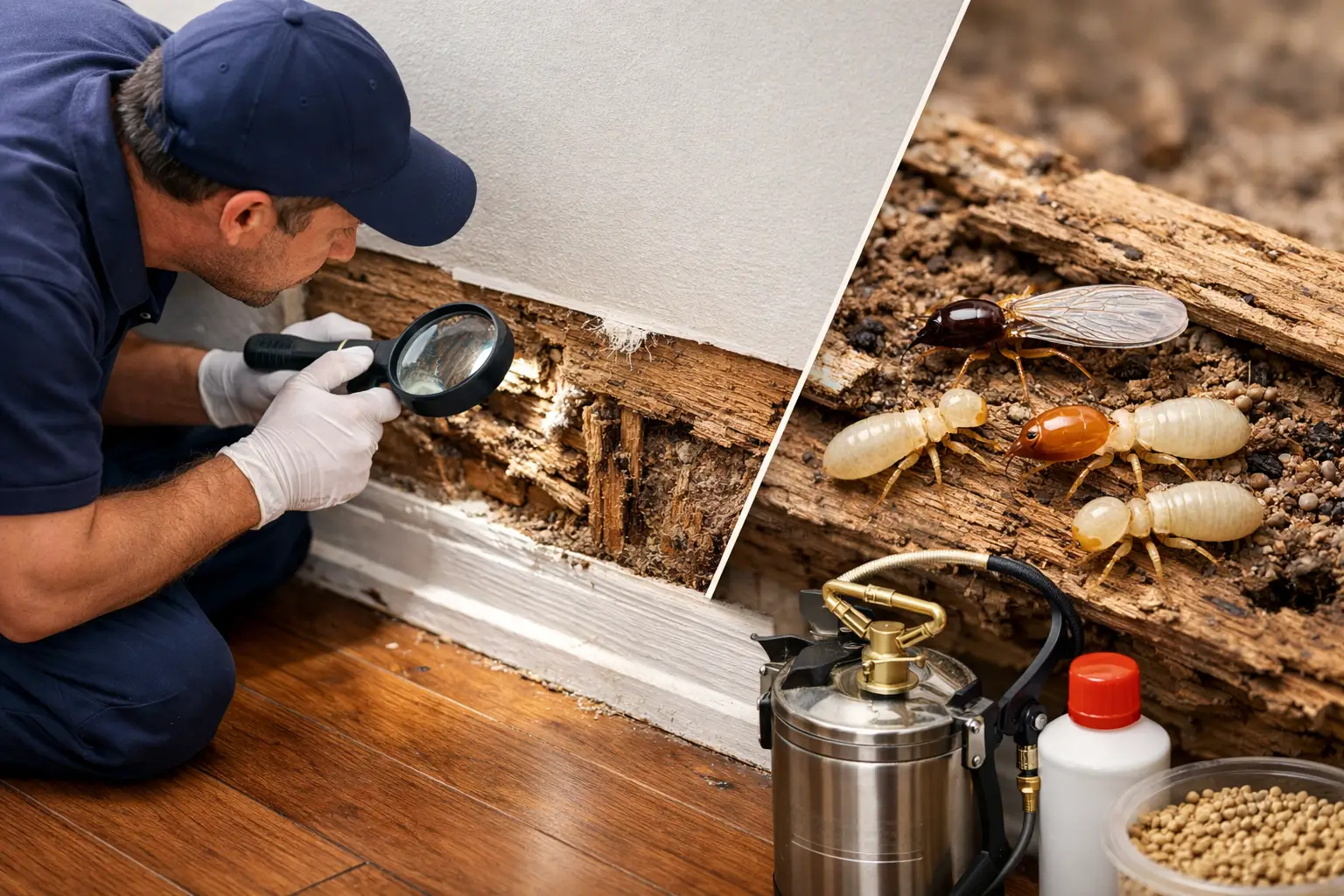
A soft spot in a window frame or a few winged insects near a sill may not look urgent. In many homes and commercial buildings, though, that is exactly how a serious termite problem starts to show itself. Termite inspection and treatment matter because these pests work quietly, often behind walls, under floors, and around structural wood long before visible damage appears.
Termites are not just a nuisance. They can compromise framing, trim, flooring, and other structural components over time, turning a hidden infestation into an expensive repair project. For property owners, the real issue is not only getting rid of active termites. It is finding the full extent of activity, choosing the right treatment, and putting a prevention plan in place that holds up.
What termite inspection and treatment actually involve
A professional termite service is more than a quick look around the baseboards and a spray around the foundation. A proper inspection is focused on evidence, risk factors, and access points. That includes looking for mud tubes, damaged or hollow-sounding wood, blistering surfaces, swarmers, discarded wings, moisture issues, and points where wood comes into direct contact with soil.
For many Ohio properties, the inspection also includes a close review of basements, crawl spaces, utility penetrations, sill plates, garages, expansion joints, and exterior grading. Termites are drawn to the conditions that support them, so moisture management and construction details matter just as much as visible pest activity.
Treatment begins after the inspection defines what is happening. If activity is confirmed, the goal is to eliminate the colony or colonies affecting the structure and create a protective barrier against future invasion. The exact method depends on the type of termite, the building layout, the severity of the infestation, and whether the problem is isolated or widespread.
Why early termite inspection and treatment save money
Termites are expensive because of what they do when nobody notices them. Unlike pests that create obvious disruption right away, termites can remain active for months or years before a property owner connects small warning signs to a larger structural issue.
That delay is where costs rise. A minor issue discovered during a routine inspection may require focused treatment and follow-up monitoring. A long-running infestation can lead to repairs in framing, subfloors, wall coverings, and finished wood. In commercial settings, the impact can spread beyond repairs into tenant concerns, operational interruptions, or compliance questions during property transactions and inspections.
This is why professional termite work is not just reactive. It is protective. A thorough inspection identifies current problems, but it also flags conditions that make an infestation more likely. Fixing drainage problems, reducing wood-to-soil contact, correcting excess moisture, and sealing structural gaps can make treatment more effective and longer lasting.
Signs you may need a termite inspection
Some termite problems are discovered during a home sale or annual property review. Others surface when an owner notices something that feels slightly off. Doors may start sticking around damaged framing. Paint can appear bubbled or uneven. Floors may feel softer than they should. In spring, swarmers may show up indoors near windows or lights.
Mud tubes are one of the clearest warning signs, especially with subterranean termites. These narrow, soil-like tubes often appear along foundation walls, support piers, or other areas that help termites travel between the soil and wood while staying protected. Damaged wood can also sound hollow when tapped, though visible damage is not always immediate.
Not every sign confirms termites. Moisture damage, carpenter ants, and wood-decaying fungi can create similar symptoms. That is one reason professional inspection matters. The treatment plan for termites is not the same as the solution for other wood-damaging pests or conditions.
Common termite treatment methods
There is no one-size-fits-all answer in termite control. The best treatment is the one that fits the infestation pattern and the structure itself.
Soil treatments
For subterranean termites, soil treatment is a common and proven option. A termiticide is applied to the soil around key foundation areas to create a treated zone. Depending on the construction, this can involve trenching, drilling, or both. The objective is to stop termites from entering the structure and to affect termites moving between the colony and the building.
This approach can be highly effective, but the quality of the application matters. Foundations with patios, additions, slab features, or hard-to-reach sections may require more complex work to achieve consistent coverage.
Baiting systems
Bait systems are another widely used option. These systems place monitored stations in the ground around the structure. Termites feed on the bait and carry the active ingredient back to the colony, helping eliminate it over time.
Baiting can be a strong fit for ongoing monitoring and long-term prevention. It is also useful where liquid application may be less practical in certain areas. The trade-off is timing. Bait systems are not always the fastest choice for every active infestation, especially if immediate structural pressure is severe and localized intervention is needed.
Wood treatments and localized applications
When termites are actively attacking accessible wood, localized treatment may be recommended as part of the overall plan. This can include direct application to affected voids, wood members, or problem areas.
Localized work can help stop activity in a specific section, but it is rarely the whole answer if subterranean termites have broader access through the soil. That is why experienced providers match local treatment to the larger infestation pattern rather than treating symptoms alone.
Why DIY termite control often falls short
Store-bought products may kill termites you can see. The problem is that termites you can see are usually a small part of the issue. The colony may remain active out of sight, and untreated access points can continue feeding new damage.
DIY work also tends to miss the inspection side of the job. Without a trained evaluation, it is easy to overlook hidden activity, construction vulnerabilities, or moisture conditions that support reinfestation. For homeowners, that can mean wasted time and recurring damage. For commercial properties, it can mean inconsistent results and a larger liability if the issue spreads.
Professional termite control brings three things DIY usually cannot: accurate identification, full-structure assessment, and treatment methods designed for lasting control. That matters when the stakes are structural.
What to expect from a professional service visit
A dependable provider should explain what was found, where activity or risk exists, and which treatment options make the most sense for the property. Good service is specific. It should not sound like a canned recommendation given to every building.
In many cases, the process starts with inspection and documentation, followed by a treatment proposal based on the structure type and severity of the issue. After treatment, follow-up may include monitoring, rechecks, and prevention guidance. For some properties, especially those with a history of termite pressure, ongoing protection is the smarter long-term choice.
That service model matters in Ohio, where seasonal moisture, foundation conditions, and varying construction types can all influence termite risk. An older home with a basement presents different access and vulnerability issues than a newer slab structure or a large commercial facility.
Choosing the right termite partner
When comparing providers, experience and inspection quality should carry real weight. Termite service is not just about applying a product. It is about understanding building conditions, pressure points, treatment limitations, and the most reliable path to control.
Look for a company that communicates clearly, documents findings, and builds a treatment plan around your property rather than around a generic package. Safety also matters. Treatments should be performed with attention to people, pets, operations, and the surrounding environment.
For homeowners, peace of mind comes from knowing the structure is being protected by trained professionals who take both elimination and prevention seriously. For commercial clients, the value includes consistency, documentation, and a service approach that supports building integrity over time. That is why many property owners choose established providers such as Apex Pest Control when termite concerns need a professional response backed by proven results.
If you suspect termites, waiting usually helps the termites more than it helps you. A timely inspection gives you clarity, and clarity is what protects a property before hidden damage becomes a much bigger problem.