



More than one out of every four American businesses in Ohio will face termite damage at some point, risking not just property but also profitability. These silent invaders can compromise building safety, disrupt operations, and lead to unexpected costs that threaten growth. Understanding the full impact of termites on commercial properties helps decision makers recognize vulnerabilities and take practical steps to safeguard their investment against these pervasive threats.
Table of Contents
- What Termite Infestations Mean For Businesses
- Types Of Termites Found In Ohio
- How Termites Invade Commercial Properties
- Warning Signs And Damage Indicators
- Risks, Legal Liabilities, And Financial Impact
- Professional Solutions And Prevention Strategies
Key Takeaways
| Point | Details |
|---|---|
| Economic Threat | Termite infestations can cause substantial damage and financial losses for businesses in Ohio, requiring extensive repairs and potentially disrupting operations. |
| Early Detection | Recognizing early warning signs of termites is crucial for preventing severe structural damage and reducing repair costs. |
| Proactive Strategies | Implementing regular inspections and moisture control measures helps minimize the risk of infestations and associated liabilities. |
| Legal Responsibilities | Property owners must address termite issues to avoid legal repercussions, including potential lawsuits and fines for failing to maintain pest-free environments. |
What Termite Infestations Mean for Businesses
Termite infestations pose a serious economic threat to Ohio businesses, potentially causing devastating structural damage and substantial financial losses. These tiny insects are more than just a nuisance – they represent a significant risk to commercial properties, with the potential to compromise building foundations, wooden structures, and critical infrastructure.
Businesses face substantial financial risks from termite damage. Research indicates that termites can severely compromise timber in urban structures, leading to expensive repair and replacement costs. In commercial settings, these damages can quickly escalate, potentially disrupting operations and requiring extensive renovation.
The economic impact of termite infestations extends far beyond simple repair expenses. Structural integrity becomes a critical concern, as these pests can silently undermine building foundations and wooden frameworks. For Ohio businesses, this means potential risks including:
- Unexpected repair costs ranging from thousands to tens of thousands of dollars
- Potential temporary business closure during extensive repairs
- Reduced property value
- Compromised safety for employees and customers
- Potential legal liability if structural damage occurs
Professional termite inspection strategies become crucial for proactive prevention. Early detection can mean the difference between minor treatments and catastrophic structural damage, saving businesses significant financial and operational stress.
Types of Termites Found in Ohio
Ohio businesses and property owners must be aware of the specific termite species that pose significant risks to their structures. The Eastern Subterranean Termite represents the primary termite threat in the state, causing extensive damage to wooden infrastructures across commercial and residential properties.
The Eastern Subterranean Termite (Reticulitermes flavipes) is particularly concerning for Ohio businesses. These insects are known for infesting structural wood near soil, targeting critical building components such as sills, studs, and joists. They create distinctive mud tubes and can silently compromise wooden structures, often going undetected until substantial damage has occurred.
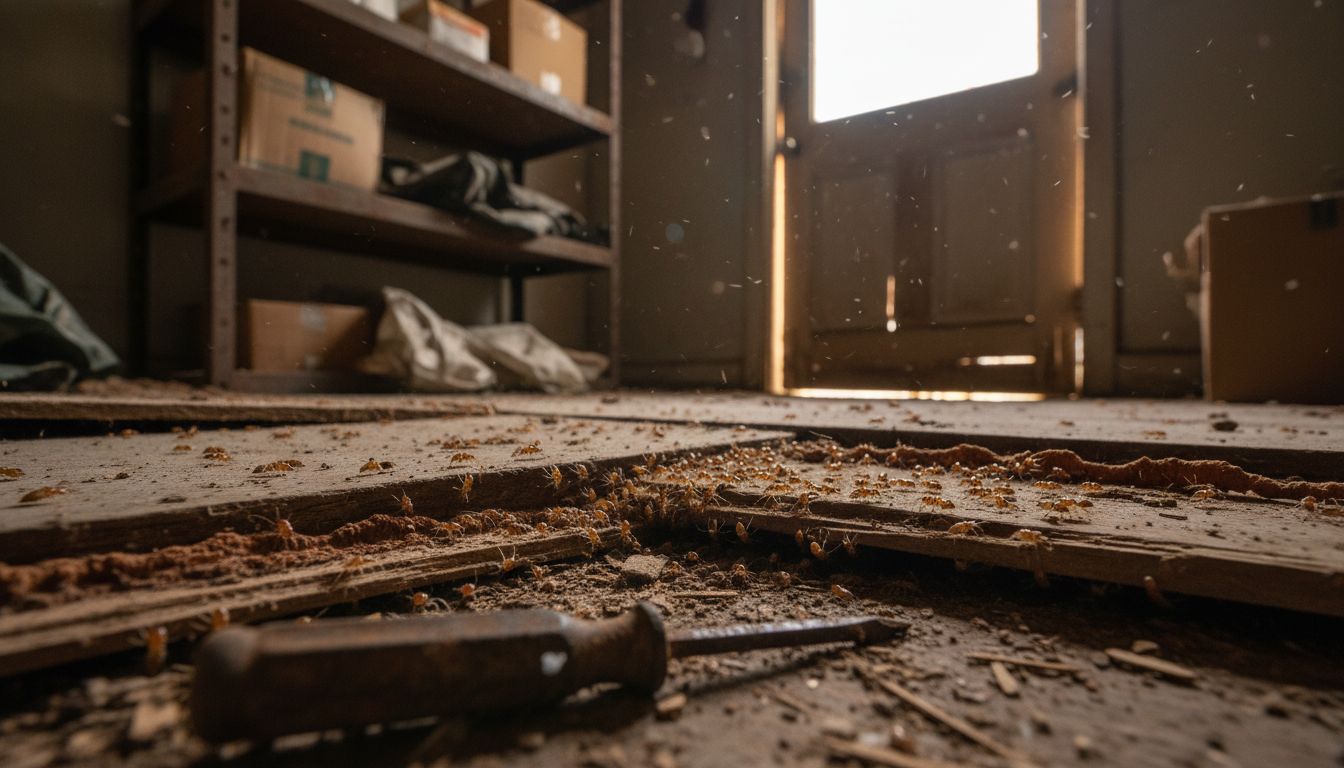
While termites are the primary wood-destroying insects, Ohio property owners should also be cautious of similar pests. Carpenter ants are frequently mistaken for termites but operate differently. These insects excavate wood to create nests, potentially causing structural damage, though they do not consume wood like termites.
Understanding the characteristics of these wood-destroying insects is crucial for Ohio businesses. Comprehensive pest identification strategies can help property managers and business owners develop targeted prevention and treatment approaches. Key differences between termites and carpenter ants include:
- Termites consume wood, while carpenter ants merely excavate
- Termite colonies are typically larger and more destructive
- Eastern Subterranean Termites create mud tubes, a distinct identifying feature
- Carpenter ants are more visible and move more freely
Proactive monitoring and professional pest control assessments remain the most effective strategies for managing potential termite infestations in Ohio’s commercial environments.
How Termites Invade Commercial Properties
Termite invasions represent a sophisticated and often undetected threat to commercial properties. Eastern Subterranean Termites demonstrate remarkable strategies for infiltrating buildings, exploiting even the smallest structural vulnerabilities to establish destructive colonies.
These wood-destroying insects typically enter commercial properties through multiple critical pathways. Structural entry points include foundation cracks, utility conduits, and areas where wood contacts soil. Eastern Subterranean Termites construct intricate mud tubes, allowing them to travel from underground nests into structural wood while maintaining critical moisture levels and protection from predators.
Moisture and wood conditions play a significant role in termite invasions. Commercial properties with poor drainage, wood-to-ground contact, or hidden water damage become prime targets. Termites are particularly attracted to:
- Wooden structures near ground level
- Areas with consistent moisture exposure
- Structural wood with existing water damage
- Poorly ventilated crawl spaces
- Locations with organic debris accumulation
Business owners should remain vigilant about potential termite entry strategies. Regular professional inspections, proper building maintenance, and strategic moisture control can significantly reduce the risk of these destructive pests establishing colonies within commercial structures.
Warning Signs and Damage Indicators
Early detection is critical when it comes to termite infestations in commercial properties. Eastern Subterranean Termites leave behind distinctive warning signs that businesses must recognize to prevent extensive structural damage.
The most prominent indicators of termite presence include the discovery of mud tubes along foundation walls, floors, or other structural surfaces. These pencil-thin tunnels are constructed by termites to maintain moisture and protect themselves while traveling between underground nests and wooden structures. Business owners should also watch for:
- Discarded termite wings near windowsills or entry points
- Hollowed or damaged wooden structures
- Soft or crumbling wood that sounds hollow when tapped
- Warped doors or windows that no longer fit properly
- Small holes or bubbling paint on wooden surfaces
Professional inspection strategies can help identify subtle damage that might go unnoticed by untrained eyes. Advanced termite damage often manifests as structural weakening, where wooden beams, floor joists, and support structures become compromised. This silent destruction can occur for months or even years before becoming visibly apparent, making regular professional assessments crucial for commercial properties.
Business owners should remain proactive, understanding that termite damage can significantly impact property value and structural integrity. Annual inspections, moisture control, and immediate investigation of any potential warning signs can prevent catastrophic and expensive structural repairs.
Risks, Legal Liabilities, and Financial Impact
Termite infestations represent a severe financial threat to commercial properties, with potential damages extending far beyond simple structural repairs. The economic consequences can be catastrophic, potentially threatening a business’s entire operational stability.
The financial implications of termite damage are staggering. Businesses can face repair costs ranging from several thousand to hundreds of thousands of dollars, depending on the extent of structural compromise. These expenses often include:
- Complete structural reconstruction
- Extensive wood replacement
- Foundation reinforcement
- Professional pest elimination treatments
- Potential business interruption costs
Legal obligations surrounding pest management create additional complexity for business owners. Property managers and commercial property owners may be held legally responsible for maintaining safe, pest-free environments. Failure to address termite infestations can result in:
- Potential lawsuits from tenants or occupants
- Violations of health and safety regulations
- Reduced property values
- Potential insurance claim complications
- Mandatory remediation expenses
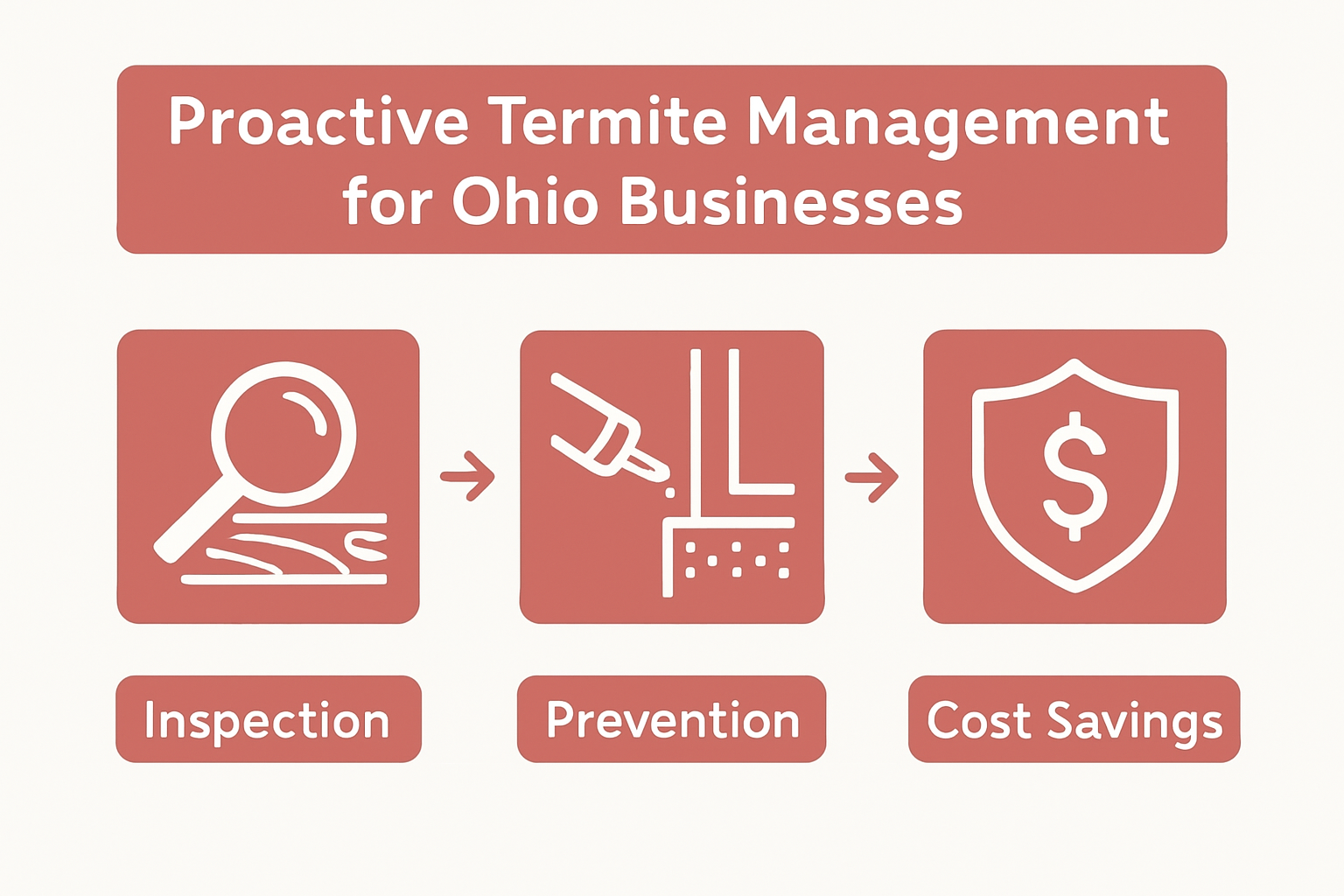
Proactive prevention remains the most cost-effective strategy. Regular professional inspections, immediate intervention, and comprehensive pest management can mitigate these substantial financial and legal risks, protecting businesses from potentially devastating economic consequences.
Professional Solutions and Prevention Strategies
Integrated Pest Management (IPM) represents the most comprehensive approach to termite prevention for Ohio businesses. This strategic methodology goes beyond traditional pest control, focusing on long-term prevention and systematic risk reduction.
Professional termite solutions involve multiple sophisticated strategies, including:
- Comprehensive property inspections
- Advanced moisture control techniques
- Strategic baiting systems
- Targeted soil treatments
- Structural modification recommendations
Structural prevention is critical in termite management. Preventive pest services emphasize reducing wood-to-soil contact, maintaining proper drainage, and implementing termite-resistant building materials. Businesses can significantly minimize infestation risks by:
- Ensuring proper ground slope away from building foundations
- Removing wood debris near structures
- Sealing potential entry points
- Maintaining consistent moisture control
- Regular professional assessments
Proactive monitoring and immediate intervention remain the most cost-effective strategies for protecting commercial properties from destructive termite populations. Professional pest management teams can develop customized prevention plans tailored to specific business environments, providing comprehensive protection against these silent destroyers.
Protect Your Ohio Business From Termite Damage Today
Termite infestations threaten the structural integrity and financial stability of many Ohio businesses. As the article highlights, Eastern Subterranean Termites silently invade through tiny cracks and moisture-prone areas causing costly repairs, operational disruptions, and even legal liabilities. If you are concerned about unexpected damage, compromised safety, or shrinking property value, taking action now is crucial.
At Apex Pest Control, we specialize in comprehensive commercial pest management designed to detect, prevent, and eliminate termite threats before major damage occurs. Our strategic preventive pest services include detailed inspections, moisture control, and tailored treatment plans that protect your property and investments. Don’t wait until the warning signs like mud tubes or damaged wood become visible. Get ahead of termites with expert solutions.
Request your free quote today and secure your business from this silent destroyer. Early intervention saves money, ensures safety for your employees and clients, and maintains your commercial property’s value.
Frequently Asked Questions
What are the signs of a termite infestation that businesses should look for?
Common signs of a termite infestation include mud tubes on foundation walls, discarded wings near entry points, hollowed or damaged wooden structures, and soft wood that sounds hollow when tapped. Regular inspections are crucial for early detection.
How can businesses prevent termite infestations?
Businesses can prevent termite infestations by ensuring proper drainage away from building foundations, reducing wood-to-soil contact, sealing potential entry points, and maintaining consistent moisture control. Regular professional inspections are also essential.
What financial impact can termite damage have on businesses?
Termite damage can lead to repair costs that range from thousands to hundreds of thousands of dollars, including structural reconstruction, wood replacement, and pest elimination treatments. It can also affect property value significantly and result in business interruptions.
What professional solutions are available for termite management?
Integrated Pest Management (IPM) offers a comprehensive approach to termite management. Solutions may include property inspections, moisture control strategies, strategic baiting systems, targeted soil treatments, and recommendations for structural modifications.