



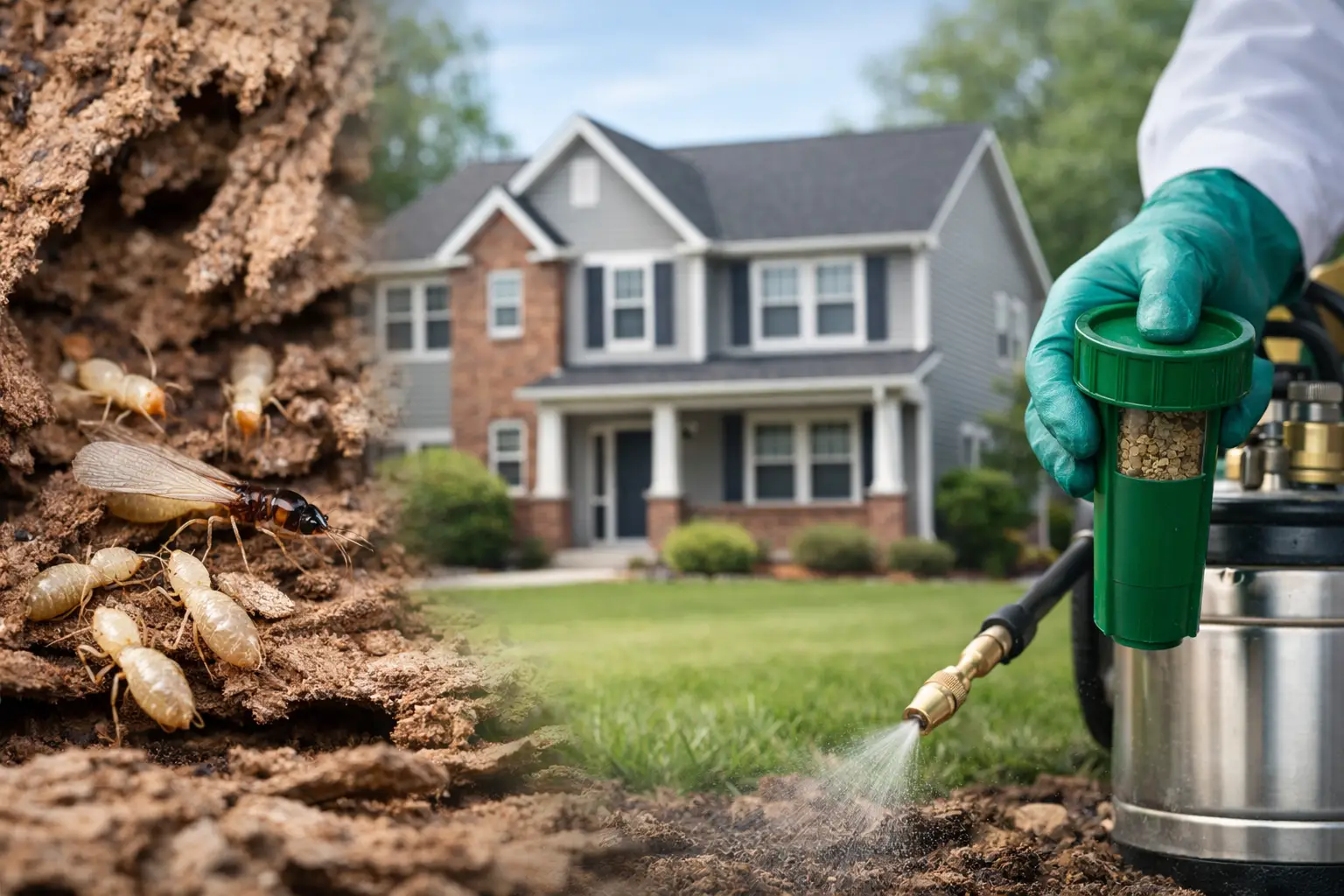
Termites do not need a dramatic entrance to create an expensive problem. A concealed mud tube along a foundation wall, blistering paint near a baseboard, or a swarm of winged insects can signal activity that has been developing out of sight. This termite treatment comparison explains how the leading professional options work, where each one fits, and why the right answer depends on the structure, the termite pressure, and the conditions around your property.
For most Ohio homes, the concern is subterranean termites. These termites live in the soil, travel through protected tunnels, and feed on wood from below. Effective control must address both the active colony and the conditions that allow termites to return.
Termite Treatment Comparison: The Main Options
Professional termite control is not a one-size-fits-all service. The two primary approaches for subterranean termites are liquid soil treatments and termite bait systems. Localized wood treatments and moisture corrections may also be part of a complete plan.
Liquid soil barrier treatments
A liquid treatment creates a treated zone in the soil around a foundation, beneath targeted slabs, and at known entry points. A certified technician may trench, treat soil, or drill through concrete where necessary to reach concealed areas. The objective is to stop termites as they move between the ground and the structure.
For an active, established infestation, a liquid barrier is often the fastest route to strong control. Modern non-repellent products are designed so termites move through treated soil without detecting it, then transfer the active ingredient within the colony. This approach can provide dependable, long-lasting protection when it is correctly installed and monitored.
The trade-off is access. Landscaping, porches, patios, finished basements, additions, and attached garages can affect where treatment is needed and how it is performed. A proper inspection is essential because treating only the visible damage or one convenient exterior wall leaves potential entry points unprotected.
Termite bait systems
Bait systems use discreet stations placed in the ground around the property. Technicians inspect the stations on a scheduled basis and introduce a bait material when termite activity is found. Worker termites share the bait within the colony, reducing or eliminating the population over time.
Baiting is a valuable choice when a low-disruption approach is preferred, when construction makes extensive soil treatment difficult, or when long-term monitoring is a priority. It can be especially useful for properties with complicated foundations, drainage features, dense hardscaping, or environmental considerations that call for a more targeted treatment strategy.
Baits are not an instant solution. Colony elimination depends on termites finding and feeding on the bait, which can take time. That does not make the system less effective, but it does make professional monitoring nonnegotiable. A bait station that is not inspected, serviced, and documented cannot provide the protection it was designed to deliver.
Localized wood treatments
Wood treatments are applied directly to infested or vulnerable wood, often inside a wall void, crawl space, basement, or other accessible area. Depending on the situation, a technician may use foam, injection treatments, or borate-based products that help protect wood from termite feeding.
This method is useful when activity is concentrated in a defined location or when a known construction feature needs added protection. It can also complement a liquid barrier or bait system. On its own, however, localized treatment may not address the colony in the soil or every route termites use to enter the building.
Homeowners sometimes choose a spot treatment because it appears less expensive upfront. The risk is that termites are rarely limited to the place where damage is first discovered. A complete inspection determines whether a localized application is appropriate or whether it would simply leave the larger problem active.
Fumigation and whole-structure treatments
Whole-structure fumigation is commonly associated with drywood termites, which live inside the wood they consume rather than returning to soil. It is generally not the standard answer for Ohio’s more common subterranean termite problems.
If a property has a confirmed drywood termite infestation, a whole-structure option may be considered because it can reach termites throughout the building. It also requires occupants and pets to leave temporarily and involves significant preparation. For that reason, it should be recommended only after the termite species and extent of activity have been accurately confirmed.
Which Treatment Works Best?
The best termite treatment is the one that controls the active threat and closes the paths termites are most likely to use next. For many Ohio properties with active subterranean termite activity, a professionally installed liquid soil treatment offers direct, reliable protection. For properties that need ongoing colony monitoring or have difficult treatment access, a bait system may be the stronger fit.
In some cases, the best answer is a layered plan: soil treatment for immediate structural protection, localized work where activity is concentrated, and continued inspections to catch new pressure before damage grows. Commercial facilities, multi-unit properties, and homes with prior termite history often benefit from this more deliberate approach.
The decision should be based on facts gathered during inspection, not on a generic package. A technician should identify the termite species, locate evidence of activity, assess construction details, evaluate moisture conditions, and explain which areas require treatment. That process protects your property and helps avoid paying for work that does not match the risk.
Safety, Pets, and Daily Life During Treatment
Professional termite treatments are selected and applied according to label directions and the conditions of the property. Before service, your technician should explain preparation requirements, any temporary access restrictions, and what to expect around children, pets, gardens, wells, or drainage systems.
Liquid treatments are typically placed in soil or targeted structural areas rather than broadly applied across living spaces. Bait stations are enclosed and installed outdoors. Wood treatments are directed to specific areas of concern. Each option has a different profile, which is one reason treatment selection matters.
Do not rely on store-bought sprays to protect a home from termites. Surface sprays may kill insects you can see, but subterranean termites spend most of their time hidden in soil, wall voids, and structural wood. A partial DIY application can also disrupt feeding patterns without eliminating the colony.
Cost: Look Beyond the Initial Price
Termite treatment pricing depends on the size and layout of the structure, the severity of activity, foundation type, accessibility, treatment method, and whether ongoing monitoring is included. A crawl space, slab foundation, finished basement, or extensive concrete can all change the scope of work.
The lowest estimate is not always the best value. Ask what areas are included, whether the plan addresses active activity and future prevention, how often follow-up inspections occur, and what documentation or warranty terms apply. For commercial properties, also ask how service records, corrective actions, and inspection reports support internal compliance and audit needs.
A clear proposal should describe the recommended method in plain language. You should understand where treatment will occur, why it is needed, and what the provider will do if termites are found again during the service period.
Prevention Still Matters After Treatment
No treatment plan should ignore the conditions that attract termite activity. Termites need moisture, concealed access, and wood or cellulose materials to feed on. Correcting these issues strengthens professional treatment and reduces future pressure.
Keep mulch, soil, and stored lumber from contacting siding or structural wood. Repair plumbing leaks, direct downspouts away from the foundation, and maintain clearance between soil and exterior wood where construction allows. Remove old stumps, scrap lumber, and cardboard stored against the house. Crawl spaces should have appropriate moisture control and ventilation based on the home’s design.
These steps do not replace termite treatment when activity is present. They make it harder for termites to gain hidden access and easier for inspections to catch warning signs early.
When to Schedule a Termite Inspection
Schedule a professional inspection promptly if you see mud tubes, swarming insects, discarded wings, soft or hollow-sounding wood, unexplained bubbling paint, or doors and windows that suddenly stick near damaged framing. Even without visible signs, an inspection is wise before purchasing a property, after discovering moisture damage, or when a neighboring home has confirmed termite activity.
Apex Pest Control builds termite recommendations around the property in front of us, not a preselected product. The goal is proven results with a treatment plan that protects the people, pets, structure, and daily operations that matter to you. Early action gives you more choices, less disruption, and a far better chance to stop termites before a small hidden problem becomes a major repair.