



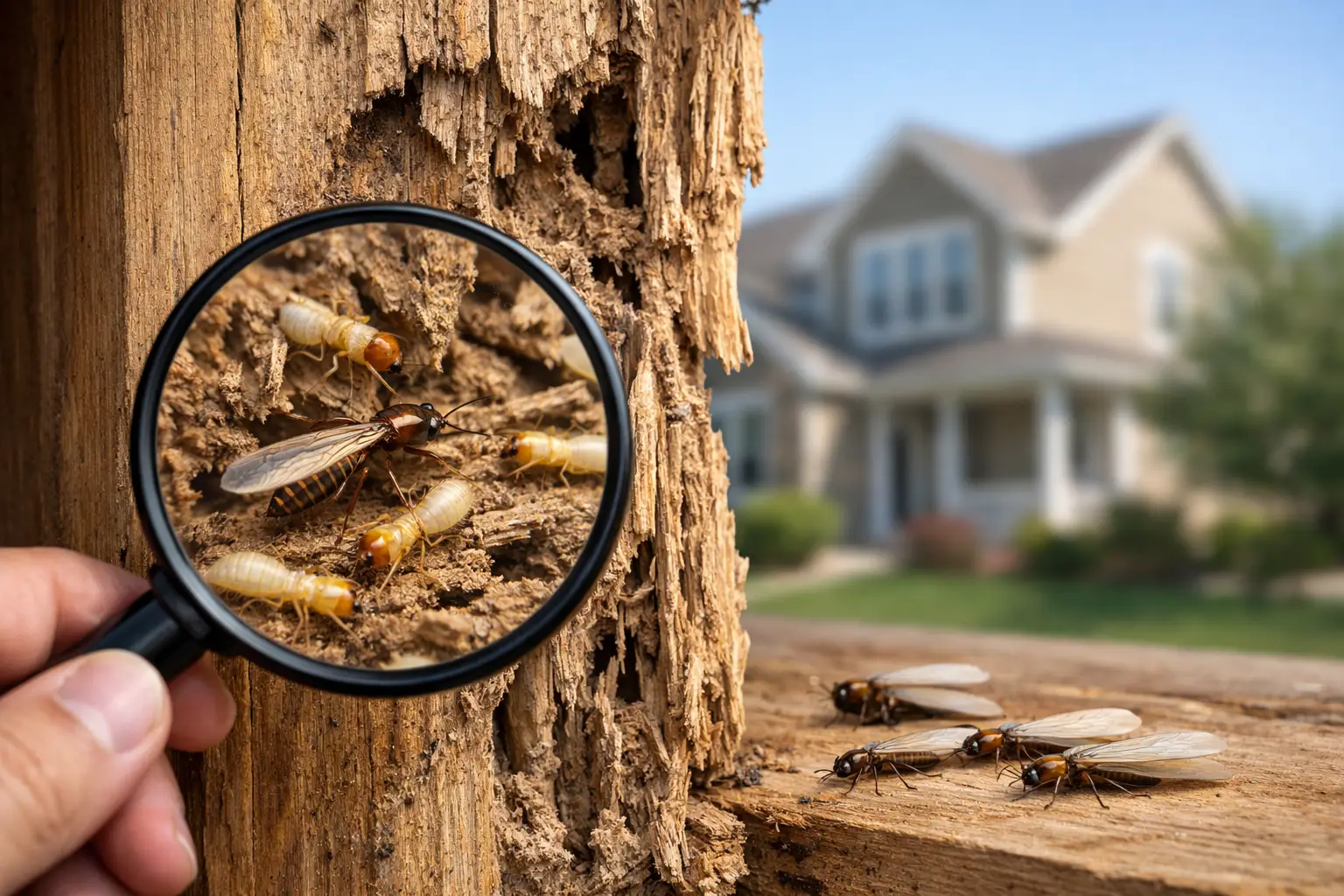
Termite warning signs are easy to miss because these destructive pests typically work inside wood, walls, and foundations rather than out in the open. By the time visible damage becomes obvious, a colony may have been feeding for months or longer. For Ohio homeowners, landlords, and facility managers, recognizing early evidence can mean the difference between a targeted treatment and costly structural repairs.
Subterranean termites are the primary concern in Ohio. They live in the soil, need dependable moisture, and travel into buildings through small gaps around foundations, utility lines, and wood that contacts the ground. A professional inspection is the surest way to confirm activity, but knowing what to look for helps you act before the problem grows.
10 Termite Warning Signs to Watch For
1. Mud tubes on foundation walls
Pencil-width tubes made from soil and wood particles are one of the clearest signs of subterranean termites. These sheltered passageways often appear along foundation walls, crawl space supports, sill plates, basement walls, or areas where concrete meets wood. Termites use them to travel between the ground and a food source while staying protected from dry air and predators.
Do not simply knock down a tube and assume the problem is resolved. A damaged tube may be abandoned, but it can also be rebuilt quickly, and active termites may be using hidden routes elsewhere. Its presence alone is enough reason to schedule an inspection.
2. Wood that sounds hollow or feels thin
Termites consume wood from the inside out, often leaving a thin outer surface that can look normal at first glance. Wood may sound hollow when tapped, feel soft when pressed, or break apart with little force. Damaged trim, baseboards, flooring, window frames, porch posts, and structural lumber can all show this pattern.
Not every soft area is termite damage. Water intrusion, fungal decay, and carpenter ants can also compromise wood. The difference matters because the treatment approach changes, which is why a trained technician should identify the source before repairs begin.
3. Swarming insects indoors or near the building
A termite swarm occurs when winged reproductive termites leave an established colony to start new ones. In Ohio, swarms are most common in spring, often after warm rain, though indoor conditions can make timing less predictable. Seeing many small, dark insects with wings near windows, doors, light fixtures, or vents deserves immediate attention.
Termite swarmers are commonly confused with flying ants. Termites have straight antennae, a broad waist, and four wings of similar length. Flying ants have bent antennae, a pinched waist, and front wings that are longer than their rear wings. Even if the swarm is outside, it may indicate a colony nearby and should not be dismissed.
4. Discarded wings near windows and doors
After swarmers find a suitable place to settle, they shed their wings. Small piles of matching, translucent wings on windowsills, near exterior doors, in garages, or around light sources can be a termite warning sign even if you never saw the insects themselves.
One or two insects may have wandered in from outdoors. A noticeable cluster of wings, especially inside a structure, calls for a closer inspection. Keep a sample or take a clear photo if possible. Accurate identification helps determine whether you are dealing with termites, ants, or another seasonal pest.
5. Bubbling, peeling, or discolored paint
Paint that bubbles or peels can be mistaken for a simple moisture problem. While moisture is often involved, termites may create a similar appearance as they feed just below painted surfaces. Look closely at lower walls, door frames, trim, and areas near plumbing or exterior foundation walls.
This symptom is not proof on its own. A professional should assess both the wood condition and the moisture source. Correcting leaks, drainage problems, or condensation is a critical part of preventing future termite pressure after treatment.
6. Tight-fitting doors or windows
Doors and windows that suddenly stick can result from normal seasonal humidity, foundation movement, or worn hardware. They can also signal termite activity or moisture damage inside nearby frames. As termites feed and moisture accumulates, wood may become distorted enough to affect how doors and windows operate.
Pay attention when sticking occurs alongside other evidence, such as bubbling paint, hollow trim, or mud tubes. A single stiff door is usually not a diagnosis. Several changes in the same area deserve professional evaluation.
7. Small holes, pinholes, or damaged drywall
Termites can damage paper-faced drywall, trim, and wood behind walls. You may notice small openings, faint lines, or areas that appear blistered or unusually fragile. In more advanced cases, drywall can crumble when touched.
Because these signs can also result from impact damage, plumbing issues, or settling, avoid opening walls without a plan. A pest professional can inspect accessible areas and help determine whether additional investigation is necessary before a contractor starts repairs.
8. Termite droppings in drywood termite areas
Drywood termites push tiny pellet-like droppings, called frass, out of their galleries. Although drywood termites are less common in Ohio than subterranean termites, items shipped from other regions, certain construction conditions, or travel-related introductions can create exceptions. Frass resembles small piles of coarse sand or sawdust near wood.
Subterranean termites generally use their droppings in their tunnels rather than leaving visible piles. If you find pellets, do not assume they are harmless sawdust. Collecting a small sample can help support identification.
9. Crumbling wood around porches, decks, and crawl spaces
Exterior structures often face high termite risk because they are exposed to moisture and may contain untreated wood close to soil. Inspect deck posts, steps, porch columns, lattice, fence connections, sheds, and crawl space framing for soft spots, channels in wood, or soil packed into cracks.
Wood-to-soil contact gives termites a direct route into a structure. Keeping mulch, firewood, lumber, and cardboard away from the foundation reduces this risk, but it does not replace an inspection when activity is suspected.
10. A neighbor’s termite problem
Termites do not respect property lines. A confirmed infestation in a neighboring home, attached townhome, nearby commercial unit, or adjacent wooded area raises the risk for your property, particularly when buildings share construction features or landscaping conditions.
This is a good time for a preventive inspection, not a reason to wait for visible damage. Early detection is especially valuable for property managers responsible for multiple units, older facilities, and buildings with crawl spaces or complex foundations.
What to Do When You See Termite Warning Signs
Avoid spraying visible insects with a general household product or disturbing suspected damage before it can be inspected. Store-bought sprays may kill a few exposed pests but will not reach the colony in the soil or hidden areas of the structure. They can also make professional detection more difficult by disrupting visible evidence.
Instead, document what you found with photos, note the location and date, and arrange a thorough termite inspection. An experienced technician should evaluate accessible interior and exterior areas, look for moisture and entry-point conditions, identify the pest accurately, and explain whether evidence is active, old, or inconclusive.
If termites are confirmed, effective control usually involves more than one step. Depending on the property and colony location, treatment may include a soil-applied termite treatment, a baiting system, targeted work in active areas, and recommendations to correct moisture or wood-contact conditions. The right plan depends on the building type, construction, infestation severity, and access around the foundation.
Termite Prevention for Homes and Commercial Properties
Prevention starts with reducing the conditions termites need: moisture, hidden access, and nearby wood. Repair plumbing leaks and roof drainage issues promptly. Make sure gutters direct water away from the foundation, maintain clearance between soil and siding, and keep mulch from being piled against exterior walls. Store firewood and scrap lumber off the ground and away from the building.
For commercial properties, termite prevention also supports maintenance planning and facility continuity. Regular inspections can identify risk around loading areas, utility penetrations, landscaped perimeters, storage rooms, and older expansion joints before damage affects operations. Clear documentation is particularly useful for multi-site operators, property managers, and facilities with compliance responsibilities.
Apex Pest Control provides professional termite inspections and individualized treatment plans designed to protect people, pets, property, and the environment. Since 1969, its trained professionals have helped Ohio property owners address pest pressure with proven, practical solutions rather than temporary fixes.
If you have found mud tubes, shed wings, unexplained wood damage, or another possible sign of termites, treat it as a reason to investigate promptly. A timely inspection gives you clear answers, protects your investment, and provides the peace of mind that comes from knowing exactly what is happening behind the walls.