



TL;DR:
- Building a pest-resistant home in Oakwood, Ohio requires detailed design and proper installation to prevent long-term insect infiltration. Regular maintenance and professional inspections are vital to sustain pest defenses against local species like termites, ants, and no-see-ums. A comprehensive approach involves selecting appropriate materials, sealing transition zones, and adjusting for seasonal climate shifts to ensure lasting protection.
Building a home in Oakwood, Ohio, and assuming standard construction will keep pests out is one of the most expensive mistakes a property owner can make. Understanding insect-resistant structures goes far beyond picking the right caulk or adding a few screens. Termites, carpenter ants, and no-see-ums exploit the gaps most builders never think about: the seam where your foundation meets framing, the void behind your siding, the unsealed conduit entry tucked behind drywall. Get those details wrong, and no amount of material upgrades will save you. Get them right, and your structure will resist pest intrusion for decades.
Table of Contents
- Key takeaways
- Pest threats in Oakwood, Ohio
- Principles of designing insect-resistant structures
- Advanced insect-proofing techniques for Oakwood builds
- Common pitfalls and maintenance strategies
- My perspective after years in Ohio pest control
- How Apexpestcontrol supports Oakwood homeowners
- FAQ
Key takeaways
| Point | Details |
|---|---|
| Detailing beats materials | Pest infiltration almost always traces back to design gaps, not the materials themselves. |
| Mesh size matters precisely | Use 20-gauge galvanized steel mesh with openings no larger than 1.6 mm to block insects effectively. |
| Borate insulation adds long-term value | Borate-treated cellulose insulation protects wall voids against termites and ants without degrading over time. |
| Seasonal movement opens gaps | Oakwood’s freeze-thaw cycles can crack rigid sealants, so flexible detailing at sill plates is non-negotiable. |
| Maintenance sustains resistance | Screens, caulk lines, and transition zones need annual inspection to stay effective through Ohio winters. |
Pest threats in Oakwood, Ohio
Oakwood sits in the Montgomery County area of Ohio, and its housing stock tells a story. Many of the homes here were built between the 1920s and 1960s, with balloon-frame or platform-frame construction that leaves plenty of voids for pests to travel through. Paired with Ohio’s humid summers, cold winters, and wet springs, this creates conditions that favor several pest species in particular.
The pests you are most likely to face in Oakwood include:
- Subterranean termites. Ohio is squarely within active termite territory. Subterranean termites travel through soil, enter at foundation cracks or wood-to-soil contact points, and cause damage that hides behind walls for years.
- Carpenter ants. These show up in wood that has been softened by moisture. Older Oakwood homes with wood sill plates close to grade are especially vulnerable.
- No-see-ums (biting midges). These tiny insects pass straight through standard 16×16 or 18×18 window screens, making them a real nuisance in warmer months near the Great Miami River corridor.
- Rodents. Mice can squeeze through a gap the size of a dime. Any opening in your foundation, utility penetration, or soffit becomes a highway into your walls.
Ohio’s climate adds another layer of difficulty. Freeze-thaw cycles widen cracks in mortar, foundation walls, and sill plates every single winter. By the time spring arrives, gaps that were sealed in the fall have shifted enough to let pests back in. For new builds in Oakwood, this means the design has to account for seasonal movement from day one, not as an afterthought.
Pro Tip: If your Oakwood home has a stone or poured-concrete foundation from before 1950, have a pest professional inspect the rim joist area specifically. That is where subterranean termite activity most often begins in older properties.
Principles of designing insect-resistant structures
The foundational principle of designing pest-resistant structures is this: pests do not create openings. They use the ones your building already has. Pest infiltration in wall assemblies almost always traces back to detailing gaps at transition zones, ventilated cladding cavities, and utility penetrations, not to a failure of the materials themselves.
Materials that actually deliver
Choosing insect-proof building materials starts with understanding what pests are trying to exploit. Wood draws termites and carpenter ants because it provides food and nesting space. Moisture draws all of them because it softens wood and creates fungal growth that acts as a food source.
Here is how key materials compare for insect resistance:
| Material | Insect resistance | Best use case |
|---|---|---|
| 20-gauge galvanized steel mesh (≤1.6 mm openings) | High for insects | Vent covers, foundation gaps, cladding cavities |
| 20-gauge galvanized steel mesh (≤6 mm openings) | High for rodents | Larger penetrations, utility entries |
| Borate-treated cellulose insulation | High for termites, ants, cockroaches | Wall and attic voids |
| Mineral wool insulation | Moderate, pest-neutral | Exterior continuous insulation layers |
| Composite or vinyl fencing | High, no cellulose to attract termites | Perimeter fencing adjacent to structure |
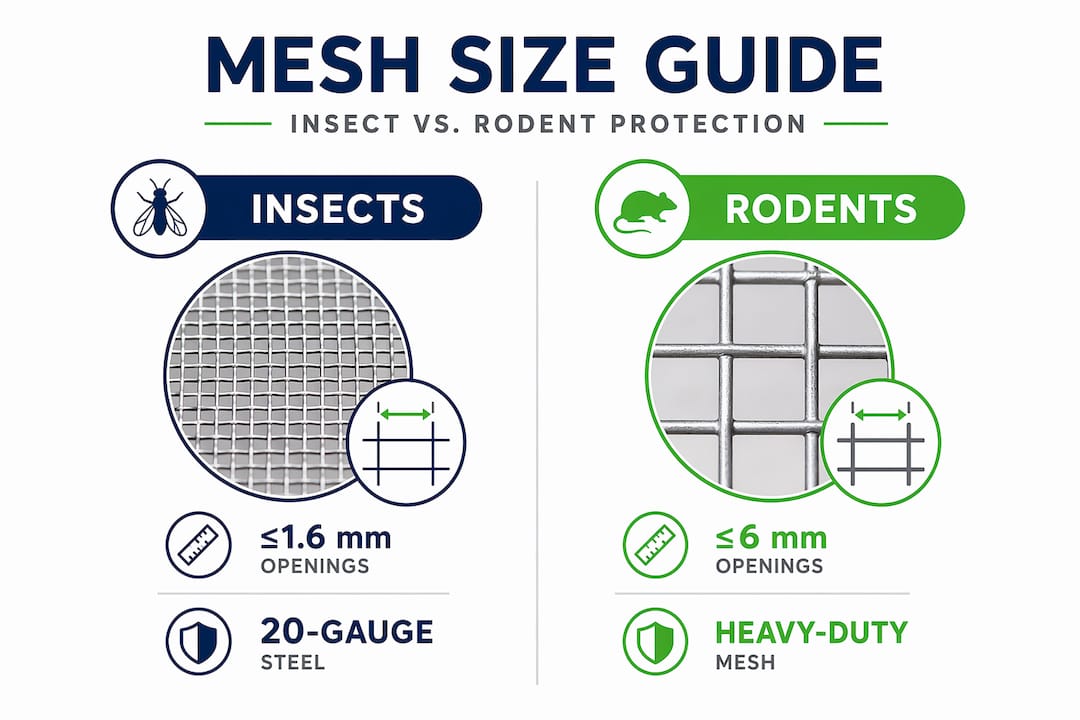
Galvanized steel mesh openings of 1.6 mm or smaller exclude most insects, while openings of 6 mm or smaller prevent rodent ingress. Fiberglass screen, by contrast, degrades faster and rodents can breach it. Metal screens in rainscreen assemblies offer significantly more durability, though they cost more and take longer to install correctly.
Moisture control is equally critical. Continuous exterior insulation shifts the dew point outward, keeping structural framing dryer and reducing the conditions that attract decay insects and fungal colonization. For new builds and deep renovations in Oakwood, adding a layer of exterior mineral wool or rigid foam over the sheathing is one of the highest-return decisions you can make for long-term pest resistance.
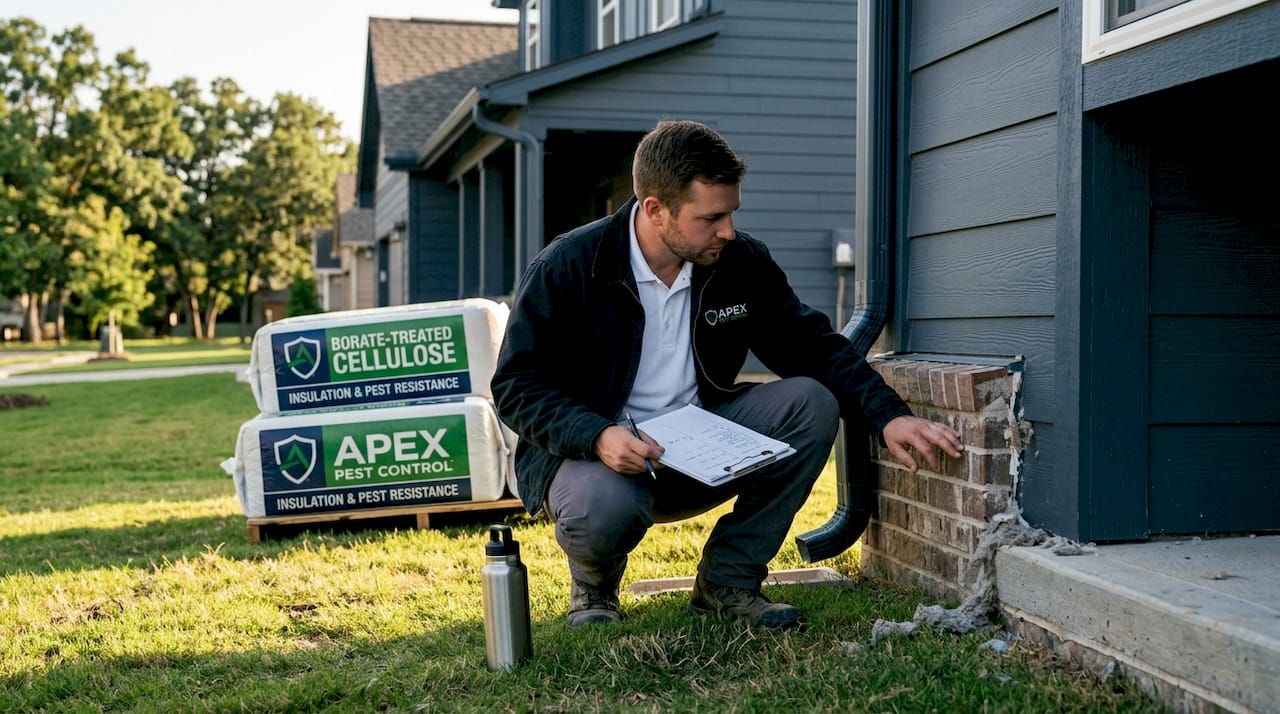
Pro Tip: When specifying borate-treated insulation, confirm the product contains at least 14% orthoboric acid and ask for blown-in installation. Borate insecticides in insulation show no degradation over time and target multiple pest species, but coverage gaps during installation reduce their effectiveness significantly.
Advanced insect-proofing techniques for Oakwood builds
Knowing what materials to use is only half the work. How you install them is what actually keeps pests out. These techniques apply whether you are building new in Oakwood or retrofitting a home that dates back to the Eisenhower era.
-
Seal sill plate transitions with metal gaskets and closed-cell spray foam. The gap between your foundation wall and the first piece of wood framing is one of the highest-risk zones in any Ohio home. Metal sill gaskets compress to fill irregular surfaces, and closed-cell spray foam fills any remaining voids. Use spray foam rated for pest resistance rather than standard expanding foam, which rodents can chew through.
-
Use flexible detailing at all movement zones. Oakwood’s winters will put real stress on rigid sealants. Seasonal movement in building components requires flexible pest-grade detailing at sill plates and foundation transitions to maintain integrity through freeze-thaw cycles. Use elastomeric sealant rather than standard caulk at any joint that bridges wood and masonry.
-
Install 20×20 mesh screens at all ventilation points. Standard window screens let no-see-ums straight through. Ultra-fine screens with 20×20 mesh counts or finer block biting midges while still allowing airflow. This matters most on south and west-facing elevations in Oakwood, where summer breezes come off open green space.
-
Detail all utility penetrations with metal escutcheons and backer rod. Plumbing, electrical, and HVAC penetrations through the exterior envelope are favorite pest entry points. Metal escutcheons prevent gnawing, and backer rod plus elastomeric sealant fills the annular gap without cracking.
-
Integrate borate-treated insulation during framing. Borate-treated cellulose insulation containing 14.72% orthoboric acid provides contact-active protection against termites, carpenter ants, cockroaches, and silverfish inside wall and attic voids. Install it during the framing stage before drywall goes up. Retrofitting this later means opening walls.
You can also review Ohio-specific seasonal considerations in Apexpestcontrol’s seasonal pest control checklist to align your construction schedule with pest activity peaks.
Common pitfalls and maintenance strategies
Even a perfectly designed insect-resistant home can fail within a few years if maintenance is ignored. Here is where most Oakwood homeowners and developers lose the gains they worked hard for during construction.
- Degraded caulk at window and door perimeters. Standard latex caulk has a service life of five to seven years in Ohio’s climate. Once it shrinks and cracks, you have opened a direct path for carpenter ants and moisture. Inspect every caulk line each spring after freeze-thaw season ends.
- Damaged or torn insect screens. A single small tear in a foundation vent screen is enough for a mouse to widen over time. Check all vent screens, soffit screens, and attic louvers annually.
- Wood mulch piled against the foundation. This is extremely common in Oakwood neighborhoods, and it is one of the fastest ways to invite subterranean termites. Keep mulch at least six inches from the foundation wall, and consider gravel as an alternative in the immediate perimeter zone.
- Settlement cracks in the foundation. Oakwood’s clay-heavy soils shift with seasonal moisture changes. Any new crack in a foundation wall or floor slab is a potential entry point and should be filled with hydraulic cement and sealed promptly.
- Neglected basement and crawl space moisture. Keeping water away from your foundation is directly tied to insect and rodent infiltration risk. A wet crawl space is a termite invitation.
Pest infiltration is almost always a design or detail failure, not a materials failure. That means a design review before construction starts, with someone specifically checking transition zones, is one of the highest-value investments you can make. Catching a missed sill gasket detail on paper costs nothing. Catching it after the drywall is up costs thousands.
For long-term protection, build monthly visual inspections into your maintenance calendar. Apexpestcontrol’s monthly pest maintenance guide gives you a practical inspection framework you can use room by room throughout the year.
My perspective after years in Ohio pest control
I’ve seen hundreds of Oakwood homes and a consistent pattern emerges every time: the builds that fail are the ones where pest exclusion was treated as a material problem. The owner picked good products. They spent real money. And the pests got in anyway, because no one checked the detail where the band joist met the exterior foam, or the utility chase that ran from the crawl space straight into the wall cavity.
What I’ve learned is that the right mindset for insect-resistant construction is the same mindset you bring to waterproofing. You are not trying to stop pests with a single barrier. You are building a system of overlapping protections, and every gap in that system is where the problem will eventually appear. Oakwood’s freeze-thaw climate makes this even less forgiving than in milder states.
The most expensive calls I see come from homeowners who discovered termite damage two or three years after moving in. The termites were there from day one. A missed wood-to-soil contact point at the back step, a sill plate that sat directly on a concrete foundation with no gasket, a vent screen that was never installed at the rim joist. None of those failures cost more than a hundred dollars to fix during construction. The remediation afterward ran into five figures.
My recommendation: before you break ground or start a renovation, get a pest exclusion review that looks specifically at your transition details, not just a general inspection. The hour you spend on that review will return more value than almost any other investment in the build.
— Dushan
How Apexpestcontrol supports Oakwood homeowners
Designing and building an insect-resistant home gets you most of the way there. But even the best-detailed structure benefits from professional pest management, especially in Oakwood, where termite pressure and carpenter ant activity are real seasonal risks.
Apexpestcontrol has been serving Ohio homeowners and property developers since 1969. The team offers targeted rodent exclusion services that complement your building’s physical barriers, closing the gap between what construction details can achieve and what professional treatment delivers. For termites and carpenter ants, Apexpestcontrol’s residential and commercial ant control program addresses active infestations and creates a treatment perimeter that works alongside your structure’s built-in defenses.
If you are mid-renovation or planning a new build in Oakwood, reach out to Apexpestcontrol for a free quote. Getting a pest professional involved before the walls close is always easier, and less expensive, than calling after the damage is done. Contact Apexpestcontrol at 1-800-684-2284 to schedule a consultation.
FAQ
What are the most common insect entry points in Oakwood homes?
The highest-risk zones are foundation-to-wall transitions, rim joists, utility penetrations, and damaged vent screens. Older Oakwood homes with wood sill plates close to grade are especially vulnerable to subterranean termites and carpenter ants.
What mesh size should I use to keep insects out of my home?
Use 20-gauge galvanized steel mesh with openings of 1.6 mm or smaller to exclude most insects. For rodent exclusion, openings of 6 mm or smaller are the standard threshold.
What are insect-resistant features I should include in new construction?
The most effective insect-resistant features include metal sill gaskets at the foundation, borate-treated cellulose insulation in wall and attic voids, continuous exterior insulation for moisture control, and ultra-fine 20×20 mesh screens at all ventilation points.
How does borate-treated insulation protect against termites?
Borate-treated cellulose insulation uses orthoboric acid as a contact-active pesticide inside wall cavities, targeting termites, carpenter ants, and cockroaches without degrading over time. Professional installation is critical to achieve full coverage.
How often should insect-resistant features be inspected?
Inspect all caulk lines, insect screens, vent covers, and foundation perimeters every spring after Ohio’s freeze-thaw season. Annual inspection catches the small failures, like cracked caulk or torn screens, before they become costly pest entry points.