



Crumbs in the kitchen, a dripping faucet, or stacked firewood near the foundation can quietly turn an Ohio home into prime real estate for unwanted guests. What many homeowners overlook is that pest attractants are not just random accidents—they are specific signals pests seek out for food, water, and shelter. Understanding what draws insects and rodents inside is the foundation for safer, more eco-friendly living—helping families prevent infestations before they start.
Table of Contents
- What Are Pest Attractants And Why They Matter
- Main Types Of Pest Attractants In Homes
- How Ohio Homes Become Pest Targets
- Common Myths About Pest Attractants
- Steps To Reduce Attractants And Prevent Infestations
Key Takeaways
| Point | Details |
|---|---|
| Understand Pest Attractants | Identifying food sources, moisture zones, shelter opportunities, and temperature comfort is essential for homeowners to deter pests. |
| Regular Inspections are Vital | Conduct monthly or quarterly inspections to proactively identify and eliminate potential pest entry points and attractive conditions. |
| Challenge Common Myths | Recognize that misconceptions about pest management can undermine effective prevention; a holistic approach is crucial. |
| Implement Systematic Prevention | Develop and execute a comprehensive strategy addressing food storage, moisture control, structural barriers, and landscape management to reduce attractants. |
What Are Pest Attractants and Why They Matter
Pest attractants are specific chemical signals and environmental conditions that draw unwanted insects and wildlife toward homes and living spaces. These subtle yet powerful triggers can transform an ordinary Ohio residence into an unintended buffet and shelter for various pests. Understanding these attractants is crucial for homeowners seeking to create pest-resistant environments.
At their core, pest attractants operate through several key mechanisms:
- Food Sources: Exposed garbage, unsealed pantry items, and food residue
- Moisture Zones: Standing water, leaky pipes, and damp basement areas
- Shelter Opportunities: Cluttered spaces, wood piles, overgrown vegetation near structures
- Temperature Gradients: Warm interior spaces during cold Ohio winters
Specific pest chemical signals work by mimicking natural environmental cues that insects use for navigation and survival. These complex chemical compounds can draw pests from significant distances, making prevention critically important for Ohio homeowners.
Each pest species responds to unique attractant combinations, which means comprehensive prevention requires understanding specific pest behaviors. Some attractants are universal – like accessible food and water – while others are highly specialized. Rodents might be drawn by protein-rich food sources, while ants follow pheromone trails left by scout insects.
Pro tip: Conduct a quarterly home perimeter inspection to identify and eliminate potential pest attractants before they become significant problems.
Main Types of Pest Attractants in Homes
Pest attractants in Ohio homes can be categorized into four primary types that create irresistible environments for unwanted insects and wildlife. These attractants transform residential spaces into potential havens for pests, making understanding their nature crucial for effective prevention and management.
Common household pest attractants typically fall into these fundamental categories:
-
Food Sources:
- Unsealed food containers
- Crumbs and food residue
- Open garbage bins
- Pet food left out
-
Moisture Zones:
- Leaky pipes
- Standing water
- High humidity areas
- Condensation around windows
-
Shelter Opportunities:
- Cluttered spaces
- Cardboard boxes
- Wood piles near home
- Untreated wall cracks
-
Temperature Comfort:
- Warm interior spaces
- Protected areas from external weather
- Insulated wall cavities
Each pest species has unique preferences within these attractant categories. Cockroaches might be drawn to dark, moist kitchen areas, while ants could target sweet kitchen spills. Some attractants are universal – like accessible food and water – while others are highly specialized and species-specific.
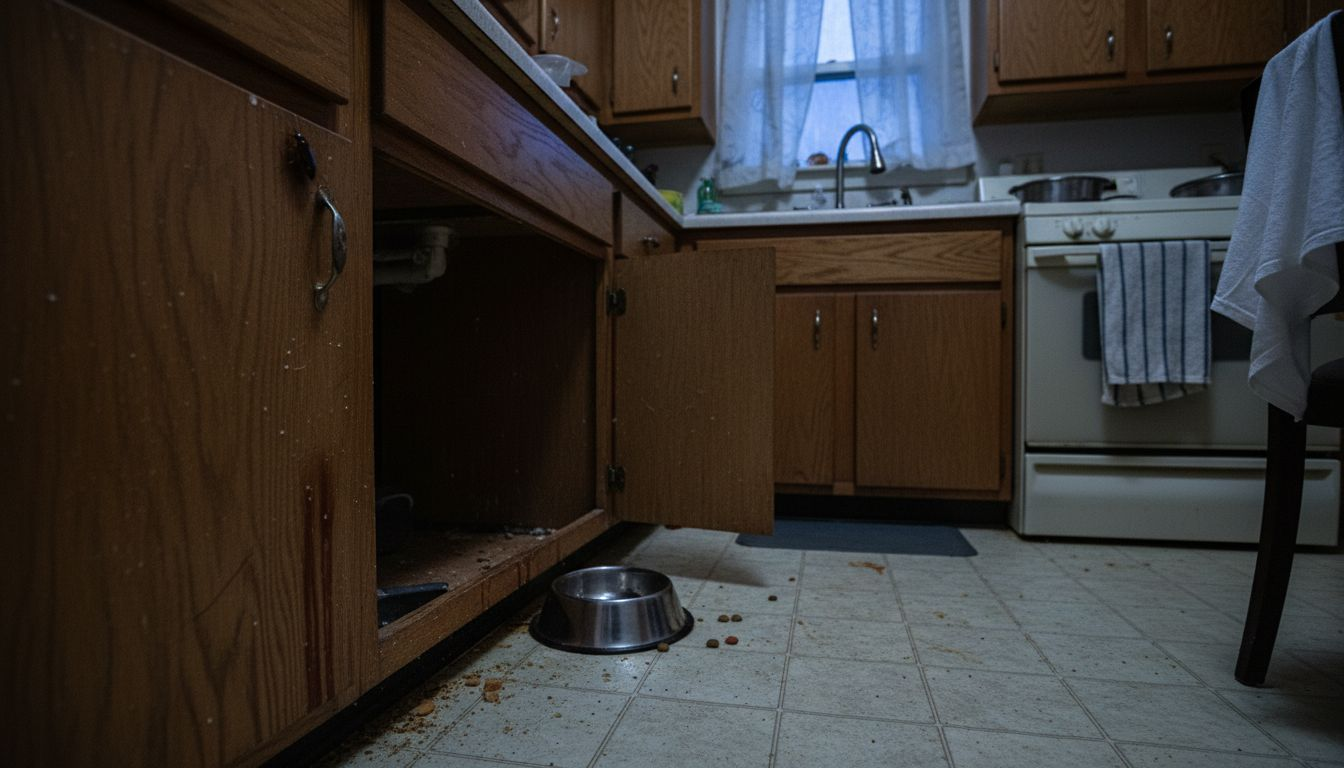
Understanding these attractants requires a comprehensive approach that goes beyond simple cleaning. Homeowners must systematically evaluate their living spaces, identifying potential entry points and conditions that make their homes attractive to unwanted guests.
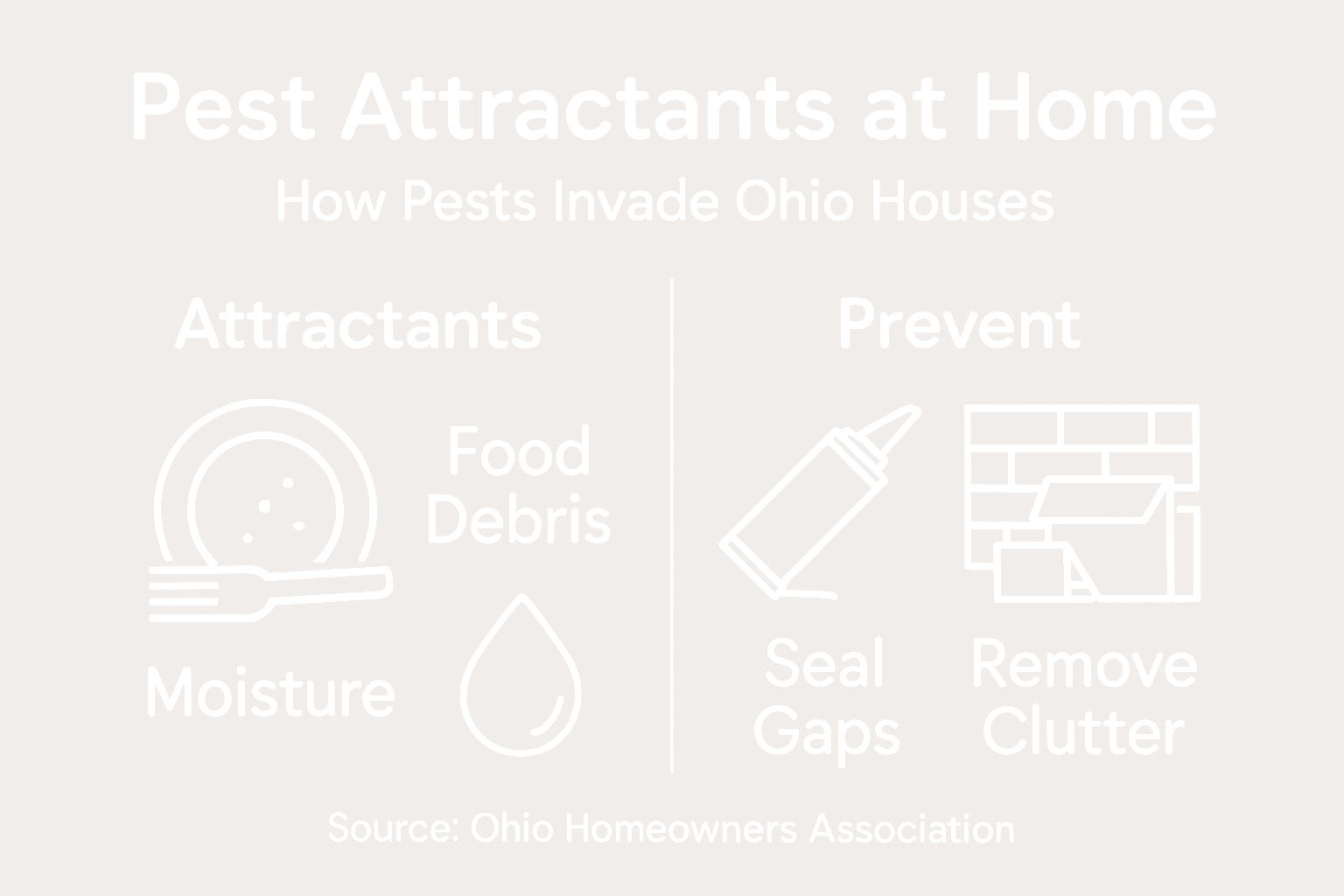
Here’s a summary of common pest attractants and their typical impact on Ohio homes:
| Attractant Type | How Pests Benefit | Example Pest Species |
|---|---|---|
| Food Access | Sustenance source | Ants, rodents, cockroaches |
| Moisture Presence | Promotes survival | Termites, centipedes |
| Shelter Sites | Safe hiding places | Mice, spiders, silverfish |
| Warmth Zones | Protection from cold | Mice, stink bugs |
Pro tip: Conduct a monthly home perimeter inspection, sealing potential entry points and removing attractive conditions before pest populations can establish themselves.
How Ohio Homes Become Pest Targets
Ohio homes transform into prime pest destinations through a complex interplay of environmental conditions, structural vulnerabilities, and seasonal changes. The state’s diverse climate and housing styles create unique opportunities for unwanted creatures to establish residence, turning seemingly secure homes into potential pest havens.
Urban pest management strategies reveal multiple pathways that make Ohio homes attractive to pests:
-
Structural Entry Points:
- Foundation cracks
- Unsealed window frames
- Gaps around utility lines
- Damaged roof edges
-
Seasonal Vulnerability Factors:
- Cold winters driving pests indoors
- Warm attic spaces during winter
- Moisture accumulation in basements
- Seasonal migration patterns
-
Environmental Attractants:
- Accumulated organic debris
- Improper food storage
- Standing water near foundations
- Dense landscaping adjacent to homes
-
Human Behavior Triggers:
- Inconsistent cleaning routines
- Cluttered storage areas
- Delayed home maintenance
- Improper garbage management
Each pest species targets different home characteristics. Rodents seek warm insulation and food sources, while insects like cockroaches are drawn to moisture and dark spaces. Ohio’s older homes with complex architectural features often provide more potential entry points and hiding spots than newer constructions.
Understanding these dynamics requires homeowners to adopt a proactive approach, systematically evaluating their living spaces and addressing potential pest attractions before infestations become established.
The following table compares proactive inspection schedules for pest prevention at home:
| Inspection Frequency | Main Focus Areas | Potential Benefits |
|---|---|---|
| Monthly | Entry points, clutter | Early detection of risk factors |
| Quarterly | Home perimeter, leaks | Prevents major infestations |
| Seasonally | Structural gaps, yard | Addresses climate-driven issues |
| Annually | Full-property audit | Identifies persistent problems |
Pro tip: Conduct a comprehensive home perimeter assessment every season, identifying and sealing potential pest entry points to prevent unwanted intrusions.
Common Myths About Pest Attractants
Pest control is riddled with misconceptions that can lead homeowners astray, potentially making their pest problems worse instead of better. Understanding the truth behind these myths is crucial for effective pest management in Ohio homes.
Common misconceptions about pest control reveal several dangerous assumptions that homeowners frequently make:
-
Pesticide Myths:
- Pesticides are always safe if used as directed
- More chemicals mean better pest control
- Natural means completely harmless
- Chemical treatments solve all pest problems
-
Attractant Misconceptions:
- Attractant traps work independently
- All attractants lure pests equally
- Single solution will eliminate entire pest population
- Pests are attracted only by food
-
Prevention Fallacies:
- Cleanliness guarantees zero pest activity
- Professional treatments are a one-time fix
- Modern homes are automatically pest-proof
- DIY methods are always sufficient
Each myth represents a dangerous oversimplification of pest management. Pests are complex organisms with sophisticated survival mechanisms. They respond to multiple environmental signals, not just single attractants. Rodents, for instance, seek warmth, food, water, and safe harboring spaces – not just an open bag of chips.
Effective pest control requires a holistic approach that addresses root causes, understands pest behavior, and implements comprehensive prevention strategies. Homeowners must look beyond surface-level solutions and recognize the intricate ecological interactions that draw pests into their living spaces.
Pro tip: Invest in a professional home assessment to understand your specific pest vulnerabilities and develop a targeted, integrated management strategy.
Steps to Reduce Attractants and Prevent Infestations
Addressing pest attractants requires a strategic, comprehensive approach that targets the fundamental resources pests seek in Ohio homes. Successful prevention means understanding and systematically eliminating the environmental conditions that make residential spaces attractive to unwanted creatures.
Integrated pest management tactics involve a multi-step approach to reducing home attractants:
-
Food Source Elimination:
- Store dry goods in airtight containers
- Clean kitchen surfaces immediately after meals
- Use sealed garbage containers
- Remove pet food after feeding
-
Moisture Control:
- Fix leaky pipes and faucets
- Use dehumidifiers in damp areas
- Ensure proper drainage around foundation
- Ventilate bathrooms and basements
-
Structural Barrier Methods:
- Seal cracks in walls and foundations
- Install weatherstripping on doors
- Repair damaged window screens
- Close potential entry points around utilities
-
Landscape Management:
- Trim vegetation away from home exterior
- Remove wood piles near house
- Keep yard clean and debris-free
- Maintain proper lawn drainage
Each prevention strategy works synergistically to create an environment that is fundamentally inhospitable to pests. Rodents, insects, and other unwanted guests require specific conditions to survive – by methodically removing these conditions, homeowners can significantly reduce infestation risks.
Successful pest prevention is not about occasional treatments but consistent, proactive management. Regular inspections, immediate maintenance, and understanding local pest behaviors are critical components of a comprehensive defense strategy.
Pro tip: Conduct a quarterly home perimeter assessment, systematically identifying and addressing potential pest entry points before they become significant vulnerabilities.
Take Control of Pest Attractants and Protect Your Ohio Home
Understanding pest attractants like food sources, moisture zones, shelter opportunities, and warm areas is the first step to preventing unwanted infestations in your Ohio home. These factors create irresistible environments for pests such as rodents, cockroaches, and ants. Don’t let hidden attractants turn your living space into a pest sanctuary.
Apex Pest Control specializes in tailored residential pest management solutions designed to eliminate these attractants and block entry points. Whether you need a one-time treatment or an ongoing service program, our experts use eco-friendly methods that prioritize the safety of your family and pets while addressing your home’s specific vulnerabilities. Explore our Uncategorized Archives – Apex Pest Control to learn how we tackle common pest challenges.
Ready to stop pests before they invade? Take action now by requesting a personalized inspection. Visit Get a Free Quote and start building a pest-resistant home today. For detailed questions or to identify a specific visitor, try our unique Upload Your Bug feature and let us help you reclaim your space.
Frequently Asked Questions
What are common pest attractants in homes?
Common pest attractants in homes include exposed food sources, moisture zones like leaky pipes or standing water, cluttered shelter opportunities, and warm temperature zones that provide comfort during colder weather.
How can I identify pest attractants in my home?
You can identify pest attractants by inspecting your home for food residue, moisture accumulation, structural cracks, and cluttered spaces. Conducting regular home perimeter assessments can help uncover potential entry points and conditions that attract pests.
What steps can I take to reduce pest attractants?
To reduce pest attractants, store food in airtight containers, fix leaks and drainage issues, seal structural cracks, and maintain a clean, clutter-free environment. Regular inspections and maintenance are key to long-term prevention.
Are all pests attracted by the same types of attractants?
No, different pest species are drawn to specific attractants. While some attractants, such as food and moisture, are universal, others are highly specialized to particular species, such as rodents being drawn to warmth and insects like cockroaches seeking moisture and dark spaces.