



Spotting cockroaches scurrying across your kitchen or bathroom can make any Bedford Heights homeowner uneasy. These determined pests are drawn indoors by accessible food, warmth, and moisture, especially in homes with leaky pipes or cluttered storage. Knowing what attracts cockroaches is the first step toward reclaiming your space. Get practical guidance for identifying and reducing the most common factors luring these insects inside, all while keeping your efforts safe for your family and the environment.
Table of Contents
- Cockroach Attraction Factors Explained
- Common Food Sources Around Bedford Heights
- Impact of Ohio Weather and Seasons
- Housing Styles and Neighborhood Risk Factors
- Typical Entry Points and Prevention Tips
Key Takeaways
| Point | Details |
|---|---|
| Moisture and Food Accessibility | Cockroaches are primarily attracted to dark, warm spaces with access to food and moisture, particularly in kitchens and bathrooms. Regular cleaning and proper food storage are essential for prevention. |
| Seasonal Activity Patterns | Cockroaches exhibit increased indoor activity during colder months, seeking warmth and moisture in homes. It’s important to address indoor humidity year-round to limit their breeding. |
| Housing Structure Influence | Multi-unit and older buildings present greater risks for cockroach infestations due to shared walls and structural gaps. Coordinated pest control efforts among neighbors can be beneficial. |
| Preventative Measures | Sealing entry points, maintaining dry conditions, and conducting regular inspections are crucial for prevention. Active measures can significantly reduce the likelihood of infestations. |
Cockroach Attraction Factors Explained
Cockroaches are persistent pests that can quickly transform Bedford Heights homes into uncomfortable living spaces. Understanding what draws these unwelcome insects into residential environments is crucial for effective prevention and control. In Northeast Ohio, several key factors make local homes attractive to cockroach populations.
Moisture and food accessibility are the primary drivers of cockroach infestations. These resilient insects are particularly drawn to environments that offer:
- Dark, warm spaces like kitchen cabinets and basement areas
- Unsealed food containers
- Leaky pipes and standing water
- Cardboard boxes and paper clutter
- Unsealed garbage receptacles
Temperature and humidity play significant roles in cockroach attraction. Cockroach biological behaviors reveal that these pests prefer environments between 70-80 degrees Fahrenheit with moderate humidity levels. Bedford Heights homes with poor ventilation or consistent indoor warmth become prime targets.
The social nature of cockroaches amplifies infestation risks. These insects communicate through chemical signals, allowing them to quickly identify and aggregate in suitable habitats. German cockroaches, which are particularly common in Ohio, are masters at exploiting human living spaces with minimal sanitation.
Pro tip: Regularly inspect dark, moist areas of your home and seal potential entry points to disrupt cockroach attraction mechanisms.
Common Food Sources Around Bedford Heights
Cockroaches in Bedford Heights are opportunistic feeders with an impressive ability to locate and consume a wide range of food sources in residential environments. These resilient pests can transform even the cleanest kitchens into potential feeding grounds through their remarkable adaptability and survival instincts.
Common food sources for cockroaches in local homes include:
- Unsealed pantry items
- Crumbs under kitchen appliances
- Grease residues on stovetops
- Pet food left out overnight
- Garbage and organic waste
- Cardboard and paper materials
- Fermenting food scraps
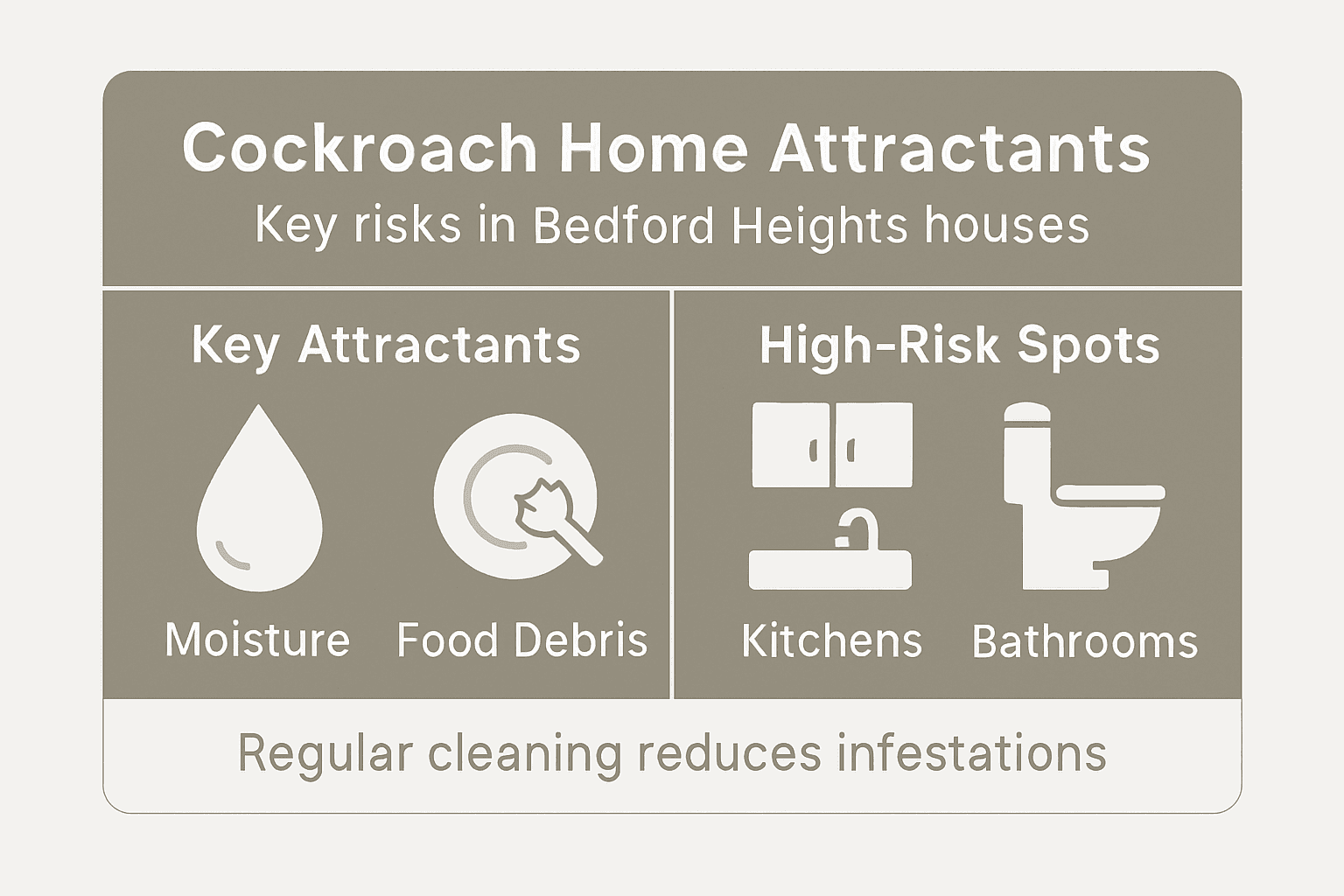
Kitchens and bathrooms represent the most vulnerable areas in Bedford Heights homes. These spaces provide ideal conditions with abundant moisture, warmth, and accessible food remnants. Cockroaches are particularly drawn to areas with consistent food debris, such as behind refrigerators, inside cabinet corners, and around trash receptacles.

Beyond traditional food sources, cockroaches demonstrate remarkable dietary flexibility. They can consume non-food items like book bindings, wallpaper glue, and cardboard, which provides additional survival strategies in challenging environments. This adaptability makes thorough cleaning and food storage critical for preventing infestations.
Pro tip: Implement a strict nightly kitchen cleaning routine, ensuring all surfaces are wiped down and food is stored in sealed, airtight containers to minimize cockroach attraction.
Impact of Ohio Weather and Seasons
Cockroaches in Bedford Heights are remarkably adaptable pests that thrive despite Ohio’s diverse and unpredictable seasonal conditions. Their survival strategies are deeply influenced by temperature, humidity, and indoor environmental factors that change dramatically throughout the year.
Seasonal cockroach activity patterns in Northeast Ohio reveal critical insights into their behavioral adaptations:
- Summer: Peak breeding and outdoor activity
- Fall: Migration indoors seeking warmth
- Winter: Concentrated indoor survival strategies
- Spring: Rapid reproduction and population expansion
During colder months, heated indoor spaces become critical refuges for these resilient insects. Basements, crawl spaces, and kitchen areas provide consistent warmth and moisture, creating ideal microenvironments for cockroach survival. Oriental and American cockroach species are particularly adept at exploiting these indoor conditions, maintaining populations even when outdoor temperatures plummet.
Moisture remains a year-round attractant for cockroaches in Bedford Heights homes. Persistent indoor humidity, leaky pipes, and condensation create environments that support continuous cockroach activity regardless of external weather conditions. This consistent moisture availability enables these pests to maintain stable populations throughout Ohio’s challenging seasonal transitions.
See how different Ohio cockroach species adapt to residential environments:
| Species | Typical Habitat Location | Special Adaptation |
|---|---|---|
| German Cockroach | Kitchens, bathrooms | Can hide in tiny crevices |
| American Cockroach | Basements, crawl spaces | Thrives in damp conditions |
| Oriental Cockroach | Laundry and utility rooms | Tolerates cooler damp areas |
Here’s a summary of how environmental and human factors in Bedford Heights affect cockroach infestations:
| Factor Type | Example in Bedford Heights | Infestation Impact |
|---|---|---|
| Environmental | High indoor humidity, warm temperatures | Boosts breeding and survival rate |
| Structural | Older buildings, shared walls | Allows rapid pest movement |
| Human Behaviors | Poor food storage, infrequent cleaning | Increases available food sources |
| Seasonal Changes | Colder winters, heated indoor spaces | Drives cockroaches indoors |
Pro tip: Maintain consistent indoor humidity levels below 50% and promptly repair any moisture sources to disrupt cockroach habitat preferences.
Housing Styles and Neighborhood Risk Factors
Bedford Heights presents a complex landscape of housing environments that significantly influence cockroach infestation potential. The city’s diverse architectural fabric, ranging from older multi-unit apartments to newer single-family homes, creates unique challenges for pest management and control.
Housing infrastructure impacts pest risks in several critical ways:
- Multi-unit buildings with shared walls increase migration paths
- Older structures with more structural gaps provide easier entry
- Aging plumbing systems create moisture-rich environments
- Densely packed neighborhoods facilitate faster pest spread
- Limited maintenance increases infestation vulnerability
Neighborhoods with older infrastructure are particularly susceptible to cockroach invasions. Row houses and apartment complexes in Bedford Heights create interconnected environments where pests can easily travel between units through tiny cracks, shared utility lines, and common wall spaces. These structural characteristics allow cockroaches to establish widespread colonies more efficiently than in isolated, well-maintained single-family homes.
Socio-economic factors also play a significant role in cockroach risk. Neighborhoods with limited resources for building maintenance and pest control tend to experience higher and more persistent infestation rates. The combination of aging infrastructure, dense housing, and reduced prevention capabilities creates ideal conditions for cockroach populations to thrive and expand rapidly.
Pro tip: Collaborate with neighbors and property managers to implement coordinated pest prevention strategies that address shared structural vulnerabilities.
Typical Entry Points and Prevention Tips
Cockroaches are master infiltrators, capable of squeezing through minuscule openings in Bedford Heights homes. Their remarkable ability to access living spaces through tiny cracks and hidden pathways makes understanding and blocking their entry routes crucial for effective pest control.
Structural exclusion strategies for preventing cockroach entry include:
- Sealing cracks around windows and door frames
- Applying silicone caulk to utility line penetrations
- Installing mesh screens on vents
- Using weather stripping on exterior doors
- Repairing damaged baseboards and wall joints
Multi-unit housing in Bedford Heights presents unique challenges for pest prevention. Cockroaches can easily migrate between units through shared walls, electrical conduits, and plumbing chases. This interconnected infrastructure allows pests to bypass traditional barriers, making coordinated prevention efforts essential for effectively controlling infestations.
Detailed inspection and proactive maintenance are key to minimizing cockroach entry points. Homeowners should conduct regular assessments of potential access areas, paying special attention to older homes with more structural vulnerabilities. Focusing on moisture control, eliminating food sources, and systematically sealing potential entry routes can significantly reduce the likelihood of cockroach invasions.
Pro tip: Conduct a comprehensive home perimeter inspection every six months, using a flashlight to identify and seal even the smallest potential cockroach entry points.
Protect Your Bedford Heights Home From Cockroach Infestations Today
Cockroach attraction in Bedford Heights homes stems from moisture, food sources, and hidden entry points as detailed in the article. These persistent pests thrive in warm, humid, and cluttered environments and quickly spread throughout connected housing units. If you are dealing with the stress of potential or existing infestations, understanding these key challenges is only half the battle.
Trust Apex Pest Control to provide expert solutions tailored to your home’s unique vulnerabilities. Our licensed technicians use family-safe, eco-friendly methods designed to eliminate cockroaches and seal off their hiding places. Learn more about comprehensive pest management in our Uncategorized Archives – Apex Pest Control and take action now to stop cockroach problems before they grow.
Don’t wait until infestations worsen in your Bedford Heights home. Request your free inspection today at Apex Pest Control to experience reliable local service backed by decades of expertise and hundreds of five-star reviews.
Frequently Asked Questions
What conditions make my home attractive to cockroaches?
Cockroaches are drawn to moisture, accessible food, and warm environments. Areas like kitchens and bathrooms, especially those with leaky pipes or unsealed food, are particularly appealing.
How can I reduce the risk of a cockroach infestation in my home?
To minimize the risk, regularly clean your home, seal food in airtight containers, fix leaks promptly, and maintain lower indoor humidity levels. Conduct routine inspections of dark, moist areas for potential entry points.
Why do cockroaches prefer certain areas of my house?
Cockroaches favor dark, warm, and moist areas where they can find food and shelter. They often hide in kitchen cabinets, behind appliances, and in basements, thriving in environments with consistent temperatures.
What role does seasonal weather play in cockroach activity?
Seasonal changes significantly impact cockroach behavior. In colder months, cockroaches seek warmer indoor spaces, leading to increased infestations. They reproduce rapidly in spring and summer due to favorable conditions.