



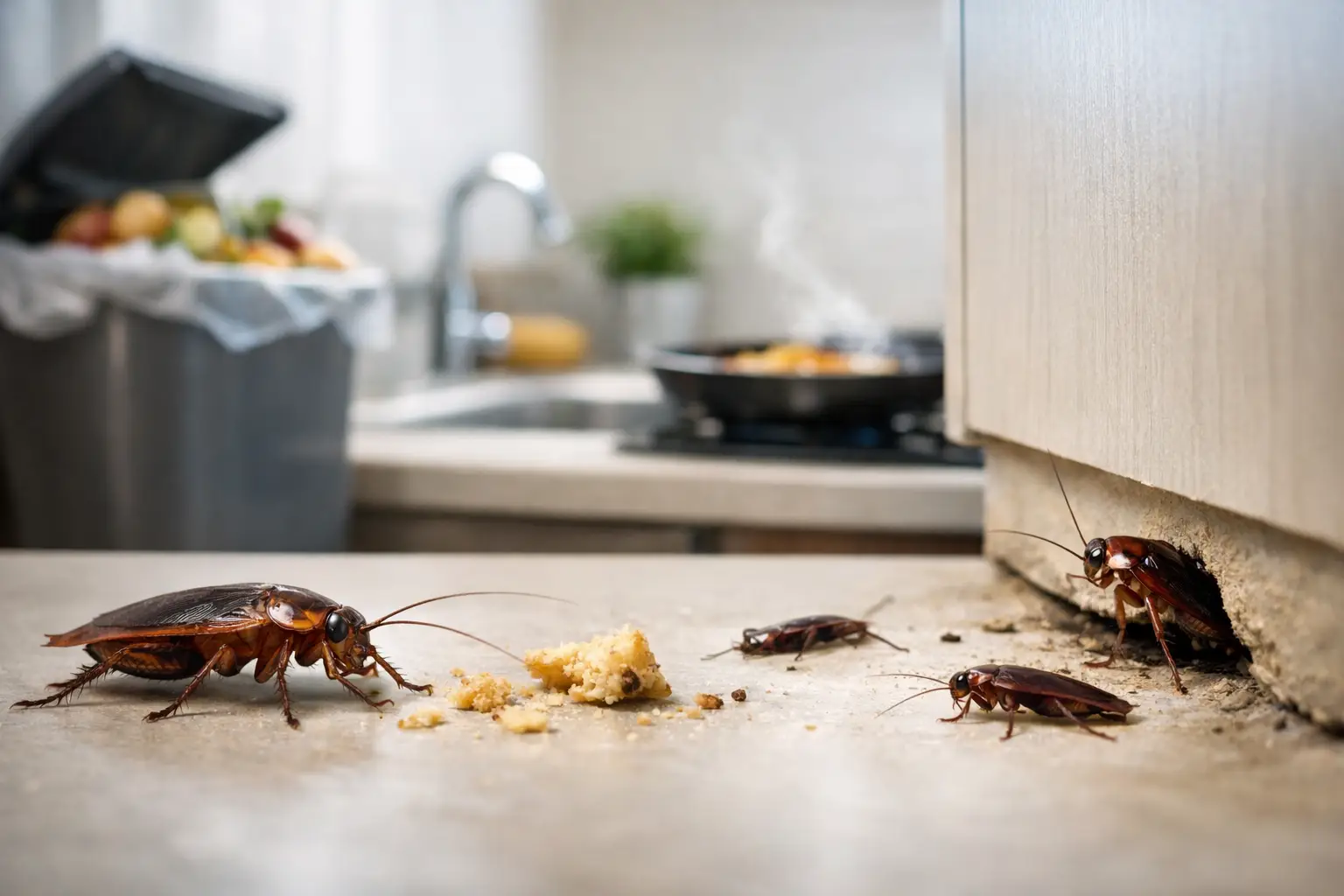
A cockroach sighting in the kitchen at night is rarely just an unpleasant surprise. Roaches are skilled at staying hidden, reproducing quickly, and moving through tiny gaps around pipes, walls, appliances, and deliveries. Understanding what causes cockroach infestations helps homeowners and facility managers address the conditions drawing them in instead of relying on a temporary fix.
A clean-looking home or business can still develop a roach problem. Food residue matters, but so do moisture, access points, clutter, neighboring units, and items brought in from outside. Effective control begins with identifying the species, locating harborages, and removing the conditions that allow the population to grow.
What Causes Cockroach Infestations?
Cockroaches need three basic things: food, water, and shelter. If they can find those resources and a way inside, they can establish themselves quickly. In Ohio homes and commercial facilities, German cockroaches are especially common indoors because they prefer warm, humid spaces near food and water. Larger species, such as American or Oriental cockroaches, may enter from sewers, basements, drains, utility areas, and exterior cracks.
The problem is not always a housekeeping failure. A single egg case, roach hiding in a grocery bag, or insect traveling from an adjacent apartment can start an infestation. Once inside, roaches spend most of their time out of sight. By the time they are seen regularly during daylight hours, the population may be substantial and professional treatment is often the fastest path to control.
Accessible Food Sources
Cockroaches are not picky eaters. Crumbs under a toaster, grease behind a range, pet food left overnight, open pantry items, overflowing trash, and residue in recycling bins can all support a population. They also feed on less obvious materials, including cardboard glue, soap residue, paper, and organic debris around drains.
Kitchens are a frequent starting point, but food sources exist throughout a property. In offices, break rooms, vending areas, employee lockers, and waste collection rooms deserve close attention. In restaurants, healthcare facilities, and multi-unit housing, a small sanitation lapse in one area can affect much more than one room.
Moisture and Plumbing Problems
Roaches can survive longer without food than without water. A slow leak under a sink, condensation near refrigeration equipment, a damp basement, or standing water beneath a dishwasher gives them a dependable source of moisture. Bathrooms, laundry rooms, mechanical spaces, and floor drains can be equally attractive.
This is why sealing food alone may not solve the issue. If an infestation is centered near plumbing or appliances, addressing leaks and moisture is a necessary part of lasting prevention. For commercial properties, routine inspections of utility rooms and drains can prevent a small problem from becoming a compliance concern.
Warm, Undisturbed Hiding Places
Cockroaches favor narrow, dark spaces where they can rest undisturbed. The warm motor area behind a refrigerator, gaps around dishwashers, voids behind cabinets, cluttered storage rooms, and spaces around utility penetrations are prime harborages. Cardboard boxes are particularly useful to roaches because they provide cover, food material, and a place to deposit egg cases.
Clutter does not create cockroaches, but it makes them harder to detect and treat. Stacks of boxes, paper products, unused equipment, and crowded storage areas give roaches more places to hide and make inspection less effective. Reducing clutter allows technicians to find activity, target treatment accurately, and monitor results.
How Cockroaches Get Into Homes and Businesses
Roaches often arrive with items brought indoors rather than entering through a visible exterior opening. Used appliances, grocery bags, deliveries, moving boxes, restaurant supplies, and secondhand furniture can carry live insects or egg cases. German cockroaches, in particular, are commonly introduced this way.
They can also enter through gaps around pipes, doors, windows, dryer vents, foundation cracks, and utility lines. In apartment communities, condominiums, hotels, and connected commercial buildings, roaches may travel through shared walls, plumbing chases, ceilings, and corridors. Treating one unit without investigating surrounding activity can lead to repeat problems.
Sewers and drains can contribute to infestations involving larger outdoor roach species. Keeping drain covers intact, repairing damaged seals, and managing moisture around building exteriors can reduce those access routes. The right prevention plan depends on the species and where activity is concentrated.
Why DIY Treatments Often Fall Short
Store-bought sprays may kill the roaches you see, but visible insects are only part of the problem. Roaches may be hiding behind walls, beneath appliances, inside cabinets, or near plumbing voids. Spraying exposed surfaces can also push insects deeper into their harborages, making the source harder to reach.
Baits can be useful when selected and placed correctly, but results depend on sanitation, competing food sources, species behavior, and proper application. Some roach populations can also show reduced acceptance of certain bait formulas. A professional inspection helps determine where roaches are feeding, nesting, and traveling so treatment reaches the population rather than only its visible edges.
For homes with children or pets, and for businesses with sanitation or audit requirements, safety and documentation matter as much as speed. A professional program can combine targeted products, monitoring, exclusion recommendations, and follow-up visits while minimizing unnecessary exposure.
Conditions That Make an Infestation Worse
Cockroaches reproduce quickly under favorable conditions. German cockroaches can produce multiple egg cases in their lifetime, and each egg case may contain dozens of young. That is why delaying action after repeated sightings can turn a manageable issue into a more involved treatment process.
Several conditions commonly allow infestations to expand:
- Food debris, grease buildup, open food containers, and unsecured trash
- Leaking pipes, damp cabinets, drain issues, and condensation around equipment
- Cracks, gaps, damaged door sweeps, and openings around plumbing or utility lines
- Cardboard storage, clutter, and rarely disturbed areas behind appliances or fixtures
- Roaches introduced through deliveries, used items, neighboring units, or shared building spaces
In multi-unit properties and commercial settings, inconsistent sanitation between spaces can complicate control. A restaurant kitchen may be well maintained, for example, while a nearby trash area, loading dock, or utility room provides the resources roaches need. Effective management requires looking at the entire route of travel, not just the room where insects were found.
Practical Steps to Prevent Cockroaches
Start by removing accessible food and water. Wipe counters and stovetops, vacuum crumbs from hard-to-reach areas, store dry goods in sealed containers, and avoid leaving pet food out overnight. Empty trash regularly and rinse recyclable containers before placing them in bins.
Next, reduce moisture. Repair plumbing leaks, dry wet areas promptly, inspect under sinks, and keep drains and floor areas clean. In basements, utility rooms, and other damp spaces, addressing humidity may be part of the solution.
Finally, limit hiding places and entry points. Break down cardboard boxes, keep storage off the floor where possible, seal gaps around plumbing, and repair worn weatherstripping or door sweeps. Inspect deliveries, used appliances, and secondhand furniture before bringing them inside. These steps do not replace treatment during an active infestation, but they make professional control more effective and help protect against reinfestation.
When to Call a Professional
Call for professional cockroach control when you see repeated activity, find droppings or egg cases, notice a musty odor in a concentrated area, or spot roaches during the day. Daytime sightings can indicate crowding in established harborages. Businesses should also act promptly when activity appears near food handling, patient care, inventory, employee areas, or audit-sensitive spaces.
A trained technician can identify the type of cockroach, inspect likely travel routes, and build a treatment plan around your property’s conditions. At Apex Pest Control, that means targeted eradication paired with practical recommendations for sanitation, exclusion, and follow-up prevention. The goal is not simply to reduce sightings for a few days. It is to remove the conditions that let roaches settle in and restore confidence in your home or facility.
If cockroaches have found food, water, shelter, or an unnoticed way inside, early action protects your property and makes control far more straightforward.