



TL;DR:
- Not all ant sightings require immediate treatment; understanding pest thresholds helps determine when action is necessary.
- Thresholds guide property owners to treat only when pest populations exceed specific levels, saving money and reducing chemical use.
Not every ant you see is a crisis. If you’ve ever called for an exterminator the moment you spotted a handful of ants trailing across your kitchen counter, you’re not alone — but you may have acted too soon. Understanding what is a pest threshold changes the way you think about pest control entirely. It shifts the question from “Do I have pests?” to “Do I have enough pests to warrant treatment?” For Oakwood property owners managing homes and rental units near areas like Far Hills Avenue or the older residential neighborhoods east of Schantz Park, that distinction matters both for your wallet and for the health of your property long term.
Table of Contents
- Key takeaways
- What is a pest threshold in property management
- Ant thresholds in Oakwood homes
- Why threshold-based pest control pays off
- How to set and apply thresholds on your property
- My take on why most property owners get this wrong
- Let Apexpestcontrol handle the threshold decisions for you
- FAQ
Key takeaways
| Point | Details |
|---|---|
| Thresholds define action points | A pest threshold is the population level at which you take action, not just the moment you spot one pest. |
| Not all pests need treatment | Many pest sightings fall below any meaningful threshold and resolve without chemical intervention. |
| Local seasons shift thresholds | Ant activity in Oakwood peaks in spring and late summer, which affects when thresholds are reached. |
| Monitoring comes before treatment | Regular inspection and record keeping allow you to spot real threshold breaches before damage occurs. |
| Thresholds save money and reduce chemicals | Threshold-based programs cut insecticide use by 44% and costs by about 40%. |
What is a pest threshold in property management
A pest threshold is the specific level of pest presence, measured by population size or visible damage, that triggers a management response. Below that level, the cost and disruption of treatment outweigh any real benefit. Above it, action is warranted and delay becomes expensive.
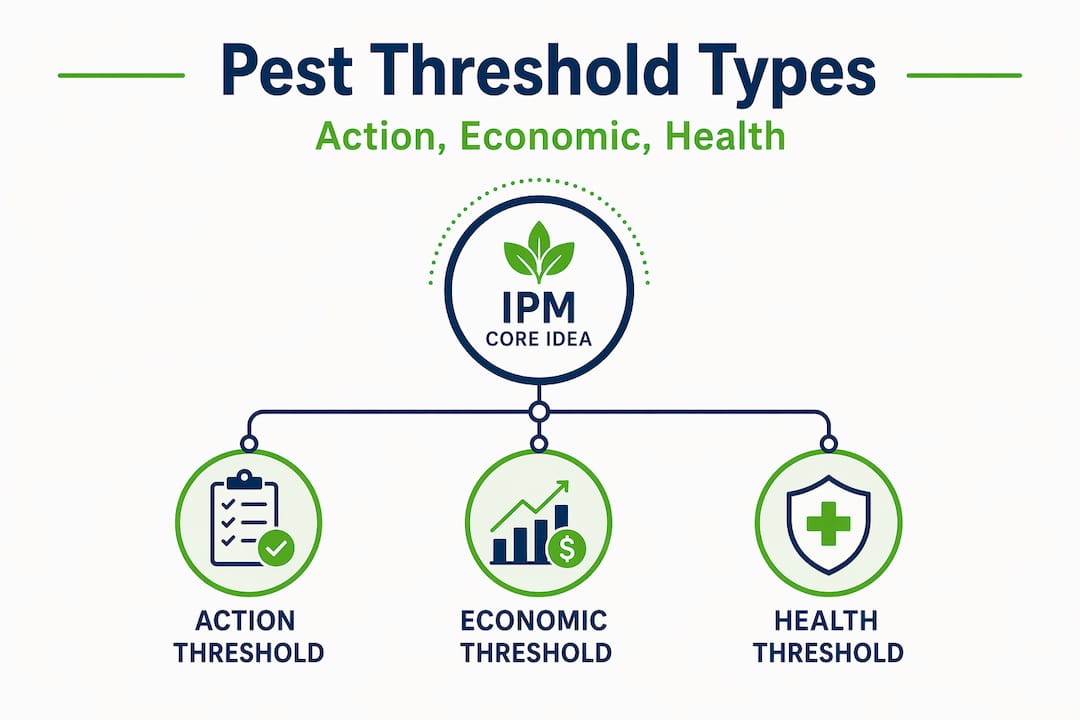
Three terms come up constantly in this conversation, and they are not interchangeable.
Action threshold refers to the point at which you deploy a control measure. It is the practical trigger for treatment and is the number most property owners actually work with day to day. Action thresholds help practitioners decide when pest control is warranted to prevent unacceptable damage or health risks.
Economic threshold is a more precise concept. It represents the pest population density where the cost of damage caused by the pests equals the cost of controlling them. Economic thresholds ensure that insecticide use remains judicious, preventing treatments that cost more than the problem they solve.
Health or legal threshold is a third category that commercial property managers cannot afford to overlook. These thresholds exist independently of cost calculations. A rodent infestation that crosses a regulatory line can result in fines or forced closure regardless of whether treatment would have been “economically justified.” A minimarket owner learned this the hard way when a rat infestation triggered serious legal consequences that had nothing to do with his own risk tolerance.
The core idea behind all three is that zero pests is an unrealistic and unnecessary goal. IPM practitioners emphasize that not all pests cause damage worth treating, and that blanket treatments do more harm than good when populations are below any meaningful threshold.
Pro Tip: Write down the threshold type that applies to your property before you call anyone. Residential property owners typically work with action thresholds, while commercial managers often have legal thresholds imposed by health codes that must be met regardless of pest population math.
Ant thresholds in Oakwood homes
Ants are the most common pest complaint from Oakwood property owners, and they are also the pest most likely to be mismanaged through immediate, threshold-free reactions. The housing stock in Oakwood, including the craftsman bungalows near Patterson Boulevard and the larger colonials in the southern residential corridors, tends to have mature landscaping, older foundation joints, and wood trim that creates multiple entry points for ant colonies.

The two species you are most likely to dealing with are pavement ants and odorous house ants. Pavement ants typically move indoors through cracks in concrete stoops and basement walls. Odorous house ants follow moisture trails into kitchens and bathrooms, often becoming visible after heavy spring rain when the ground becomes saturated.
Ohio’s climate creates two distinct periods of elevated ant activity. The first wave hits in late April through early June as soil temperatures warm and overwintering colonies become active. The second wave runs from late July into September, when dry conditions push ants indoors in search of water. Both windows represent times when threshold levels can be reached quickly if conditions are right.
Here is a practical reference for how ant activity typically maps to threshold decisions in a residential Oakwood setting:
| Season / Condition | Typical ant activity | Threshold status | Recommended response |
|---|---|---|---|
| Early spring (April) | Scout ants indoors, 1-5 per day | Below threshold | Monitor, seal entry points |
| Late spring (May-June) | Trailing workers, 10+ per day | Approaching threshold | Bait stations, continued monitoring |
| Midsummer (July) | Indoor foraging near moisture sources | At or above threshold | Targeted treatment warranted |
| Late summer (August-Sept) | Consistent indoor trails, possible satellite colony | Above threshold | Professional inspection recommended |
| Fall/Winter | Rare indoor sightings | Well below threshold | No treatment needed |
The phrase “10 or more ants per day in consistent trails” is a commonly used rough benchmark for residential action thresholds, but your specific threshold may shift depending on property type, whether you have food service areas, and your personal tolerance level. Threshold levels shift based on environmental conditions and property-specific factors, which is why static numbers are always starting points rather than fixed rules.
Pro Tip: Place a few sticky monitoring cards near known ant entry points in early April. Count what you catch over 48 hours. If numbers double week over week, you are on a trajectory toward your action threshold and should start baiting before the population peaks.
Why threshold-based pest control pays off
The financial and environmental case for threshold-based management is not theoretical. A meta-analysis covering 126 studies and 466 trials across 34 crops confirmed that threshold-based programs reduce insecticide applications by 44% and costs by roughly 40% without compromising control outcomes.
For an Oakwood property owner, those percentages translate into real dollars. Unnecessary treatments for ant populations below any meaningful threshold can easily run $100 to $300 per visit. If you are scheduling quarterly blanket treatments without any monitoring data behind those decisions, you may be paying for three out of four visits that delivered no benefit.
Beyond cost, the environmental argument is significant for any property with gardens, landscaping, or proximity to the Wolf Creek greenway. Overusing pesticides kills beneficial insects that keep other pest populations in check. Eliminate the predators, and you may end up with a worse pest problem six months later.
Here is a clear breakdown of what threshold-based management delivers:
- Fewer unnecessary treatments. You treat when data says treat, not when anxiety says treat.
- Reduced chemical exposure for your family, tenants, and pets living in the treated space.
- Preserved beneficial species like ground beetles and spiders that naturally suppress pest populations.
- Better long-term results because targeted treatment avoids creating pesticide-resistant pest populations.
- Documented decision making that protects commercial property managers from liability claims about over-application.
Underfunding pest prevention relative to property values carries real financial risk. Threshold-based planning is a safeguard, not a shortcut. Spending modestly on monitoring now prevents the emergency spending that comes from ignoring a problem until it becomes structural damage or a health code violation.
How to set and apply thresholds on your property
Getting started with threshold-based pest management does not require a science degree. It requires a system. Here is a practical process designed specifically for Oakwood residential and commercial property owners managing ant activity.
-
Conduct a baseline inspection. Walk every room and the exterior perimeter of your property in early April. Note entry points, moisture sources, food storage conditions, and any existing ant trails. Document what you find with photos and written notes. This becomes your comparison baseline for the season.
-
Choose a monitoring method. Sticky traps near baseboards, counters, and entry points work well for tracking ant presence over time. Check and count them every 48 to 72 hours during active seasons. You are looking for trends, not single data points.
-
Define your site-specific threshold. A rental property with a shared kitchen has a lower tolerance threshold than a single-family home with no food service. Set your action threshold before you need it, not in the moment of panic when you see ants everywhere.
-
Record everything. A simple spreadsheet with date, location, count, and conditions (recent rain, temperature) lets you recognize seasonal patterns. After two seasons of data, you will know almost exactly when your property typically reaches threshold and can act proactively.
-
Integrate threshold decisions with IPM. Thresholds work best inside a full integrated pest management framework. That means physical controls like caulking and weatherstripping come first, baits and targeted treatments come second, and broad chemical applications are reserved for situations where the population has genuinely exceeded your threshold.
-
Reassess after each treatment. Did treatment reduce the population below threshold? How quickly did numbers rebound? That feedback sharpens your threshold definition over time.
Pro Tip: The monthly pest maintenance approach is one of the most effective ways to stay ahead of threshold breaches. Brief monthly checks take less than 20 minutes and let you catch upward trends before they become infestations.
My take on why most property owners get this wrong
I’ve worked around pest management long enough to know that fear drives most bad decisions in this space. A property owner sees five ants, imagines thousands inside the walls, and reaches for the phone before checking whether the situation warrants any response at all.
What I’ve learned from watching this play out across Oakwood properties is that the first sighting almost never represents the actual problem. Ants that appear indoors in April are typically scouts. They disappear on their own more often than people realize. The real problem, when it develops, shows up later and looks different: consistent trails, satellite colonies near moisture sources, and populations that don’t retreat when conditions change.
The property owners who get the best outcomes are the ones who invest in monitoring first. They treat thresholds as a decision-making tool rather than a permission slip to panic. They also understand that the common myth about needing to eliminate every pest immediately is costing them money and exposing their properties to more chemical treatments than necessary.
My honest advice: spend 30 minutes this April setting up a simple monitoring system. You may discover your ant situation resolves on its own. If it doesn’t, you will have the data to make a confident, cost-justified decision about treatment instead of guessing.
— Dushan
Let Apexpestcontrol handle the threshold decisions for you
Understanding pest thresholds is one thing. Applying them accurately to an older Oakwood property with a mature oak canopy, a concrete block foundation, and tenants who leave crumbs is another. Apexpestcontrol has been doing exactly that since 1969. Our team knows Oakwood’s seasonal ant patterns, its housing quirks, and the specific conditions that push populations above threshold faster than owners expect.
We offer personalized inspections that establish your baseline, define your site-specific thresholds, and build a treatment plan that only activates when the data says it should. Whether you need targeted ant control services or help managing a more complex situation involving rodents that cross legal thresholds, we bring the same evidence-based approach. Get your free rodent inspection quote and see what threshold-smart pest management looks like when a professional handles the monitoring for you. Call 1-800-684-2284 to get started.
FAQ
What is a pest threshold in simple terms?
A pest threshold is the level of pest activity, measured by population size or visible damage, that justifies taking action. Below that level, treatment costs outweigh the benefits.
How do I know when my ant problem has crossed a threshold?
Consistent indoor ant trails of 10 or more ants per day, especially during midsummer in Oakwood, are a common indicator that your action threshold has been reached and targeted treatment is warranted.
Are pest thresholds different for residential and commercial properties?
Yes. Residential properties typically use action thresholds based on tolerance and damage risk, while commercial properties often face legal and health thresholds set by local regulations that must be met regardless of cost.
Does threshold-based pest management actually save money?
Research confirms that threshold-based programs reduce insecticide use by 44% and cut costs by approximately 40%, making it a proven cost-reduction strategy for property owners.
Can I set a pest threshold myself or do I need a professional?
You can start a basic monitoring system yourself using sticky traps and a simple tracking log. For accurate site-specific threshold definitions and integrated treatment plans, a professional inspection from a company like Apexpestcontrol gives you a much more reliable starting point.