



TL;DR:
- Ant infestations in Ohio are primarily caused by accessible food, moisture, and structural entry points that attract and sustain colonies. Seasonal weather cycles and landscaping choices further elevate the risk by creating ideal nesting and entry environments for ants. Effective prevention and control require addressing all triggers simultaneously, including sealing entry points, managing vegetation, and using proper storage methods to eliminate attractants and disrupt pheromone trails.
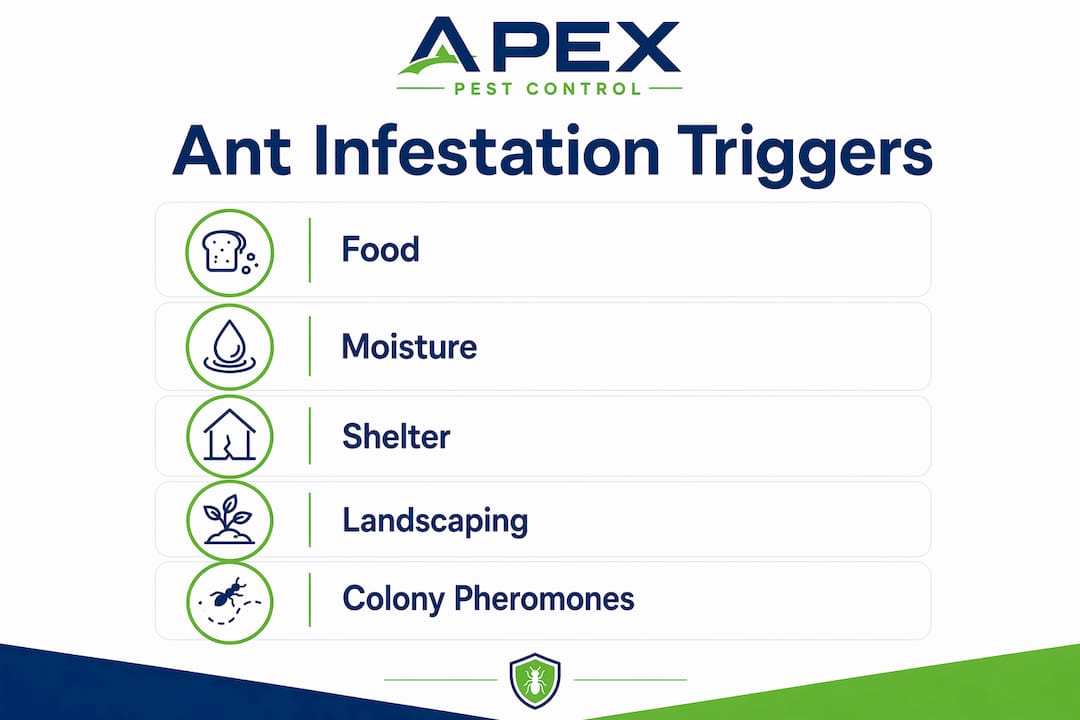
Ant infestations are defined by the presence of accessible food, moisture, and shelter that ants detect through chemical signals and structural vulnerabilities in and around your home. In Ohio cities like Solon, Oakwood, and Bedford Heights, what triggers ant infestations goes beyond a messy kitchen. Seasonal weather swings, aging housing stock, and common landscaping choices all create conditions that invite colonies indoors. Understanding these triggers is the first step toward stopping an infestation before it takes hold.
What triggers ant infestations: food, moisture, and shelter
The three core causes of ant infestations are food availability, moisture accumulation, and accessible shelter. Ants are not random invaders. They send scout ants ahead to locate resources, and those scouts lay pheromone trails that recruit hundreds of workers within hours. Once a trail is established inside your home, the colony scales up fast.
Food sources for ants cover a wider range than most Ohio homeowners expect. Sugary spills, grease residue on stovetops, pet food left in bowls, and even crumbs under appliances all register as viable targets. Protein-rich foods attract different species than sugar does, which is why you may see two distinct ant types in the same kitchen.
Moisture is equally powerful as an ant attraction factor. Condensation under sinks, dripping pipes, and water pooling near potted plants create the damp microenvironments that many Ohio ant species need to survive. Ohio’s humid summers and wet springs make moisture management a year-round concern, particularly in older homes in neighborhoods like Maple Heights and Bedford.
One detail that surprises many homeowners: sealed containers can still emit detectable food odors through cardboard boxes and thin plastic bags. Ants can smell what you cannot. Transferring dry goods like flour, sugar, and cereal into hard-sided glass or thick plastic containers removes this hidden trigger entirely.
- Sugary liquids: juice spills, syrup residue, and open soda cans
- Greasy surfaces: stovetop splatter, used cooking oil, and unwashed pans
- Pet food: dry kibble left out overnight is a top ant attractant
- Moisture sources: leaking pipes, condensation trays, and overwatered houseplants
- Garbage: open or loosely sealed trash cans, especially in warm months
Pro Tip: Place a dry paper towel under houseplant saucers to absorb standing water. This removes one of the most overlooked moisture sources in Ohio kitchens and living rooms.
How structural features and landscaping invite ants in
Ohio homes, particularly the brick colonials and ranch-style houses common in Solon and Warrensville Heights, offer ants multiple entry points that most residents never notice. Ants enter through cracks, gaps around plumbing fixtures, ventilation openings, and the spaces around door thresholds and window frames. A gap the width of a credit card is wide enough for most ant species.
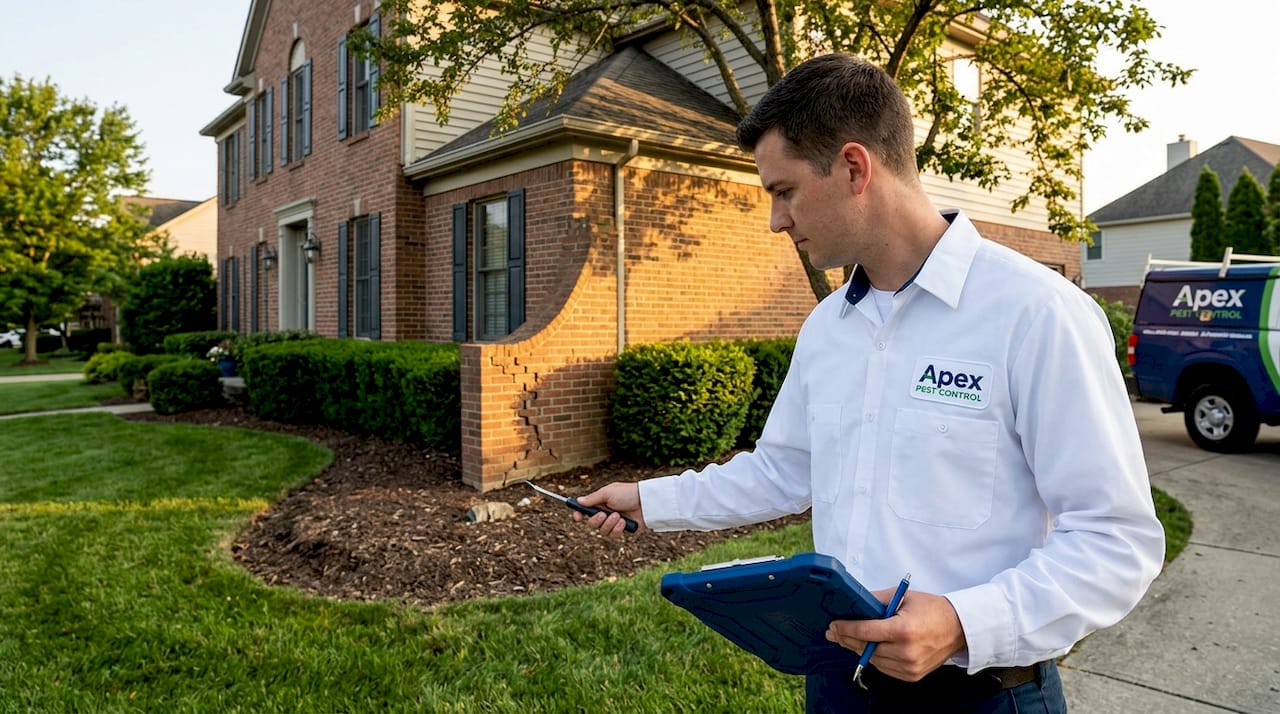
Landscaping is one of the most underestimated causes of ant infestations. Mulch beds placed directly against a home’s foundation create a warm, moist nesting habitat just inches from your walls. Tree limbs and shrubs touching the exterior act as physical bridges, allowing ants to bypass ground-level barriers entirely. Removing mulch near foundations and trimming back vegetation are two of the highest-impact structural changes you can make.
Carpenter ants deserve specific attention in Ohio. These large black ants do not eat wood, but they excavate it to build nests. Homes with water-damaged sills, wet basement framing, or deteriorating deck boards are prime targets. In Bedford Heights and Sagamore Hills, where many homes were built in the mid-20th century, this type of structural vulnerability is common.
| Feature | Infestation risk |
|---|---|
| Mulch against foundation | High: creates nesting habitat and moisture retention |
| Tree limbs touching roof or siding | High: direct ant highway into upper levels |
| Foundation cracks or gaps | High: primary entry point for most ant species |
| Wood-to-soil contact on decks | High: invites carpenter ant nesting in damp wood |
| Sealed entry points and trimmed shrubs | Low: removes access and nesting opportunities |
- Check door sweeps and window screens every spring before ant season peaks
- Inspect utility penetrations where pipes and cables enter the foundation
- Keep firewood stacked away from the house and elevated off the ground
- Clear leaf litter from window wells and basement stairwells after fall
How ant biology and pheromone trails sustain infestations
Ant infestation persistence is driven by colony structure, not just individual ant behavior. The queen, who may live for years, stays hidden deep in the nest while thousands of workers forage. Killing the ants you see does nothing to address the queen or the colony’s reproductive capacity. This is why DIY sprays often appear to work for a few days before the problem returns at full strength.
The pheromone trail system is the engine behind rapid infestation growth. A single scout finds a crumb on your kitchen counter in Oakwood and lays a chemical path back to the nest. Within hours, a visible trail of workers forms. Disrupting pheromone trails with warm soapy water or a vinegar solution breaks this recruitment loop and buys time for more permanent fixes.
The most dangerous mistake Ohio homeowners make is reaching for a can of spray insecticide at the first sign of ants. For species like Pharaoh ants, which are found across Ohio, this triggers budding behavior. Pharaoh ant colonies fragment when stressed by insecticides, splitting into multiple satellite nests throughout the home. One problem becomes five.
Ant infestations are often a response to external weather and environmental conditions rather than solely due to poor home sanitation. Ohio’s drought periods and heavy rain events push ants indoors seeking stable moisture and temperature, regardless of how clean your home is.
Ohio’s seasonal weather drives these patterns in predictable cycles. Late spring brings the first foraging surge as colonies expand after winter. A dry July in Solon or a wet September in Bedford Heights can push ants indoors just as reliably as an open bag of sugar.
Pro Tip: Never spray visible ant trails with a contact insecticide unless you know the species. For Pharaoh ants and odorous house ants, bait products that workers carry back to the queen are far more effective than surface sprays.
Practical steps to prevent and reduce ant infestations
Preventing ant infestations in Ohio requires addressing all three triggers at once: food, moisture, and structural access. Fixing one without the others leaves the door open. The steps below are ordered by impact, starting with the changes that eliminate the strongest attractants first.
- Store all dry goods in hard-sided containers. Glass jars and thick-walled plastic bins with locking lids prevent scent from escaping. Cardboard boxes and zip-lock bags are not sufficient barriers against ant detection.
- Fix every plumbing leak, no matter how small. A slow drip under a bathroom sink in a Maple Heights ranch home can sustain an ant colony for months. Check supply lines, P-traps, and the base of toilets twice a year.
- Pull mulch back at least 12 inches from your foundation. Replace wood-based mulch near the house with gravel or rubber mulch, which retains less moisture and is less hospitable for nesting.
- Trim all vegetation touching the exterior. Tree branches, shrubs, and climbing plants that contact siding or rooflines give ants a direct route past any ground-level treatment.
- Seal entry points with caulk or expanding foam. Focus on foundation cracks, gaps around pipes, and the perimeter of door frames and window sills. Review the ant prevention tips specific to Ohio homes for a full checklist.
- Disrupt active trails with vinegar or peppermint oil. A 50/50 white vinegar and water spray temporarily disrupts scent trails and buys time while you address the root cause. Reapply every two to three days since the effect fades quickly.
- Take out trash daily during warm months. Kitchen waste bins with loose-fitting lids are one of the top ant attraction factors in Ohio homes from May through September.
Pro Tip: Sprinkle ground cinnamon along window sills and door thresholds as a short-term repellent barrier. Cinnamon lines repel ants and cost almost nothing. Pair this with a vinegar wipe-down of countertops to remove any existing pheromone trails.
For Ohio property managers overseeing multi-unit buildings in Bedford Heights or commercial spaces in Solon, the same principles apply at scale. Shared dumpster areas, loading docks with gaps under doors, and landscaping beds against building perimeters are the highest-risk zones. Reviewing ant control in commercial buildings gives property managers a framework built for larger properties.
Key takeaways
Ant infestations in Ohio homes are triggered by food, moisture, and structural access points, and stopping them requires addressing all three simultaneously rather than reacting to visible ants alone.
| Point | Details |
|---|---|
| Food and moisture are primary triggers | Store dry goods in hard-sided containers and fix all plumbing leaks to remove the top attractants. |
| Pheromone trails drive rapid escalation | Wipe active trails with vinegar or soapy water to break the recruitment loop before it grows. |
| Insecticide sprays can worsen infestations | Pharaoh ant colonies split into multiple nests when stressed by sprays, spreading the problem further. |
| Landscaping creates direct access routes | Pull mulch 12 inches from foundations and trim all vegetation touching the exterior of your home. |
| Ohio weather pushes ants indoors seasonally | Expect infestation surges in late spring and after drought or heavy rain events across Ohio. |
Why most Ohio homeowners are fighting ants the wrong way
I have seen this pattern repeat itself across Ohio properties for years. A homeowner spots a trail of ants in the kitchen, grabs a can of spray, and considers the problem solved. Two weeks later, the ants are back, often in a different room and in larger numbers. The spray addressed the symptom, not the system.
The part most people miss is that ants are responding to conditions, not choosing your home randomly. When I walk through a property in Solon or Oakwood and find an infestation, the cause is almost always visible within five minutes: a leaking pipe under a bathroom vanity, mulch piled against the foundation, or a bag of dog food sitting open in the garage. The ants did not create those conditions. They just found them.
What I find most underappreciated is the seasonal dimension. Ohio’s weather in 2026 has continued the pattern of wet springs followed by dry stretches in July and August. Both conditions drive ants indoors. A homeowner who treats in May and relaxes in June is often caught off guard by a second wave in late summer. Effective prevention is not a one-time task. It is a seasonal practice.
The other thing I would push back on is the idea that infestations mean a dirty home. Infestations often reflect external conditions more than interior cleanliness. I have seen spotless kitchens in Bedford Heights with serious ant problems because the landscaping outside was creating a perfect nesting environment. Fixing the yard fixed the infestation.
— Dushan
Get lasting ant control from Apexpestcontrol
DIY methods handle surface-level triggers, but persistent ant problems in Ohio homes and commercial properties require professional identification of the species, the nest location, and the colony’s full scope. Apexpestcontrol has served Ohio homeowners and property managers since 1969, with treatments tailored to the specific ant species and housing conditions found in cities like Solon, Oakwood, Bedford Heights, and Warrensville Heights. Professional treatment goes beyond sprays, targeting the colony structure and eliminating the conditions that keep ants returning. For residential and commercial properties across Ohio, explore professional ant control services or call 1-800-684-2284 for a free estimate.
FAQ
What are the most common triggers of ant infestations in Ohio?
The most common triggers are accessible food sources, moisture from leaks or condensation, and structural entry points like foundation cracks and gaps around plumbing. Ohio’s seasonal weather, including wet springs and dry summers, also drives ants indoors when outdoor conditions become unstable.
Why do ants keep coming back after I spray them?
Spraying visible ants kills foragers but leaves the queen and colony intact. For species like Pharaoh ants, insecticide sprays can trigger budding behavior, where the colony splits into multiple nests, spreading the infestation rather than ending it.
How do I know if I have a serious ant infestation?
Signs of ant problems include visible foraging trails, especially near food or water sources, sawdust-like frass near wood structures (a sign of carpenter ants), and ants appearing in multiple rooms or on upper floors. A trail that reforms within 24 hours of cleaning indicates an active, established colony nearby.
Does landscaping really affect ant infestations?
Yes. Mulch against your foundation, tree limbs touching the roof, and dense shrubs near walls all create nesting habitat and direct access routes. Vegetation acts as a highway that allows ants to bypass ground-level barriers and reach upper levels of your home.
When should I call a professional for ant control in Ohio?
Call a professional when DIY methods fail after two treatment cycles, when you see carpenter ant activity near wood structures, or when trails reappear in multiple locations. For natural control options before escalating to professional treatment, start with targeted bait products and pheromone trail disruption.