



TL;DR:
- Reactive pest control is costly, disruptive, and risky in Ohio, where inspections target even minor pest evidence.
- A comprehensive IPM-based pest plan includes monitoring, prevention, targeted treatment, and detailed documentation to ensure legal compliance and safety.
- Tailoring these plans to local pests and seasonal changes in Oakwood improves effectiveness and prevents enforcement actions that threaten business continuity.
Ohio property managers often assume that calling an exterminator when pests show up is good enough. It is not. Understanding why commercial properties need pest plans means recognizing that reactive treatment is the most expensive, disruptive, and legally risky approach you can take. A single inspection report citing cockroaches can trigger enforcement actions, force a temporary closure, and shred years of earned customer trust in days. This guide breaks down what a real pest plan involves, what Ohio regulations demand, and how to build a system that keeps your property protected year-round.
Table of Contents
- What a commercial pest plan entails and why it matters
- The risks of ignoring pest plans: lessons from Ohio’s regulatory actions
- How pest plans support safety and legal compliance in Ohio commercial properties
- Tailoring pest plans for Oakwood: common pests and seasonal challenges
- Implementing and documenting your commercial pest plan: practical steps for Ohio property managers
- Why many Ohio pest plans fail—and how thinking differently can protect your property
- Secure your Oakwood commercial property with expert pest control plans
- Frequently asked questions
What a commercial pest plan entails and why it matters
To fully understand why pest plans are invaluable, let’s explore what these plans actually involve and how they differ from common reactive practices.
A commercial pest plan is not a monthly spray schedule. It is a documented management system built around Integrated Pest Management (IPM), a science-based approach that uses monitoring, prevention, and targeted intervention rather than blanket pesticide application. IPM programs are needed because they provide a documented, preventive system using ongoing monitoring to decide when action is necessary, rather than relying on reactive, one-time treatments.
The practical difference matters enormously for your bottom line. Scheduled spraying without monitoring wastes money and builds pest resistance over time. A proper IPM-based commercial pest control system, by contrast, only triggers chemical treatment when pest populations cross a defined threshold, which saves money and reduces exposure risk for employees and customers alike.
A well-structured commercial pest plan includes:
- Facility assessment to identify entry points, harborage areas, and conditions that attract pests
- Monitoring devices such as bait stations, glue boards, and pheromone traps placed at strategic locations throughout the property
- Threshold levels that define exactly when pest activity requires treatment versus continued monitoring
- Targeted treatment protocols using the least-risk products appropriate for the pest and location
- Documented inspection records capturing findings, corrective actions taken, and follow-up results
- Regular plan reviews to adjust for seasonal changes, new construction, or shifting pest pressure
Documentation is not just paperwork. It is your legal defense during a health department inspection and your early warning system when pest activity starts to climb.
The risks of ignoring pest plans: lessons from Ohio’s regulatory actions
Understanding how pest plans function helps highlight the risks you face without them, especially under Ohio’s strict regulatory environment.
Ohio’s local health departments do not treat pest issues as minor inconveniences. They are public health hazards, and enforcement can move fast. One of the clearest examples: a Central Ohio restaurant was closed after its license was revoked following repeated health code violations, with inspectors documenting cockroach presence across multiple visits between February and April 2026.
“Approximately 5 live cockroaches in the dining area” was enough to trigger the final enforcement action that ended that business’s license.
Five cockroaches. Not a full-blown infestation. Five. That detail matters because it illustrates that Ohio inspectors are not waiting for an overwhelming pest problem before acting. They are looking for evidence of uncontrolled pest activity, which is exactly what you get when there is no monitoring plan in place to catch and address problems early.
The consequences of operating without an effective pest plan include:
- License revocation and forced closure, cutting off all revenue until compliance is demonstrated
- Negative media coverage that follows public enforcement records, damaging your reputation beyond the closure itself
- Re-inspection fees and compliance costs that dwarf what a prevention plan would have cost annually
- Civil liability if customers, tenants, or employees suffer health impacts tied to documented pest conditions
- Loss of vendor or lease relationships where pest-free certification is a contractual requirement
For restaurant pest management in Ohio, the stakes are particularly high because food-handling environments fall under both local health code and state-level food safety regulations simultaneously.
How pest plans support safety and legal compliance in Ohio commercial properties
Besides regulatory enforcement, pest plans play a vital role in reducing safety risks and meeting legal obligations in your commercial property.
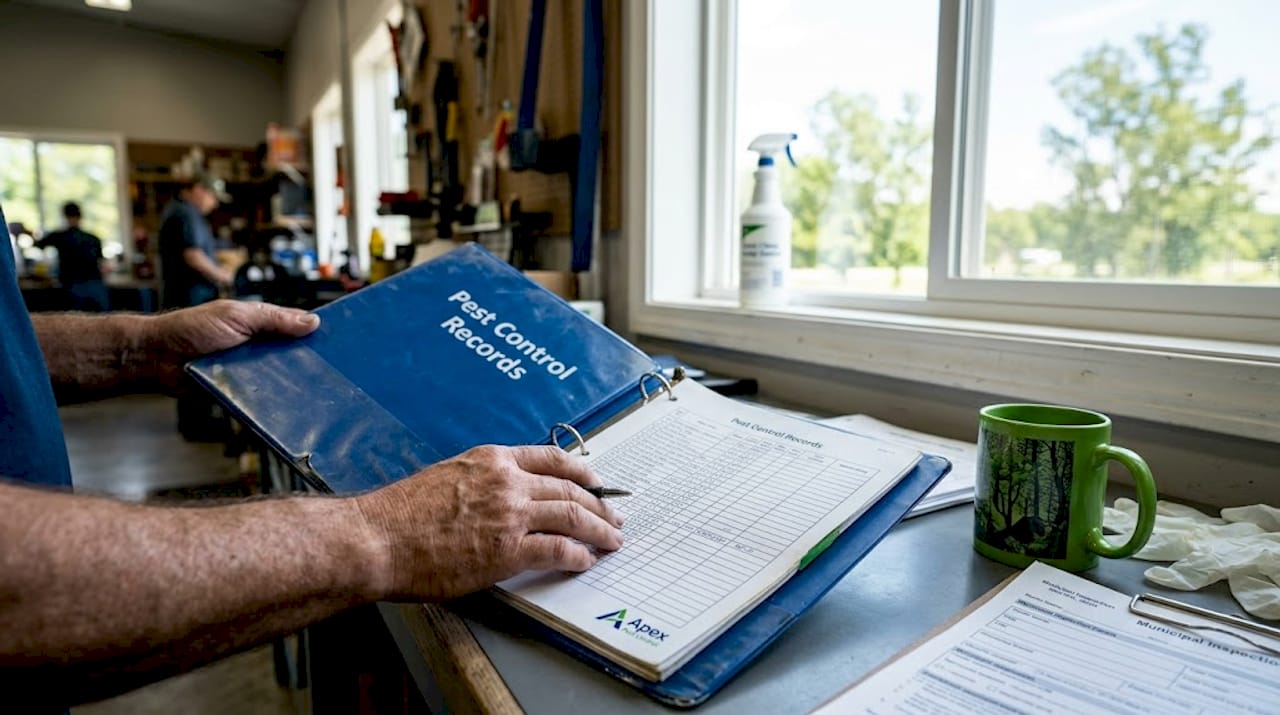
OSHA compliance is where many property managers have a blind spot. They think pest control is a facilities issue, not a safety issue. Wrong. OSHA-oriented pest management documentation reduces safety and liability risk by supporting proper recordkeeping and hazard communication practices when pesticides are applied as part of a structured program, rather than ad-hoc spraying that bypasses safety protocols entirely.
Here is what your pest plan documentation should capture to stay audit-ready:
- Applicator credentials: Name, license number, and company for every treatment performed on the property
- Product registration details: EPA registration number and Safety Data Sheet (SDS) for every pesticide applied
- Treated areas: Specific zones, rooms, or equipment locations where treatment occurred
- Application dates and re-entry intervals: When treatment happened and when the area is safe for occupancy
- Inspection findings: What pest activity was observed, at which monitoring devices, and in what quantities
- Corrective actions and closure evidence: What was done in response to findings and confirmation that the issue was resolved
Pro Tip: Keep your pest plan binder or digital records accessible to your facilities manager and front-line supervisors, not just locked away in an office. Early detection depends on your staff knowing what to look for and where to report it. If only one person holds the records, you have a single point of failure.
Following these commercial pest protocols creates a paper trail that protects you during both OSHA audits and health department inspections.
Tailoring pest plans for Oakwood: common pests and seasonal challenges
Now that the importance and legalities of pest plans are clear, let’s examine how to customize a plan for Oakwood’s unique pest and climate conditions.
Oakwood commercial properties face pest pressure that shifts significantly with Ohio’s four distinct seasons. Ants are the most common nuisance complaint during warmer months, particularly in older commercial buildings where foundation cracks, door gaps, and poorly sealed utility penetrations create easy entry points. When temperatures drop in fall, rodents seek warmth and move indoors through the same vulnerabilities.
IPM is a science-based decision-making process that combines biological, cultural, physical, and chemical tools to manage pest populations at acceptable levels while minimizing risks to human health and the environment. Applied locally, that means your Oakwood pest plan should account for:
- Spring and summer: Ant foraging activity peaks, especially near dumpsters, loading docks, and kitchen areas. Monitor entry points weekly and address food debris immediately.
- Late summer: Stinging insects (yellow jackets and wasps) become aggressive near outdoor seating and trash receptacles. Nest removal before Labor Day prevents the worst of it.
- Fall: Rodents, spiders, and occasional cockroaches move indoors. Seal gaps around HVAC conduits, pipe penetrations, and door sweeps before October.
- Winter: Rodent pressure remains elevated. Check bait stations monthly and look for gnaw marks or droppings near stored materials.
| Season | Primary pest risks | Key monitoring focus |
|---|---|---|
| Spring | Ants, flies | Entry points, dumpster areas |
| Summer | Ants, stinging insects | Outdoor seating, trash zones |
| Fall | Rodents, cockroaches | HVAC penetrations, storage rooms |
| Winter | Rodents | Bait stations, wall voids |
Pro Tip: Older commercial buildings in Oakwood frequently have original door seals and window frames that no longer provide tight closure. A simple door sweep installation and foam backer rod in utility gaps costs under $50 per opening and eliminates dozens of pest entry points before a single trap is set.
Connecting commercial pest monitoring to your seasonal calendar and building-specific vulnerabilities is what separates a real pest plan from a generic service contract. Understanding the role pest management plays in your overall facility operations makes that connection easier to sustain.
Implementing and documenting your commercial pest plan: practical steps for Ohio property managers
With pest plan basics tailored to Oakwood in mind, let’s focus on how to implement and maintain such a plan effectively in your property.
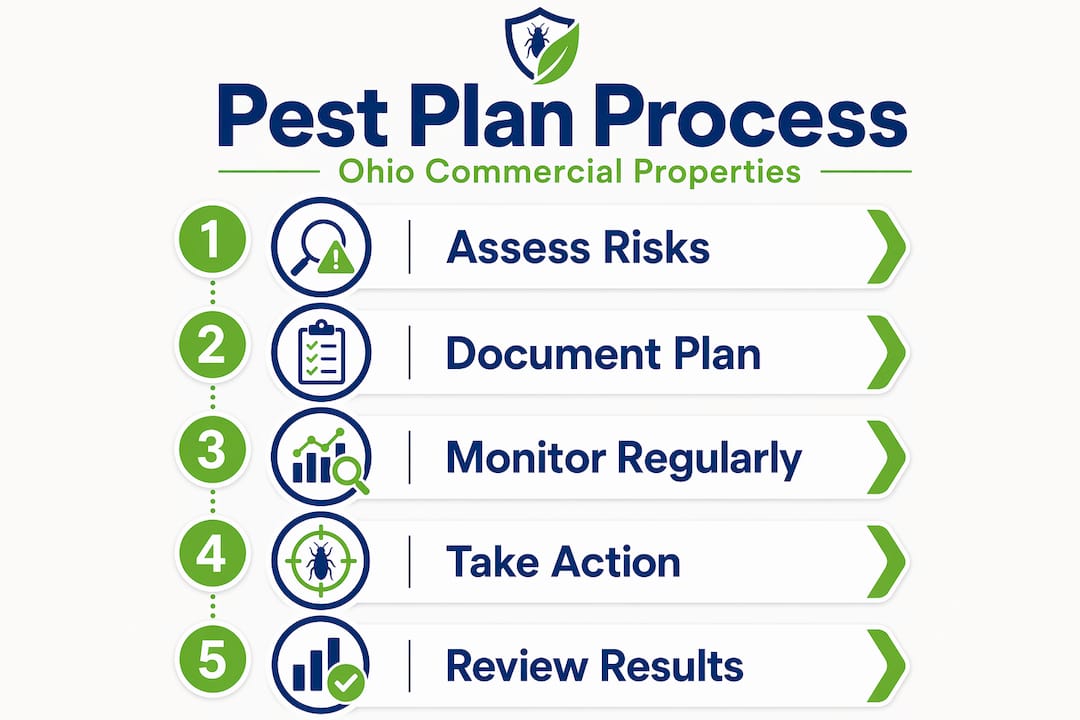
The most common failure point in commercial pest plans is not the pest control itself. It is the documentation. Audit-ready pest plans for regulated environments structure documentation around zones and devices, with trap locations, verified inspections, and corrective action closure evidence, because auditors want to see both what you did and whether the problem is actually closed.
Follow these steps to build a plan that holds up under scrutiny:
- Map your property into inspection zones: Assign each zone a number or letter. Label trap and bait station locations on a floor plan. This makes inspections consistent and reproducible.
- Set a baseline: During the first 30 days, document what you find at each device during every inspection. This tells you what is normal for your property.
- Define action thresholds: For example, two rodent captures in one zone within one week triggers immediate treatment and a structural inspection for entry points.
- Assign ownership: One person is responsible for each zone inspection. Without ownership, inspections get skipped.
- Log every service visit: Use a standard form capturing the date, technician, findings, products used, and follow-up required.
- Close the loop: Every corrective action needs a close-out entry confirming the issue was resolved. An open corrective action during a health inspection signals ongoing non-compliance.
| Documentation element | Why it matters | Audit risk if missing |
|---|---|---|
| Trap/device location maps | Proves consistent monitoring | Moderate |
| Applicator credentials | OSHA and liability compliance | High |
| Corrective action records | Shows issues are resolved | Very high |
| Product SDS on file | Hazard communication requirement | High |
| Threshold trigger log | Demonstrates decision-making rationale | Moderate |
Use a commercial pest control checklist to verify your documentation covers every element auditors look for. Pair that with a commercial pest monitoring program that runs on a predictable schedule, and you will have documentation that protects you rather than exposes you.
Why many Ohio pest plans fail—and how thinking differently can protect your property
Here is the uncomfortable truth that most pest control conversations avoid: the majority of commercial pest plans in Ohio are not really plans. They are service contracts with a binder attached. The exterminator shows up, sprays the perimeter, leaves a report, and everyone moves on until the next visit. When inspectors arrive and find cockroaches, that binder does not save anyone.
The real failure is cultural, not procedural. Property managers treat pest management as a vendor relationship rather than an operational discipline. The moment that mindset takes hold, staff stop reporting unusual activity, maintenance stops noting entry points during repairs, and the pest plan becomes a piece of paper nobody reads.
What actually works is treating pest management the same way you treat fire safety. Your employees know where the fire extinguishers are. They know to report a burning smell. That same instinct needs to apply to pest activity. Early sighting reports from cleaning staff or food handlers are more valuable than any scheduled spray, because they catch problems at the source before populations establish.
The other failure pattern is incomplete corrective action. A technician finds mouse droppings in a storage room, sets additional traps, and documents the finding. But nobody seals the gap behind the utility line where the mouse entered. Two weeks later, more droppings. The trap catches one mouse, but the entry point is still open. That gap between what was found and whether it was truly fixed is where audits fail and infestations grow.
Understanding the role of pest management as an integrated part of your facility operations, not a standalone service, is the shift that separates properties that pass inspections from those that make the news.
Secure your Oakwood commercial property with expert pest control plans
For reliable, customized pest control that aligns with Ohio regulations and Oakwood’s unique challenges, consider professional services available to help you implement and maintain effective pest plans.
At Apex Pest Control, we have been protecting Ohio commercial properties since 1969. Our IPM-based pest plans are built around your specific facility, your local pest pressures, and the compliance requirements your business faces. From rodent extermination to full-facility monitoring programs, we provide the documentation and follow-through that keeps your property audit-ready. We also recommend pairing pest management with the fundamentals covered in this commercial cleaning basics guide for maximum sanitation control. Start with our commercial pest control checklist to identify where your current plan has gaps, then request a free quote to get a program built for your property.
Frequently asked questions
What is an Integrated Pest Management (IPM) plan for commercial properties?
An IPM plan is a science-based pest control method focused on prevention, monitoring, and targeted treatment only when necessary, designed to minimize health risks and reduce overall pesticide use compared to reactive approaches.
How can ignoring pest plans affect a commercial business in Ohio?
Ignoring pest plans can lead directly to health code violations and serious enforcement outcomes including license revocation and closure, along with lasting reputational and revenue damage that extends well beyond the enforcement period itself.
What OSHA requirements relate to commercial pest management?
OSHA-compliant pest management requires detailed documentation of every pesticide application, including applicator credentials, EPA product registration numbers, treated areas, and timing to ensure safe and legally defensible operations.
Why is ongoing monitoring important in a commercial pest plan?
Routine pest population monitoring helps detect activity early so treatment occurs only when thresholds are crossed, reducing unnecessary pesticide use and preventing small problems from becoming the kind of infestations that trigger regulatory action.
How do pest plans adapt to local conditions like those in Oakwood, Ohio?
Effective pest plans account for local pest species, Ohio’s seasonal temperature swings, building-specific vulnerabilities such as aging infrastructure and utility gaps, and state and local regulatory requirements to deliver tailored protection that a generic service contract simply cannot provide.