



TL;DR:
- Maintaining detailed pest sighting logs enables early detection, targeted treatment, and legal protection for Oakwood homeowners.
- Consistent recording of specific details, environmental conditions, and patterns transforms simple observations into actionable insights, preventing infestations from escalating.
Pest sighting documentation is defined as the systematic recording of where, when, and how pests appear on a property, and it is the foundation of effective pest control management. For homeowners and property managers in Oakwood, Ohio, keeping a pest sighting log is not a bureaucratic exercise. It is the difference between catching a mouse trail near a basement utility entry in late October and discovering a full rodent colony by January. Tools like mobile apps, dated photographs, and simple notebooks all qualify as documentation methods. The industry term for this practice is pest monitoring, and understanding why document pest sightings matters gives you a strategic advantage over infestations before they take hold.
Why document pest sightings in Oakwood homes
Oakwood properties, particularly the older ranch-style and two-story homes near Patterson Boulevard and the Oakwood Club area, share a common vulnerability: aging foundations, mature tree lines close to structures, and crawl spaces that attract rodents and ants as Ohio temperatures drop each fall. Early detection documentation allows homeowners to intervene before minor pest activity becomes a widespread infestation, which can occur within weeks. That window is short, and most homeowners miss it because they rely on memory rather than records.

The importance of pest documentation becomes clearest when you compare two scenarios. A homeowner who notes “three ants near kitchen baseboard, 7 a.m., Tuesday, after heavy rain” has actionable data. A homeowner who thinks “I saw some ants last week” has nothing a pest control professional can use. Accurate logging changes treatment from guesswork to strategy, improving outcomes and reducing the number of treatments required.
Tracking pests consistently also reveals patterns that a single sighting never would. If you record ant activity every Tuesday morning after rain events, you have identified a moisture-driven entry point, not a random occurrence. That pattern tells a technician exactly where to apply targeted treatment rather than treating the entire perimeter.
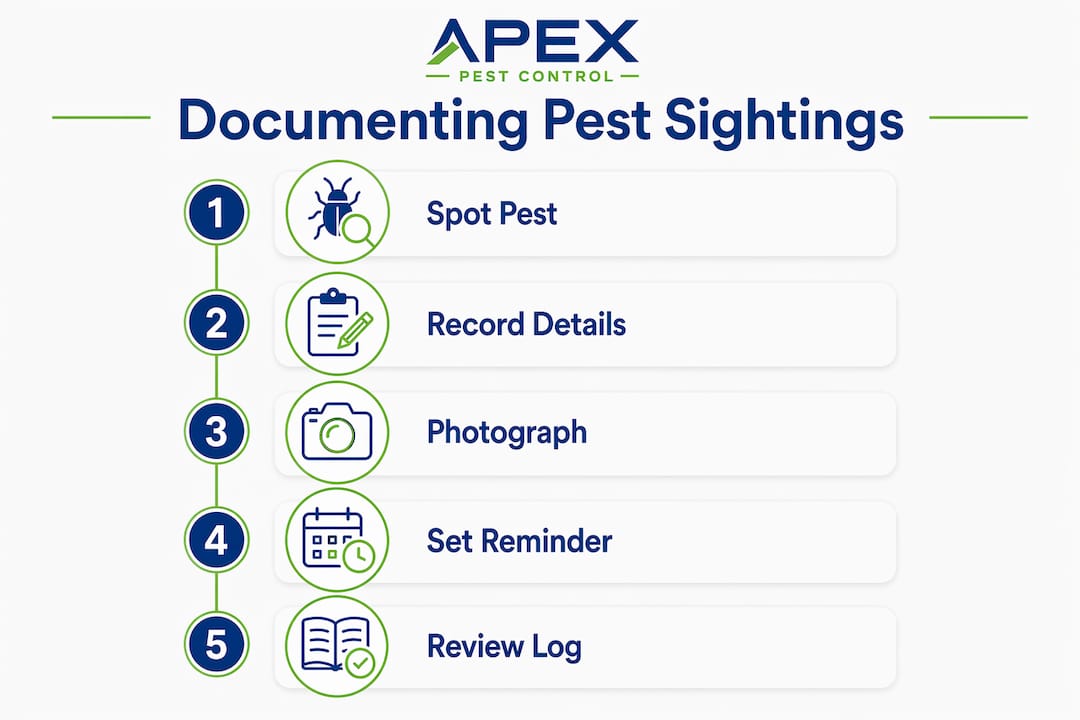
Here are the specific details worth capturing at every sighting:
- Date and time of the sighting
- Exact location within the property (room, wall, entry point)
- Pest species or best description if unknown
- Number of pests observed
- Environmental conditions (recent rain, temperature, open food sources)
- Any visible damage, droppings, or nesting material nearby
Pro Tip: Set a recurring phone reminder to review your pest log every Sunday evening. Consistency in logging helps you track pest patterns across weeks and seasons, not just isolated incidents.
How pest records protect you legally and financially
Property managers in Oakwood who oversee rental units near the Woodbourne neighborhood face a specific legal reality: tenant disputes over pest infestations are among the most common habitability complaints filed in Ohio. Pesticide application records must include product details, date, location, and applicator information, and must be retained for specified durations to comply with state and federal laws. Without that documentation, treatments are legally invalidated even when they were performed correctly.
The compliance benefit extends beyond landlord-tenant disputes. Ohio’s pesticide application regulations require licensed operators to maintain records, and licenses may be suspended if proper records are unavailable despite correct applications. For property managers who coordinate with pest control companies, keeping your own parallel sighting logs creates a second layer of protection.
Photos and videos with timestamps provide tangible evidence that supports pest sighting records and legal claims. Organizing digital and written evidence chronologically documents the pest infestation timeline clearly, which matters enormously if a dispute reaches a mediator or court.
Useful documentation formats for legal protection include:
- Timestamped photos stored in a labeled folder by month and year
- Written pest logs with signatures or digital date stamps
- Communication records between tenants and management about pest reports
- Copies of treatment invoices tied to specific sighting dates
Pro Tip: Align your sighting logs directly with treatment records. A recordkeeping system that ties pest sightings to treatment dates improves traceability and gives you a defensible paper trail if compliance questions arise.
Best practices for documenting pest sightings in Oakwood properties
The most effective pest sighting documentation captures context alongside sighting details. Location, timing, pest counts, and recent environmental changes all matter to understanding infestation dynamics. A sighting log that only says “saw a mouse” is nearly useless. A log that says “mouse observed near HVAC return vent, basement northeast corner, 6:45 p.m., 38°F outside, entry gap visible at pipe penetration” gives a technician a starting point.
Oakwood homeowners have several practical tools available for building a documentation habit. Digital apps like iNaturalist allow photo uploads with automatic GPS and timestamp data. Google Sheets or Apple Notes work well for simple text logs. A dedicated spiral notebook kept in the kitchen drawer is still a legitimate and effective option. The tool matters less than the consistency.
Here is a direct comparison of manual versus digital documentation methods:
| Method | Strengths | Limitations |
|---|---|---|
| Notebook or paper log | No technology required, always accessible | Easy to lose, no backup, harder to search |
| Spreadsheet (Excel, Google Sheets) | Searchable, shareable with pest control pros | Requires device access, manual entry |
| Mobile app (iNaturalist, pest apps) | Auto-timestamps, photo storage, GPS tagging | Requires smartphone, learning curve |
| Camera with date stamp | Strong visual evidence for legal use | Photos need separate written context |
For property managers overseeing multiple Oakwood units, a shared Google Sheet with columns for unit number, date, location, pest type, and action taken creates a property-wide tracking system. This approach surfaces patterns across units, such as a rodent pressure point in a shared utility corridor, that individual unit logs would never reveal. The residential pest management guide from Apexpestcontrol offers Ohio-specific guidance on organizing these records effectively.
Pro Tip: Take a photo before you do anything else. Most homeowners spray immediately upon spotting pests, but photographing the sighting first preserves evidence and gives your pest control professional far better diagnostic information.
Common mistakes that undermine your pest sighting logs
The most damaging mistake in pest monitoring is vague, undated entries. “Saw bugs in kitchen” tells a pest control professional nothing about species, location, time of day, or conditions. Detailed logs including date, time, location, count, and environmental conditions strengthen evidence that a pest problem is escalating and support treatment decisions. A vague entry is worse than no entry because it creates false confidence that the problem is documented.
Here are the most common documentation mistakes Oakwood homeowners make, and how to correct each one:
- Skipping environmental context. Note temperature, recent precipitation, and any open food or water sources near the sighting. These details reveal the conditions driving pest activity.
- Recording only the first sighting. One entry does not establish a pattern. Log every sighting, even if it seems minor or repetitive.
- Waiting until the end of the day. Memory degrades within hours. Log the sighting within 15 minutes while location and behavior details are still accurate.
- Ignoring pest behavior. Whether a rodent was moving quickly, foraging, or carrying nesting material changes the treatment approach significantly.
- Storing logs in a single location. A notebook that gets thrown away or a phone that breaks ends your documentation history. Back up digital logs to cloud storage monthly.
Late recording is a particularly common problem in Ohio’s fall season, when rodent pressure increases sharply as temperatures drop below 50°F. Homeowners notice signs but delay logging them, and by the time a pest control professional is called, the early-stage evidence is gone. Building a monthly pest maintenance routine that includes a dedicated log review prevents this gap.
If you suspect a quarantined or invasive pest species in your Oakwood home, such as spongy moth egg masses on exterior siding, evidence preservation through timestamped photos and location data is critical. APHIS requires specimens to be accompanied by documentation so regulatory officials can track and monitor pests accurately, and your sighting log becomes part of a formal identification workflow.
Key takeaways
Consistent, detailed pest sighting logs are the single most effective tool Oakwood homeowners and property managers have for early detection, legal protection, and targeted pest control treatment.
| Point | Details |
|---|---|
| Early detection saves money | Logging first sightings immediately narrows treatment scope before infestations spread within weeks. |
| Legal protection requires records | Timestamped photos and written logs defend property managers in tenant disputes and compliance reviews. |
| Context beats bare sightings | Recording location, time, pest count, and environmental conditions transforms logs into diagnostic tools. |
| Digital beats paper for traceability | Apps with GPS and auto-timestamps create legally stronger records than handwritten notes alone. |
| Consistency is the non-negotiable | A weekly log review habit prevents the gaps that let early pest activity go undetected. |
What I’ve learned from years of pest documentation in Ohio homes
I have reviewed hundreds of pest situations across Ohio properties, and the pattern is consistent: the homeowners who document early almost always avoid the worst outcomes. The ones who call us after a full rodent infestation in a Oakwood basement almost always say the same thing. They noticed something weeks earlier but did not write it down.
What surprises most people is that documentation does not need to be elaborate to be effective. A three-line note on a phone, taken within minutes of a sighting, is worth more than a detailed report written from memory three days later. The pest logs guide we recommend to Ohio property owners reinforces this point. Precision at the moment of sighting is what makes the difference.
I also want to address something the standard advice misses. Documentation gives property managers peace of mind that goes beyond pest control. When a tenant reports a pest issue and you can pull up a log showing three prior inspections, two treatments, and zero sightings in the preceding 60 days, the conversation changes entirely. You are no longer on the defensive. You have a record that shows responsible management.
The habit takes about two weeks to build. After that, it becomes automatic. Take the photo, write the note, back it up. That is the entire system.
— Dushan
How Apexpestcontrol helps Oakwood residents take control
Apexpestcontrol has served Ohio homeowners and property managers since 1969, and the team understands exactly what Oakwood properties face each season. When you bring your pest sighting logs to a consultation, the technicians use that data to design targeted treatments for rodents, ants, cockroaches, and other common Ohio pests rather than applying broad-spectrum solutions that miss the actual entry points. If rodents are your primary concern, the rodent extermination service page outlines the full removal and exclusion process tailored to Ohio homes. Apexpestcontrol also offers free quotes for Oakwood residents. Call 1-800-684-2284 or request your quote online to get started.
FAQ
Why should homeowners document pest sightings?
Documenting pest sightings creates a record that enables early detection, guides targeted treatment, and provides legal protection in tenant or compliance disputes. Without written records, pest control professionals must treat based on incomplete information, which reduces treatment accuracy.
What details should I include in a pest sighting log?
Record the date, time, exact location, pest species or description, number of pests observed, and any relevant environmental conditions such as recent rain or temperature. Detailed logs that include these data points support both treatment decisions and legal claims.
How long should I keep pest sighting records?
Keep pest sighting records for at least two to three years, or longer if your property is subject to rental agreements or pesticide application compliance requirements. State and federal regulations specify retention periods for pesticide application records, and your sighting logs should align with those timelines.
Can my pest sighting log help in a tenant dispute?
Yes. Timestamped photos and written sighting logs organized chronologically provide tangible evidence of when a pest issue was identified and what actions were taken. This documentation protects landlords and property managers from habitability claims by demonstrating a proactive response history.
What is the best tool for documenting pest sightings?
Mobile apps with GPS and automatic timestamps, such as iNaturalist, offer the strongest combination of convenience and legal-grade evidence. For property managers overseeing multiple units, a shared spreadsheet in Google Sheets paired with a photo folder organized by date and unit number covers both traceability and accessibility.