



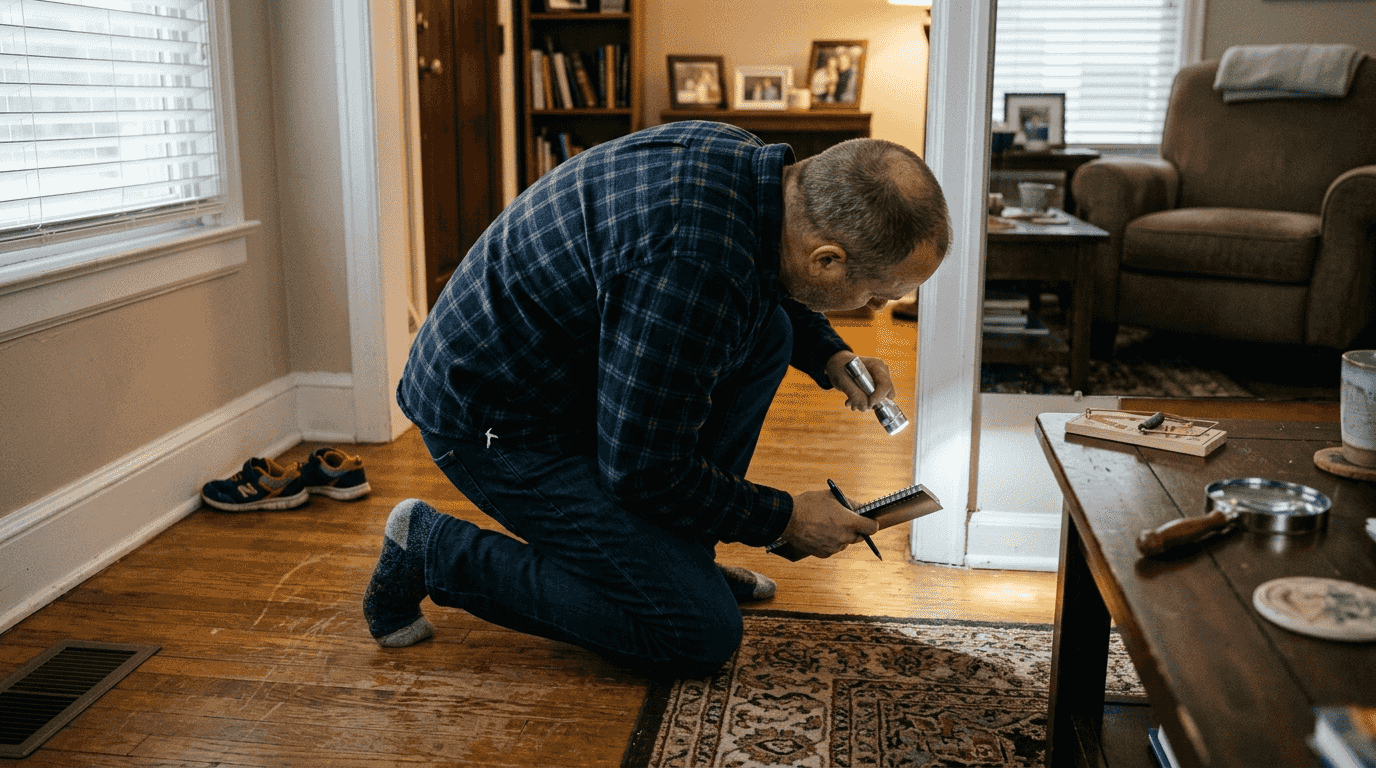
Many homeowners and property managers assume pest problems announce themselves with obvious signs, but the reality is far different. By the time you notice visible damage or activity, pests have often established thriving colonies that cost thousands to eliminate. Routine pest inspections cut damage and boost safety by catching infestations before they spiral out of control. This guide explains why consistent pest monitoring is essential for Northeast Ohio properties, what signs to watch for, and how to implement effective monitoring strategies that protect your investment and family’s health throughout 2026 and beyond.
Table of Contents
- Understanding Pest Monitoring: What It Is And Why It’s Essential
- Common Pests In Northeast Ohio And Signs To Monitor
- Methods And Tools For Effective Pest Monitoring At Home And Property
- Professional Pest Monitoring Services: When And Why To Choose Them
- Protect Your Home With Expert Pest Monitoring Services
Key takeaways
| Point | Details |
|---|---|
| Early detection saves money | Regular monitoring identifies pest activity before extensive damage occurs, reducing treatment costs significantly. |
| Prevention beats reaction | Consistent monitoring prevents infestations rather than reacting to established colonies that require intensive treatment. |
| Professional expertise matters | Trained technicians spot subtle warning signs homeowners miss and provide comprehensive monitoring solutions. |
| Regional pests require tailored approaches | Northeast Ohio’s specific pest challenges demand monitoring strategies designed for local conditions and seasonal patterns. |
| Integrated methods work best | Combining DIY monitoring with professional inspections creates the most effective defense against common household pests. |
Understanding pest monitoring: what it is and why it’s essential
Pest monitoring is the systematic practice of inspecting your property for signs of pest activity, tracking changes over time, and identifying potential entry points before infestations develop. Unlike reactive pest control that addresses visible problems, monitoring focuses on prevention through regular observation and documentation. This proactive approach catches pests during their earliest stages when populations are small and treatment is straightforward.
The financial impact of skipping monitoring is staggering. Termites alone cause billions in property damage annually, with most homeowners discovering infestations only after structural damage appears. Rodents chew through electrical wiring, creating fire hazards that insurance may not cover if negligence is proven. Bed bugs spread rapidly between rooms, turning a single-room problem into a whole-house nightmare within weeks. Routine inspections significantly reduce pest damage and increase safety by stopping these scenarios before they start.
Northeast Ohio’s climate creates unique pest challenges that make monitoring especially critical. Cold winters drive rodents indoors seeking warmth, while humid summers accelerate ant and termite activity. Spring thaws reveal winter damage and create ideal conditions for carpenter ant colonies. Without consistent monitoring, these seasonal shifts catch property owners off guard.
Effective pest monitoring delivers multiple benefits beyond cost savings:
- Protects property value by preventing structural damage that reduces resale prices
- Safeguards health by identifying disease-carrying pests like rodents and cockroaches early
- Reduces pesticide use by catching problems when targeted treatments work effectively
- Provides documentation for insurance claims and property transactions
- Creates peace of mind knowing your home receives regular professional attention
The monitoring process involves inspecting common pest entry points, checking for droppings or damage, placing monitoring devices in strategic locations, and documenting findings to track trends. Property managers benefit especially from systematic monitoring that protects multiple units and maintains tenant satisfaction. Homeowners gain confidence knowing potential problems are identified before guests notice or damage accumulates.
Common pests in Northeast Ohio and signs to monitor
Northeast Ohio properties face distinct pest pressures that require targeted monitoring approaches. Understanding which pests threaten your property and recognizing their warning signs transforms monitoring from guesswork into strategic prevention. The region’s mix of urban density, wooded areas, and seasonal temperature swings creates ideal conditions for multiple pest species.
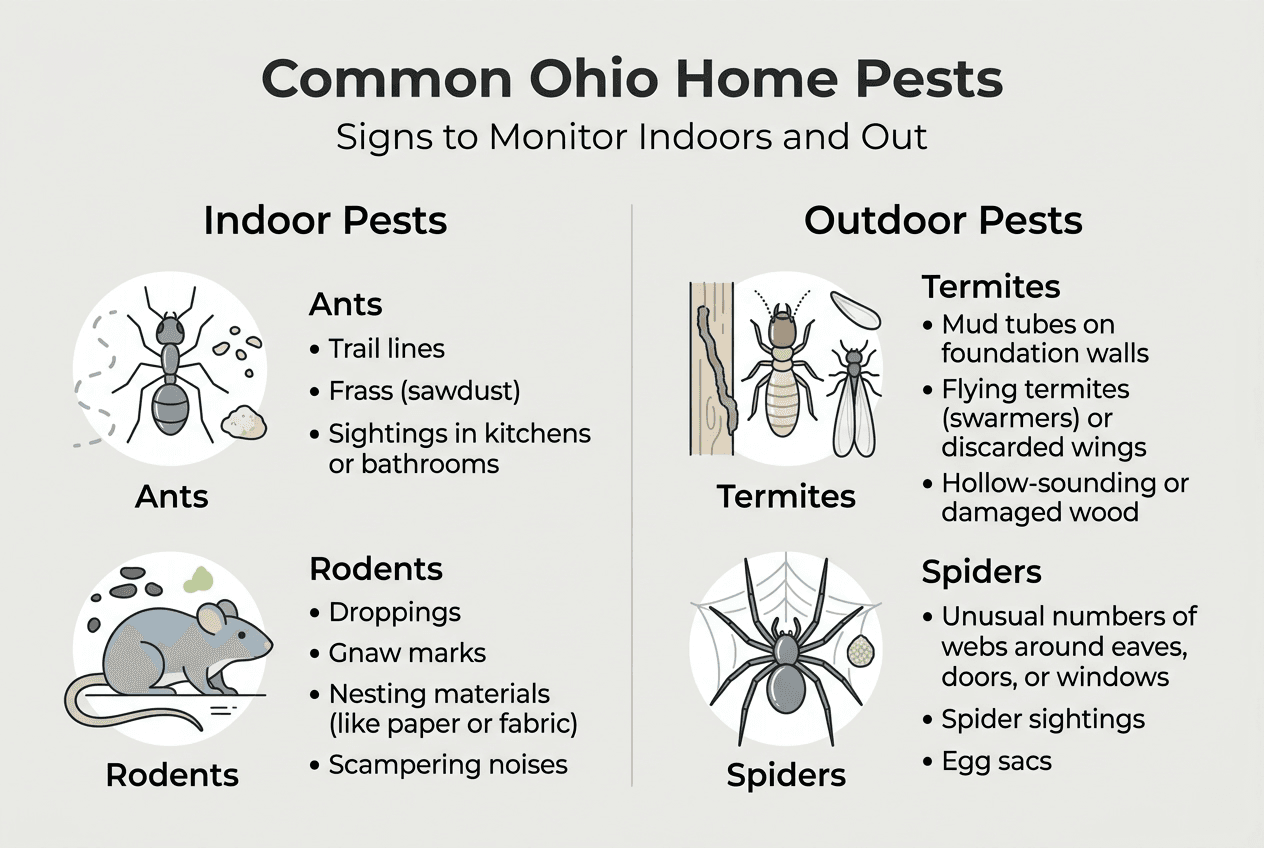
Ants represent one of the most common monitoring targets. Carpenter ants excavate wood to build nests, leaving behind sawdust piles near baseboards and window frames. Odorous house ants create trails along countertops and walls, following scent markers to food sources. Pavement ants nest in foundation cracks, with small dirt mounds appearing near driveways. Spring and early summer bring peak ant activity as colonies expand and new queens establish territories.
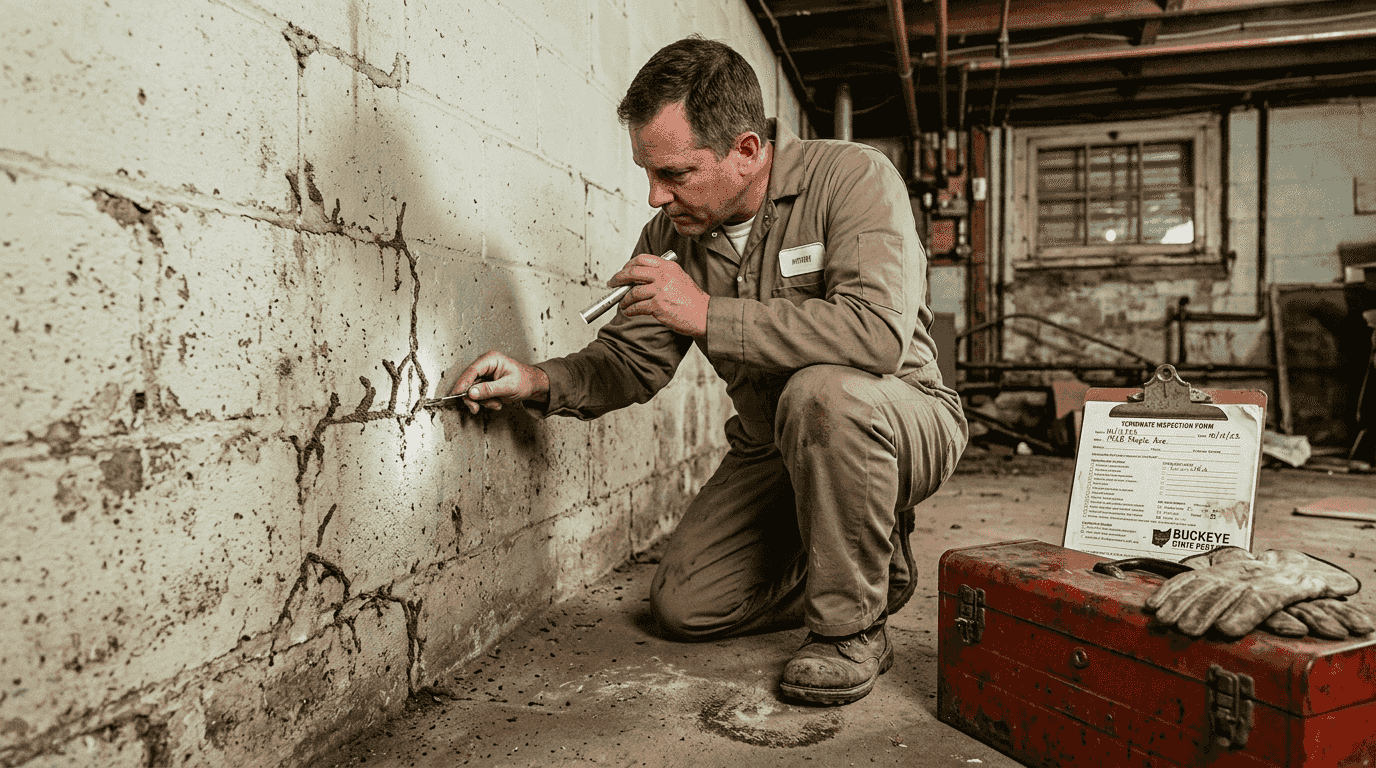
Termites cause silent destruction that monitoring catches before expensive repairs become necessary. Subterranean termites build mud tubes along foundation walls, connecting soil to wood food sources. Discarded wings near windows signal swarming season when new colonies form. Hollow-sounding wood and sagging floors indicate advanced infestations that monitoring should prevent. Annual inspections during spring detect termite activity when colonies are most active.
Rodents leave unmistakable signs that monitoring quickly identifies. Mouse droppings appear along walls and in cabinets, resembling dark rice grains. Gnaw marks on food packaging, wires, and wood trim indicate active feeding. Greasy rub marks along baseboards show regular travel routes. Scratching sounds in walls or ceilings reveal nesting locations. Fall monitoring is critical as temperatures drop and mice seek indoor shelter.
Bed bugs require careful monitoring because infestations spread rapidly between rooms and buildings. Small blood spots on sheets indicate feeding activity. Dark fecal stains appear on mattress seams and headboards. Shed skins and tiny white eggs cluster in furniture crevices. A sweet, musty odor develops in heavily infested rooms. Effective monitoring includes identifying common local pests and signs to prevent serious infestations from taking hold.
Seasonal patterns influence which pests require monitoring attention:
- Spring brings termite swarms, carpenter ant activity, and increased rodent movement
- Summer accelerates all pest reproduction, with ants and wasps reaching peak populations
- Fall drives rodents indoors and triggers final insect breeding cycles before winter
- Winter concentrates pests in warm areas, making detection easier but infestations more severe
Tailored monitoring acknowledges that different pests require different detection methods. Visual inspections work well for ants and rodents. Moisture meters help identify termite-friendly conditions. Interceptor traps catch bed bugs attempting to reach sleeping areas. Combining multiple monitoring approaches based on your property’s specific pest risks creates the most comprehensive protection strategy.
Methods and tools for effective pest monitoring at home and property
Implementing a practical monitoring routine requires understanding which tools work best for different situations and how to use them effectively. The right combination of methods turns pest monitoring from an overwhelming task into a manageable routine that fits your schedule and budget.
Monitoring tools range from simple visual inspections to specialized equipment that detects hidden activity. Sticky traps placed along baseboards and in corners capture crawling insects, revealing which pests are active and their travel patterns. Snap traps and live traps monitor rodent activity while providing immediate control. Pheromone traps attract specific insects, helping identify population levels. Moisture meters detect conditions that attract termites and other moisture-loving pests. Flashlights and inspection mirrors allow thorough examination of dark spaces where pests hide.
Integrated pest management relies heavily on monitoring techniques for early detection and control, making systematic approaches more effective than random checks. A structured monitoring routine ensures nothing gets overlooked:
- Schedule monthly inspections on the same date to establish consistency and track seasonal changes
- Start in the basement or crawl space where moisture and entry points concentrate pest activity
- Check kitchen and bathroom areas for signs of ants, cockroaches, and moisture-related pests
- Inspect bedrooms and living areas for bed bugs, carpet beetles, and occasional invaders
- Examine the exterior foundation, looking for cracks, gaps, and signs of pest entry
- Document findings with photos and notes to track changes and identify developing problems
- Replace monitoring devices and refresh attractants to maintain effectiveness
Pro Tip: Conduct monitoring inspections during early morning or evening hours when many pests are most active, making detection easier and more accurate.
Comparing monitoring tools helps you choose the right options for your situation:
| Tool Type | Cost Range | Ease of Use | Detection Effectiveness | Best For |
|---|---|---|---|---|
| Sticky traps | $5 to $15 | Very easy | Moderate | Crawling insects, general monitoring |
| Snap traps | $3 to $20 | Easy | High for rodents | Mouse and rat detection |
| Pheromone traps | $10 to $30 | Moderate | High for target pests | Specific insect species |
| Moisture meters | $20 to $100 | Moderate | High for conditions | Termite-prone areas |
| Inspection camera | $30 to $200 | Moderate | Very high | Hidden spaces, wall voids |
| Professional inspection | $75 to $200 | Easy (for you) | Highest | Comprehensive assessment |
Combining multiple monitoring methods improves detection accuracy significantly. Place sticky traps in different rooms to map pest distribution. Use moisture meters in basements while conducting visual inspections upstairs. Set rodent traps along exterior walls while checking interior cabinets for droppings. This layered approach catches problems regardless of where they start.
Timing and location matter as much as the tools themselves. Focus monitoring efforts on high-risk areas like kitchens, bathrooms, basements, and attics where pests find food, water, and shelter. Check areas near pipes, vents, and utility entries where pests gain access. Inspect stored items in garages and sheds that provide undisturbed nesting sites. Seasonal adjustments keep monitoring relevant as pest pressures change throughout the year.
Professional pest monitoring services: when and why to choose them
While DIY monitoring provides valuable protection, professional pest monitoring services offer advantages that justify their cost for many homeowners and property managers. Understanding when to seek professional help and what to expect from expert monitoring helps you make informed decisions about protecting your property.
Professional monitoring delivers expertise that comes from years of training and daily exposure to pest problems. Technicians recognize subtle signs homeowners miss, like early termite damage or unusual ant behavior that signals a developing supercolony. They understand pest biology and seasonal patterns, adjusting monitoring strategies based on current conditions. Licensed professionals access commercial-grade monitoring equipment and products unavailable to consumers. Their systematic approach ensures comprehensive coverage rather than spot-checking obvious areas.
Several situations indicate professional monitoring is the smart choice. Properties with previous infestations benefit from expert monitoring that confirms treatments worked and prevents recurrence. Homes near wooded areas or water sources face elevated pest pressure requiring specialized knowledge. Multi-unit properties need coordinated monitoring that prevents pests from moving between units. Buyers and sellers use professional inspections to document property conditions and avoid transaction surprises. Professional pest services provide advantages for thorough and reliable monitoring that DIY methods cannot match.
Cost considerations often drive the professional versus DIY decision, but the calculation extends beyond inspection fees. Professional monitoring typically costs $75 to $200 per visit, with quarterly or monthly service plans reducing per-visit expenses. This investment prevents repair bills that easily reach thousands for termite damage or tens of thousands for extensive rodent contamination. Insurance coverage may require professional documentation to process pest-related claims. Property value protection alone justifies monitoring costs when selling or refinancing.
Comparing DIY and professional monitoring clarifies the trade-offs:
| Feature | DIY Monitoring | Professional Monitoring |
|---|---|---|
| Cost | Low upfront, potential high repair costs | Moderate ongoing, lower total costs |
| Expertise | Limited to research and experience | Extensive training and daily practice |
| Equipment | Consumer-grade tools | Commercial equipment and products |
| Time required | Significant personal time | Minimal homeowner involvement |
| Comprehensiveness | Depends on knowledge and effort | Systematic and thorough |
| Documentation | Informal notes and photos | Detailed reports and records |
| Liability | Homeowner assumes all risk | Professional insurance coverage |
Pro Tip: Choose professional services that provide detailed written reports after each inspection, creating documentation that protects property value and supports insurance claims if problems develop.
Selecting a reliable professional service requires evaluating several factors. Look for licensed and insured companies that meet state requirements and carry liability coverage. Check online reviews and ratings, focusing on feedback about monitoring accuracy and communication quality. Ask about technician training and certification programs that ensure consistent service. Request sample inspection reports to evaluate thoroughness and clarity. Verify the company serves your specific area and understands local pest challenges. Compare service agreements, noting inspection frequency, coverage areas, and what happens if pests are detected.
The best approach often combines DIY vigilance with professional expertise. Maintain basic monitoring between professional visits, watching for changes that warrant immediate attention. Use professional quarterly inspections to catch problems your monitoring might miss. This hybrid strategy maximizes protection while controlling costs.
Protect your home with expert pest monitoring services
Taking action to protect your Northeast Ohio property starts with choosing the right pest monitoring partner. Apex Pest Control provides comprehensive monitoring solutions tailored to the unique challenges of Bedford Heights, Oakwood, Solon, and surrounding communities. Our licensed technicians understand local pest patterns and seasonal pressures that threaten your property investment.
Regular professional monitoring catches problems before they become expensive emergencies. Our systematic inspections cover every vulnerable area, from foundation to attic, using proven detection methods and commercial-grade equipment. We document findings with detailed reports that track changes over time and provide valuable records for property transactions. Compare top residential pest solutions to understand the comprehensive protection professional monitoring delivers.
Experienced local exterminators bring decades of combined knowledge to every inspection, spotting warning signs that untrained eyes miss. Our family-safe methods protect your household while eliminating pest threats. With over 200 five-star reviews, we have earned the trust of Northeast Ohio homeowners who value dependable service and effective results. Contact us today for a comprehensive property assessment and customized monitoring plan that fits your needs and budget.
FAQ
How often should I perform pest monitoring in my home?
Monthly monitoring provides the best balance between thoroughness and practicality for most Northeast Ohio homes. Adjust frequency based on pest activity levels, with weekly checks during high-risk seasons like spring and fall when pest pressure peaks. Properties with previous infestations or high-risk locations benefit from more frequent monitoring until patterns stabilize. Professional quarterly inspections complement monthly DIY monitoring by providing expert evaluation and catching problems your routine might miss. Learn more about establishing effective monthly pest monitoring routines that fit your schedule.
What are the first signs of a termite infestation?
Mud tubes running along foundation walls from soil to wood structures are the most reliable early termite indicator. Discarded wings near windows and doors appear during spring swarming season when new colonies form. Hollow-sounding wood when tapped and small holes in drywall signal active feeding inside walls. Sagging floors or doors that suddenly stick indicate advanced damage requiring immediate professional attention. Understanding termite inspection signs helps you catch infestations before structural damage becomes severe and expensive to repair.
Can I rely on DIY pest monitoring alone?
DIY monitoring effectively handles minor pest issues and provides valuable ongoing surveillance between professional visits. Basic visual inspections and simple traps catch many common problems before they escalate. However, challenging infestations involving termites, bed bugs, or extensive rodent activity require professional expertise and equipment. Hidden damage and subtle warning signs often escape untrained observation, allowing problems to worsen undetected. Most homeowners achieve the best results combining regular DIY vigilance with quarterly professional inspections. Compare professional versus DIY pest monitoring approaches to determine the right strategy for your situation.
How do professional pest monitoring services work?
Professional monitoring begins with a comprehensive initial inspection covering interior spaces, exterior perimeter, crawl spaces, and attics. Technicians use specialized equipment like moisture meters, thermal cameras, and borescopes to detect hidden activity. They place monitoring devices in strategic locations and document current conditions with detailed reports and photos. Follow-up visits track changes, evaluate monitoring device results, and adjust strategies based on findings. Services provide customized treatment plans when monitoring reveals active infestations, ensuring problems are addressed quickly and effectively. Learn about the complete professional pest monitoring process and what to expect from expert services.