



TL;DR:
- Bedford Heights homes face persistent pest issues due to older infrastructure and seasonal climate factors.
- Integrated pest management focuses on prevention, monitoring, and targeted treatments to control pests safely.
- Professional help is recommended for severe infestations, as DIY methods are often insufficient for large or recurring problems.
Bedford Heights homeowners deal with one of the most frustrating problems imaginable: pests that just won’t quit. Whether it’s the scratch of mice behind your walls at 2 a.m. or a trail of ants marching across your kitchen counter, pest problems feel personal. And they’re more common than most people realize. In fact, 30% of Ohio homes face ants as a recurring pest challenge alone. This guide cuts through the noise and gives you clear, practical answers on how to identify, prevent, and eliminate pest problems specific to Bedford Heights.
Table of Contents
- Why pests thrive in Bedford Heights homes
- Integrated pest management: Safe, effective solutions explained
- DIY vs. professional pest control: What residents should know
- Practical prevention tips for a pest-free home
- What most guides miss about pest control in Bedford Heights
- Get professional pest control help in Bedford Heights
- Frequently asked questions
Key Takeaways
| Point | Details |
|---|---|
| Know your local risks | Understanding Bedford Heights’ pest threats helps you take smarter action. |
| IPM offers safe solutions | Integrated pest management keeps families safe with focused, low-risk treatments. |
| DIY only works for minor pests | Severe infestations require a professional touch for long-term results. |
| Prevention starts at home | Simple habits and repairs reduce your pest risk year-round. |
| Call experts when needed | Prompt help can save you money and stress as soon as problems appear. |
Why pests thrive in Bedford Heights homes
Bedford Heights sits in Cuyahoga County, where humid summers, cold winters, and aging housing stock create near-perfect conditions for pest activity. When temperatures drop in the fall, rodents and insects push indoors looking for warmth. When spring arrives and moisture builds up, ants and cockroaches come out in force. It’s a cycle that repeats year after year, and it catches many homeowners off guard.
The basics of pest infestation in Ohio homes point to three major attractors: food, moisture, and shelter. Bedford Heights has plenty of all three. Older homes in the area often have small cracks in foundations, gaps around plumbing, and spaces under doors that give pests easy entry. Even newer construction is not immune, especially if landscaping holds moisture close to the home’s exterior.
The most common pests Bedford Heights residents deal with include:
- Ants (especially odorous house ants and pavement ants), which invade kitchens and bathrooms
- Cockroaches, which thrive in warm, damp spaces like under sinks and behind appliances
- Rodents (mice and rats), which squeeze through gaps smaller than a dime to nest inside walls
- Bed bugs, which spread easily through secondhand furniture and travel on luggage
Understanding what attracts pests locally is the first step toward stopping them. Cockroaches, for example, are drawn to grease buildup behind stoves, dripping faucets, and cardboard boxes stored in basements. These are everyday household items that most people don’t immediately associate with pest risk.
Local insight: Bedford Heights homes built before 1980 are especially vulnerable because older plumbing, insulation gaps, and basement crawl spaces give pests plenty of places to hide and multiply without being noticed for weeks.
With this context in mind, let’s look at how professional and integrated pest control can help protect your home.
Integrated pest management: Safe, effective solutions explained
Now that you know why pests thrive here, discover the smartest methods to keep infestations at bay.
Integrated Pest Management, commonly called IPM, is a structured approach to pest control that focuses on long-term prevention with minimal risk to people, pets, and the environment. It’s not just a fancy term. IPM is a system that integrated pest management professionals use to combine monitoring, exclusion, habitat modification, and targeted treatments rather than blasting a home with chemicals and hoping for the best.
Here is how IPM works in practice for Bedford Heights homeowners:
- Inspection and monitoring — Identify which pests are present, where they’re entering, and what conditions are supporting them. This means checking under sinks, behind appliances, in attic spaces, and along the home’s exterior.
- Setting action thresholds — Decide at what point pest numbers require active treatment versus continued monitoring. Not every ant sighting means you need an exterminator immediately.
- Prevention first — Seal cracks, fix leaks, remove food sources, and modify the environment to make your home less attractive to pests.
- Minimal-risk treatment — If treatment is needed, start with the least toxic options: traps, baits, and targeted sprays in specific areas.
- Evaluation — After treatment, assess what worked and adjust the strategy going forward.
The IPM step-by-step guide used by Ohio professionals makes it clear that this approach is especially valuable for homes with children, elderly residents, or pets who may be more sensitive to chemical treatments.
IPM vs. conventional pest control: A direct comparison
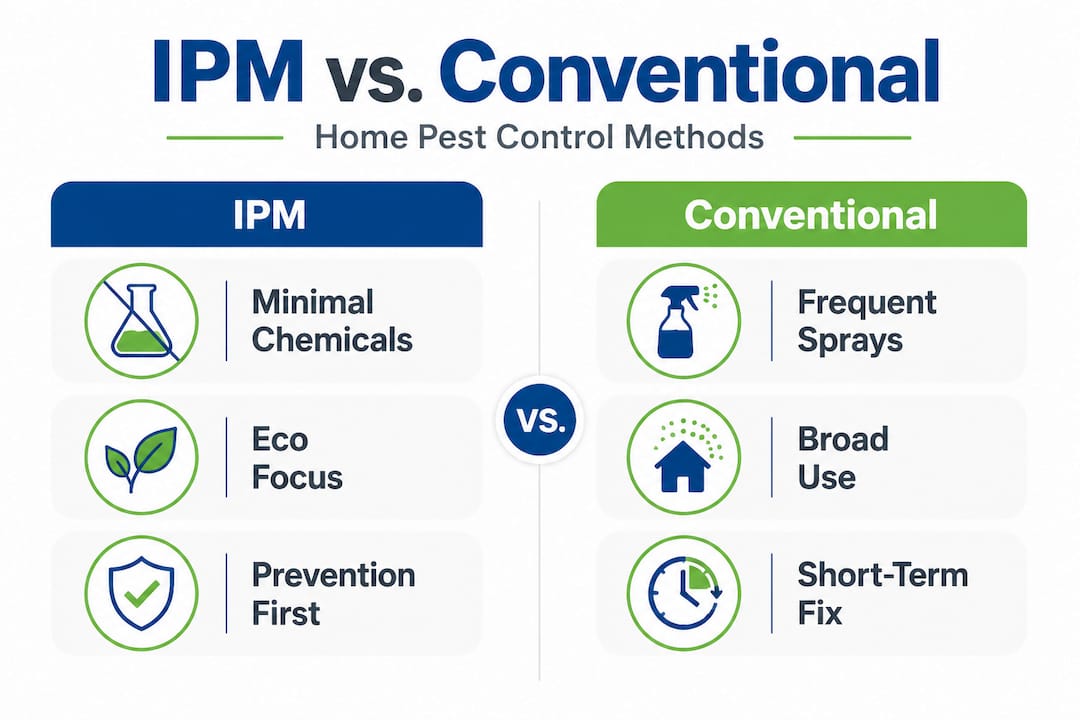
| Factor | IPM approach | Conventional pest control |
|---|---|---|
| Chemical use | Minimal, targeted | Broad, routine applications |
| Focus | Prevention and monitoring | Reactive treatment |
| Safety for families | High priority | Variable |
| Long-term effectiveness | Strong | Moderate without follow-up |
| Environmental impact | Low | Higher |
| Cost over time | Often lower | Can be higher with repeat visits |
Pro Tip: Ask any pest control provider whether they use an IPM framework before scheduling service. If they can’t explain their monitoring process, they may be relying on chemical treatment alone, which is less effective over time and harder on your household.
The key difference is that IPM treats your home as an ecosystem, not just a problem to spray. When you address the root causes, such as moisture, entry points, and food access, you stop pests from returning rather than just killing the ones already inside.
DIY vs. professional pest control: What residents should know
Once you understand how pest control works, it’s important to weigh your options for treating your specific problem.
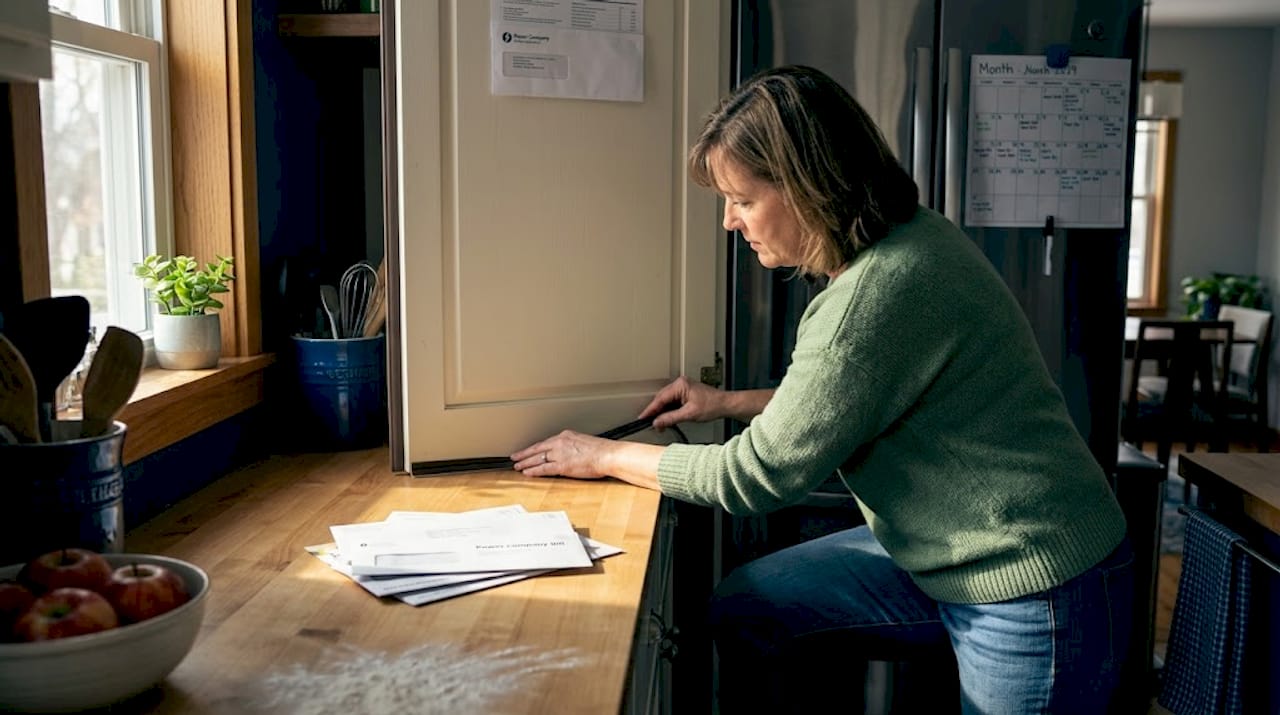
Many Bedford Heights homeowners start with DIY solutions, and that’s completely reasonable. Store-bought baits, traps, and sprays can handle minor ant trails, the occasional cockroach, or a single mouse sighting. DIY pest proofing tips can help you seal entry points, use steel wool around pipe gaps, and set snap traps in high-traffic areas. These steps are worth doing regardless of whether you also call a professional.
But here’s the honest truth: DIY rodent proofing is a common first step but may not fully resolve larger infestations. Mice reproduce fast. A single female mouse can produce up to 35 offspring per year. If you’re only catching one or two mice per week with traps, the population may still be growing behind your walls.
When to call a professional
- You see pests consistently over several days or weeks despite treatment
- You find droppings, gnaw marks, or structural damage
- You spot bed bugs or suspect a bed bug infestation
- Cockroaches appear during the day (a sign of heavy infestation)
- You have young children, pets, or immunocompromised family members at home
Top pest control services in the Cleveland area, including Bedford Heights, are equipped to handle severe or persistent infestations that DIY methods simply can’t fully address. Professional services use commercial-grade products, have knowledge of pest biology, and follow up to confirm the problem is resolved.
DIY vs. professional: Cost and effectiveness at a glance
| Category | DIY | Professional service |
|---|---|---|
| Upfront cost | Low ($10 to $50 per product) | Moderate ($150 to $400 per treatment) |
| Effectiveness (minor issue) | Good | Excellent |
| Effectiveness (major issue) | Limited | Excellent |
| Follow-up included | No | Often yes |
| Safety knowledge | Consumer level | Certified and trained |
| Guarantee | None | Often included |
Pro Tip: Before spending money on multiple rounds of DIY products, document what you’re seeing: type of pest, where you’re finding it, and how often. That information helps a professional diagnose the problem faster and choose the right treatment on the first visit.
The financial logic is clear. Spending $50 per month on products that don’t resolve the issue adds up quickly, while a single professional treatment that actually works ends up costing less in the long run and causes far less stress.
Practical prevention tips for a pest-free home
By following proven prevention and treatment strategies, you can take charge before pests become a major issue.
Prevention is where most homeowners have the most control, and it doesn’t require expensive products or professional visits. Small, consistent habits make a significant difference. Practical pest control tips from experienced Ohio professionals consistently point to the same core habits that help homeowners minimize pest activity throughout the year.
Here are the most effective steps Bedford Heights residents can take:
- Clean up food and spills immediately — Pests need food to survive. Even small crumbs on a countertop or a sticky residue near the stove is enough to attract ants and cockroaches overnight.
- Store food in sealed containers — Cardboard cereal boxes and loosely closed chip bags are easy targets. Transfer pantry items to airtight plastic or glass containers.
- Fix leaky faucets and pipes — Moisture is one of the top attractors for pests. A slow drip under your kitchen sink creates the perfect environment for cockroaches to thrive.
- Declutter basements, garages, and attics — Piles of boxes, old newspapers, and stored clothing give rodents and insects the perfect nesting material. The less clutter, the fewer hiding spots.
- Seal cracks and gaps around your home’s exterior — Walk around the outside of your home at least twice a year. Check where utilities enter the foundation, around window frames, and at the base of doors.
- Check seasonal entry points — In fall, mice and stink bugs look for warm entry points. In spring, ants and wasps begin foraging. Each season brings different risks for Bedford Heights homes.
- Inspect secondhand furniture before bringing it inside — Bed bugs are notorious for traveling on used furniture, mattresses, and even picture frames. Check seams and joints carefully.
Correct habits and routine checks minimize pest encounters significantly over time. This isn’t about being obsessive. It’s about removing the three things pests need most: food, water, and shelter.
Pro Tip: Set a quarterly reminder on your phone to do a 20-minute walk-through of your home’s interior and exterior. Check for moisture issues, new cracks, and signs of pest activity. Catching a problem early saves you hundreds of dollars and weeks of frustration.
What most guides miss about pest control in Bedford Heights
Here is something we’ve seen in over 50 years of working in Ohio: most generic pest control advice treats every home the same. Seal entry points, clean up crumbs, call a pro if it gets bad. It’s not wrong advice, but it misses something important. Bedford Heights has its own character, its own housing stock, its own microclimates, and its own pest patterns.
A home near Mill Creek, for example, deals with different moisture levels and different rodent pressure than a home closer to Rockside Road. Older split-levels in the area often have unique crawl space configurations that standard exclusion advice doesn’t account for. General tips help, but they don’t replace someone who knows this specific territory.
We also see homeowners wait too long. There’s a common belief that a few pests are just part of living in Ohio. That’s true to a degree, but there’s a difference between the occasional spider and a cockroach population nesting behind your dishwasher. Waiting makes every problem worse and every treatment more complicated.
The other thing most guides won’t tell you is that eco-friendly and effective are not opposites. Eco-friendly pest control methods have advanced significantly over the past decade and can handle serious infestations without saturating your home in chemicals. Families with young children, pets, or anyone with sensitivities should specifically ask about low-impact options. They work, and they’re increasingly the standard for responsible local providers.
The bottom line is that local expertise matters more than any list of tips. A professional who knows Bedford Heights, knows what pests are active in each season, and knows the building patterns of your neighborhood is worth far more than a generic online guide or a national chain service that treats your home like a checkbox.
Get professional pest control help in Bedford Heights
Now that you understand the keys to effective pest control, here’s where to go for specialized support in Bedford Heights. At Apex Pest Control, we’ve been protecting Ohio homes since 1969, and we know how local pests behave across every season. Whether you’re dealing with rodents in your walls, bed bugs in your bedroom, or ants invading your kitchen, we have targeted solutions designed for your situation. Explore our rodent extermination services and bed bug treatments for specialized help. Ready to take the first step? Request a free pest control quote today and let our local team put together a plan that fits your home, your family, and your budget.
Frequently asked questions
What are the most common pests in Bedford Heights?
The most frequent pests are ants, cockroaches, rodents, and bed bugs, all of which are among the most common infestations reported by Ohio homeowners year-round.
Is it safe to try DIY pest control in my home?
DIY methods can manage minor problems effectively, but for severe or repeated infestations, professional services are safer and more reliable than store-bought products alone.
What is the benefit of integrated pest management (IPM) for homes?
IPM uses targeted, low-risk strategies focused on prevention and minimal chemical use, making it the preferred choice for families. Integrated approaches are safer for children and pets without sacrificing effectiveness.
How can I prevent pests from coming back after treatment?
Routine cleaning, sealing entry points, and addressing moisture issues are essential. Consistent habits and checks are what keep pest populations from rebounding after treatment.
How soon should I call a pest control professional?
If you notice repeated sightings or signs of structural damage or droppings, contact a professional right away. Serious or recurring pest problems get significantly harder and more expensive to treat the longer you wait.