



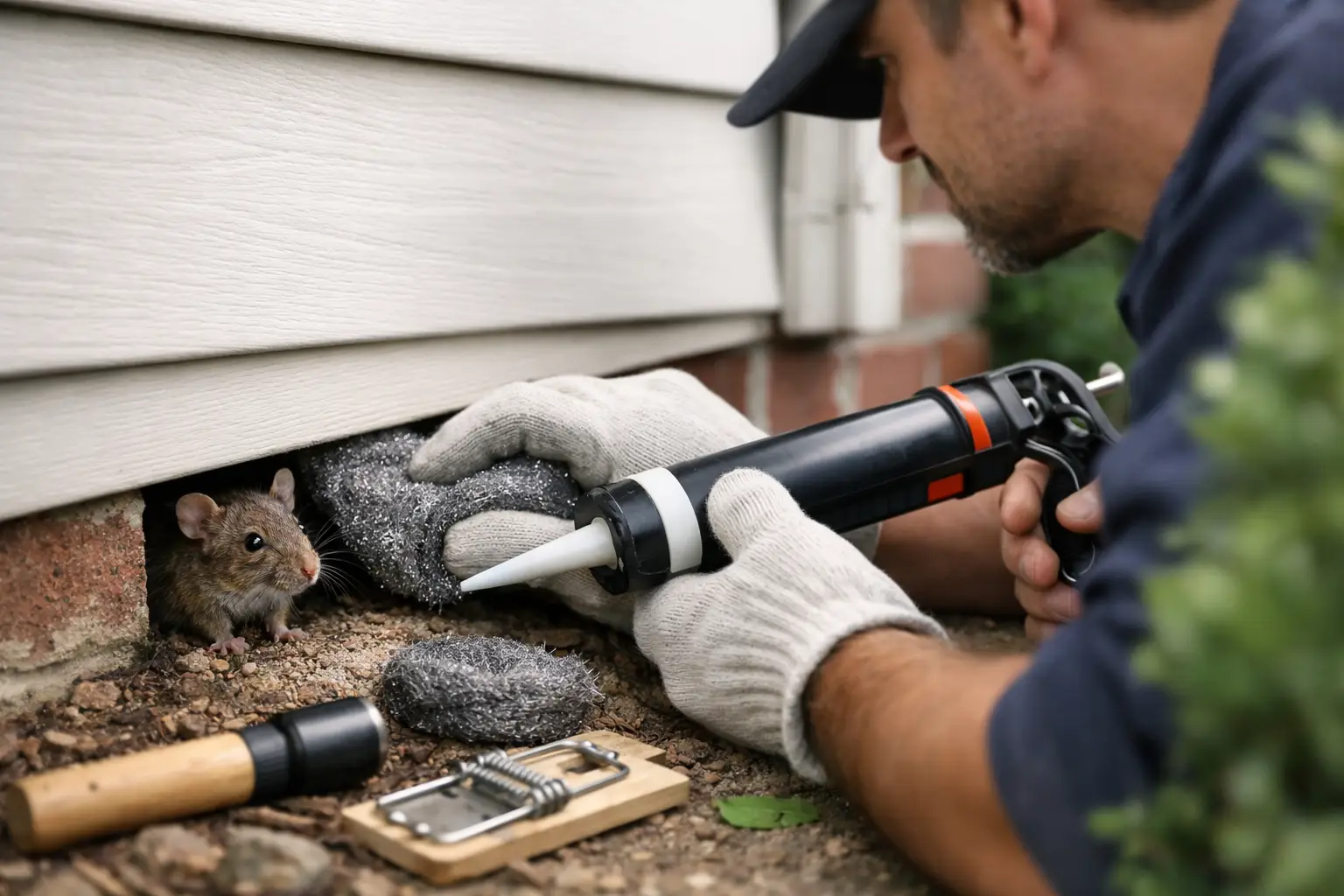
Scratching in a wall at 2 a.m. usually means the problem started long before you heard it. By the time mice or rats make themselves known, they have often already found food, water, and a reliable way in. That is why a homeowner guide to rodent exclusion matters more than any quick fix. Exclusion is the part of rodent control that closes the door behind the infestation and helps keep it closed.
Rodent exclusion is the process of identifying how rodents enter a home and physically blocking those access points. It sounds straightforward, but the details matter. Mice can fit through openings as small as a dime, and rats can squeeze through gaps about the size of a quarter, according to the Centers for Disease Control and Prevention. If the opening stays open, trapping alone becomes a cycle instead of a solution.
What rodent exclusion actually involves
A strong exclusion plan is not just a matter of stuffing steel wool into a hole and hoping for the best. Effective exclusion combines inspection, repair, sanitation, and follow-up. The goal is to make the home structurally difficult to enter and less rewarding once a rodent gets close.
For most homeowners, that starts outside. Rodents usually enter at ground level or through roofline vulnerabilities, then move into wall voids, attics, crawl spaces, basements, and garages. Common entry points include utility penetrations, gaps under doors, damaged vents, uncapped pipes, loose siding, and foundation cracks. In older Ohio homes, weathering and seasonal expansion can create small openings that go unnoticed until temperatures drop and rodents begin looking for shelter.
Inside the home, exclusion also means controlling the conditions that support rodent activity. Food debris under appliances, accessible pantry goods, pet food left out overnight, and moisture issues near sinks or floor drains all increase the odds of a problem taking hold.
Homeowner guide to rodent exclusion inspections
The inspection phase is where many DIY efforts fall short. Homeowners tend to focus on the room where they saw droppings, but the true access point is often elsewhere. A proper inspection follows the rodent’s route, not just the evidence left behind.
Start with the exterior foundation and work methodically around the structure. Look closely where cables, gas lines, and AC lines enter the home. Check basement windows, garage door corners, and the lower edges of siding. Then move upward to soffits, roof returns, attic vents, and chimney areas. If tree limbs touch the roof, they may help rodents or other wildlife reach elevated openings.
Inside, pay attention to grease marks, gnawing, shredded nesting material, and droppings in utility rooms, attics, and behind stored items. Fresh droppings are a sign that exclusion should not be done in isolation. If active rodents remain inside when openings are sealed, they can cause additional damage searching for a new exit.
That is one reason professional service can make a real difference. A trained technician can distinguish between an active infestation and older evidence, identify less obvious access points, and recommend repairs that hold up instead of temporary patchwork.
The best materials for rodent exclusion
Not every sealant or patch material stands up to rodents. Mice and rats are persistent chewers, and soft materials can fail quickly.
For long-term exclusion, metal is often the most dependable choice. Galvanized hardware cloth, metal flashing, heavy-duty door sweeps, and properly fitted vent covers offer better protection than foam alone. Some expanding foams are sold for pest-blocking use, but they are most effective when paired with more durable materials rather than used as the only barrier.
Caulk can help close small finish gaps, but it is not a complete exclusion strategy when the opening is large enough to invite chewing. Weather stripping is useful around doors and garage entries, though it needs inspection over time because wear creates new vulnerabilities.
The right fix depends on the opening. A gap around a pipe may need copper mesh and sealant, while a broken crawl space vent may require replacement with a rodent-resistant screen. A larger construction gap may need flashing or carpentry repair. Good exclusion work is specific to the structure, not one-size-fits-all.
Why sanitation still matters
Exclusion fails more often when attractants stay in place. A sealed home with easy food access in the garage or basement is still under pressure from rodents searching for a way in.
Dry goods should be stored in hard-sided containers when possible, especially in pantries, basements, and garages. Bird seed, grass seed, and pet food are common rodent magnets and should never be left in thin bags. Trash needs secure lids, and outdoor bins should be placed away from entry doors when practical.
Landscaping also affects rodent pressure. Dense vegetation against the home, stacked firewood near the foundation, and cluttered storage areas create cover. Trimming back growth and keeping a cleaner perimeter reduces the number of safe hiding spots close to the structure. The Environmental Protection Agency supports integrated pest management practices that combine exclusion and sanitation because prevention works better when the environment is less inviting.
It depends on the rodent and the house
A homeowner guide to rodent exclusion should be honest about trade-offs. The right plan depends on whether you are dealing with mice, roof rats, Norway rats, or occasional invaders moving in from nearby fields or neighboring properties.
Mice are often the bigger issue inside homes because they need very little space to get in. They are excellent climbers and can use utility lines, stacked materials, or rough exterior surfaces to reach upper levels. Rats usually need more substantial openings, but they can cause more visible destruction and may burrow near foundations or slabs.
The age and design of the house matter too. Newer homes can still have vulnerable construction gaps, especially around utility penetrations. Older homes may have settled over time, creating repeated failure points around masonry, door frames, and roof transitions. What works in a tightly built suburban home may not be enough for a century home with multiple additions and mixed materials.
When DIY rodent exclusion makes sense
Some exclusion tasks are reasonable for homeowners who are comfortable working safely around the property. Replacing worn door sweeps, sealing a small gap around a pipe, screening a simple vent opening, and improving food storage are practical first steps. These actions can reduce risk quickly and are worthwhile even if professional treatment follows.
DIY becomes less effective when there are multiple entry points, roofline issues, crawl space concerns, or signs of a well-established infestation. It also becomes risky when ladders, contaminated insulation, droppings, or electrical penetrations are involved. According to the CDC, rodent droppings and nesting materials can present health concerns, so cleanup and repair should be handled carefully.
If you have heard movement in more than one area, found repeated droppings after cleanup, or noticed gnawing on structural or utility materials, a professional inspection is the safer path. Proven rodent control is not just about sealing holes. It is about confirming where the activity started, removing the current population, and closing off the structure in a way that lasts.
How professional rodent exclusion delivers better results
Professional exclusion is usually most effective when paired with targeted trapping or treatment. That sequence matters. First, the active problem is brought under control. Then the structure is secured to prevent reinfestation. In some cases, technicians may seal most entry points early while leaving controlled access locations for removal strategies, then complete final closure once activity drops. That approach helps avoid trapping rodents inside inaccessible spaces.
A dependable service provider will also look beyond the obvious hole in the wall. They should evaluate the home as a system, including insulation damage, moisture issues, sanitation factors, and seasonal patterns that increase pressure. In Ohio, rodent activity often becomes more noticeable in fall and winter, but exclusion is valuable year-round because spring and summer are when many hidden vulnerabilities can be repaired more easily.
For homeowners, the real benefit is peace of mind. A complete exclusion plan protects food storage, wiring, insulation, and indoor air quality while reducing the stress of repeated sightings and recurring service calls. That is the difference between temporary control and long-term prevention.
If you suspect rodents, act before the next scratching sound confirms the problem has grown. The earlier entry points are identified and sealed correctly, the easier it is to protect your home, your family, and the investment you have made in the property.