



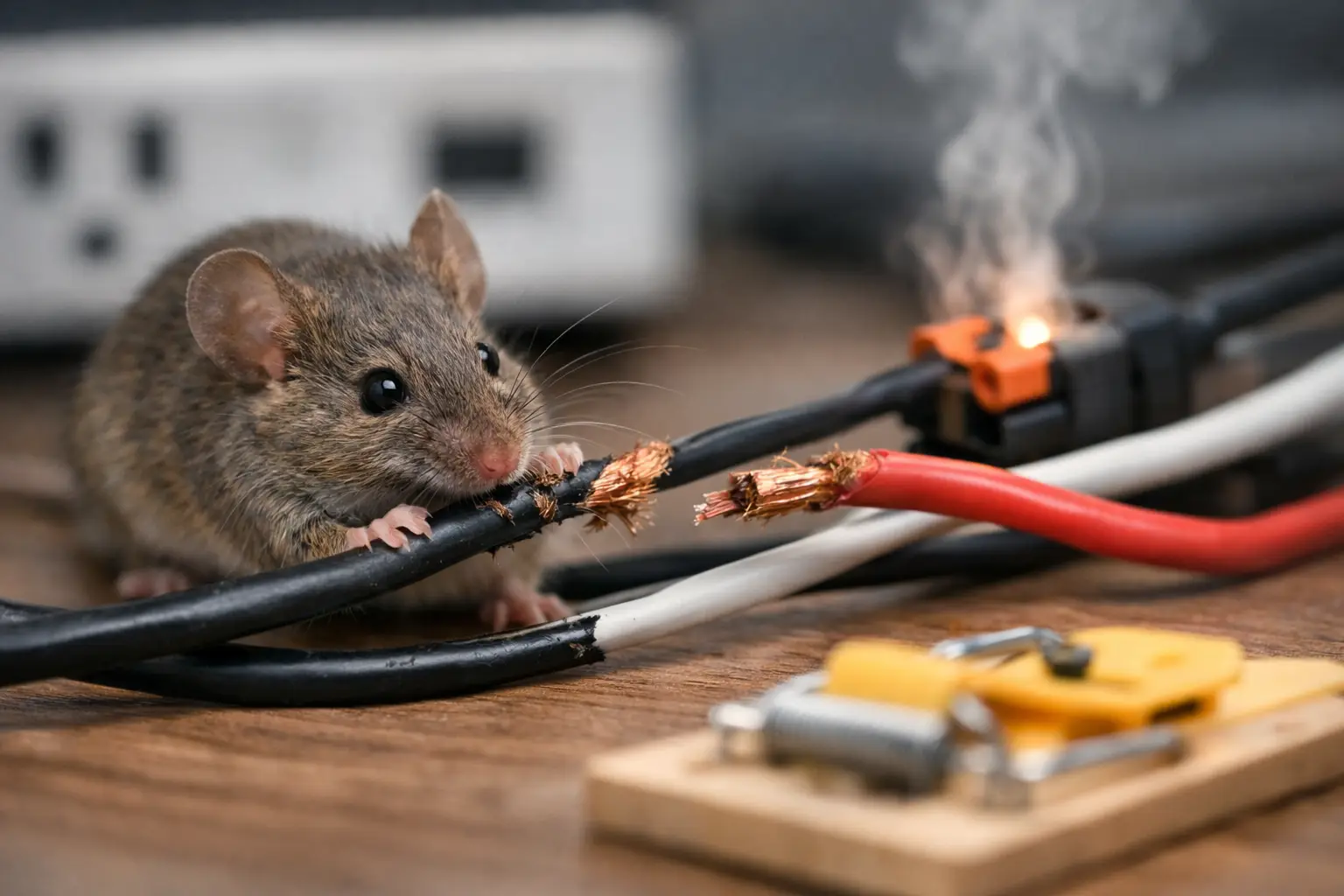
A light flicker, a dead outlet, or a warning light in the car may look like an electrical problem at first. Sometimes, it is a rodent problem. Why do mice chew wires? Their need to gnaw is constant, and the wiring hidden in walls, attics, basements, appliances, and vehicles can become collateral damage. Left unaddressed, a small mouse issue can create expensive repairs and a serious fire concern.
For homeowners and facility managers, the priority is not simply finding a chewed wire. It is finding out how mice entered, where they are active, and what conditions are allowing them to stay.
Why Do Mice Chew Wires in Homes and Buildings?
Mice have front teeth that grow continuously throughout their lives. Gnawing on hard materials helps wear those teeth down. They will chew wood, plastic, cardboard, insulation, and wire coverings when those materials are in their path. Wire insulation is not usually a preferred food source, and mice are not attracted to electricity itself. They are chewing because the material is accessible and because their normal behavior requires them to gnaw.
Wiring is especially vulnerable because it often runs through quiet, concealed areas that mice favor. A mouse can move behind cabinets, beneath insulation, through wall voids, above suspended ceilings, and around mechanical equipment with little disturbance. Once inside, it may follow utility lines as travel routes or chew nearby materials while building a nest.
The damage can be worse during fall and winter in Ohio, when mice move indoors seeking stable shelter, food, and warmth. However, rodent activity is possible year-round, particularly in commercial facilities with storage areas, kitchens, floor drains, loading docks, utility rooms, or constant sources of heat.
They May Be Building a Nest Nearby
Mice gather soft materials for nesting, including paper, fabric, fiberglass insulation, and shredded packaging. While they do not use copper wire as nesting material, they may chew through insulation or cable jackets while accessing a protected nesting space. Attics, crawl spaces, wall cavities, and the backs of appliances are common locations.
Wires Can Block Their Travel Paths
Mice tend to travel close to walls and along edges, pipes, conduits, and utility runs. If wiring crosses a route between food, water, and shelter, the mouse may investigate or gnaw at it. Tight openings also encourage chewing. A mouse can fit through a gap roughly the size of a dime, then enlarge vulnerable openings around pipes, cables, vents, and foundations.
Some Wire Coatings Are Easy to Damage
Wire insulation is designed to protect electrical conductors, not withstand repeated rodent gnawing. Plastic and rubber-like coatings can be easy for a mouse to damage, especially if the wire is exposed, loosely routed, or located within a cluttered storage area. The type of insulation may affect how readily it is chewed, but the larger issue is always an active rodent presence.
The Real Risks of Mice Chewing Electrical Wires
A damaged wire is more than an inconvenience. When insulation is removed, exposed conductors can short, arc, or overheat. Depending on the location and severity of damage, this can affect lighting, HVAC equipment, appliances, security systems, internet service, garage door openers, or other essential equipment.
Fire risk is the most serious concern. Electrical faults caused by damaged wiring can generate heat and sparks in areas that may contain dry insulation, dust, paper, or other combustible materials. Damage inside a wall or ceiling can remain hidden until a breaker trips, an odor develops, or equipment fails.
Vehicles are also at risk. Mice may nest under the hood, in cabin filters, or near engine compartments that retain warmth after driving. They can chew sensor wiring, ignition components, and other cables, creating problems that range from warning lights to no-start conditions. A vehicle stored in a garage, barn, warehouse, or rarely used lot deserves regular inspection.
For businesses, the impact can extend beyond repair costs. Damaged wiring near refrigeration, point-of-sale equipment, alarm systems, production equipment, or data connections can interrupt operations. A single rodent sighting in a food, healthcare, hospitality, or regulated environment can also raise sanitation and audit concerns.
Signs Mice May Be Damaging Wires
Do not wait for an electrical failure before taking action. Signs of rodent activity are often visible before chewed wires are discovered. Small, dark droppings near walls, under sinks, behind equipment, or in storage areas are a common indicator. You may also find shredded paper or insulation, greasy rub marks along baseboards, a stale urine odor, or scratching sounds in walls and ceilings.
Electrical clues deserve attention as well. Repeated breaker trips, intermittent power, flickering lights, unexplained equipment malfunctions, or a burning-plastic smell should be evaluated promptly. These symptoms do not automatically mean mice are responsible, but they should never be ignored.
If you find a chewed cable, avoid touching exposed conductors or attempting a temporary tape repair. Turn off power to the affected circuit if it is safe to do so, and contact a qualified electrician for electrical repairs. Pest control addresses the cause of the damage. Electrical professionals address the damaged system itself.
How to Prevent Mice From Reaching Your Wiring
Prevention works best when it combines exclusion, sanitation, habitat reduction, and professional control. Setting traps without closing entry points may reduce activity temporarily, but new mice can continue entering the structure.
Start outside. Inspect the foundation, siding, roofline, utility penetrations, window wells, door sweeps, and vents for gaps. Seal openings with durable materials appropriate to the location. Expanding foam by itself is rarely a dependable rodent barrier because mice can chew through it. Gaps around utility lines and damaged vent screens are frequent entry points that deserve careful attention.
Inside, reduce access to food and nesting materials. Store pantry goods, pet food, bird seed, and bulk ingredients in tightly sealed containers. Clean crumbs beneath stoves and refrigerators, repair leaking pipes, and avoid leaving cardboard, paper, textiles, or clutter piled in garages, basements, and storage rooms. These steps will not eliminate an established infestation on their own, but they make the environment less favorable.
Protecting vulnerable wiring may require practical adjustments. Keep stored items off the floor and away from walls when possible. Avoid placing loose cords where rodents can access them. In commercial settings, keep electrical and mechanical rooms orderly enough for inspection, and ensure wall penetrations around cables and conduit are properly sealed.
Why DIY Rodent Control Has Limits
A few mice can become a larger problem quickly. Mice are cautious, reproduce rapidly, and often remain hidden in areas homeowners cannot safely inspect. DIY traps can be useful for monitoring a small, isolated concern, but persistent droppings, recurring sounds, multiple sightings, or wire damage call for a more complete response.
Effective rodent control requires identifying entry points, locating activity zones, selecting the right control methods, and following up until activity is resolved. For businesses, it also requires consistent documentation, inspection routines, and prevention measures that hold up across the facility.
When to Call a Professional
Call for professional pest control when you see repeated evidence of mice, discover nesting material, find chewed wiring, or suspect activity in walls, attics, crawl spaces, or commercial equipment areas. The sooner the issue is addressed, the more likely you are to avoid escalating repair costs and potential electrical hazards.
Apex Pest Control develops customized rodent control plans that focus on active control and long-term prevention. Our trained technicians inspect the property, identify likely entry and harborage areas, and recommend practical steps to protect people, pets, property, and daily operations. For Ohio homeowners and commercial facilities, proven rodent control provides more than relief from an unpleasant sighting. It helps protect the systems your home or business depends on.
If mice have already reached your wiring, treat it as a signal to act promptly. Have damaged electrical components evaluated by an electrician, then address the rodent activity before the next chewed cable becomes a larger safety problem.