



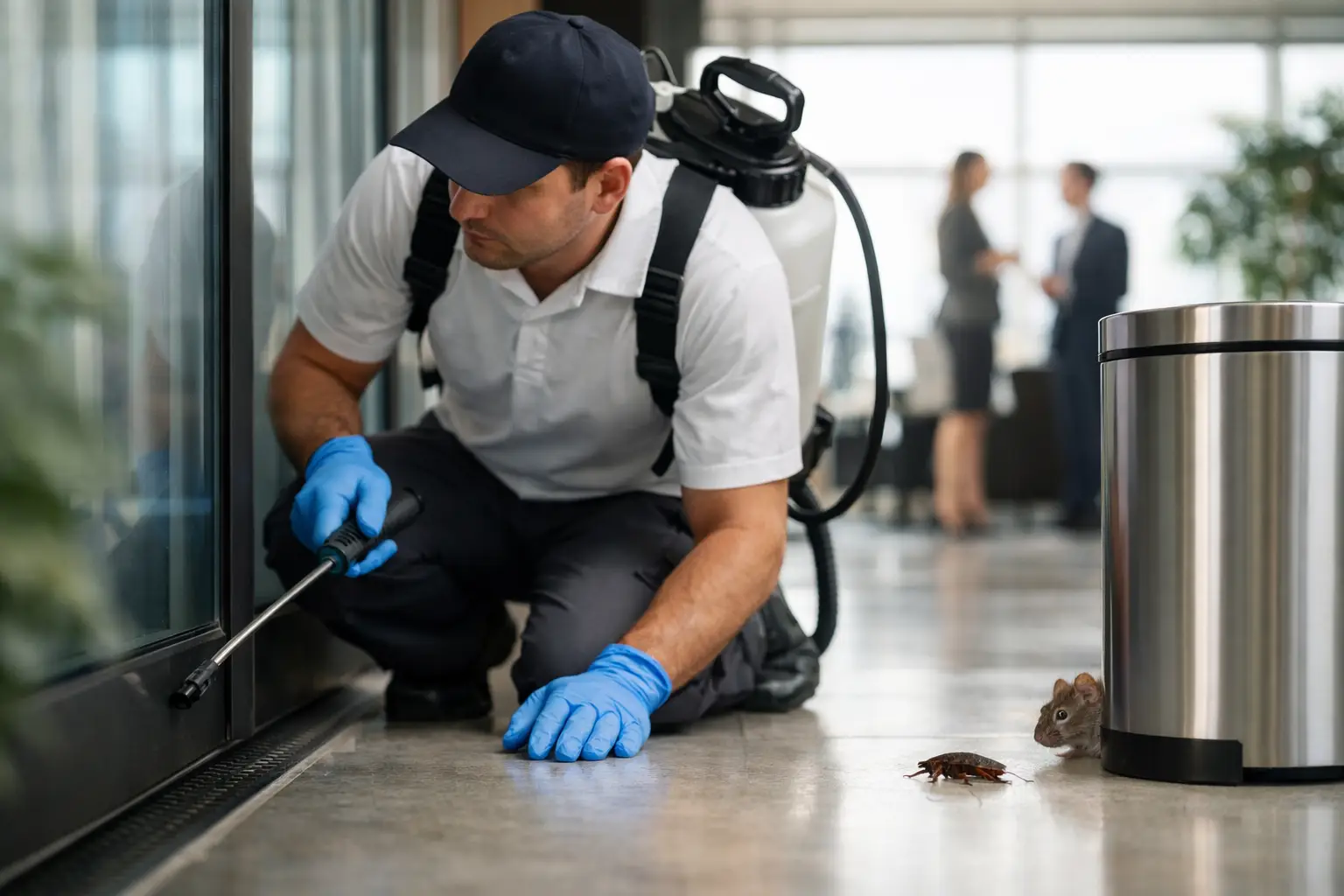
A single mouse sighting near a loading dock, fruit flies around a bar drain, or a few beetles in stored inventory can quickly become more than a maintenance issue. Pests can disrupt operations, damage products and property, affect employee confidence, and create serious concerns during customer visits or regulatory audits. The best commercial pest prevention practices focus on stopping the conditions that attract pests before an infestation has the chance to grow.
For facility managers, operations teams, and property managers, prevention is not a one-time service. It is a documented, site-specific process that combines sanitation, exclusion, inspection, monitoring, and fast corrective action. The right plan protects the facility without creating unnecessary disruption for staff, customers, or tenants.
Start With a Facility-Specific Pest Risk Assessment
Every commercial property has a different pest profile. A restaurant may face pressure from flies, cockroaches, rodents, and stored product pests. A warehouse may be more vulnerable to rodents, birds, and insects entering through receiving areas. Office buildings often contend with ants, occasional invaders, and pest activity moving between tenant spaces. Healthcare, food processing, hospitality, and multifamily properties require especially disciplined prevention because the consequences of a pest issue can escalate quickly.
A professional assessment should identify where pests can enter, find food or water, harbor, and move through the building. Technicians should examine exterior doors, utility penetrations, rooflines, dumpsters, floor drains, break rooms, mechanical rooms, storage areas, false ceilings, and receiving docks. Pest activity is often easiest to detect at the edges of a facility, long before it becomes visible in occupied spaces.
This assessment should not produce a generic checklist alone. It should result in a plan based on your operating hours, building layout, sanitation routines, seasonal pest pressure, industry requirements, and tolerance for service interruptions. A distribution center that receives daily shipments needs a different approach than a medical office or a multi-tenant retail property.
Make Exclusion a Maintenance Priority
Pests do not need a large opening to enter a commercial building. Mice can use gaps around utility lines, damaged door sweeps, openings at loading docks, and poorly sealed wall penetrations. Insects may enter around doors, windows, vents, roof gaps, and exterior lighting fixtures. Once inside, they can travel through wall voids, utility chases, and suspended ceilings without being noticed.
Effective exclusion means closing those pathways before pest pressure turns into activity indoors. Keep exterior doors properly aligned, replace worn sweeps, seal gaps around pipes and conduits, repair damaged screens, and address broken masonry or siding. Pay close attention to receiving doors and dock levelers. These high-traffic areas are often necessary for operations, but they should not remain open longer than required.
Exclusion does involve trade-offs. A tightly sealed facility can improve pest prevention, but ventilation, fire safety, drainage, and accessibility must still be maintained. That is why repairs should be prioritized and coordinated with qualified building and maintenance teams rather than handled as quick, isolated fixes.
Remove Food, Water, and Harborage
Pest prevention succeeds when a facility becomes less rewarding for pests to occupy. Crumbs beneath equipment, open food containers in employee areas, leaking pipes, grease buildup, overflowing trash, and cluttered storage all create opportunities for insects and rodents.
Sanitation is not limited to janitorial schedules. It requires clear ownership across departments. Food service staff, warehouse teams, tenants, maintenance personnel, and cleaning crews all affect pest conditions. Break rooms should be cleaned daily, food should be kept in sealed containers, and trash should be removed on a dependable schedule. In food-handling environments, hard-to-reach areas beneath shelving, equipment, and coolers need regular attention because they can quietly support pest populations.
Water control matters just as much. Repair leaks promptly, clear floor drains as appropriate for the facility, prevent standing water near dumpsters, and inspect condensate lines and mechanical rooms. Cockroaches, flies, and rodents are drawn to reliable moisture sources, particularly when outdoor conditions become dry or cold.
Storage practices deserve the same discipline. Keep goods elevated off the floor and positioned with adequate clearance from walls for inspection and cleaning. Rotate inventory, inspect incoming materials, and remove cardboard or unused equipment that can provide harborage. For warehouses and manufacturing sites, this is essential to preventing stored product pests from becoming an inventory problem.
Use Monitoring to Find Activity Early
The strongest commercial pest programs do not wait for employees or customers to report a problem. Monitoring devices help identify pest pressure early, reveal trends, and show whether corrective actions are working. Depending on the site, monitoring may include rodent stations, mechanical traps, insect monitors, fly light traps, pheromone traps, and targeted inspection points.
Placement matters. Devices should be positioned based on pest biology and facility risk, not simply distributed evenly throughout a building. Rodent monitoring is often most effective along walls, near exterior entry points, and around docks. Fly management should focus on likely breeding areas and points where flying insects enter. Stored product pest monitoring belongs near susceptible inventory, not in unrelated offices.
Monitoring data should lead to action. Repeated catches in one area may point to a gap beneath a door, a sanitation concern, a water source, or an issue with incoming shipments. Treating the symptom without correcting the contributing condition can create a cycle of recurring activity.
Build Documentation Into the Program
For many businesses, pest prevention is also a compliance responsibility. Food facilities, healthcare environments, schools, hospitality properties, and multi-location operations may need clear records for internal reviews, third-party audits, tenant communication, or regulatory inspections.
A dependable program includes service reports, device maps, inspection findings, pest activity trends, treatment records, corrective-action recommendations, and documentation of follow-up work. These records should be understandable enough for facility leadership to use, not filed away until an auditor requests them.
Documentation also makes accountability easier. If a technician notes an exterior gap, a leaking pipe, or repeated sanitation concerns, the facility should have a defined process for assigning and closing that action item. Pest management works best when the provider and the customer share information quickly and consistently.
Choose Targeted Treatment, Not Automatic Over-Treatment
Preventive service does not mean applying products everywhere on every visit. A responsible commercial pest management plan uses integrated pest management principles: inspect first, identify the pest and conditions, correct contributing issues, monitor results, and use targeted treatment when it is needed.
This approach supports safety for employees, customers, pets where applicable, and the environment. It can also reduce disruption in sensitive settings. For example, an office with occasional ant activity may need exterior perimeter work and a focused interior treatment, while a persistent cockroach issue in a commercial kitchen may require more intensive sanitation coordination, crack-and-crevice treatment, and frequent follow-up.
The right level of treatment depends on the pest, the severity of activity, the industry, and the property’s risk tolerance. Fast, decisive action is necessary when there is an active threat, but long-term control still depends on addressing the source.
Train Employees to Report, Not Guess
Employees are often the first people to notice pest evidence. They may see droppings, gnaw marks, damaged packaging, insect sightings, nesting material, bird activity, or unusual odors. A simple reporting process helps the facility respond before a minor issue becomes a widespread infestation.
Staff do not need to identify every pest correctly. They should know whom to notify, where to record the sighting, and why prompt reporting matters. Encourage employees to report concerns without blame. A pest sighting is useful information, not a failure, when it triggers a fast inspection and correction.
Property managers should also establish communication expectations for tenants and vendors. Contractors can accidentally leave doors open, create new wall penetrations, or introduce pests through deliveries and materials. Clear procedures reduce these avoidable risks.
Work With a Commercial Partner That Can Scale
Commercial pest prevention requires more than occasional treatment. Your provider should understand your facility, respond when conditions change, communicate clearly, and provide documentation that supports operational and compliance needs. For organizations with multiple locations, consistent reporting and account oversight become even more valuable.
Apex Pest Control develops customized commercial programs built around proven prevention, targeted treatment, and practical corrective actions. From Ohio facilities to multi-state commercial accounts, experienced technicians can help protect your property, reputation, and peace of mind. The most effective time to strengthen prevention is before pests have a reason to settle in.