



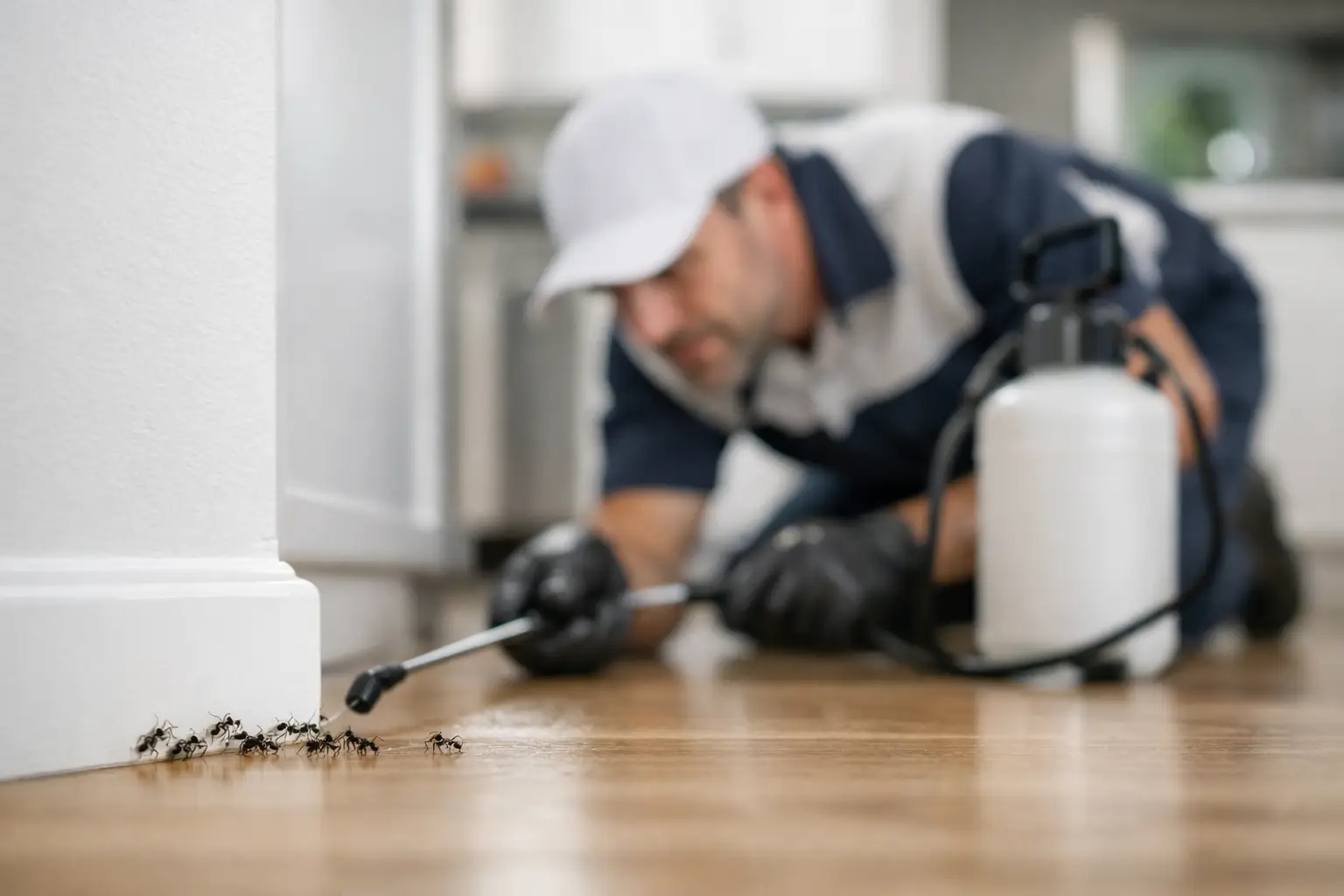
You usually notice ants after they have already settled in. A line along the baseboard, a cluster around the sink, a trail reappearing a day after you wiped it out – those are signs you may need an ant exterminator for home protection, not another short-term fix. The real issue is rarely the ants you can see. It is the colony behind them, the food source attracting them, and the access points allowing them to return.
For homeowners, that distinction matters. Sprays and store-bought traps can reduce activity for a few days, but many ant problems keep cycling because the treatment never reaches the nest or does not match the species involved. Effective ant control starts with the right diagnosis, then moves into targeted treatment and prevention that make the home less inviting over time.
When an ant exterminator for home use makes sense
Not every ant sighting requires professional service. A few scouts near a door after heavy rain may be resolved by cleaning up food residue and sealing a gap. But if you are seeing consistent trails, ants in multiple rooms, activity around moisture sources, or repeat infestations every season, the problem has likely moved beyond basic do-it-yourself control.
This is especially true when ants show up in kitchens, bathrooms, basements, or wall voids. Those locations often point to established nesting nearby or conditions inside the home that support continued activity. Carpenter ants deserve even more attention because they can tunnel through damp or damaged wood. They do not eat wood like termites, but they can still create costly structural issues if the colony is left alone.
The value of a professional service is not just stronger products. It is the process. An experienced technician looks at where ants are foraging, what species is present, how they are entering, and whether moisture, landscaping, or construction details are contributing to the infestation. That is how lasting control starts.
Why DIY ant control often falls short
Most homeowners begin with the obvious solution – kill the ants they see. That feels logical, but it often misses how ant colonies function. Worker ants are only one part of the population. If the queen and developing brood remain protected, the colony can keep sending out more workers.
There is also the problem of product mismatch. Some ants respond well to baiting. Others avoid certain formulations or shift food preferences depending on the season. In one case, a sweet bait may work well. In another, a protein-based bait or a non-repellent treatment strategy may be more effective. Using the wrong product can scatter the colony, reduce bait acceptance, or create the appearance of success without solving the infestation.
Over-the-counter sprays can make that worse. Repellent products often kill visible ants quickly, but they may drive the rest of the colony deeper into walls, under flooring, or outside the treatment area. That can turn a manageable problem into a recurring one.
There is also a safety side to consider. Homes with children and pets need carefully selected materials, precise placement, and clear instructions after treatment. Professional ant control is not just about elimination. It is also about protecting the people and animals who live there.
The most common ants found in and around homes
A reliable ant exterminator for home infestations starts by identifying the species. That step shapes the treatment plan.
Odorous house ants are among the most common household invaders. They are small, persistent, and often show up in kitchens and bathrooms. They can build large colonies and are known for splitting into multiple nesting sites, which makes casual treatment unreliable.
Pavement ants usually nest under concrete slabs, sidewalks, patios, and driveways, then move indoors in search of food. Homeowners often notice them around foundations, lower-level rooms, and entry points.
Carpenter ants are larger and more concerning because they nest in wood affected by moisture. If ants are appearing near windows, rooflines, plumbing leaks, or damaged trim, the home may need more than surface treatment. It may also need repair of the conditions that allowed nesting to begin.
Pharaoh ants and other small indoor species can be difficult to eliminate without a professional plan. Some species spread when disturbed, which is one reason random spraying can backfire.
What professional ant treatment should include
A proper ant service begins with inspection. That means more than a quick glance around the kitchen. It includes identifying activity patterns, likely entry points, conducive conditions, and the relationship between indoor sightings and exterior nesting areas.
After inspection, treatment should be customized. In some homes, exterior perimeter treatment and strategic baiting are enough. In others, wall void applications, foundation treatments, moisture recommendations, and sanitation adjustments are necessary to stop the problem from rebuilding.
Good service also accounts for the season. Ant pressure often rises in spring and summer, but indoor infestations can continue year-round, especially when colonies are established in wall voids, crawl spaces, or heated areas of the structure. A one-time service can be effective for isolated issues, but recurring infestations may call for ongoing pest management that keeps pressure down before trails return.
The best providers also explain what they are doing and why. Homeowners should know what was found, where treatment was applied, how long results may take, and what changes can help support control. That clarity builds confidence and helps prevent the same issue from repeating a few months later.
What homeowners can do between treatments
Professional treatment does the heavy lifting, but homeowner habits still matter. Ants are drawn by food, water, and shelter, so reducing those attractants supports better results.
Keeping counters clean, storing dry goods in sealed containers, and addressing crumbs and spills promptly can reduce food availability. Fixing leaks under sinks, improving ventilation in damp areas, and drying out basements or crawl spaces can make the home less attractive to moisture-loving species. Outside, trimming vegetation away from the structure and limiting debris near the foundation can reduce nesting pressure close to the house.
Sealing gaps around doors, utility penetrations, and windows also helps, though exclusion alone rarely solves an active infestation. Think of it as support, not the entire solution. If the colony is already established, the nest still has to be addressed.
How to choose the right ant exterminator for home service
Homeowners should look for more than availability and price. Ant control works best when the company has experience with species identification, customized treatment plans, and safe application methods for occupied homes.
Ask whether the provider offers both one-time treatment and ongoing prevention, because the right choice depends on the severity and history of the problem. Ask how they approach children, pets, and sensitive environments. Ask whether they inspect for moisture issues and other contributing conditions instead of just applying product and leaving.
A dependable company should be able to explain the treatment strategy in clear terms and set realistic expectations. Some infestations improve quickly. Others take follow-up service, especially when multiple nesting sites are involved. Honest guidance is a good sign. So is a company with a long operating history, trained technicians, and a clear focus on proven results rather than quick promises.
For homeowners in Ohio, local experience also matters. Ant behavior can shift with seasonal weather, rainfall, soil conditions, and housing style. A provider familiar with those patterns is more likely to spot the real source of the problem and build a plan that holds up.
When fast action matters most
If ants are increasing quickly, showing up around food prep areas daily, or appearing in areas tied to moisture damage, waiting usually does not help. Colonies grow. Trails strengthen. Repeat foraging makes infestation patterns harder to break.
Carpenter ant activity deserves prompt attention because it may point to wood decay or hidden moisture problems that need repair. Homes with infants, pets, or family members sensitive to pests and treatments also benefit from a professional approach that prioritizes both control and safety.
Apex Pest Control handles ant problems with targeted treatment, experienced technicians, and service plans built around the home rather than a one-size-fits-all approach. That is what homeowners need when basic products stop working and peace of mind matters as much as elimination.
The right time to call for help is usually earlier than most people think. When ants keep coming back, proven treatment is not an extra step. It is the step that finally puts the problem in the right hands.