



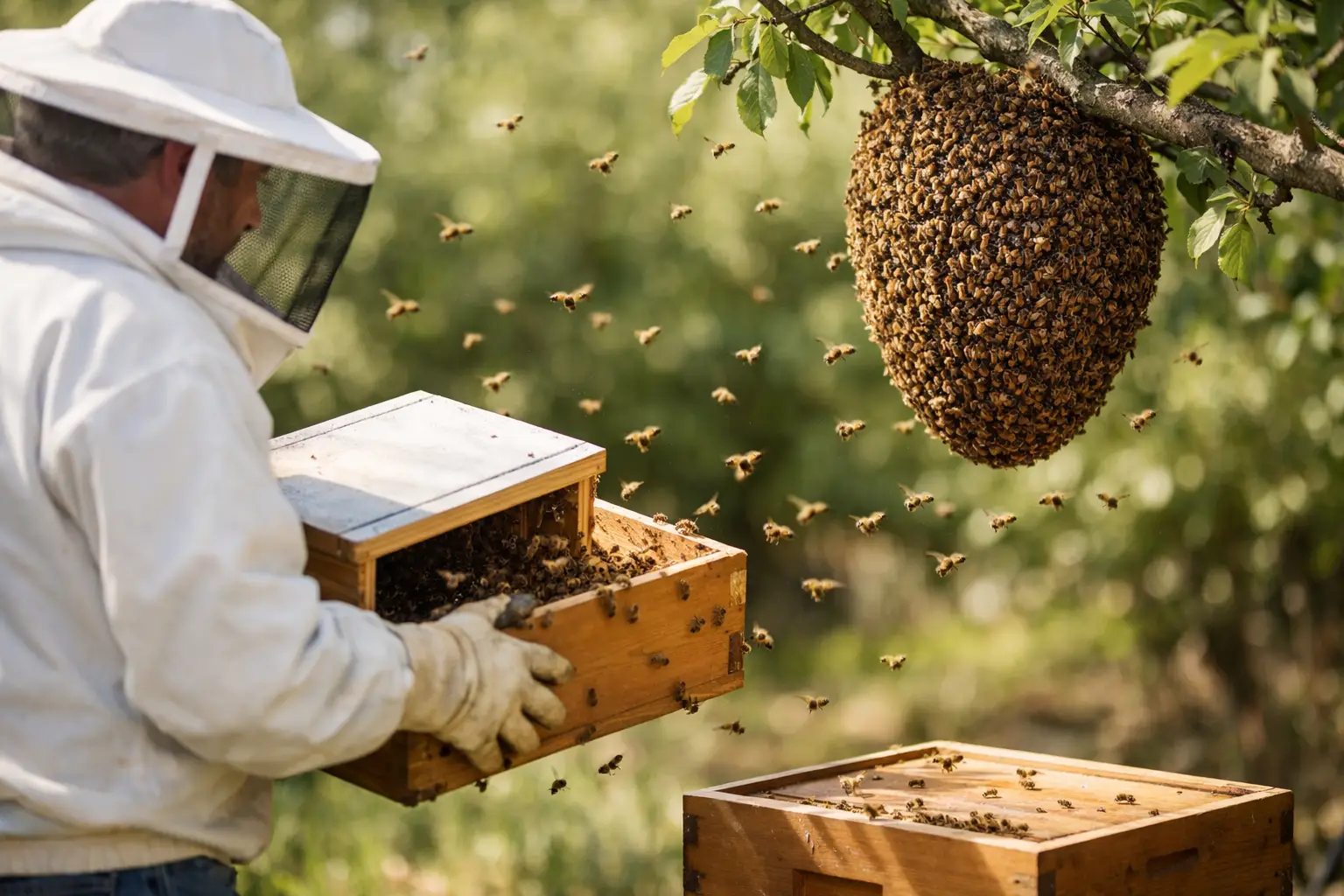
A cluster of bees on a porch rail or inside a wall gets attention fast. When people search for bee relocation near me, they are usually trying to solve two problems at once – protect their family or customers now, and avoid harming beneficial pollinators if relocation is possible.
That is the right instinct, but the next step matters. Not every flying insect is a honey bee, not every bee colony can be safely relocated, and not every situation allows for a simple same-day transfer. The safest outcome starts with a professional inspection and a clear identification of what is actually on your property.
When bee relocation near me is the right solution
Relocation is most often considered when the insects are honey bees and the colony is accessible enough to remove with the queen, brood, and comb intact. That usually means a swarm hanging from a tree branch, fence, shrub, or other exposed surface. In those cases, a trained professional may be able to collect and transfer the bees rather than destroy them.
The situation changes when bees have moved into a wall void, chimney, soffit, roofline, or other structural space. At that point, the issue is no longer just about moving insects from one place to another. It becomes a structural pest problem that may involve opening building materials, removing wax and honey, cleaning contaminated areas, and preventing reinfestation. Relocation may still be part of the solution, but it is not always simple, low-impact, or inexpensive.
There is also the question of species. Many property owners call all stinging insects bees, but yellow jackets, hornets, and wasps are commonly mistaken for them. Those pests are not handled the same way, and relocation is generally not the goal. Accurate identification is what determines the right treatment plan.
Why identification comes before removal
A dependable pest professional will not promise relocation before confirming what is present, where it is located, and how established the activity is. That protects you from delays, unnecessary cost, and unsafe handling.
Honey bees are usually fuzzy, more rounded, and less aggressive away from the hive. Wasps and hornets tend to look smoother, narrower, and more defensive around nests. Bumble bees are also bees, but they behave differently from honey bees and may nest in ground voids or sheltered spaces. Carpenter bees can drill into wood and create a separate kind of property concern.
Each of these calls for a different response. If a colony is inside a commercial facility, multifamily property, school, or busy home entry point, the urgency goes up because people are moving through the area constantly. In those cases, quick containment and a controlled service plan matter as much as the final removal method.
What professionals look for during an inspection
A proper inspection is about more than spotting insects. The technician needs to understand whether you are dealing with a temporary swarm, an active colony, or another stinging insect altogether.
They will typically assess flight patterns, entry points, the height and accessibility of the nest site, and whether the insects are entering structural voids. They also look for signs of long-term occupation such as staining, odor, honey seepage, or sound inside walls. On commercial properties, they may also evaluate customer traffic, employee exposure, loading docks, refuse areas, landscaped zones, and other factors that increase risk.
This is where experience matters. A visible cluster of bees may be only part of the problem. If bees are disappearing behind siding or brick, the colony could extend well beyond what you can see from the outside.
The trade-offs homeowners and property managers should know
People often hope relocation will be the obvious best answer every time. In reality, it depends on access, timing, species, and risk.
If the bees are in an exposed swarm, relocation may be straightforward. If they are deep inside a structure, preserving the colony while protecting the building may require more invasive work. If there are children, pets, employees, tenants, or customers nearby, safety may limit how long the situation can remain untreated while relocation options are arranged.
There is also the issue of residue. Even after bees are removed, honeycomb and wax left inside a wall can attract ants, roaches, rodents, and other pests. It can also melt, leak, and stain drywall or ceilings in warm weather. That is why a professional solution often includes cleanup and exclusion, not just insect removal.
For Ohio property owners, seasonality can affect the response as well. Spring and early summer often bring swarm calls, while established colonies discovered later in the season may involve larger populations and more complicated removal.
Bee relocation near me versus extermination
This is the question most people are really asking. Can the bees be saved, or does the infestation need to be eliminated?
The honest answer is that both outcomes exist, and the right one depends on conditions at the site. Responsible pest management is not about choosing the harshest option first. It is about choosing the safest and most effective option for the people on the property while taking the situation as it actually is.
Relocation is more likely when the insects are confirmed honey bees, the colony can be accessed without unreasonable damage, and the removal can be performed safely. Extermination may become necessary when the insects are not honey bees, when they present an immediate public safety risk, or when structural conditions prevent viable relocation.
That may not be the answer some property owners want to hear, but it is better than false reassurance. A professional should explain the reason behind the recommendation, not just quote a service and move on.
What you should do before the technician arrives
First, keep people away from the area. That means children, pets, employees, customers, and anyone doing yard work or exterior maintenance. Do not spray the insects with store-bought products, do not hit the nest, and do not try to seal the entry hole if bees are already inside a wall.
Sealing an entry point too early can force insects deeper into the structure or create new exit points indoors. Sprays can also make identification harder and increase agitation. If possible, note where the insects are entering and exiting, when activity is heaviest, and whether the cluster is exposed or hidden. A few clear details can help the service team prepare properly.
If the bees are near a doorway, loading area, playground, patio, or storefront, temporary restriction of that space is a smart move until the site is assessed.
Why professional bee work is not a DIY job
Ladders, rooflines, wall voids, and defensive stinging insects are a bad combination for improvised removal. Even calm-looking bees can react when a colony is disturbed. The risk increases if someone is allergic, if the nest is overhead, or if the colony is concealed in construction materials.
There is also the issue of incomplete removal. A DIY attempt may knock down visible insects while leaving the queen, brood, or comb behind. That often leads to continued activity, property damage, or secondary pest problems later.
Professional service is about control. It brings the right protective equipment, species identification, access planning, and follow-up steps to solve the problem fully rather than temporarily.
Choosing a bee relocation service you can trust
Search results can make every provider sound the same, but the quality of response varies. Look for a company that handles both identification and removal, understands structural pest risks, and can explain when relocation is realistic and when another treatment path is necessary.
That matters even more for commercial sites, where documentation, safety procedures, and reliable scheduling are part of the job. A restaurant, warehouse, apartment community, healthcare site, or office property cannot afford vague answers or partial work.
An established pest management company should be able to assess the situation quickly, outline the risk clearly, and recommend a plan that protects people, property, and ongoing operations. In Ohio, where seasonal pest pressure changes fast, responsive service is not a luxury. It is part of preventing a manageable issue from becoming a larger one.
If you are dealing with suspected bees on your home or business, the best next step is simple: get the insects identified, get the site evaluated, and act before the problem spreads into the structure or puts more people at risk. Peace of mind starts with the right diagnosis.