



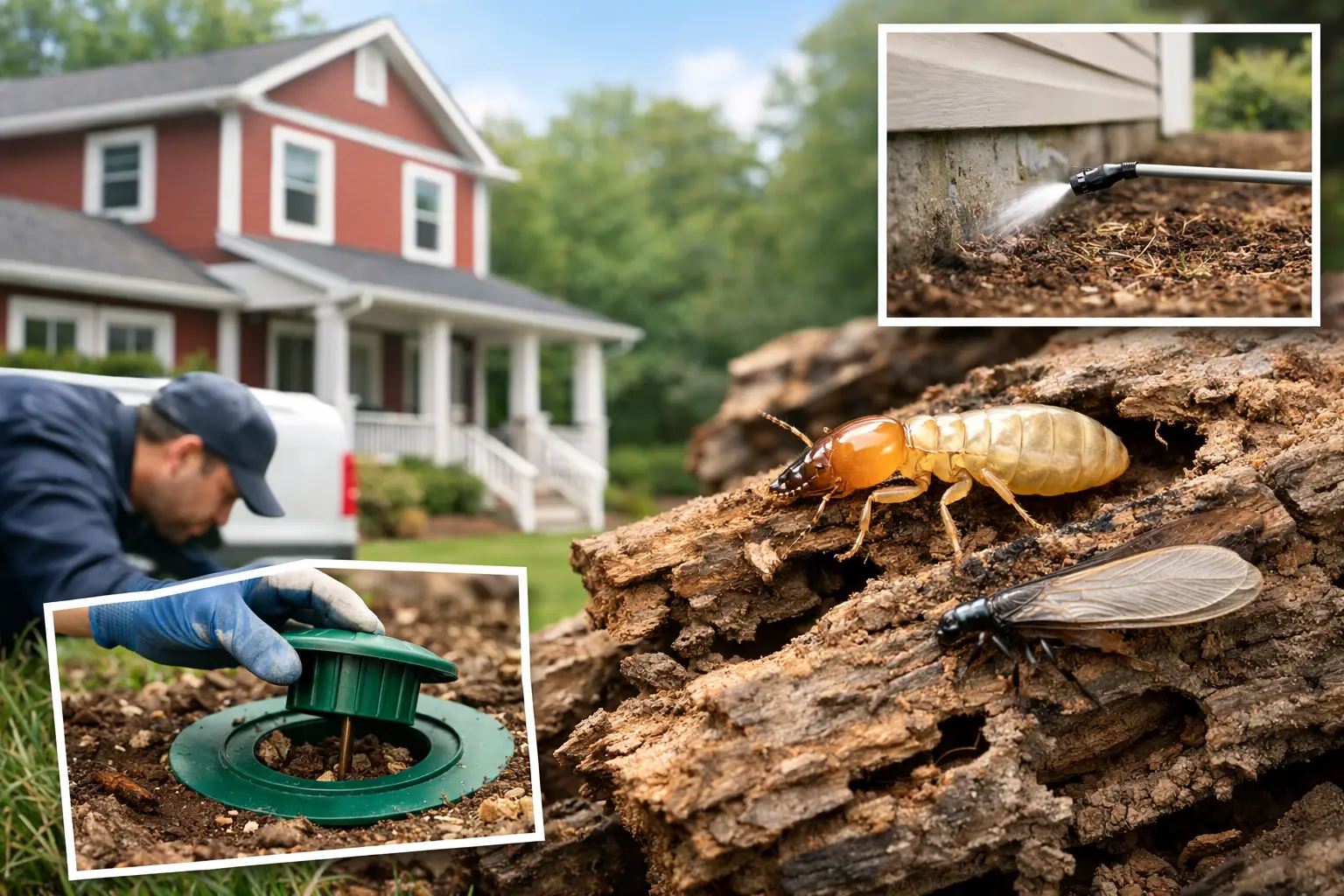
A termite problem rarely begins with obvious damage. These insects work inside walls, beneath floors, and around structural wood where homeowners may not see them until repairs are expensive. The best termite protection options combine early detection, proven treatment methods, moisture control, and ongoing professional prevention – not a single spray applied after damage has already started.
For Ohio homeowners, protection should account for the property itself. A home with a damp crawl space, aging wood siding, firewood stacked near the foundation, or previous termite activity needs a different plan than a newer, dry home with good drainage. The right approach starts with a detailed inspection and continues with measures that make the property less attractive and less accessible to termites.
Why termite prevention requires a layered plan
Subterranean termites are the primary concern for most properties in Ohio. They live in the soil and travel through hidden mud tubes to reach wood, often entering through tiny foundation cracks, utility openings, or areas where wood contacts the ground. Because they need moisture, problems with grading, gutters, plumbing leaks, and crawl spaces can increase risk.
No individual product can correct every risk factor. A soil treatment can stop termites from reaching the structure, but it cannot fix a chronic moisture issue. Monitoring stations can reveal activity, but they are not a substitute for an inspection of vulnerable areas. A dependable plan layers prevention and treatment based on the building’s construction, conditions around the foundation, and evidence of activity.
Best termite protection options to consider
Professional termite inspections
A professional inspection is the foundation of effective termite protection. It identifies active termites, old damage, moisture conditions, possible entry points, and construction features that may conceal activity. Inspectors look for mud tubes, soft or hollow wood, damaged trim, shed wings, soil-to-wood contact, and conditions that allow termites to move undetected.
Annual inspections are a practical choice for many homes, particularly properties with a history of termites, crawl spaces, older foundations, or nearby wooded areas. An inspection does not automatically mean treatment is needed. It provides the facts needed to choose one, avoid unnecessary applications, and catch a small issue before it becomes structural damage.
For commercial buildings, inspections should be scheduled around the facility’s risk profile. Multi-unit properties, food-related operations, warehouses, and facilities with complex utility penetrations benefit from documented inspections that support preventive maintenance and audit readiness.
Liquid soil treatments
A professionally applied liquid termiticide creates a treated zone in the soil around and, when needed, beneath a structure. This is one of the most established options for active subterranean termite infestations and for long-term protection of vulnerable properties. Depending on the product and treatment design, termites that move through treated soil may be controlled directly or transfer the material within their colony.
Liquid treatments are not simply sprayed around a home. Proper application may involve trenching along the foundation, treating around plumbing penetrations, drilling through concrete slabs or porches where required, and addressing known entry points. The goal is to establish continuous protection where termites are likely to travel.
This option is especially effective when an inspection confirms active activity or when a structure has conditions that make termite entry likely. Its trade-off is that quality depends heavily on application. Gaps in treatment, inaccessible areas, and unusual foundation designs all need to be evaluated by trained technicians.
Termite baiting systems
Bait stations are installed in the ground around a property and checked at scheduled intervals. When termites feed at a station, they can carry bait back to the colony, helping reduce or eliminate the source of the infestation rather than only blocking access to the building.
Baiting is often a strong fit for homeowners seeking ongoing monitoring and for properties where extensive liquid treatment may be less practical. It can also provide an early-warning system by detecting termite activity before termites reach the structure. However, bait systems require consistent inspection and maintenance. A station that is not monitored on schedule cannot provide the protection it was designed to deliver.
For many properties, baiting is best viewed as a managed prevention program rather than a one-time purchase. The service provider should document station locations, inspection dates, findings, and any corrective actions.
Wood treatments for targeted areas
When termites are found in accessible framing, sill plates, crawl spaces, or other exposed wood, direct wood treatment may be recommended as part of a broader plan. These applications can help protect specific areas, especially where activity is concentrated or where wood is highly vulnerable.
Wood treatments are useful, but they are usually not a complete answer for subterranean termites. Termites can enter from other points around the foundation, so treating one visible damaged area without addressing soil access can leave the structure exposed. A technician should explain whether targeted wood treatment is supplemental or whether it can serve as the primary method for the situation.
Moisture and exclusion corrections
Some of the best termite protection happens before any treatment is applied. Termites are drawn to damp conditions and can gain access through routine maintenance issues that are easy to overlook. Correcting these conditions helps reduce pressure on your home and supports the performance of professional treatment.
Homeowners should keep soil and mulch below siding, direct gutter runoff away from the foundation, repair plumbing leaks promptly, and maintain clearance between structural wood and the ground. Firewood, lumber, cardboard, and wood debris should be stored away from the home. Crawl spaces should be evaluated for standing water, poor ventilation, damaged vapor barriers, and excessive humidity.
These corrections do not guarantee termites will stay away. They do make the property less favorable for them and can expose warning signs earlier. They are a valuable part of any protection plan, whether a home uses liquid treatment, baiting, or both.
Choosing between baiting and liquid treatment
The best choice depends on what the inspection finds. Liquid treatment is often preferred when there is confirmed active termite activity, a need for immediate structural protection, or a clear pathway termites are using to enter. Baiting can be an excellent choice for ongoing monitoring, colony-focused control, and properties where long-term preventive service is the priority.
In some cases, a combined strategy provides the strongest result. A targeted liquid treatment can address an active threat while a monitored baiting system provides continued surveillance around the property. This approach is not necessary for every home, but it may be worthwhile for high-risk properties, homes with past infestations, or buildings with difficult construction features.
The right provider should be clear about what is being recommended and why. Ask whether activity was confirmed, what areas are at risk, how the treatment is applied, what follow-up is included, and what conditions you need to correct. A confident answer should be specific to your property, not a one-size-fits-all sales pitch.
What homeowners should avoid
DIY termite products may kill termites that are visible, but visible termites are rarely the entire problem. Subterranean colonies can be underground, behind walls, or beneath slabs. Surface sprays and home remedies can disturb activity without reaching the colony or blocking hidden access points.
It is also risky to assume old damage means termites are gone. Termite damage can remain long after a colony has been controlled, but only an inspection can determine whether activity is current. Likewise, do not wait for mud tubes or sagging floors to take action. By the time those signs are obvious, repair costs may already be significant.
Professional protection built around your property
Effective termite control is measured by more than a treatment day. It includes careful inspection, precise application, clear documentation, follow-up service, and practical guidance that protects the building over time. Families need confidence that treatments are selected and applied with care for people, pets, and the home environment. Property managers need dependable records, prompt response, and scalable service across their locations.
Apex Pest Control develops customized termite treatment and prevention programs designed around each property’s risks, construction, and level of activity. With professional evaluation and ongoing protection where needed, homeowners and facility managers can replace uncertainty with a clear plan for preventing costly termite damage.
If you have noticed mud tubes, damaged wood, swarming insects, or moisture around the foundation, schedule an inspection promptly. Early action protects more than wood – it protects the value, safety, and peace of mind tied to your property.