



TL;DR:
- Building perimeter pest prevention involves sealing entry points and applying targeted chemical treatments to keep ants and rodents outside. Regular, coordinated treatments combined with habitat reduction and inspections are essential for effective long-term control in Ohio. Failure to seal gaps or relying solely on repellents often results in persistent infestations despite ongoing efforts.
You keep your Oakwood property clean, yet ants still trail across the kitchen floor every spring and rodents find their way into the garage before the first frost. Sound familiar? Building perimeter pest prevention, which pest professionals formally call perimeter pest management or exterior Integrated Pest Management (IPM), is the reason some homes stay pest-free while neighboring properties battle repeated infestations. This guide gives you a clear, Ohio-specific plan to stop pests before they get inside, using strategies that work against the two most persistent offenders in Oakwood: ants and rodents.
Table of Contents
- Key Takeaways
- Building perimeter pest prevention: know your local threats
- Inspecting and sealing your building’s exterior
- Executing effective perimeter treatments
- Routine maintenance and long-term monitoring
- Common pitfalls that undermine prevention efforts
- My take on perimeter pest prevention
- Professional perimeter pest control services in Ohio
- FAQ
Key Takeaways
| Point | Details |
|---|---|
| Seal entry points first | Rodents and ants exploit gaps as small as a quarter-inch, so physical exclusion must happen before any chemical treatment. |
| Remove habitat near the foundation | Debris, standing water, and dense plantings within three feet of your home attract and shelter pests year-round. |
| Combine bait with barrier sprays | Repellents alone displace ant colonies without eliminating them; bait works with sprays for colony-wide control. |
| Schedule treatments seasonally | Ohio’s climate calls for six perimeter applications from early spring through late fall to maintain a reliable barrier. |
| Use a team-based IPM approach | Homeowners, maintenance staff, and pest professionals must coordinate inspections, repairs, and treatments to get lasting results. |
Building perimeter pest prevention: know your local threats
Before you can protect your perimeter, you need to understand exactly what you are up against in Oakwood. The older craftsman and colonial-style homes near Harman Park and throughout the Schantz Avenue corridor were built with stone foundations and wood framing that create dozens of natural entry points. Two pests exploit these vulnerabilities more than any other.
Ants in Oakwood are most commonly pavement ants and odorous house ants. Pavement ants nest under sidewalks, driveways, and foundation slabs and send foraging workers inside through the tiniest cracks in search of food. Odorous house ants follow moisture trails and are notorious for appearing in kitchens and bathrooms every spring as Ohio temperatures climb above 50°F.
Rodents are a late-summer and fall problem for most Oakwood properties. As temperatures drop, mice and Norway rats actively seek warmth. Rodents can enter through holes as small as a dime, which means most homes have dozens of potential entry points around pipes, vents, and the gap between the foundation and siding.
Ohio’s seasonal swings matter here. Pest pressure builds fast in March and April as ground temperatures rise, peaks in late summer, and spikes again in October when rodents begin migrating indoors. Knowing these cycles lets you treat proactively instead of reactively.
Common exterior entry points include:
- Cracks in poured concrete or block foundations, especially around older Oakwood homes
- Gaps around utility pipes, gas lines, and HVAC conduits
- Damaged or missing weep hole covers on brick facades
- Poorly sealed door sweeps and garage door weatherstripping
- Attic vents with deteriorated mesh screens
Inspecting and sealing your building’s exterior
EPA recommends regular exterior inspections, and for good reason. No chemical treatment holds up if pests have unrestricted physical access to your building. Think of exclusion as your foundation layer, everything else builds on top of it.
Here is a practical inspection sequence you can complete in under an hour:
- Walk the full perimeter of the building at ground level and look for any gap wider than a quarter-inch.
- Check where utilities enter the structure, including water lines, gas pipes, cable conduits, and dryer vents.
- Inspect door sweeps on all exterior doors, including the door between the garage and the living space.
- Look at window screens for tears and ensure frames sit flush against the sill.
- Examine the roofline where it meets the siding, particularly on older Oakwood homes with wood fascia boards.
- Check downspout connections and window wells for standing water or debris buildup.
For sealing, match your material to the gap size. Small cracks along the foundation respond well to paintable latex caulk. Larger gaps around pipes need a two-step approach. Steel wool or copper mesh combined with caulk is the standard for rodent exclusion because rodents chew through foam alone.
Pro Tip: After sealing pipe penetrations, paint over the repair with exterior latex paint. The color change makes future inspection fast because fresh gnaw marks through paint are easy to spot.
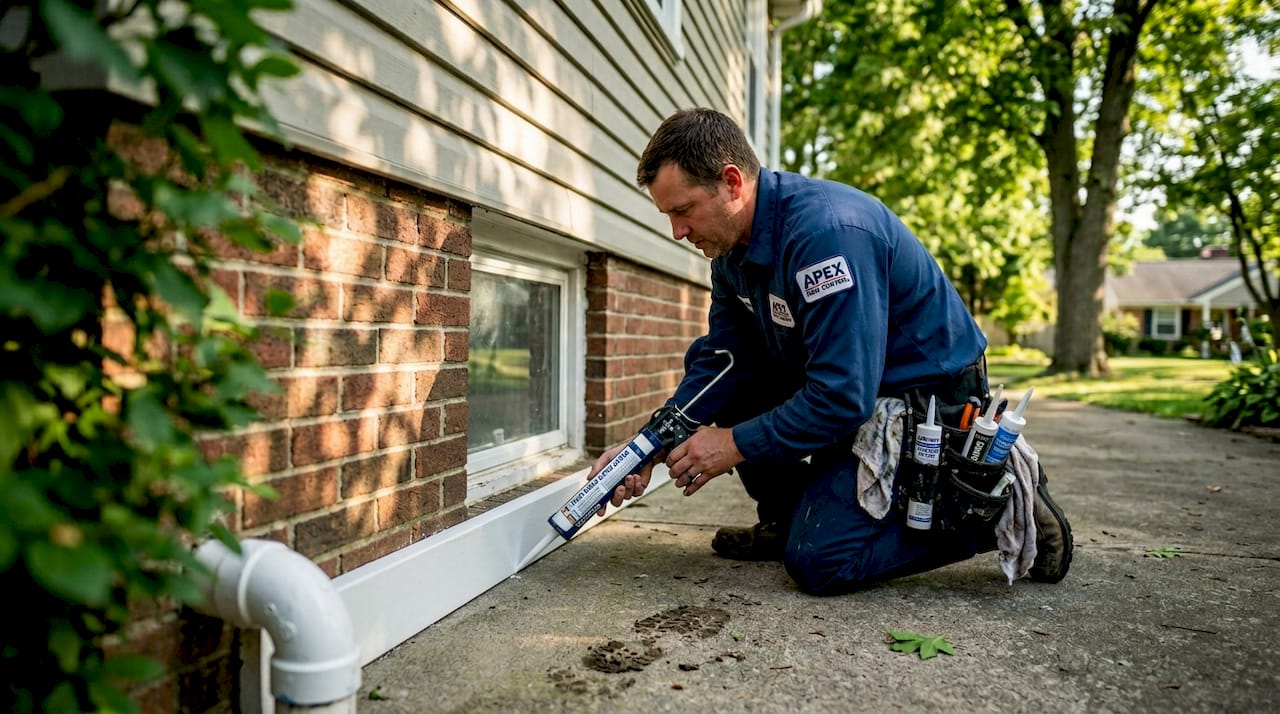
Habitat reduction is equally important. Tall grass and dense plantings near the foundation create shelter for both ants and rodents. Pull mulch back at least six inches from the foundation wall, store firewood at least 20 feet from the house, and clear leaf litter from window wells each fall. Mosquitoes can breed in bottle-cap-sized puddles, and the same moisture that attracts mosquitoes draws ants and other pests. Fix leaking hose bibs, clear clogged gutters, and regrade low spots near the foundation.
For a structured checklist approach to exterior maintenance, the seasonal pest control checklist from Apexpestcontrol is worth bookmarking before spring arrives.
Executing effective perimeter treatments
Physical exclusion blocks the obvious entry points. Perimeter treatment handles the pests that find the gaps you missed or that simply cross the foundation before entering. The professional term for this approach is a perimeter protection program, and the execution details make a significant difference in results.
The standard treatment zone covers two to three feet outward from the foundation horizontally and up to three feet vertically on the foundation wall itself. This coverage geometry targets the actual movement paths ants and rodents use, rather than treating randomly around the yard.
Here is how barrier sprays and bait compare as tools:
| Treatment type | Best for | Limitation | Residual window |
|---|---|---|---|
| Foundation barrier spray | Killing ants and insects on contact | Does not eliminate ant colonies | 30 to 90 days depending on rain and UV |
| Perimeter bait band | Colony elimination for ants | Slower acting | Up to 90 days in dry conditions |
| Rodent bait stations | Rodent population reduction | Requires tamper-resistant housing | Varies by activity level |
| Door and window spray | Targeted contact kill | Short residual on UV-exposed surfaces | 14 to 30 days |
Repellents alone displace ants but do not eliminate colonies. Workers carry bait back to the nest and feed the queen, which is what actually breaks the colony. This is why combining a botanical insecticide foundation spray with a granular ant bait band produces far better results than either product alone. Green-labeled products using plant-derived active ingredients can achieve up to 90 days of residual control and hold up well to Ohio’s summer heat and rain.
Safety during application matters, especially in Oakwood neighborhoods where children and pets use outdoor spaces. Keep treated areas dry for at least 30 minutes before allowing foot traffic. Store any unused product in its original container away from children and pets.
Pro Tip: Apply perimeter sprays on a calm, dry day when no rain is forecast for 24 hours. Applications before a rain event cut residual effectiveness by up to half and waste product.
For more on responsible exterior pest exclusion methods, Apexpestcontrol has detailed guidance that covers both green and conventional approaches.
Routine maintenance and long-term monitoring
A single perimeter treatment is not a season-long solution in Ohio. Heat, UV exposure, and rain degrade chemical barriers, and new entry points open as properties settle and weather. A schedule of six applications from early spring through late fall maintains a continuous protective barrier despite environmental degradation.
A practical maintenance schedule for Oakwood properties:
- March/April: First application as soil temps rise above 50°F; inspect exclusion work from the previous fall
- May/June: Second application to address increasing ant foraging activity
- July: Mid-season reapplication after summer rain events
- August: Fourth application; check rodent bait stations before fall migration begins
- September: Pre-fall rodent focus; reseal any new gaps found during inspection
- October/November: Final application before hard freeze; remove any accumulated debris from the perimeter
EPA emphasizes coordinated schedules between property managers, maintenance staff, and pest professionals. For a multi-unit property or rental home in Oakwood, this means scheduling perimeter treatments to align with routine maintenance visits, not as separate events. A pest technician who finds a fresh gap around a water heater vent can flag it immediately for the maintenance team instead of simply treating around it.
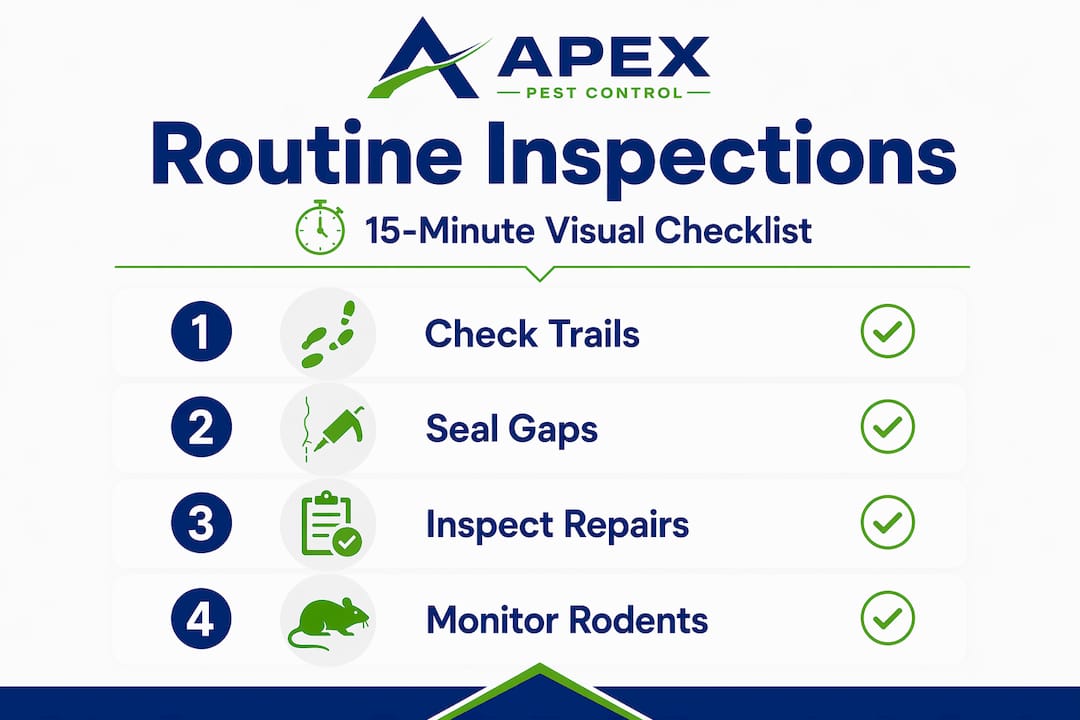
Visual inspections between treatments take less than 15 minutes and catch problems early. Look for new ant trails, fresh rodent droppings near the foundation, and any signs that soil has shifted away from sealed gaps. The exterior pest maintenance guide from Apexpestcontrol covers what to look for between professional visits.
Common pitfalls that undermine prevention efforts
Even well-planned perimeter programs fail. Recognizing the early warning signs saves you from waiting until an infestation is fully established inside the home.
The most common failure modes:
- Skipping the exclusion step: Treating without sealing entry points is like mopping a floor with the faucet still running. Chemical barriers slow pests but physical gaps remain accessible.
- Moisture left unaddressed: A slow leak under a downspout or a consistently wet window well keeps ants attracted to the perimeter regardless of treatments applied nearby.
- Treating only once per year: Ohio’s weather degrades barriers fast. A spring-only treatment rarely holds through September.
- Using repellents without bait: Displacing ant colonies moves the problem to a neighbor’s property and guarantees reinfestation when the repellent wears off.
When you notice fresh ant activity or rodent signs despite treatments, do not simply reapply the same product. Inspect for new entry points first, check for moisture sources, and consider whether weather events recently compromised the barrier. Mechanical and habitat controls form the baseline, and chemical applications work best as a reinforcing layer on top of solid exclusion.
When activity persists after two consecutive treatment cycles, that is the signal to bring in a licensed pest professional for a full diagnostic inspection. Self-treating a developing rodent problem typically delays effective control and allows the population to grow.
Connecting with licensed professionals who know Ohio’s seasonal patterns gives you a significant advantage over trial-and-error approaches.
My take on perimeter pest prevention
I’ve worked with Ohio homeowners long enough to know that the ones who get the best results are not necessarily the ones spending the most money on treatments. They are the ones who do the boring, unglamorous work first: sealing gaps, pulling mulch back from the foundation, and fixing that slow drip under the outdoor spigot.
What I’ve seen fail repeatedly is the “spray and hope” approach. A homeowner notices ants in May, buys a store-brand perimeter spray, and applies it along the foundation. It works for three weeks. Then the ants are back. The colony was never touched. The spray displaced foragers but the nest under the driveway slab is thriving. This is the most common and most preventable mistake in integrated pest management.
The other thing I tell property managers specifically: pest prevention is a team task. The maintenance person who notices a fresh gap around a newly installed cable line is as important to your pest program as the pest technician. Building that communication into your routine is what separates properties that stay clean from those that cycle through infestations every season.
Pest cycles in Ohio are predictable. That predictability is your advantage. Use it.
— Dushan
Professional perimeter pest control services in Ohio
If your perimeter treatments are not holding up through Ohio’s seasons, or if you’re dealing with an active rodent situation heading into fall, Apexpestcontrol has been solving exactly these problems for Ohio homeowners and property managers since 1969. The team provides comprehensive exterior inspections, targeted rodent extermination services, and custom perimeter treatment programs built around Ohio’s seasonal pest cycles. Whether you manage a single-family home in Oakwood or a multi-unit property, Apexpestcontrol offers residential pest control solutions that combine exclusion, treatment, and ongoing monitoring. Call 1-800-684-2284 for a free quote and a first inspection.
FAQ
What is building perimeter pest prevention?
Building perimeter pest prevention is the practice of creating physical and chemical barriers along a structure’s exterior to stop pests like ants and rodents from entering. It combines exclusion, habitat reduction, and targeted treatments under an IPM framework.
How often should I treat my home’s perimeter in Ohio?
Most Ohio properties benefit from six perimeter treatments scheduled from early spring through late fall, since heat, UV exposure, and rain degrade chemical barriers every four to six weeks.
What materials seal rodent entry points most effectively?
Steel wool or knitted copper mesh packed into gaps, then secured with caulk or foam, is the most effective option. Rodents chew through foam alone, so the metal mesh layer is non-negotiable for any opening larger than a quarter-inch.
Why do ants keep coming back after I spray?
Repellent sprays move foraging ants away from the treated zone but do not reach the colony or queen. Repellents displace ants without colony elimination, so combining bait with barrier spray is the approach that actually breaks the infestation cycle.
When should I call a professional for perimeter pest issues?
Call a licensed pest professional if pest activity continues after two consecutive treatment cycles, if you find rodent droppings inside the building, or if you cannot identify and seal the entry points responsible for ongoing intrusions.