



TL;DR:
- Modern pest management in Mentor, OH emphasizes monitoring, targeted treatments, and integrated pest management practices.
- Proper pest identification and early detection are essential to effective, safe, and cost-efficient pest control.
- When infestations persist or involve invasive species, professional licensed services using local knowledge are recommended.
Most people assume pest control means a technician shows up, sprays everything in sight, and leaves. That assumption is costing Ohio homeowners and business managers real money and real risk. Modern pest management in Mentor, OH looks nothing like that old model. Today’s best practices rely on monitoring, targeted treatments, and a science-backed framework called integrated pest management (IPM). This guide walks you through the pests most common in Mentor, the methods that actually work, and how to know when it’s time to bring in a licensed professional.
Table of Contents
- Understanding common pest problems in Mentor, OH
- Modern pest control methods: Ohio’s integrated approach
- Safe and effective pest management strategies
- When to call a professional pest control service in Mentor, OH
- Our take: Why local knowledge matters most for pest control in Ohio
- How Apex Pest Control can help you in Mentor, OH
- Frequently asked questions
Key Takeaways
| Point | Details |
|---|---|
| Know your pests | Identifying the exact pest is the crucial first step for successful and safe treatment. |
| Use targeted solutions | Only treat infested areas and follow integrated pest management for minimal risk. |
| Trust local experts | Local professionals understand Mentor’s unique pest challenges and offer specialized, effective support. |
| Prevent and monitor | Consistent inspection and early response help avoid major pest issues before they start. |
Understanding common pest problems in Mentor, OH
Mentor sits in Lake County, where Lake Erie’s proximity creates a humid, temperate climate that pests love. Warm, wet summers and cold winters push rodents indoors and give insects like ants and stinging insects a long active season. That climate, combined with Mentor’s mix of residential neighborhoods and commercial corridors, creates a wide range of pest pressures that shift by season and property type.
The common pests in Ohio that show up most often in Mentor include:
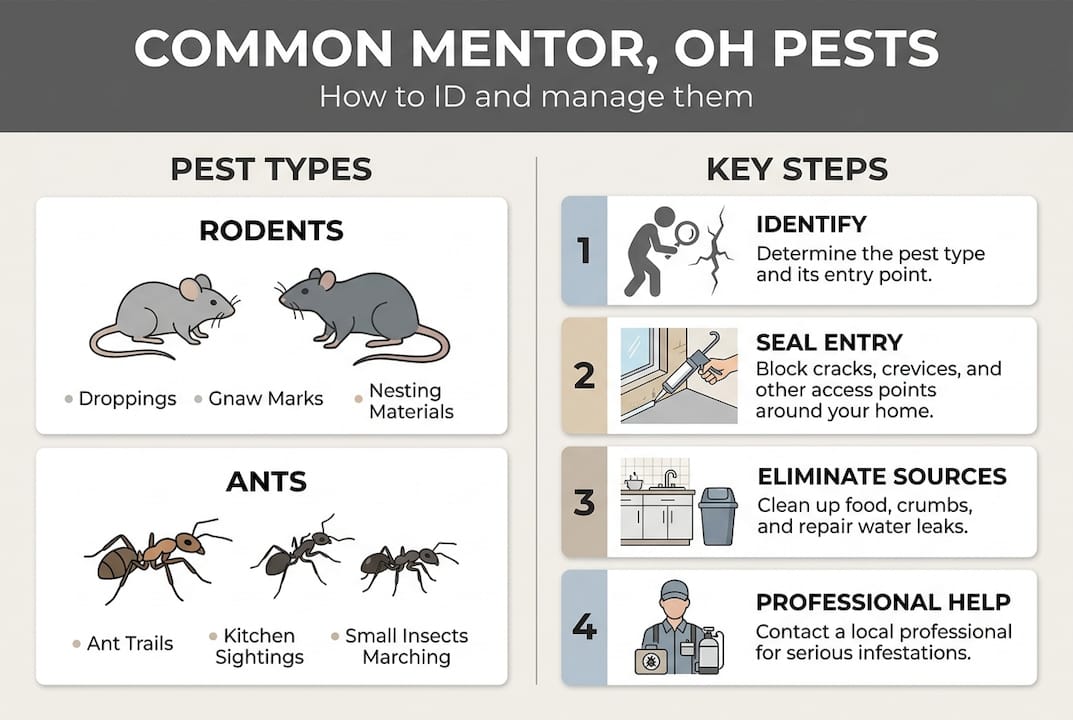
- Rodents (mice and rats): Enter homes through gaps as small as a dime, especially in fall as temperatures drop.
- Ants (pavement ants, carpenter ants): Thrive in warm months, exploiting cracks in foundations and wood structures.
- Bed bugs: Spread through travel, secondhand furniture, and multi-unit buildings. A serious concern for hotels, apartments, and rental properties.
- Stinging insects (yellow jackets, wasps, hornets): Build nests in eaves, attics, and landscaping from spring through early fall.
- Cockroaches: More common in commercial kitchens and multi-family housing, but residential cases are rising.
The pest picture also differs between residential and commercial settings. Homeowners deal more with seasonal rodent entry and ant trails. Businesses, especially restaurants and warehouses, face ongoing pressure from cockroaches, stored-product pests, and rodents drawn to food sources and loading docks.
| Pest | Peak season | Common entry point | Risk level |
|---|---|---|---|
| Mice and rats | Fall and winter | Foundation gaps, utility lines | High |
| Ants | Spring and summer | Cracks, door frames | Moderate |
| Bed bugs | Year-round | Travel, used items | High |
| Stinging insects | Summer and fall | Eaves, ground nests | Moderate to high |
| Cockroaches | Year-round | Drains, deliveries | High (commercial) |
Correct identification is the foundation of smart management. Treating for the wrong pest wastes money and can make the real problem worse. Ohio IPM best practices confirm that integrated pest management and vigilance are essential for reporting invasives and stopping new threats before they establish. Understanding why pest control matters goes beyond comfort. Unmanaged infestations damage structures, contaminate food, and create health risks.
Modern pest control methods: Ohio’s integrated approach
Understanding which pests are common sets the stage for choosing the right approach. IPM is not a single product or treatment. It is a decision-making process that combines monitoring, prevention, and targeted action. The goal is to manage pest populations at acceptable levels while minimizing risks to people, pets, and the environment.
Here is how IPM works in practice for Ohio homes and businesses:
- Monitor the property regularly to detect pests early.
- Identify the pest accurately before taking any action.
- Set thresholds: Decide at what point the pest population actually requires treatment.
- Choose the least-risk option first: Sealing entry points, removing food sources, or using traps.
- Apply targeted treatments only when monitoring confirms they are necessary.
This is a sharp contrast to the old model of routine, calendar-based spraying. Ohio IPM best practices are clear: monitor before treating, avoid prophylactic spraying, and target only affected areas.
| Category | Traditional approach | IPM approach |
|---|---|---|
| Application timing | Scheduled, routine | Based on monitoring data |
| Chemical use | Broad and preventive | Targeted and minimal |
| Safety profile | Higher exposure risk | Lower exposure risk |
| Long-term results | Pest resistance builds | Sustainable population control |
| Cost over time | Higher (repeat treatments) | Lower (prevention-focused) |
“The smartest pest control starts before you ever open a product. Monitoring tells you what you’re dealing with, where it is, and how bad it really is. Without that step, you’re guessing.”
Pro Tip: If you see one or two ants, don’t spray the whole kitchen. Track where they’re coming from, seal the entry point, and remove any food source. That single step often ends the problem without any chemical treatment.
For Ohio properties, IPM in Ohio homes is increasingly the standard recommended by extension specialists. It also pairs well with eco-friendly pest solutions that protect pollinators and reduce chemical runoff into Lake Erie’s watershed.
Safe and effective pest management strategies
With the basics of IPM in mind, let’s dive into practical, safe strategies every property owner can use. These steps follow the OSU Extension’s recommended process and are designed to protect your household or staff while solving the actual pest problem.
Step-by-step safe pest management:
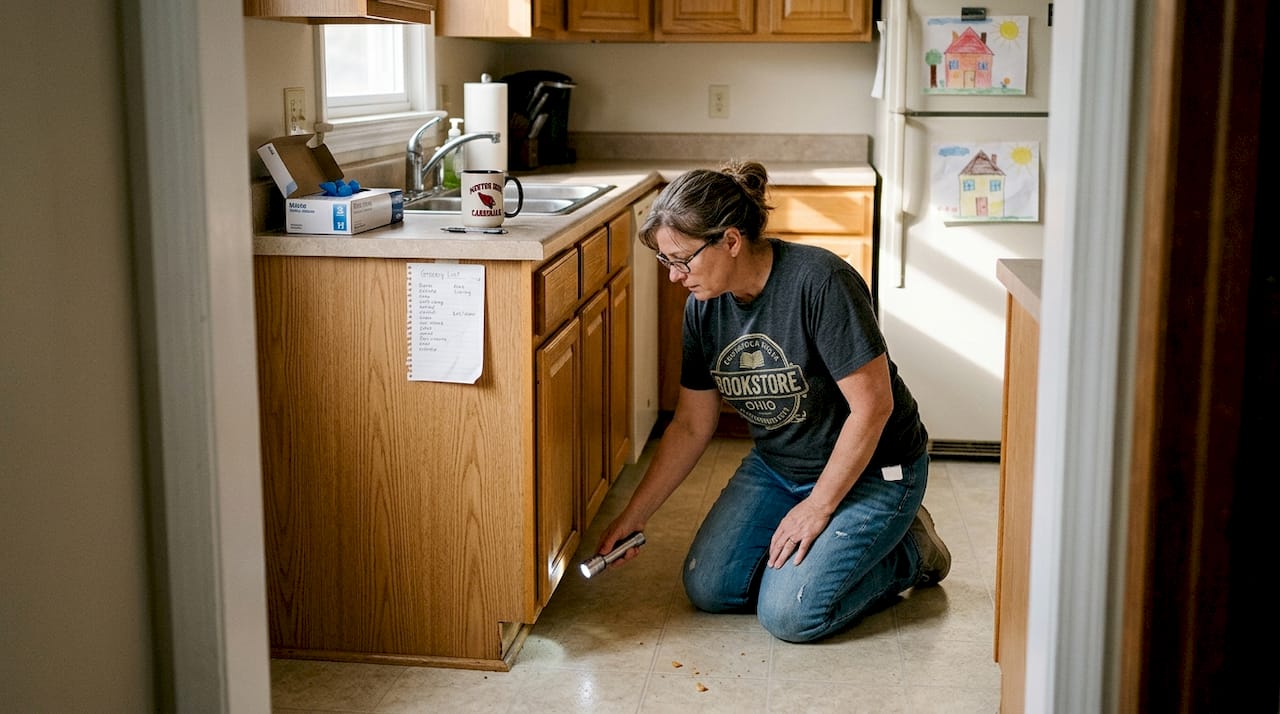
- Monitor: Walk the property weekly. Look for droppings, damage, nesting material, or live pests. Use sticky traps in key areas to track activity levels.
- Identify accurately: Use a field guide, an app, or call a professional. Misidentification is one of the most common and costly mistakes.
- Take targeted action: Only treat infested areas and integrate cultural and biological controls before reaching for a chemical product.
- Reassess: After treatment, monitor again. Did the population decline? Is there a new entry point? Adjust your approach based on what the monitoring data shows.
Pro Tip: Ohio is seeing a rise in invasive pest species. If you spot something unfamiliar, photograph it and report it to your local OSU Extension office. Early reporting protects your neighbors and your community.
Mistakes to avoid:
- Over-treating with broad-spectrum pesticides when a targeted product would work
- Misidentifying pests and buying the wrong product
- Skipping the monitoring step and treating based on assumption
- Ignoring entry points and food sources, which guarantees the pest returns
- Using outdoor pesticides indoors, which creates unnecessary exposure risk
Biological controls, like introducing beneficial nematodes for grub problems or using pheromone traps for specific insects, can reduce or eliminate the need for chemical intervention entirely. Cultural controls, like storing food in sealed containers, fixing leaky pipes, and trimming vegetation away from the building, are often the most effective long-term tools available. The IPM steps for Ohio and strategies to reduce pest risks in your home are worth reviewing before you reach for any product.
When to call a professional pest control service in Mentor, OH
Sometimes, even well-informed homeowners and managers need professional support. Knowing when to make that call saves time, money, and a lot of frustration.
Call a licensed professional when:
- The infestation keeps coming back despite your best efforts
- You suspect bed bugs, since DIY treatments rarely eliminate them fully
- You’ve found a rodent entry point but can’t locate or seal it
- Stinging insect nests are in walls, attics, or near high-traffic areas
- You suspect an invasive species, since invasives and hard-to-control pests require expert assistance and reporting
- The infestation is in a commercial kitchen, food storage area, or healthcare setting where compliance matters
Licensed pest control professionals in Ohio must meet state training and certification requirements. That means they understand Ohio’s specific pest species, seasonal patterns, and legal restrictions on product use. A local Mentor professional also knows which invasive species are currently active in Lake County and how to report them correctly.
Pro Tip: Don’t wait until a small problem becomes a large one. A single mouse in October can become a colony of 20 by January. Early intervention is always cheaper and safer.
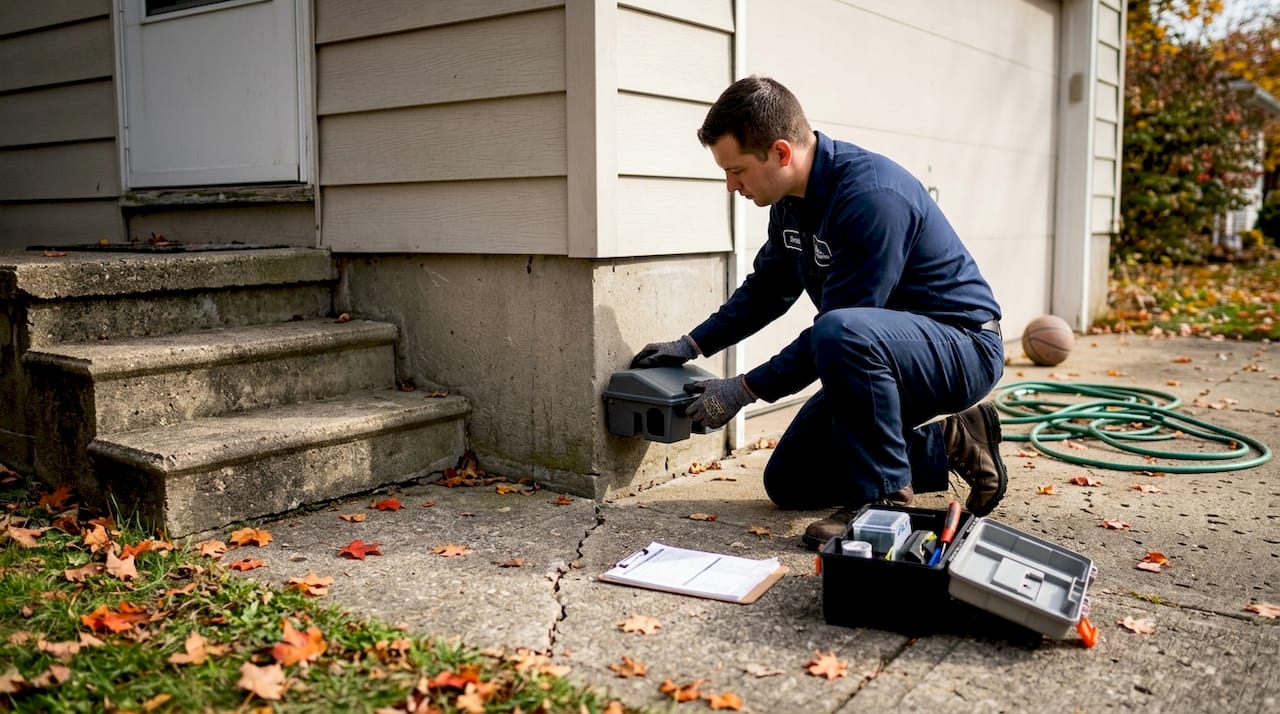
When you schedule a first visit, expect the professional to inspect the full property, not just the area where you spotted the pest. They should identify the species, locate entry points, and present a treatment plan that explains what products will be used and why. Check that the company is licensed with the Ohio Department of Agriculture and ask whether they follow IPM principles. These essential residential pest tips and the full Ohio pest guide can help you prepare the right questions before that first visit.
Our take: Why local knowledge matters most for pest control in Ohio
After more than 50 years serving Ohio properties, we’ve watched national pest control chains roll into markets like Mentor with the same generic protocol they use in Florida or Texas. It doesn’t work. Mentor’s pest profile is shaped by Lake Erie’s humidity, the specific invasive species moving through the Great Lakes region, and the way Ohio’s freeze-thaw cycle drives rodents indoors at a very predictable time each year.
A blanket spray schedule designed for a warmer, drier climate misses the mark here. It also builds chemical resistance in local pest populations, which makes future treatment harder and more expensive. We’ve seen properties that spent years on national contracts end up with worse infestations than when they started.
Local knowledge means knowing that box tree moths are an emerging threat in northern Ohio right now, or that a warm November will extend yellow jacket activity well past the usual season. That kind of awareness is what sustainable Ohio pest management is actually built on. It’s not a product. It’s judgment built from years of working in this specific environment.
How Apex Pest Control can help you in Mentor, OH
Ready to put local expertise to work? Here’s how our team can help. Apex Pest Control has been protecting Ohio homes and businesses since 1969, and our Mentor-area team brings that full depth of experience to every property we visit. Whether you’re dealing with rodent extermination, a bed bug situation, persistent ants, or stinging insects near your building, we build a plan around your specific pest, your property, and your safety priorities. We also offer organic pest solutions for clients who want the lowest possible chemical exposure. Every visit starts with a thorough inspection, not an assumption. Get a free quote today and find out what a locally informed, IPM-based approach can do for your property.
Frequently asked questions
What is the safest way to control pests in my Ohio home?
The safest approach uses integrated pest management: monitor, identify, and treat only where needed, using targeted solutions rather than preventive sprays across the whole home.
How can I tell if I need a professional pest control service?
Recurring infestations, safety concerns, or suspected invasive pests are clear signals to call a licensed professional rather than continuing with DIY methods.
Are chemicals always needed in pest control?
No. Many pest problems respond well to non-chemical controls like sealing entry points and removing food sources. Targeted insecticides are only applied to infested areas when monitoring confirms they are necessary.
What should I expect from a professional pest control visit?
Expect a full property inspection, accurate pest identification, a written treatment plan tailored to your situation, and clear guidance on what steps you can take to prevent the problem from returning.