


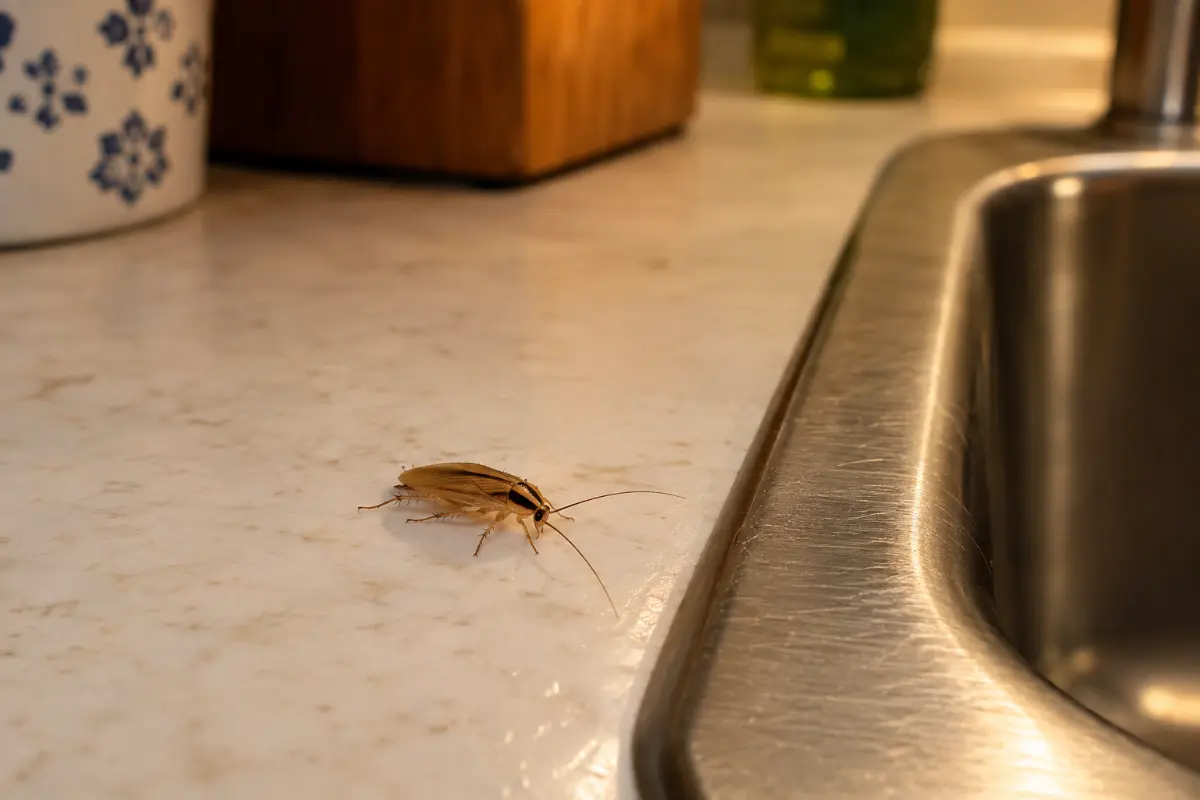
You turn on the kitchen light and something small and tan darts under the stove. In Cleveland homes and apartments, that’s very often a German cockroach. They’re one of the most common indoor roaches in Northeast Ohio and the hardest to get rid of. Good German cockroach control comes down to three things: confirming what you have, cutting off what the roaches live on, and using baits instead of sprays. This guide walks through each step, explains what Ohio renters should know, and says honestly when it’s time to bring in a professional.
Is it a German cockroach? Northeast Ohio’s four common roaches
Four cockroaches turn up regularly in Greater Cleveland homes, and each one calls for a different response.
- German cockroach. About 1/2 to 5/8 inch long and tan to light brown, with two dark stripes running lengthwise behind the head. It lives indoors, mostly in kitchens and bathrooms, and stays hidden during the day.
- Oriental cockroach. Larger, dark brown to almost black, and slow-moving. It prefers cool, damp places, so it shows up in basements, floor drains and crawl spaces.
- American cockroach. The big reddish-brown one, about 1.5 inches or more. In Ohio it’s mostly a problem in commercial buildings, steam tunnels and sewers, and less often in houses.
- Pennsylvania wood cockroach. Common in wooded suburbs like Westlake, Bay Village and the Chagrin Valley. It wanders in from woodpiles and leaf litter in late spring and summer, but it can’t establish itself indoors. A few of these are a nuisance, not an infestation.
If the roaches you’re seeing are small, tan and striped, and they’re in the kitchen or bathroom, assume German cockroach and act quickly. Our cockroach identification page has photos of all four.
Why German cockroaches spread so fast
German cockroaches reproduce faster than any other roach you’re likely to meet. According to Penn State Extension, each egg capsule holds 30 to 48 eggs. A female carries the capsule with her until the eggs are about to hatch, and produces four to eight capsules in her lifetime. Penn State estimates that one female can lead to more than 10,000 descendants in a year.
They don’t need to come from outside, either. They arrive in grocery bags, cardboard boxes, secondhand appliances and luggage. In connected buildings they travel between units along plumbing lines and shared walls (NC State Extension). That matters in Cleveland, where many people live in older apartment buildings and up-and-down doubles. Ohio winters don’t slow them down, because a heated kitchen gives them warmth, food and water all year.
They’re also a health issue. Their droppings and shed skins carry allergens that can trigger sneezing, congestion and asthma, and they can carry bacteria onto food and dishes.
Signs of German cockroaches
- Roaches running for cover when you turn on a light at night
- Roaches seen during the day, which often means the population has outgrown its hiding spots
- Dark specks like ground pepper in cabinet corners, drawers and behind appliances
- Small brown egg capsules or shed skins
- A musty, oily smell in heavy infestations
How to get rid of German cockroaches: what actually works
These steps follow Penn State and NC State Extension guidance. They work best done together.
1. Find out where they are
Put sticky traps in 10 or more spots for about a week: under the sink, behind the fridge and stove, next to the dishwasher, in the bathroom and inside lower cabinets. The traps that catch the most show you where to focus. Keep a few traps in place afterward so you can tell whether numbers are dropping.
2. Take away food, water and shelter
Baits only work if the roaches would rather eat the bait than your crumbs.
- Wash dishes before bed and wipe stovetops and counters.
- Store cereal, pet food and other dry goods in sealed containers.
- Take the trash out nightly, or use a can with a tight lid.
- Fix dripping faucets and leaks under sinks.
- Cut down on clutter, especially cardboard and paper bags, which roaches hide in and feed on.
3. Use gel bait, not spray
Gel baits are the core of German cockroach control. Put small dabs, about the size of a dime or smaller, in many spots where roaches travel: hinge corners of cabinets, under sinks, behind appliances. Don’t spray cleaners or insecticide near the bait, because that makes the roaches avoid it. Expect it to take a couple of weeks to see a real drop in numbers.
A light dusting of boric acid into wall voids and behind appliances can help too, but keep it away from children, pets and food. Our guide to borax vs. boric acid explains the difference.
4. Skip the foggers
Bug bombs and general-purpose sprays feel like they’re doing something, but Penn State Extension says they’re of little value against German cockroaches. They can scatter the roaches deeper into walls and into neighboring units, which makes control harder.
5. Seal what you can
Caulk gaps around pipes under sinks, behind toilets and where lines come through walls. This won’t stop roaches that arrive in a grocery bag, but it limits where they can hide and how they move between rooms or units.
If you rent in Ohio: tell your landlord in writing
Under Ohio Revised Code 5321.04, landlords must keep rental units in a fit and habitable condition and keep common areas safe and sanitary. In apartment buildings, treating one unit on its own often fails because roaches move between units. Report the problem to your landlord or property manager in writing, so there’s a record and they can coordinate treatment across the building. This isn’t legal advice. If you have questions about your rights, a local tenant resource or attorney can help.
When to call a professional
A small problem caught early in a single-family house can sometimes be cleared up with traps, bait and better housekeeping. Call a pro if any of these apply:
- You still catch roaches on traps after two to three weeks of steady baiting and cleanup.
- You see roaches during the day, or in rooms away from the kitchen and bathrooms.
- You live in an apartment, condo or double where roaches can move between units.
- Someone in the home has asthma or allergies.
- You’ve used sprays or foggers and the roaches seem to have spread.
- It’s a restaurant, rental property or other business, where an infestation affects tenants, customers or inspections.
Professionals can rotate between bait formulas so roaches don’t learn to avoid them, add insect growth regulators to break the breeding cycle, and come back to check whether the treatment is working.
Apex Pest Control has handled cockroach problems in Northeast Ohio since 1969. In most cases our staff can diagnose the problem and explain the treatment procedure while you’re on the phone with us. Depending on the situation, we can do a one-time treatment for a sudden infestation, backed by the Apex “Pest-Free” guarantee, or set up an ongoing service plan with return visits. We serve Cleveland, Lakewood, Westlake, Rocky River, Bedford Heights and the rest of Greater Cleveland, plus the Akron, Columbus and Dayton areas.
FAQ
Can German cockroaches live in a clean house?
Yes. They often arrive in boxes, bags or used appliances, and a clean kitchen still has water, grease and crumbs in places you don’t see. Clean homes are easier to treat, though, because the roaches go for the bait faster.
How long does it take to get rid of German cockroaches?
Baits usually take a couple of weeks to cut numbers noticeably, and eggs that hatch later need follow-up. Plan on several weeks of baiting and monitoring for a moderate infestation, and longer in apartment buildings.
Do roach foggers work on German cockroaches?
Not well. Penn State Extension says foggers and residual sprays are of little value against German cockroaches and can scatter them, making the problem harder to fix.
Will a Cleveland winter kill cockroaches?
Not German cockroaches. They live entirely indoors, and a heated home lets them breed all winter. Cold weather may reduce how many Pennsylvania wood cockroaches wander in, but it doesn’t affect an infestation already inside.
Seeing roaches in your kitchen? Get a plan that works
If you’re dealing with German cockroaches in Cleveland or anywhere in Northeast Ohio, call Apex Pest Control at (440) 786-8520, or fill in the form below for a free estimate. We’ll find where they’re hiding and treat the source, not just the roaches you can see.