



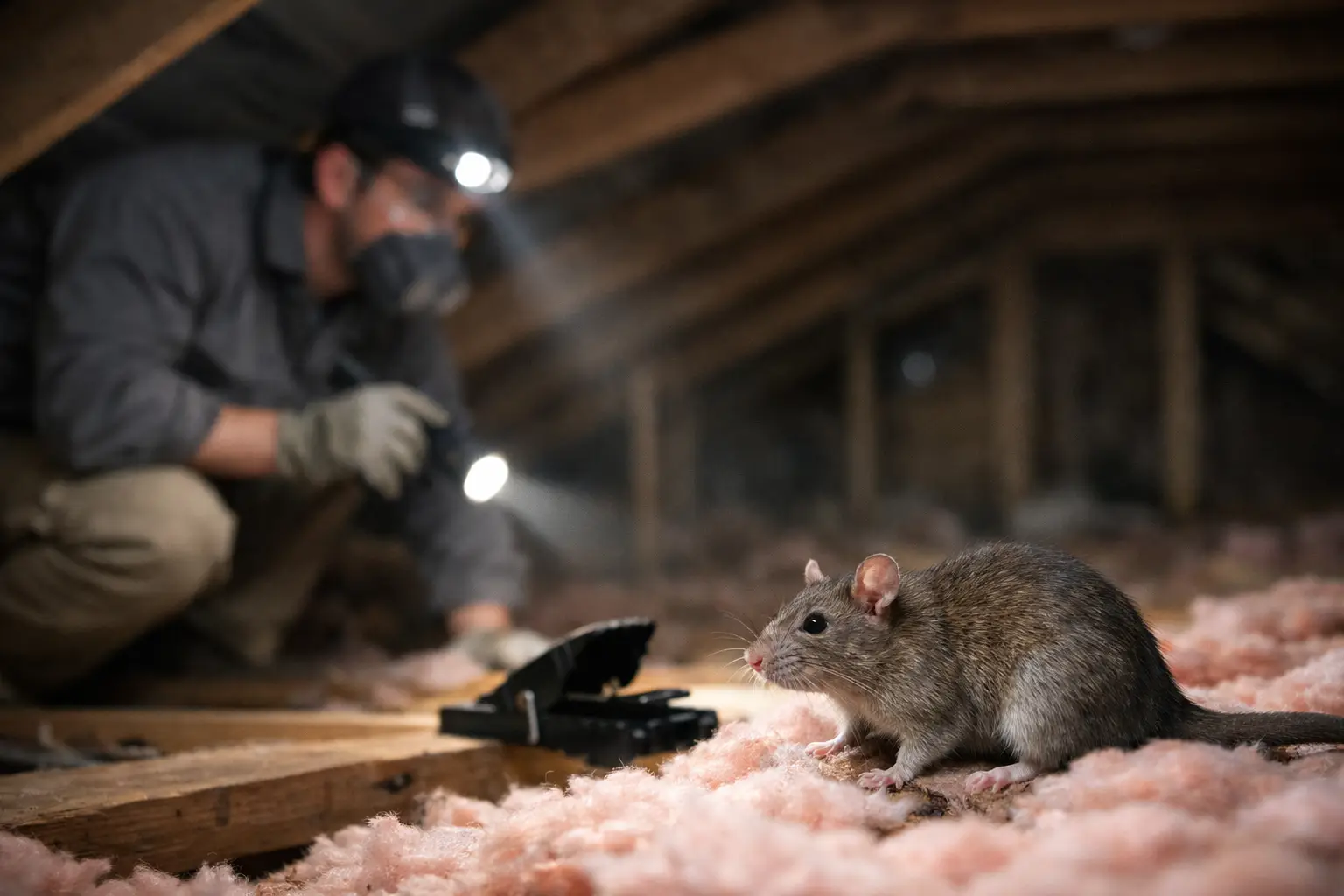
If you are hearing scratching above the ceiling at night, finding droppings near insulation, or noticing a sharp musky odor, you may already be past the early warning stage. Knowing how to get rid of rats in attic spaces quickly matters because attic infestations do not stay contained for long. Rats chew wiring, contaminate insulation, damage stored items, and create a health risk for everyone in the home.
The good news is that attic rat problems can be solved. The less comfortable truth is that success usually depends on doing more than setting a few traps. Effective control means removing the active rodents, finding how they got in, cleaning the contamination safely, and sealing the structure so the problem does not come back.
Why rats choose the attic
An attic gives rats exactly what they need – warmth, protection, nesting material, and privacy. In Ohio, seasonal weather shifts make attics especially attractive in colder months, but infestations can happen year-round. Rooflines, soffits, vents, and utility penetrations often give rats hidden access without homeowners noticing.
Once inside, rats multiply fast. A small problem can turn into a serious infestation before you see one animal in daylight. By the time you hear movement regularly, there may already be nesting areas, travel paths, urine marking, and widespread contamination.
Signs you have rats in the attic
The clearest sign is nighttime noise. Rats are most active after dark, so scratching, scurrying, gnawing, or quick movement in the ceiling or walls often points to rodent activity above.
Other signs include droppings, shredded insulation or paper, greasy rub marks along beams or access points, and strong odors. You may also notice chewed wood, cardboard, plastic, or electrical wiring. In some homes, pets become unusually fixated on one ceiling area or attic hatch before people notice the infestation themselves.
It also helps to look outside. Rats often enter through gaps around roof vents, damaged fascia, uncapped chimneys, loose siding edges, or openings around pipes and wires. Openings do not need to be large. Rats can exploit surprisingly small gaps if the edge gives them something to chew.
How to get rid of rats in attic areas the right way
The first step is confirming the infestation and its extent. That means identifying where rats are nesting, where they are traveling, and where they are entering. If you skip this part and go straight to treatment, you may remove a few rats and leave the real problem untouched.
Trapping is usually the most effective core method for attic rat removal. Snap traps, when placed correctly along runways and near active areas, can reduce populations quickly. Placement matters more than quantity. Traps should be set where rats already travel, typically along edges rather than in open spaces. Bait selection also matters, and it can take some adjustment depending on available food sources in the attic.
Rodent bait can play a role in some situations, but it comes with trade-offs. Improper baiting can lead to rats dying in inaccessible voids, which creates odor issues and complicates cleanup. It also requires careful handling around children, pets, and non-target wildlife. For most homeowners, bait should never be treated as a casual, do-it-yourself shortcut.
Glue boards are generally a poor choice for attic rat control. They are less effective on larger rodents, create sanitation concerns, and often do not solve the infestation. Repellents, ultrasonic devices, and strong-smelling home remedies also tend to disappoint. They may create temporary disruption, but they do not remove established attic populations or close entry points.
Removal alone is not enough
One of the most common mistakes is focusing only on the rats you can hear. If entry points stay open, new rodents can move in as soon as the current group is removed. That is why professional rodent control almost always includes exclusion work.
Exclusion means sealing the structure with durable materials that rats cannot chew through easily. Depending on the home, that may include screening vents, repairing soffits, sealing roofline gaps, reinforcing utility penetrations, and correcting construction defects that invite repeat access. Foam alone is rarely enough. Lasting repairs usually require metal-based materials or structural correction.
There is also a timing issue. Entry points should usually be sealed only after active removal is underway or complete. If a structure is sealed too early, rats can become trapped inside walls or attic spaces, which creates new problems. This is one reason attic infestations often benefit from an experienced inspection rather than guesswork.
Cleanup is part of the job
Rats leave behind more than noise and damage. Their droppings, urine, nesting material, and contaminated insulation can affect indoor air quality and create health concerns. Cleanup should be handled carefully, especially in enclosed attic environments.
Dry sweeping or vacuuming droppings without proper precautions can stir contaminated particles into the air. Safer cleanup starts with protective equipment and controlled handling of affected material. Heavily soiled insulation often needs to be removed and replaced, particularly if contamination is widespread or odor has set in.
This is also the stage where hidden damage becomes clear. Technicians may find chewed wiring, compromised ductwork, or wood damage that needs attention from an electrician or contractor. The rodent issue may be solved, but the property still needs to be restored to a safe condition.
When DIY can work and when it usually does not
If the infestation is very small, access is straightforward, and you can clearly identify the entry point, a limited do-it-yourself response may help. That usually means a small number of traps, close monitoring, and prompt structural sealing once activity stops.
But attic jobs become difficult fast. Limited access, insulation depth, roofline complexity, and hidden travel paths make it easy to miss active areas. If you are hearing rats in multiple sections of the home, seeing droppings in more than one area, or finding repeated activity after traps have been set, the issue is likely larger than it appears.
Professional service becomes especially important when there are children or pets in the home, heavy contamination, damaged wiring, or signs the infestation has spread into wall voids or lower living spaces. Commercial buildings, multi-unit properties, and older homes also tend to require a more coordinated treatment and exclusion plan.
What professional attic rat control should include
A dependable rodent service should begin with a full inspection, not a one-size-fits-all treatment. The inspection should identify activity levels, nesting locations, structural vulnerabilities, sanitation issues, and the likely source of the infestation.
From there, treatment should combine targeted removal with exclusion recommendations. In many cases, the best results come from a layered plan: trap-out, follow-up monitoring, entry-point sealing, and sanitation guidance. For larger infestations, repeat visits are often necessary. That is not a sign the process failed. It is usually how thorough rodent control is done.
Homeowners should also expect clear safety communication. Any attic treatment needs to account for occupants, pets, insulation conditions, and access hazards. Reputable providers explain what they are doing, why they are doing it, and what results to expect at each stage.
For Ohio homeowners dealing with recurring attic noises or visible rodent signs, working with an established pest control company can shorten the timeline and reduce the chance of reinfestation. Apex Pest Control approaches rodent issues with that full-cycle mindset – removal, exclusion, and prevention rather than temporary relief.
How to keep rats out of the attic for good
Long-term prevention starts outside the attic. Tree limbs should be trimmed back from the roofline when possible, and exterior gaps should be inspected routinely, especially around vents, eaves, and roof intersections. Damaged shingles, loose flashing, and broken vent screens should be repaired promptly.
Food access matters too. Pet food, bird seed, and overflowing trash can support rodent pressure around the property, which increases the chance of indoor entry. Crawl spaces, garages, and basements should also be checked because attic infestations often connect to activity in other parts of the structure.
Ongoing monitoring can make a major difference. A home that has had rats once is worth inspecting again before cold weather sets in. Small repairs made early are far easier than another full infestation.
A fast response protects more than the attic
Rats in the attic are not just a nuisance overhead. They are a structural, sanitation, and safety issue that gets more expensive the longer it is ignored. The right response is methodical: identify the extent of activity, remove the rodents effectively, seal every realistic entry route, and deal with the contamination they leave behind.
If you suspect rats above your ceiling, trust what you are hearing and act before the damage spreads. A quiet attic is not just more comfortable – it is a sign your home is protected the way it should be.