



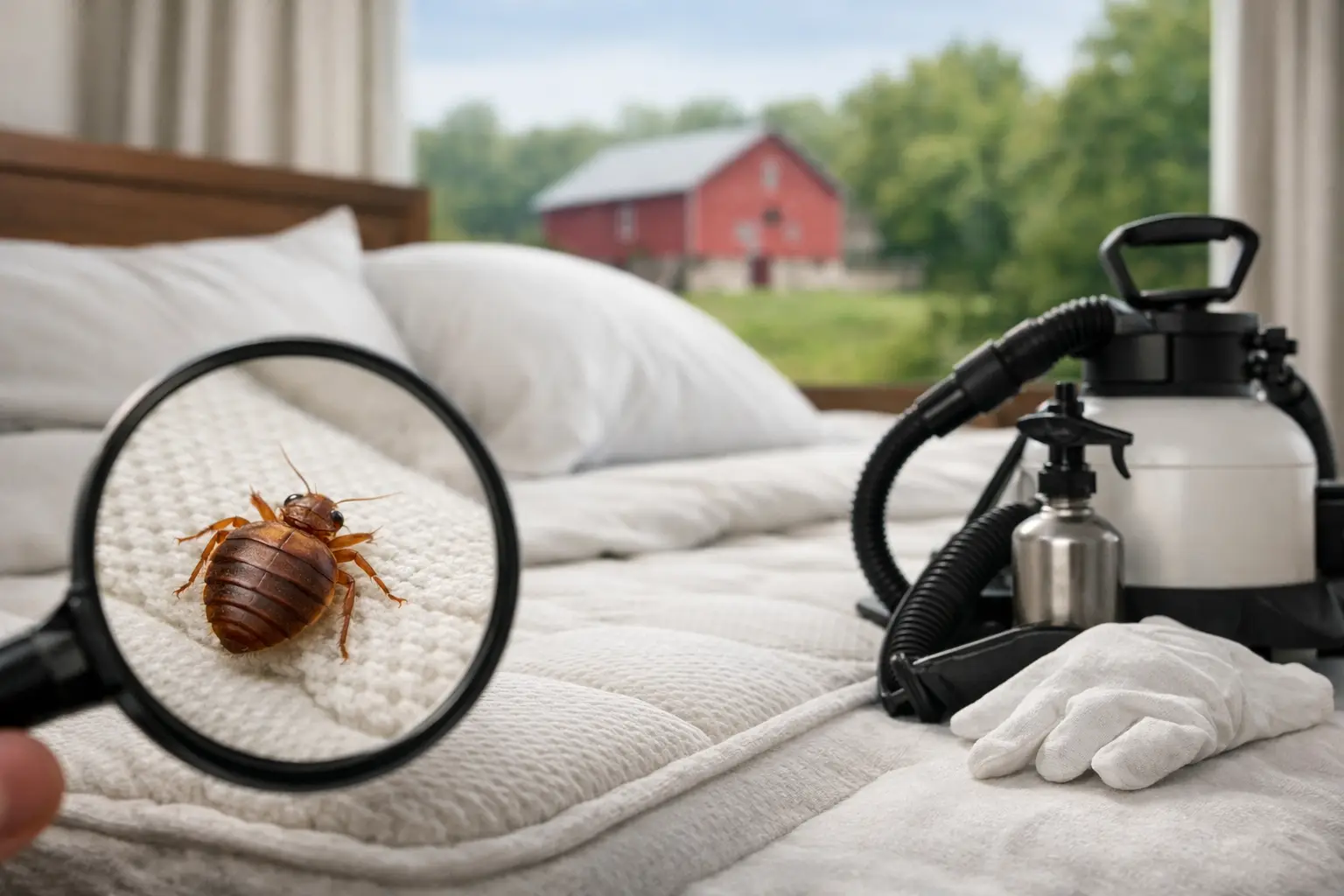
A bed bug problem rarely starts with a dramatic discovery. It often begins with unexplained bites, small dark spotting along a mattress seam, or a bug found near the bed after a trip or overnight guest. This Ohio bed bug treatment guide explains what to do next, what effective treatment involves, and why a fast, organized response gives you the best chance of eliminating the infestation completely.
Bed bugs are stressful, but they are not a sign of poor housekeeping. They are skilled hitchhikers that can enter homes, apartments, hotels, offices, and care facilities on luggage, furniture, clothing, or personal items. Once established, they hide in tight spaces and feed when people are resting. Waiting or relying on a single store-bought product can allow the population to spread into adjacent rooms and, in multi-unit properties, neighboring units.
Confirm the Problem Before You Treat
Bed bug bites alone do not confirm an infestation. Bite reactions vary widely, and mosquitoes, fleas, skin irritation, and other causes can look similar. A careful inspection is the first step toward the right solution.
Adults are flat, oval insects about the size and color of an apple seed. Young bed bugs are smaller and lighter in color. Look beyond the mattress surface. Inspect piping, seams, box springs, bed frames, headboards, nightstands, upholstered furniture, baseboards, picture frames, curtain folds, and nearby cracks. Signs can include live bugs, pale shed skins, tiny pearly eggs, and dark fecal spotting.
In a hotel, apartment, senior living community, dormitory, or workplace, report the concern promptly to management. Commercial and multifamily properties need a coordinated response because treating one room while overlooking nearby areas can lead to recurring activity. Documentation, targeted inspections, and clear resident or employee instructions protect both occupants and the facility.
Ohio Bed Bug Treatment Guide: Start With Containment
If you suspect bed bugs, resist the urge to move items from the affected room into other parts of the home. Carrying blankets, laundry baskets, chairs, or luggage through the house can spread bed bugs to new hiding places.
Place washable bedding, clothing, and soft items from the affected area directly into sealed bags for transport to the laundry. Drying on high heat is often the most reliable first step because heat kills bed bugs and eggs when the items reach sufficient temperature. After drying, keep clean items sealed in fresh bags or bins until treatment and follow-up inspections are complete.
Vacuuming can remove visible bugs and debris, especially around mattress seams, bed frames, floor edges, and upholstered furniture. Use a crevice tool, move slowly, and immediately seal and discard the vacuum contents in an outdoor trash container. Vacuuming helps reduce numbers, but it is not a complete treatment. Bed bugs can remain deep inside furniture joints, wall voids, and other inaccessible areas.
Avoid sleeping in another room if possible. Bed bugs follow their food source. Relocating to a couch or guest room may encourage them to spread. Also avoid foggers or “bug bombs.” These products generally do not penetrate bed bug hiding places and can drive insects farther into walls, furniture, or adjoining rooms. Misuse also creates unnecessary exposure risks for people, pets, and property.
Why Professional Bed Bug Control Works Better
Successful bed bug elimination is rarely a one-product job. It requires inspection, targeted treatment, preparation, and follow-up. The right approach depends on the size of the infestation, the type of property, clutter levels, furniture layout, and whether activity has reached multiple rooms or units.
A professional technician begins by locating likely harborages and determining the scope of activity. That assessment matters. Treating only the mattress when bed bugs are also behind the headboard, in a recliner, or along baseboards will not solve the problem.
Professional programs may use carefully applied residual products, crack-and-crevice treatments, dust formulations, targeted vacuuming, mattress or box-spring encasements, monitoring devices, and heat-based methods when appropriate. Every method has trade-offs. Whole-room or whole-home heat can provide fast results when performed correctly, but it requires precise temperature control and careful preparation to protect heat-sensitive belongings. Conventional targeted treatment can be highly effective and may fit some situations better, but it often requires multiple visits because eggs can survive an initial service and hatch later.
The strongest plans use a layered strategy rather than promising a quick spray-and-go fix. Apex Pest Control develops treatment plans around the property, infestation level, and household or facility needs, with safety considerations for children, pets, residents, employees, and customers.
Preparation Is Part of the Treatment
Preparation instructions are not busywork. They give the treatment access to the areas where bed bugs hide and reduce the chance of reinfestation. Your pest professional should provide property-specific directions before service, but homeowners commonly need to reduce clutter near beds and furniture, launder designated fabrics, empty selected drawers or storage areas, and make bed frames and baseboards accessible.
Do not throw out furniture automatically. Discarding an item without wrapping or marking it can spread bed bugs through hallways, curbs, or shared dumpsters. Many beds, couches, and chairs can be treated effectively. If an item is heavily infested, structurally damaged, or impossible to treat thoroughly, a professional can help determine whether disposal is warranted and how to do it responsibly.
For apartments and condos, preparation and communication are especially critical. Management may need to inspect adjoining units, units above and below, and common areas based on the building layout and evidence of activity. A coordinated program is more protective than leaving each resident to manage the issue independently.
What to Expect After Treatment
Seeing an occasional bed bug shortly after service does not automatically mean the treatment failed. Depending on the method used, bed bugs may emerge from hiding places or eggs may hatch after the initial visit. Follow your technician’s instructions regarding re-entry, cleaning, laundering, and leaving treated areas undisturbed.
Do not apply additional over-the-counter pesticides unless your provider specifically directs you to do so. Extra products can interfere with a professional treatment plan, create safety concerns, and make it harder to identify where activity remains. Keep records of sightings, including the date, room, and location. That information helps guide follow-up inspections.
Follow-up service is a key part of bed bug control. A thorough program verifies whether activity has stopped, addresses newly hatched insects when needed, and checks adjacent or previously affected areas. Be cautious of any company that guarantees permanent elimination after one brief visit without inspection, preparation guidance, or a follow-up process.
Prevent Bed Bugs From Returning
Prevention cannot eliminate every risk, but practical habits can make a major difference. When returning from travel, inspect luggage before bringing it into bedrooms, keep suitcases off beds and upholstered chairs, and dry travel clothing on high heat when appropriate. Inspect secondhand furniture carefully before bringing it indoors, particularly mattresses, bed frames, upholstered chairs, and couches.
Mattress and box-spring encasements designed for bed bugs can make inspections easier and remove common hiding places, though they do not replace treatment for an active infestation. Reducing clutter around sleeping areas also limits places for bed bugs to hide and makes early signs easier to spot.
Commercial operators should build bed bug response procedures into their pest management plan. Staff should know how to report a suspected issue without moving potentially affected items through the facility. Property managers and operations leaders benefit from documented inspections, clear treatment protocols, and responsive communication that supports occupants while protecting business continuity.
When to Call for Help
Call a qualified pest management professional as soon as you find live bed bugs, repeated signs near a sleeping area, or bites accompanied by physical evidence. Early treatment is usually less disruptive and more cost-effective than waiting for the infestation to expand.
Choose a provider that explains the inspection findings, treatment options, preparation requirements, safety measures, and follow-up schedule in plain language. The goal is not simply to kill the bed bugs you can see. It is to identify their hiding places, interrupt their life cycle, and give your home or facility a clear path back to normal.
A bed bug infestation can make any room feel unsettled. With prompt reporting, disciplined preparation, and a proven treatment plan, you can replace that uncertainty with a controlled, well-managed solution and lasting peace of mind.