


A scratching sound above the ceiling at 2 a.m. is not a problem to put off until the weekend. Wildlife can damage insulation, wiring, ductwork, and stored materials quickly, while droppings and nesting debris can create sanitation concerns. A qualified Ohio wildlife removal service should do more than remove the animal you see. It should identify how it entered, protect the people and pets on the property, and prevent the next animal from taking its place.
For homeowners and property managers, that distinction matters. A single raccoon, squirrel, bat, bird, or skunk may be the visible part of a larger problem. Effective removal starts with a careful inspection and ends with a secure, clean structure.
What an Ohio Wildlife Removal Service Should Include
Wildlife removal is not a one-size-fits-all treatment. The right approach depends on the species, the animal’s location, the time of year, the condition of the building, and whether young animals may be present. A technician should first determine what is active on the property rather than guessing based on a noise or a single sighting.
A professional inspection typically evaluates the roofline, attic, soffits, vents, chimney, foundation, crawl space, utility penetrations, exterior doors, and other vulnerable areas. Technicians look for rub marks, tracks, droppings, damaged screens, chewed openings, nesting material, and gaps that may appear small but are large enough for an animal to use.
The removal plan should then address three connected jobs: safe removal, exclusion, and cleanup. Skipping any one of them leaves a property exposed. Removing an animal without closing the entry point invites another animal inside. Sealing a structure before confirming that all animals are out can trap them in walls or attics. And leaving contaminated insulation or droppings behind can preserve odors that attract future wildlife.
Humane Removal Must Fit the Animal and Situation
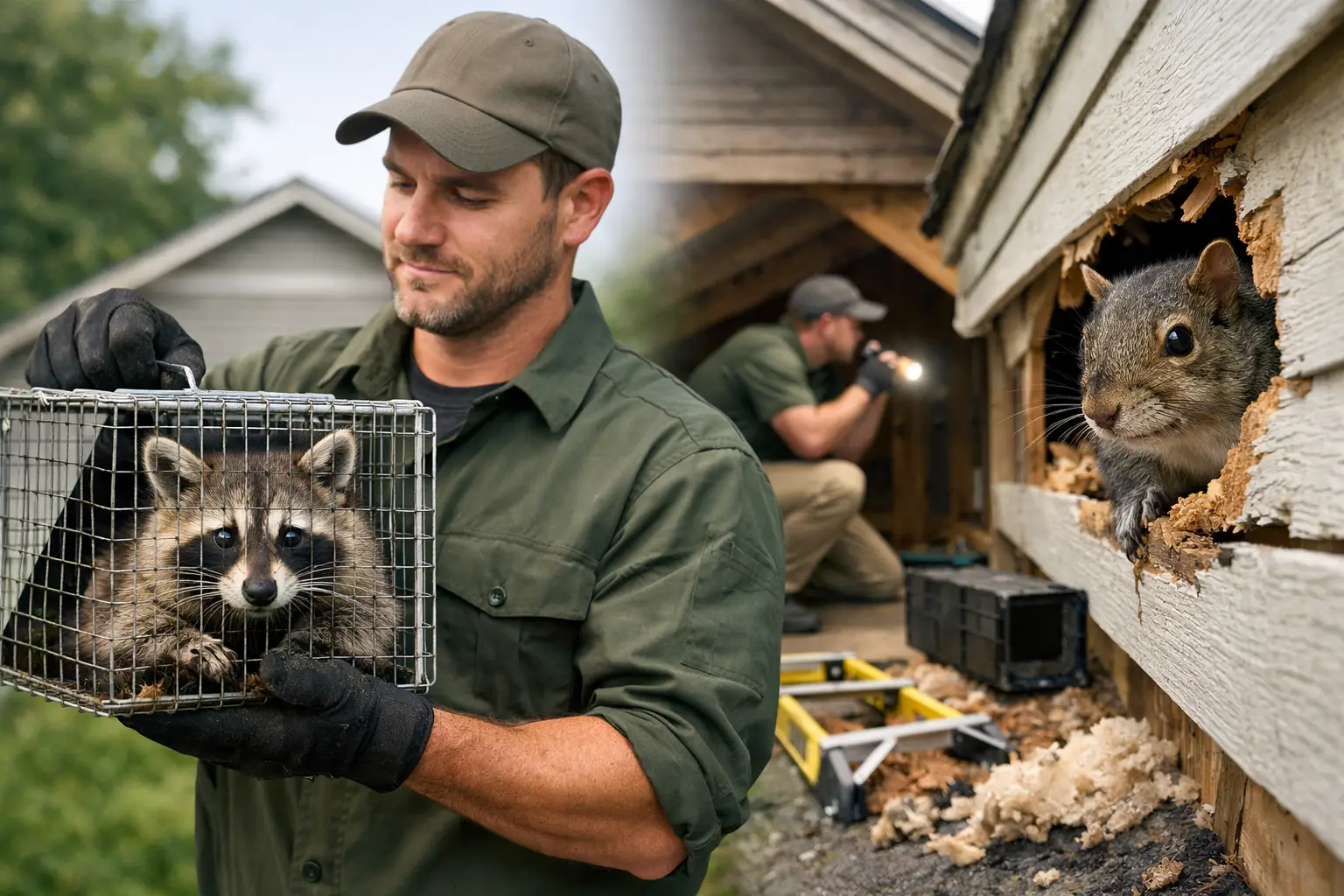
Ohio properties commonly experience wildlife activity from squirrels, raccoons, skunks, opossums, groundhogs, bats, and nuisance birds. Each species behaves differently. Squirrels often enter near roof edges and attic vents. Raccoons can damage weak soffits or roof openings. Skunks may den under decks, sheds, or porches. Bats can use extremely narrow gaps around rooflines, vents, and siding transitions.
Professional removal methods should be humane, species-appropriate, and compliant with applicable Ohio regulations. This is especially important when young animals may be dependent on a den or roost. A rushed approach can separate mothers from offspring, create odor issues when an animal dies inside, or cause more damage as trapped wildlife searches for another way out.
Bat activity requires particular care. Bats are valuable insect predators, but they do not belong in occupied areas of a home, school, workplace, or food facility. Exclusion work may need to be timed appropriately to avoid trapping young bats inside. If a bat was found in a room where someone was sleeping, a child was unattended, or a person may have had direct contact, do not release it or handle it bare-handed. Contact local public health authorities or a medical professional promptly for guidance about potential rabies exposure.
Exclusion Is the Part That Protects Your Property
The most valuable wildlife service is often the work that happens after removal. Exclusion means locating and securing potential entry points so wildlife cannot return. It is not simply stuffing a visible hole with temporary material. Durable exclusion may involve repairing damaged vent covers, reinforcing soffits, screening vulnerable openings, securing chimney access, sealing utility gaps, and addressing deteriorated exterior building materials.
The correct repair depends on the animal and the structure. Hardware and screening must be strong enough to resist chewing or pulling. Openings must be sealed without blocking proper ventilation or creating moisture problems. On larger commercial buildings, the scope may include dock doors, roof penetrations, loading areas, exterior waste storage, and gaps around mechanical systems.
This is where experience matters. A technician who treats removal and building protection as separate jobs may solve the immediate complaint without solving the reason the animal entered. At Apex Pest Control, wildlife work is built around identifying the active problem, removing it responsibly, and helping protect the structure against repeat activity.
Cleanup Is More Than a Cosmetic Step
Wildlife can leave behind droppings, urine, nesting material, feathers, food debris, parasites, and strong odors. In attics and crawl spaces, those conditions may contaminate insulation and make an area more attractive to other animals. Cleanup recommendations should be based on the amount of contamination and the accessibility of the affected space.
Property owners should avoid sweeping or vacuuming dry droppings without proper protective measures, since disturbing debris can send particles into the air. A trained team can assess whether spot cleanup, sanitation, odor treatment, or insulation removal and replacement is appropriate. The goal is to restore the space while reducing the conditions that draw wildlife back.
Signs You Need Wildlife Removal Instead of a DIY Fix
A sighting outdoors does not always require removal. Ohio wildlife regularly moves through yards, wooded lots, and commercial landscapes without entering buildings or creating damage. The concern becomes more urgent when an animal has established access to the structure, is damaging property, or creates a health and safety risk.
Call for an inspection if you hear recurring movement in walls, ceilings, or attic spaces; notice droppings near a vent, fireplace, or access point; find chewed wood, wiring, or screens; smell persistent urine or a dead-animal odor; or see repeated animal traffic near the same part of the building. Daytime raccoon activity, unusual behavior, or an animal that seems disoriented also warrants caution. Keep children and pets away and avoid attempting to touch, feed, trap, or relocate wildlife yourself.
DIY repairs can be effective for minor maintenance when there is no evidence of active wildlife, such as replacing a loose screen or trimming branches away from a roof. But once animals are inside, the trade-off changes. A quick seal-up may trap animals indoors. Store-bought repellents often provide inconsistent results. Poison is particularly risky because animals can die in inaccessible areas, creating odors and secondary pest problems.
Wildlife Removal for Ohio Homes and Commercial Properties
For a homeowner, wildlife removal is about protecting the home environment, family routines, pets, and a major investment. Rapid response is useful when animals are in living spaces, but a detailed inspection is just as important when activity is limited to an attic, crawl space, chimney, garage, or deck.
Commercial properties face additional concerns. A bird nesting near an entrance, rodent activity around a waste area, or a raccoon accessing a loading zone can affect sanitation, employee safety, customer perception, and audit readiness. Facilities such as restaurants, warehouses, offices, retail sites, health care properties, and multi-unit housing need documentation, consistent inspections, and prevention measures that fit daily operations.
A dependable commercial wildlife program considers the entire site, not just the complaint location. Exterior conditions such as overflowing trash, unsecured dumpsters, standing water, dense vegetation, and open doors can increase wildlife pressure. The right plan balances effective control with the need to keep operations moving and meet site-specific safety requirements.
Questions to Ask Before Choosing a Wildlife Company
Before scheduling service, ask how the company confirms the species and entry points, whether exclusion repairs are included or quoted separately, and how it handles young animals or seasonal bat concerns. You should also ask what cleanup is recommended, how follow-up is handled, and whether the provider can support your property type.
Clear answers are a good sign. A professional should explain what was found, what work is necessary now, what conditions could lead to future activity, and where costs may vary. For example, a single accessible entry point may require a straightforward repair, while widespread roofline deterioration or contaminated attic insulation may require a broader plan.
Wildlife problems are stressful because they disrupt the safety and comfort of a property. The right response is calm, thorough, and built for lasting prevention. If you are hearing activity, seeing damage, or finding evidence of animals in your Ohio home or facility, arrange a professional inspection before a manageable issue becomes a costly repair.