



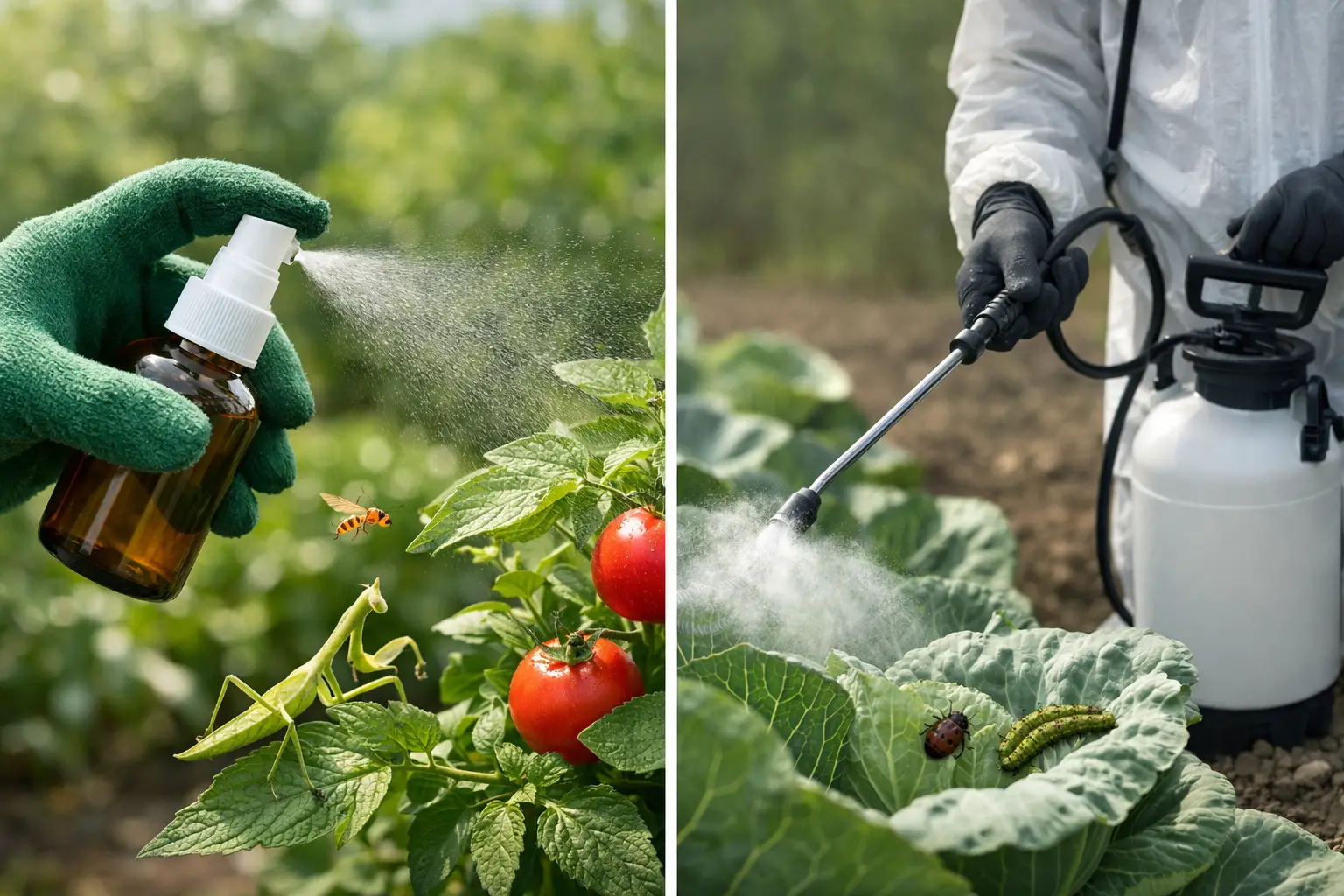
A trail of ants across the kitchen counter, a mouse in the pantry, or wasps near a busy entryway demands a real solution – not a label that sounds reassuring but leaves the problem active. In the choice between organic pest control vs traditional treatments, the best answer depends on the pest, the severity of activity, the people and pets on site, and the need to prevent a repeat infestation.
Organic and conventional methods can both have a place in a responsible pest management plan. The key is understanding what each approach can do well, where its limits are, and how a trained professional can apply the least disruptive effective solution.
What Organic Pest Control Usually Means
Organic pest control is often used as a broad term, not a single treatment standard. It generally refers to products or practices made from naturally derived ingredients or methods designed to reduce reliance on conventional synthetic pesticides. Depending on the situation, that may include botanical products, mineral-based materials, soaps, oils, traps, exclusion work, sanitation improvements, habitat modification, or biological controls.
For a homeowner, organic pest control may mean sealing entry points, removing food and moisture sources, and using targeted products in limited areas. For a commercial facility, it can mean tightening sanitation procedures, improving waste handling, closing structural gaps, and increasing monitoring before a treatment is considered.
That approach has an important advantage: it addresses the conditions that let pests thrive. A treatment may eliminate visible ants, for example, but a moisture issue, open food storage, or unsealed exterior gap can keep attracting new activity. Prevention is not an optional extra. It is the foundation of durable pest control.
Still, natural does not automatically mean harmless, and organic does not automatically mean effective for every infestation. Some naturally derived products can irritate skin or affect non-target insects when misused. Others have limited residual performance, meaning they may need more frequent application. Product selection and precise application matter as much as the ingredient category.
How Traditional Pest Control Works
Traditional pest control typically uses EPA-registered conventional products alongside inspection, monitoring, exclusion, and sanitation recommendations. These treatments may be formulated for longer residual control, faster knockdown, or specific pest behaviors such as feeding, nesting, or breeding.
A well-designed traditional treatment is not simply a broad spray. Professional pest management should identify the pest, locate harborages and entry points, evaluate pressure around the property, and treat only where treatment is justified. For many pests, targeted baiting, crack-and-crevice application, monitoring devices, and exterior barrier work can control the issue with far less exposure than a generalized approach.
Traditional options are often particularly valuable when pest pressure is high or the consequences of incomplete control are serious. Termites can damage structural wood. Rodents can contaminate food, damage wiring, and introduce health concerns. Bed bugs can spread rapidly through a home, apartment community, hotel, or care setting. In these cases, a product with dependable performance may be necessary as part of a complete treatment program.
Organic Pest Control vs Traditional: The Real Differences
The most useful comparison is not “safe” versus “unsafe.” Responsible pest control is based on risk management, proper use, and effectiveness. Both organic and traditional methods should be selected and applied with people, pets, property, and the environment in mind.
Speed and strength of control
Traditional products often provide faster or longer-lasting control for established infestations. This can be critical for stinging insects around a playground, rodent activity in a food facility, or a severe cockroach problem in a multi-unit property. Fast control reduces the time pests have to reproduce, spread, or cause damage.
Organic approaches can be highly effective for lower-level activity, prevention, and certain outdoor or occasional invaders. However, they may require more frequent service, closer monitoring, or stronger support from non-chemical methods. A customer should be cautious of any provider promising that one organic product will solve every pest problem permanently.
Exposure considerations
Organic methods can help reduce the use of conventional pesticides, especially when prevention and exclusion are prioritized. That may be a strong preference for families with young children, pet owners, sensitive occupants, or facilities with specific environmental policies.
Yet the lowest-risk choice is often a targeted treatment plan, not necessarily an organic-only plan. Placing a secured rodent bait station outdoors, using a gel bait in a concealed cockroach harboring area, or treating a wasp nest directly may create less overall exposure than repeated broad applications of a less effective material. A professional should explain what is being used, where it will be applied, and any preparation or reentry instructions.
Cost and service frequency
The upfront price of a treatment does not tell the full story. Organic programs can cost more over time if they require frequent visits or if prevention corrections are delayed. Traditional treatments may offer longer residual control, but they should never replace the work of closing gaps, correcting moisture, and improving sanitation.
For businesses, recurring costs also include operational risk. A single pest sighting can lead to failed inspections, customer complaints, product loss, or damage to a brand’s reputation. Facilities that need documentation and audit readiness benefit from a program built around routine inspections, trend reporting, corrective action, and clear service records.
Environmental impact
Both methods have environmental trade-offs. Some botanical products break down quickly, which can reduce residual presence but also shorten control. Some traditional products are highly targeted and effective at very low application rates, but they still require careful selection to protect pollinators, waterways, and non-target wildlife.
The responsible path is integrated pest management, often called IPM. IPM starts with inspection and prevention, uses monitoring to confirm activity, and applies the most appropriate treatment only when needed. It is a practical framework for reducing unnecessary pesticide use without accepting an unresolved infestation.
Which Option Fits Common Pest Problems?
For ants, exclusion, sanitation, and moisture correction are essential whether organic or conventional products are used. A bait-based strategy may be needed when colonies are established inside walls or beneath slabs.
For mosquitoes, source reduction is the first line of defense. Removing standing water, improving drainage, and managing dense vegetation can lower breeding and resting sites. During heavy mosquito season, targeted professional applications may provide additional relief for outdoor living areas.
For rodents, traps, exclusion, and sanitation are central to control. An organic-only approach may be suitable in some settings, but extensive infestations often require a broader plan, particularly where food safety or structural damage is a concern.
For termites, bed bugs, cockroaches, and stinging insects, the decision should be based on inspection findings rather than a preference for a single category of product. These pests can create expensive, disruptive, or unsafe conditions when control is incomplete. Proven treatment performance and follow-up inspection deserve priority.
What a Professional Treatment Plan Should Include
Whether you prefer organic options, traditional products, or a combination, expect a provider to begin with a detailed inspection. The technician should identify the pest when possible, assess the extent of activity, look for contributing conditions, and explain the recommended approach in plain language.
A quality plan also includes prevention. That may involve sealing utility penetrations, repairing screens, addressing water leaks, improving food storage, managing exterior vegetation, or changing waste practices. These corrections make every treatment more effective.
At Apex Pest Control, customized programs are built around the conditions at your home or facility, not a one-size-fits-all spray schedule. Certified professionals can discuss eco-friendly and organic options while making sure the plan is capable of delivering the control your situation requires.
Choose Results That Protect Your Property
If your priority is reduced pesticide use, say so at the start of the inspection. If you are dealing with an urgent infestation, be equally clear about the level of activity and the impact on your home or operation. Those details help determine whether an organic-focused plan, a traditional treatment, or a carefully managed combination offers the best path forward.
The right pest control program should give you more than temporary relief. It should remove active pressure, reduce the conditions pests need, and provide the confidence that your property is being protected with care.