



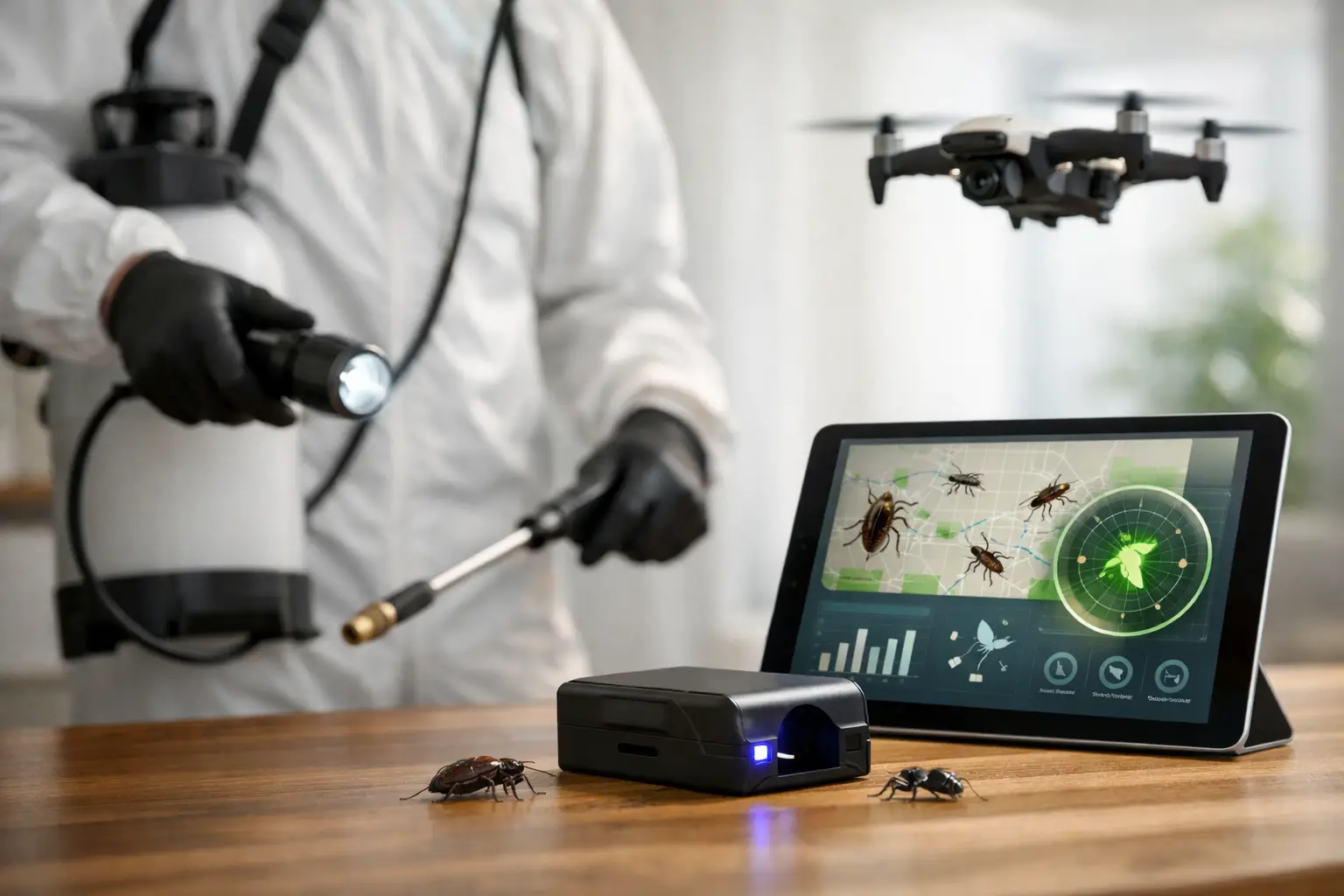
A rodent problem behind a wall, a termite risk beneath a floor, or recurring flies in a food facility cannot be solved by guesswork. The most valuable pest control technology trends are helping professionals find pest pressure earlier, document conditions more clearly, and prevent small problems from becoming expensive disruptions.
For homeowners, that can mean faster answers and fewer unnecessary treatments. For commercial facilities, it can mean cleaner records, better audit readiness, and stronger protection for customers, inventory, and operations. Technology is not a substitute for a trained pest management professional, but when it supports proven inspection and treatment methods, it can make service more precise and accountable.
Pest Control Technology Trends Changing Prevention
The technology worth paying attention to is practical. It helps identify activity, confirm the source of a problem, track patterns over time, or verify that a treatment plan is working. It should never become a flashy add-on that distracts from exclusion, sanitation, structural maintenance, and targeted control.
Remote rodent monitoring
Connected traps and monitoring devices are among the most useful advances for commercial rodent management. These devices can alert a service team when activity occurs, reducing the time between a capture or trigger event and follow-up service. In the right setting, that matters a great deal.
A warehouse, food-processing area, healthcare facility, or multi-site retail operation may have dozens or hundreds of monitored points. Remote data helps prioritize the locations that need attention instead of relying only on a fixed inspection route. It also creates a clearer record of when activity occurred and how quickly it was addressed.
There are limits. A notification does not identify how rodents entered, why they are active, or whether nearby conditions are supporting a population. A technician still needs to inspect exterior gaps, loading doors, utility penetrations, harborage areas, food sources, and sanitation practices. The device identifies a signal. Professional pest management turns that signal into prevention.
Digital inspection reports and service records
Paper logs are giving way to digital reporting that can include photographs, trend data, site maps, recommendations, technician notes, and proof of service. For a homeowner, digital reports make it easier to understand what was found, what was treated, and what should happen next. For a facility manager, they can provide the documentation needed to support internal standards and third-party audits.
This shift is especially valuable for businesses with multiple locations. Account teams can review service consistency, recurring findings, open corrective actions, and pest activity across an entire portfolio. A record that is accurate but difficult to access has limited value. Digital documentation puts the information where decision-makers can use it.
Good reporting should be understandable, not overloaded with technical jargon. The most useful report answers straightforward questions: What pest activity was found? Where was it found? What action was taken? What conditions need correction? When will the area be checked again?
Smart traps, cameras, and monitoring tools
Technology can help confirm activity in difficult-to-access areas. Motion-triggered cameras, non-toxic monitoring devices, insect light traps with digital tracking, and species-specific traps can help professionals distinguish between occasional intruders and an active infestation.
For example, a camera in a commercial dumpster enclosure may reveal that rodent activity occurs after a specific delivery schedule. A monitoring device in a utility room may show repeated activity near a pipe chase. In a home, focused inspection tools can help locate evidence in crawl spaces, attics, and wall voids without unnecessary disruption.
The trade-off is that more data does not automatically mean better decisions. Cameras require appropriate placement and privacy awareness. Monitoring devices need regular inspection and maintenance. Most importantly, a professional must interpret the evidence in context. One mouse on a camera is not always a major infestation, but it may point to an opening that needs immediate attention.
Data-driven mosquito and seasonal pest prevention
Weather patterns, rainfall, standing water, temperature, and seasonal behavior all influence pest activity. Modern service planning increasingly uses those conditions to time inspections and prevention more effectively, particularly for mosquitoes, ants, stinging insects, and overwintering pests.
In Ohio, mosquito pressure can change quickly after periods of warmth and rain. Proactive inspections of drainage areas, gutters, containers, landscaping, and other moisture-holding locations can reduce breeding opportunities before populations build. The same preventive mindset applies to ants entering during wet weather or stinging insects establishing nests around eaves and structures.
Predictive information is helpful, but it is not a guarantee. A property with poor drainage or dense vegetation may experience pest pressure differently than a nearby property. Customized service remains essential because conditions around each home or facility are different.
Precision Treatments and Lower-Impact Options
Another important trend is not a single device. It is the movement toward more targeted pest management. The goal is to apply the right solution, in the right place, at the right time, while reducing unnecessary exposure for people, pets, property, and the surrounding environment.
Professionals may use targeted baits, insect growth regulators, exclusion materials, crack-and-crevice applications, biological approaches where appropriate, and non-chemical monitoring tools as part of an integrated pest management plan. These methods are often more effective than broad, routine applications because they address the pest’s behavior and the conditions allowing it to thrive.
That does not mean every pest problem can be handled with a single low-impact product or a completely chemical-free approach. Bed bugs, termites, German cockroaches, and severe rodent infestations can require multiple methods and carefully timed follow-up. The responsible choice depends on the pest, the level of activity, the structure, and the people using the space.
A reliable provider should explain the plan clearly: what will be used, why it is being used, what preparation is needed, and what results to expect. Safety is not an afterthought. It is part of proper treatment design.
Where Technology Still Needs a Technician
Artificial intelligence, automated alerts, and connected devices are gaining attention across the pest management industry. They can organize data and flag unusual activity, but they cannot replace the judgment needed to inspect a property thoroughly.
A trained technician sees the conditions that sensors may miss: a warped door sweep, a roofline gap, moisture-damaged wood, a failed sanitation process, clutter that creates harborage, or a landscape feature directing pests toward a building. They also know when apparent activity is old evidence rather than a current infestation.
This distinction matters when customers are under stress. Technology can make service faster and more transparent, but proven results still come from correct identification, careful inspection, effective treatment, and follow-through. For commercial accounts, that also means communicating corrective actions to the people responsible for maintenance, sanitation, shipping, and facility operations.
Choosing Technology-Enabled Pest Service
When evaluating a pest management program, ask how the provider uses technology to improve outcomes rather than simply add equipment. For a home, that may mean detailed digital reports, better inspection tools, and scheduled prevention based on seasonal risks. For a business, it may include site mapping, remote monitoring, trend reporting, and documented corrective actions.
Look for a service plan that begins with an inspection and includes clear recommendations for exclusion and prevention. Ask who reviews activity trends, how urgent alerts are handled, and whether records can support your operational or audit requirements. A useful program should also allow for adjustment. If pest activity changes, the service plan should change with it.
Apex Pest Control combines modern monitoring and documentation with the field experience that has protected homes and businesses for decades. The right technology should give you more visibility and more confidence, not leave you managing another complicated system.
If pests are appearing repeatedly, treat the pattern as useful information. A professional inspection can determine whether better monitoring, targeted treatment, structural repairs, or ongoing prevention will provide the lasting peace of mind your property needs.