



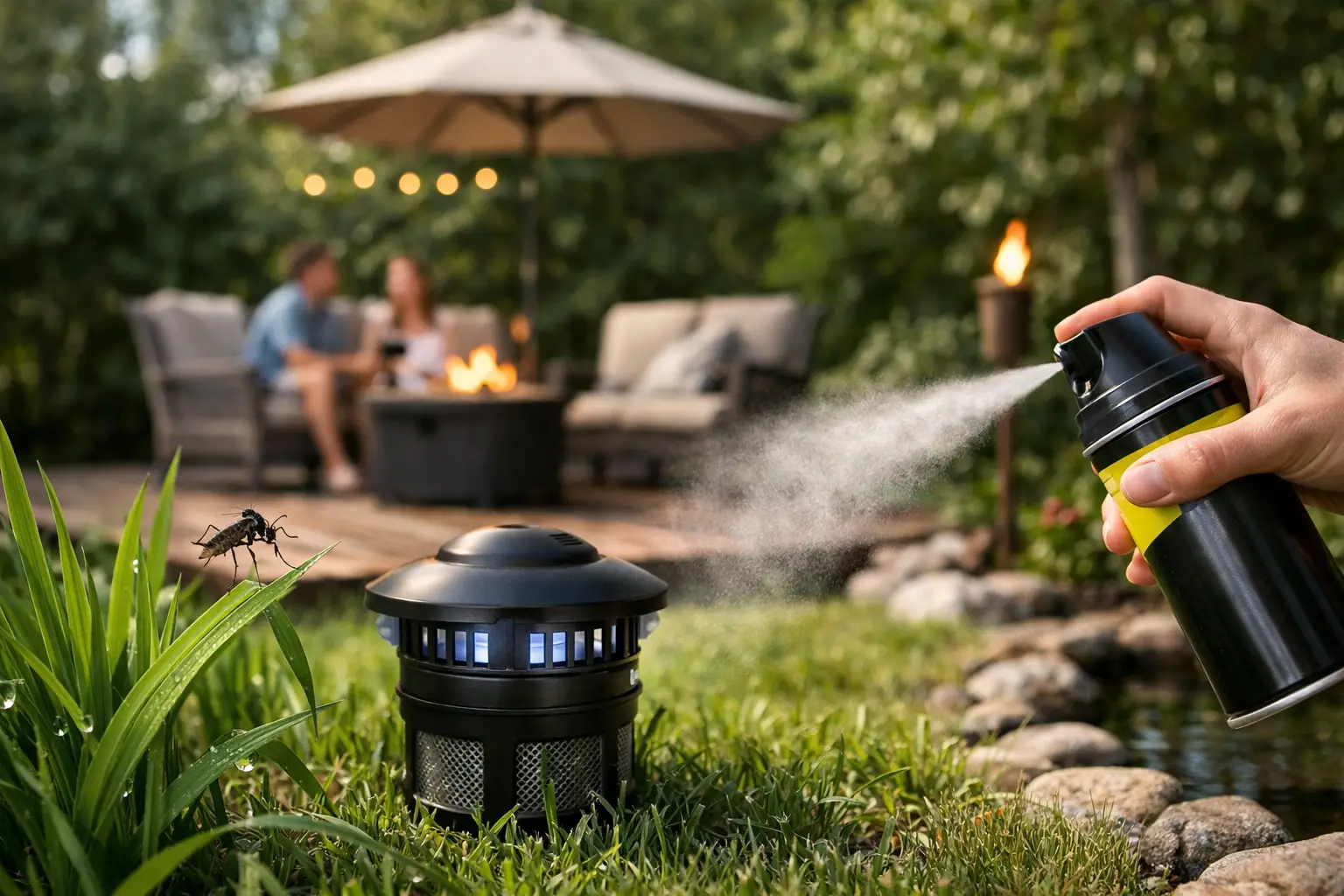
That familiar evening pattern matters more than most homeowners realize – you step outside, sit down for five minutes, and suddenly everyone is swatting. Effective mosquito control for backyard areas starts with understanding that mosquitoes are not random. If they are consistently active around your patio, deck, play area, or landscaping, your property is giving them what they need to breed, rest, and feed.
For many Ohio homeowners, the problem gets worse after rain, during humid stretches, and in yards with dense plant growth or standing water. A few bites may seem like a seasonal nuisance, but heavy mosquito activity can make outdoor space unusable. The right approach is not one quick fix. It is a layered plan that reduces breeding sites, limits harborage, and uses targeted treatment where pressure remains high.
Why backyard mosquito problems keep coming back
Mosquitoes only need a small amount of water to reproduce. Birdbaths, clogged gutters, kids’ toys, plant saucers, tarps, wheelbarrows, and low spots in the yard can all hold enough water for larvae to develop. Many homeowners look for one obvious source and miss the smaller ones scattered across the property.
Backyards also create ideal resting conditions. Adult mosquitoes avoid direct sun and wind whenever possible. They settle into shaded shrubs, tall grass, groundcover, underside areas of decks, and damp corners around fences or sheds. If your yard has moisture, shade, and protected vegetation, it can support mosquito activity even if your neighbor’s yard looks similar.
That is why DIY efforts often help for a weekend but fail over time. Spraying one area without addressing water and harborage does not break the cycle. On the other hand, removing water alone may not be enough if adult mosquitoes are already resting in dense landscaping or migrating in from nearby properties.
Mosquito control for backyard conditions begins with inspection
The most effective starting point is a careful inspection of the full outdoor space. That means looking beyond the patio where bites happen and identifying where mosquitoes are developing and hiding.
A proper inspection should include drainage issues, gutters and downspouts, decorative water features, toys and containers, pool covers, landscape beds, and perimeter vegetation. It should also account for timing. Some mosquito species are more aggressive at dawn and dusk, while others may remain active through shaded daytime areas.
This inspection step matters because treatment should match the conditions. A backyard with frequent standing water needs a different strategy than a yard with heavy shrub cover and little drainage trouble. The best results come from customized control, not a one-size-fits-all application.
What homeowners can do right away
The first priority is water management. Empty anything that collects rainwater at least once a week, because mosquito life cycles move fast in warm weather. Clean gutters so water flows properly, correct low-lying drainage issues where practical, and refresh birdbath water regularly. If you have a decorative feature that holds water continuously, it may require professional guidance to keep it from becoming a breeding source.
Next, reduce resting areas close to where people gather. Trim overgrown shrubs, thin dense vegetation, and keep grass cut. This will not eliminate mosquitoes by itself, but it removes some of the shaded, humid shelter they prefer during the day.
You should also take a realistic view of temporary consumer products. Citronella candles, handheld foggers, and store-bought sprays can provide short-term relief in limited settings, especially for a small gathering. They are less reliable when pressure is heavy, the yard is large, or the property has multiple breeding and harborage zones. They can play a supporting role, but they rarely solve a persistent infestation.
When professional mosquito control makes sense
If your backyard remains active despite cleanup and habitat reduction, professional service is usually the most efficient next step. This is especially true when mosquitoes are interfering with family use of the yard, outdoor dining, kids’ play time, pet activity, or entertaining.
Professional mosquito control for backyard spaces typically includes targeted treatment of vegetation, shaded resting sites, and other high-activity zones. Depending on the property, it may also include larval control in areas where standing water cannot be fully eliminated. The goal is not just to knock down visible adults. It is to interrupt the life cycle and reduce recurring pressure.
This is where experience matters. A trained technician is looking at the full environment – moisture sources, resting sites, structural conditions, and patterns of activity. That leads to more accurate treatment placement and better long-term performance than broad, untargeted spraying.
For households with children and pets, safety is a central concern, and it should be. A reputable pest management provider will explain the treatment plan, the products selected, any timing or reentry guidance, and how the service fits into an overall prevention strategy. The right company does not treat safety as a side note.
What a stronger treatment plan usually includes
A dependable mosquito plan is layered. First comes source reduction, which addresses the water and habitat conditions helping mosquitoes thrive. Then comes targeted application to active resting sites, especially around shrubs, fence lines, lower tree canopies, and shaded perimeter areas.
In some cases, recurring seasonal service is the better investment than a one-time treatment. A one-time application may be useful before an event or during a sudden spike in mosquito activity. But if the property has ongoing environmental pressure, recurring service usually delivers more consistent relief. This is particularly true during Ohio’s warm, wet months, when new breeding cycles can develop quickly after rain.
There are trade-offs to consider. A one-time treatment may offer fast improvement but can lose effectiveness as weather and mosquito pressure change. A recurring program costs more over a season, but it generally provides steadier control and reduces the chance that the problem rebounds between visits. Which option makes sense depends on how severe the mosquito activity is, how often the yard is used, and how much tolerance your household has for interruption.
Common backyard conditions that make mosquitoes worse
Some properties are simply harder to manage than others. Homes near woods, ponds, drainage corridors, retention areas, or dense neighboring vegetation often deal with higher mosquito pressure. Even a well-maintained yard can be affected by nearby breeding and resting sites outside the property line.
Irrigation can also contribute. Overwatered lawns and consistently wet landscape beds create damp conditions that support mosquito survival. The issue is not usually the sprinkler system itself, but how often it runs and whether it leaves shaded areas saturated.
Outdoor clutter is another overlooked factor. Stored containers, stacked materials, unused equipment, and loose tarps often create both water collection points and protected hiding areas. Cleaning up these zones improves more than appearance. It removes mosquito-supporting conditions that are easy to miss in everyday use.
Setting realistic expectations
No honest provider should promise a mosquito-free yard under every condition. Weather, surrounding properties, and natural migration all affect results. What professional service should do is dramatically reduce activity, improve comfort, and make your outdoor space usable again.
That is an important distinction. Good control is about measurable reduction and ongoing management, not unrealistic guarantees. If your yard has chronic moisture issues or backs up to heavy vegetation, it may require more active monitoring and repeat service than an open, dry property.
The upside is that mosquitoes are manageable when the strategy matches the site. Inspection, habitat correction, and targeted treatment work better together than any single tactic alone. For homeowners who are tired of planning their evenings around bug spray and bites, that layered approach is usually the difference between temporary relief and real control.
Choosing the right help for mosquito control for backyard areas
When comparing providers, look for more than a fast spray appointment. You want a company that evaluates the property, explains the source of the problem, and recommends treatment based on actual site conditions. Proven results come from experience, not guesswork.
It also helps to work with a team that can tailor service to your needs, whether that means a one-time treatment before a gathering or an ongoing seasonal program for consistent protection. Apex Pest Control approaches mosquito service the same way it handles other pest problems – with a customized plan, trained professionals, and a clear focus on safety and prevention.
If mosquitoes are pushing your family indoors, the most helpful next step is not another temporary workaround. It is getting a clear picture of why your yard is attracting them and putting a treatment plan in place that addresses the problem at the source.