




TL;DR:
- Pantry pests often enter homes through store-bought food with invisible eggs.
- Effective control requires thorough cleaning, sealing foods, and monitoring for signs.
- Long-term prevention involves sanitation, stock rotation, humidity control, and professional help if needed.
You keep a clean kitchen. You wipe the shelves, rotate your groceries, and toss expired items without a second thought. So why are there tiny moths fluttering around your pantry light at 10 p.m.? The frustrating truth is that product pests have nothing to do with how tidy your home is. These insects hitchhike inside on store-bought groceries, often as invisible eggs already tucked inside sealed packages. For Ohio homeowners, the combination of warm summers and humid basements creates ideal conditions for these pests to quietly multiply. This guide walks you through exactly how to identify, control, and prevent product pests before a minor nuisance turns into a full-scale infestation.
Table of Contents
- What are product pests and how do they infest homes?
- Identifying product pests: Types and signs in your pantry
- Effective control methods for product pests
- Best prevention techniques for lasting protection
- What most guides miss about product pests in Ohio homes
- Let experts help you keep your home pest-free
- Frequently asked questions
Key Takeaways
| Point | Details |
|---|---|
| Know your enemy | Product pests like beetles and moths commonly invade Ohio pantries through groceries and thrive in stored foods. |
| Early detection critical | Spotting signs early and acting fast limits damage and makes pest eradication far easier. |
| Act now, prevent next time | Combine thorough cleaning with airtight storage and regular checks to solve and prevent product pest issues. |
| DIY works, but know the limits | Simple cleaning and prevention help most, but hidden infestations or severe cases require expert support. |
What are product pests and how do they infest homes?
Let’s clear up the confusion right away. Stored product pests infest stored food products like grains, flour, and cereals, which is why they’re also called pantry pests. They’re not coming in through cracks in your foundation or hitching a ride on your dog. They arrive in your grocery bags.
The most common Ohio pantry pests include Indian meal moths, saw-toothed grain beetles, flour beetles, and weevils. Each has a slightly different preference, but all of them thrive in the same environment: warm, undisturbed dry goods sitting in a pantry or cabinet.
Here’s what makes them so sneaky. Female insects lay eggs directly inside food products, sometimes at the processing facility or warehouse before the item ever reaches a store shelf. By the time you bring that bag of rice or box of oatmeal home, a new generation may already be developing inside. You won’t see anything wrong with the package.
Ohio’s climate plays a real role here. Humid summers push indoor moisture levels up, and pantry spaces that aren’t climate-controlled can easily become warm and damp enough for these pests to thrive. According to the list of Ohio product pests, these insects are a consistent year-round concern across the state, with activity peaking in warmer months.
Common signs of a product pest infestation:
- Small moths flying near light sources in the kitchen
- Tiny beetles crawling inside or near food packages
- Silky webbing clumped inside flour, cereal, or grain bags
- Clumping or unusual odor in dry goods
- Larvae or shed skins near the back of pantry shelves
| Pest | Primary food source | First sign noticed |
|---|---|---|
| Indian meal moth | Grains, nuts, dried fruit | Moths flying near lights |
| Saw-toothed grain beetle | Cereal, flour, sugar | Beetles in packaging |
| Weevil | Rice, corn, wheat berries | Holes in whole grains |
| Flour beetle | Flour, spices, dried goods | Fine powder or frass |
Even a brand-new, sealed package can harbor product pests if eggs were present before packaging. The infestation starts at the source, not in your home.
Check your Ohio home pest guide for a broader look at what other insects may be sharing your living space without your knowledge.
Identifying product pests: Types and signs in your pantry
Knowing what you’re dealing with changes everything. A lot of homeowners panic when they see a small moth or beetle in the kitchen, assuming it’s something more dangerous. In most cases, it’s a pantry pest, and the fix is very different from treating cockroaches or ants.
Common product pests in Ohio include Indian meal moths, grain beetles, and weevils, each with distinct behaviors and appearances that make them identifiable once you know what to look for.
| Pest | Appearance | Favorite foods | Damage caused |
|---|---|---|---|
| Indian meal moth | Copper/gray wings, 5/8 inch wingspan | Grains, dried fruit, pet food | Webbing, contaminated food |
| Saw-toothed grain beetle | Flat, brown, 6 saw-like teeth on thorax | Flour, cereal, pasta | Contamination, spoilage |
| Weevil | Reddish-brown, snout-shaped head | Rice, corn, whole wheat | Hollow grains, frass |
| Flour beetle | Red-brown, oval, about 1/7 inch | Flour, spices, chocolate | Musty odor, discoloration |
Use this pest identification guide as a reference when you’re not sure what you’re looking at.
How to do a basic pantry inspection:
- Remove everything from the pantry shelves completely.
- Look at each package carefully for holes, webbing, or movement.
- Open suspect items and check for larvae, beetles, or clumping.
- Inspect shelf corners and cracks where eggs or larvae may hide.
- Check pet food, bird seed, and spice jars, which are often overlooked.
For broader identifying pantry and occasional pests guidance, it helps to know which bugs are seasonal and which signal a deeper problem.
Pro Tip: The moment you spot one moth or beetle, act immediately. A single female Indian meal moth can lay up to 400 eggs in her lifetime. Catching the problem at the first sign cuts your cleanup time in half and prevents the infestation from spreading to neighboring cabinets.
For more Ohio pest control tips that apply year-round, it’s worth reviewing what seasonal changes mean for your home’s vulnerability.
Effective control methods for product pests
Recognizing pests is only half the battle. Here’s how to take back your kitchen with the right mix of manual methods and proven tools.

The foundation of any effective response is removal and cleaning. Discarding infested items, deep cleaning, and using airtight containers are the core control steps that no shortcut can replace. Skipping any one of them leaves the door open for reinfestation.
Step-by-step control checklist:
- Throw away all infested or suspect food items immediately, sealed in a bag before going in the trash
- Vacuum every shelf, corner, and crack in the pantry, then dispose of the vacuum bag outside
- Wipe all surfaces with hot soapy water, paying close attention to shelf edges and door frames
- Transfer remaining safe food into glass, metal, or hard plastic airtight containers
- Place pheromone traps to monitor moth activity (these catch adults but won’t eliminate an infestation alone)
- Use diatomaceous earth along shelf edges as a physical barrier against beetles and weevils
- Bay leaves tucked into containers can deter some species, though they work best as a supplement
For a detailed breakdown of pantry pest cleaning steps, a structured monthly routine makes a real difference in keeping things under control.
Pro Tip: Before storing new bags of rice, oats, or flour, place them in the freezer for at least 4 days. Freezing kills any eggs or larvae already inside the package before they can hatch in your pantry.
Eradication timeline: Complete elimination typically takes between 2 and 8 weeks depending on how widespread the infestation is and how consistently you apply control and clean-up practices. Larger infestations that have spread to multiple cabinets take longer and often require professional help.
For Ohio homeowners who want to handle things themselves first, these DIY pest prevention in Ohio strategies are a practical starting point.
Best prevention techniques for lasting protection
While emergency fixes are important, lasting relief comes from smart prevention. Here’s how Ohio homeowners can maintain a pest-free pantry year-round.
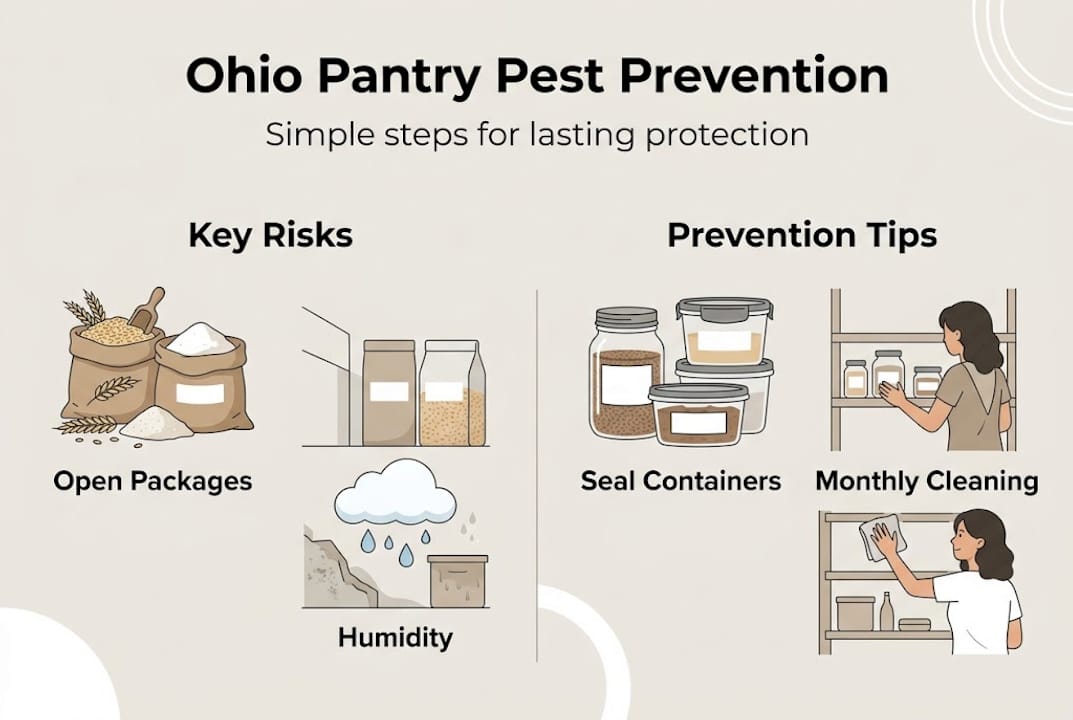
Integrated pest management (IPM) is the gold standard for prevention. IPM combines sanitation, monitoring, and targeted treatment to keep pests from getting a foothold in the first place. For product pests, sanitation, stock rotation, inspection, and humidity control are the four pillars that work together.
Ohio’s summers bring humidity levels that can push indoor moisture well above 60%, which is the threshold where stored grain pests reproduce most aggressively. Keeping your pantry below that level with a small dehumidifier or by improving cabinet ventilation makes a measurable difference. The climate factors for stored grain pests in Ohio confirm that moisture management is one of the most overlooked prevention tools available to homeowners.
Monthly prevention routine:
- Pull everything out of one pantry section and inspect packages for damage or signs of pests.
- Wipe down shelves and check corners for webbing or frass.
- Rotate stock using the FIFO method: first in, first out. Older items move to the front.
- Check humidity levels in the pantry and kitchen area.
- Replace or check pheromone traps if you use them for ongoing monitoring.
- Confirm all containers are properly sealed with no cracks or loose lids.
For a full set of IPM examples for homes, you’ll find practical strategies that go beyond the pantry and protect your whole home.
“Prevention is far more effective and far less costly than repeated treatment. One hour of monthly maintenance saves dozens of hours of cleanup and hundreds of dollars in discarded food.”
If you’ve tried consistent prevention and still see activity, that’s the signal to bring in a professional. Hidden infestations inside wall voids or in areas you can’t easily reach require tools and expertise beyond what most homeowners have. Reviewing pest safety tips before any treatment is also a smart step for families with kids or pets.
What most guides miss about product pests in Ohio homes
Here’s something most articles won’t tell you: the cleanliness of your home is almost irrelevant when it comes to product pests. The real risk factor is what’s already inside the packages you buy. Pests often enter through store-bought products with invisible infestations, and adults may live up to 8 months, quietly reproducing in your cabinets long before you notice a single moth.
Ohio’s seasonal humidity swings make this worse than in drier states. A pantry that’s fine in February can become a breeding ground by July if moisture isn’t managed. That’s not a reflection of how well you maintain your home. It’s just Ohio weather doing what it does.
The other thing most guides gloss over is the real limit of DIY methods. Pheromone traps and bay leaves work well for prevention and light monitoring, but they won’t reach eggs tucked inside wall cracks or larvae deep in a cabinet hinge. When an infestation has gone undetected for months, professional tools and trained eyes are often the only way to find and eliminate every source. Knowing when to call for help isn’t giving up. It’s the smarter move. For a realistic picture of what you’re up against, the Ohio pest management resource is worth a read.
Let experts help you keep your home pest-free
For Ohio homeowners who want the best defense, expert support brings practical peace of mind. At Apex Pest Control, we’ve been protecting Ohio homes from product pests and dozens of other invaders since 1969. Our team uses professional IPM examples and science-backed methods to find infestations where homeowners can’t, and eliminate them safely around your family and food. We also offer sustainable pest management solutions designed for long-term results, not just a quick fix. If you’re dealing with recurring pantry pests or just want a thorough inspection before things get worse, reach out today and request a free pest control quote. We make it easy to get started.
Frequently asked questions
What foods are most at risk for product pest infestations?
Product pests target grains, flour, cereals, rice, nuts, dried fruit, and pet food most frequently, making those the items to inspect and store most carefully.
How can I tell if I have a pantry pest or another bug in my kitchen?
Indian meal moths and grain beetles are distinguished by webbing inside dry goods and movement within containers, signs you won’t typically see with other kitchen insects like ants or cockroaches.
Do pantry pests spread diseases or harm my family?
Product pests spoil food and cause waste, but they are not major disease vectors, so the primary concern is contaminated food rather than direct health risk.
Is it possible to eliminate product pests permanently?
Yes, eradication is possible with thorough cleaning, discarding infested food, consistent prevention habits, and professional intervention when hidden sources are involved.
How long does it take to get rid of a pantry pest infestation?
Eradication typically takes between 2 and 8 weeks, depending on how widespread the infestation is and how consistently control methods are applied.